Reporter’s Notebook: Why transportation solutions in Fort Wayne can feel paradoxical
Joshua Schipper reflects on his transportation reporting, asking: Can you build a more walkable Fort Wayne if people don’t want to use it?
This story is part of Moving Fort Wayne Forward, a year-long reporting effort to engage residents, employers, and community leaders of Greater Fort Wayne around the possibility of a more modern, multimodal transportation system. Read the full series here.
Since I began reporting on transportation solutions for Input Fort Wayne last August, I have encountered a handful of challenges in doing so. Many of my initial assumptions have been contradicted. I have noticed a number of paradoxical roadblocks, and changes to my personal experience navigating the city have made parts of this series more complicated to cover than I anticipated.
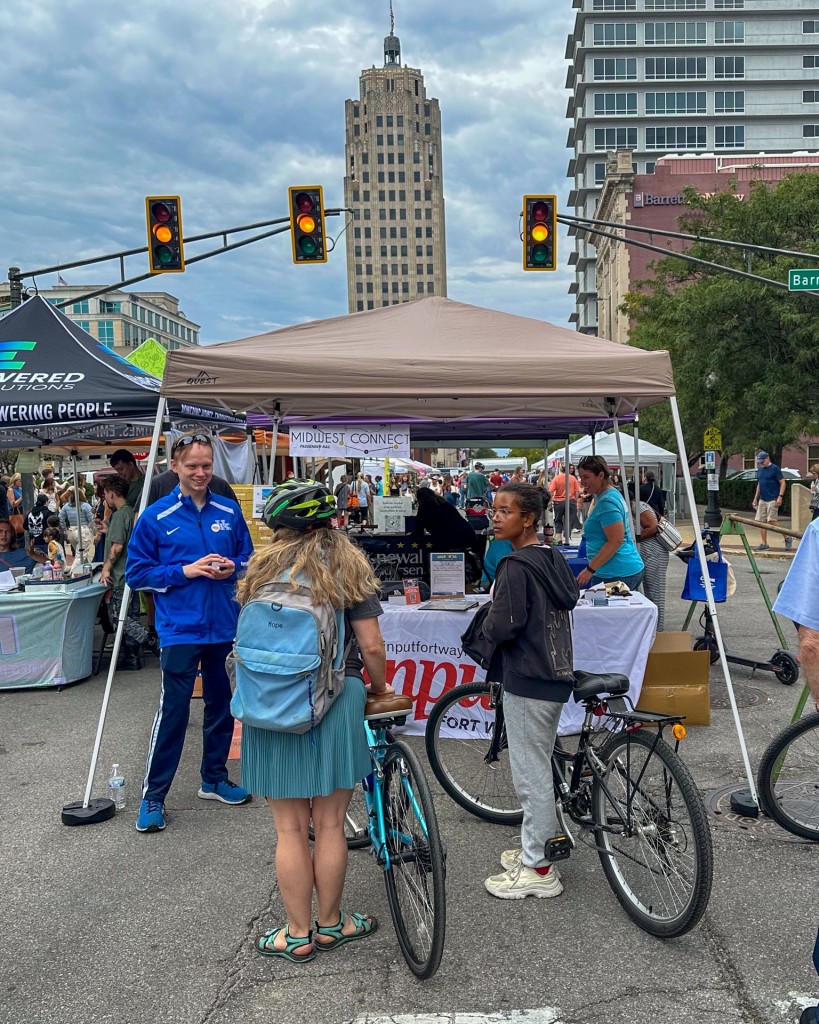
anything but a car. I rode my scooter that morning, but when relentless rain came in the early
afternoon, I had to call someone to drive me home. Weather, too, is a constraint that can be
difficult to overcome without the convenience of a car. (Brittany Lantz)
As I wrapped up my first piece in the series, I moved from an apartment to a house. While the apartment was not surrounded by particularly walkable infrastructure, we enjoyed quick trips to nearby restaurants and amenities. Moving into Arlington Park — a large, 1970s suburban neighborhood in an area of Fort Wayne where commercial and residential areas are spread apart — I initially expected that convenience to completely disappear.
But something unexpected happened. After moving in, we discovered a network of sidewalks that allows my family to safely access a community center, parks, and nearby homes without interacting with much, if any, vehicular traffic. While Arlington Park is largely disconnected from surrounding commercial areas, it excels at something I had not previously considered: internal walkability.
That realization challenged one of my earliest assumptions — that suburban design from this era of development is inherently hostile to walking. In reality, it can be selectively walkable. While researchers typically measure walkability by assessing access to destinations like stores and employment, and find that many of its broader benefits depend on that external connectivity, my experience in an internally walkable neighborhood has been more positive than expected.
In addition to the mindset change that came from moving, I also became a father. By the start of this series, I was driving my daughter to daycare several times a week. That routine forced me to face another layer of transportation, not as a reporter but as a parent. Could I take the bus to daycare? Technically, yes. But doing so would mean navigating busy roads with a stroller, walking nearly 90 minutes, and adding significant time to an already tight morning schedule. Now that I am a dad, even walking alone on certain sidewalks that feel too close to major roads makes me think twice, let alone with a baby in a stroller.
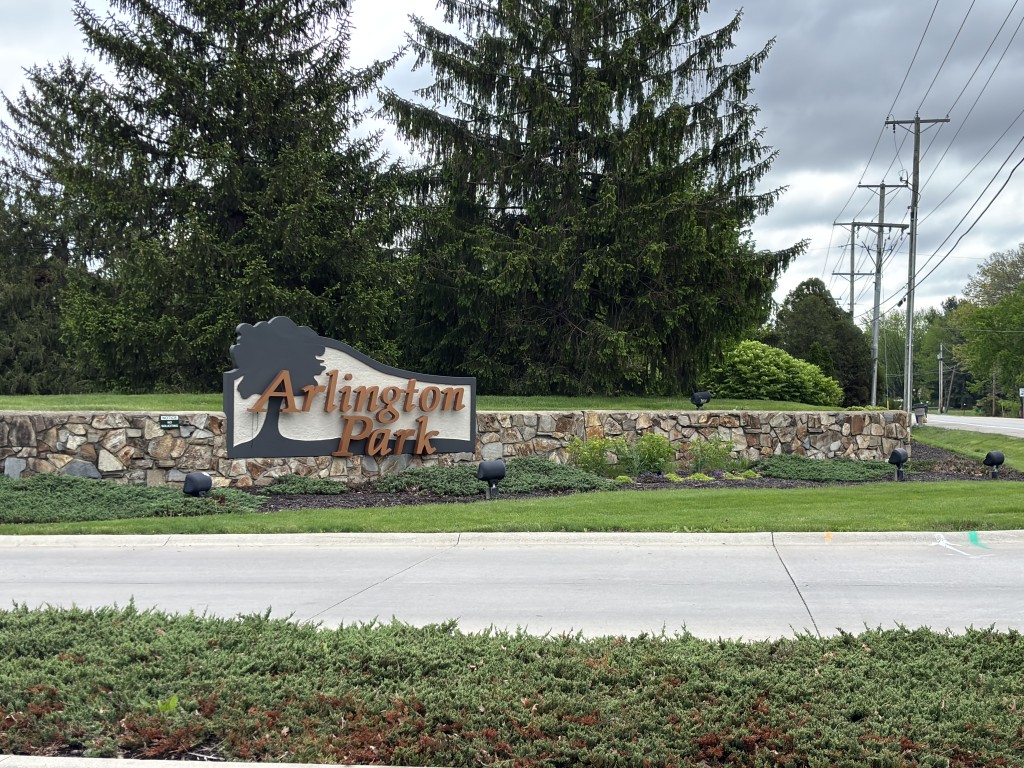
restaurants, I was surprised by the impact that its internal walkability had for my family. (Joshua
Schipper)
With that added perspective, Fort Wayne’s car-centric design began to feel less like a problem and more like a feature. People often describe Fort Wayne as “family-friendly,” and I began to see how its car-centric design might be part of the reason. Even a more “complete system” might not work as well for families. Surveys from the Pew Research Center show that many parents struggle to balance work and family responsibilities, with more than half reporting difficulty doing so and many saying they frequently feel rushed. This pressure makes convenience and predictability essential to how families structure their daily routines. While car-centric design does not solve transportation issues for families without access to a vehicle, for families like mine, Fort Wayne’s car-centric design enables a version of daily life that feels efficient, predictable, and safe.
The prevalence of remote and hybrid work, too, appears to diminish the urgency of becoming more walkable. Projects like Interstate 469 — one of the most expensive infrastructure investments in Allen County — were designed to move traffic efficiently around the city rather than through it. Today, that infrastructure enables something slightly different: the ability to live farther from employment centers while remaining economically connected. Remote work makes it easier for residents to choose low-density, low-traffic outlying towns without sacrificing access to jobs. U.S. Census Bureau data shows the share of Americans working from home more than tripled, from 5.7% in 2019 to 17.9% in 2021. Hybrid work has enabled out-migration from urban cores and reduced the importance of commuting distance.
This raises a difficult question: If fewer people are commuting daily, does the priority of building alternative transportation systems decrease? Or does it simply change the landscape of the problem?
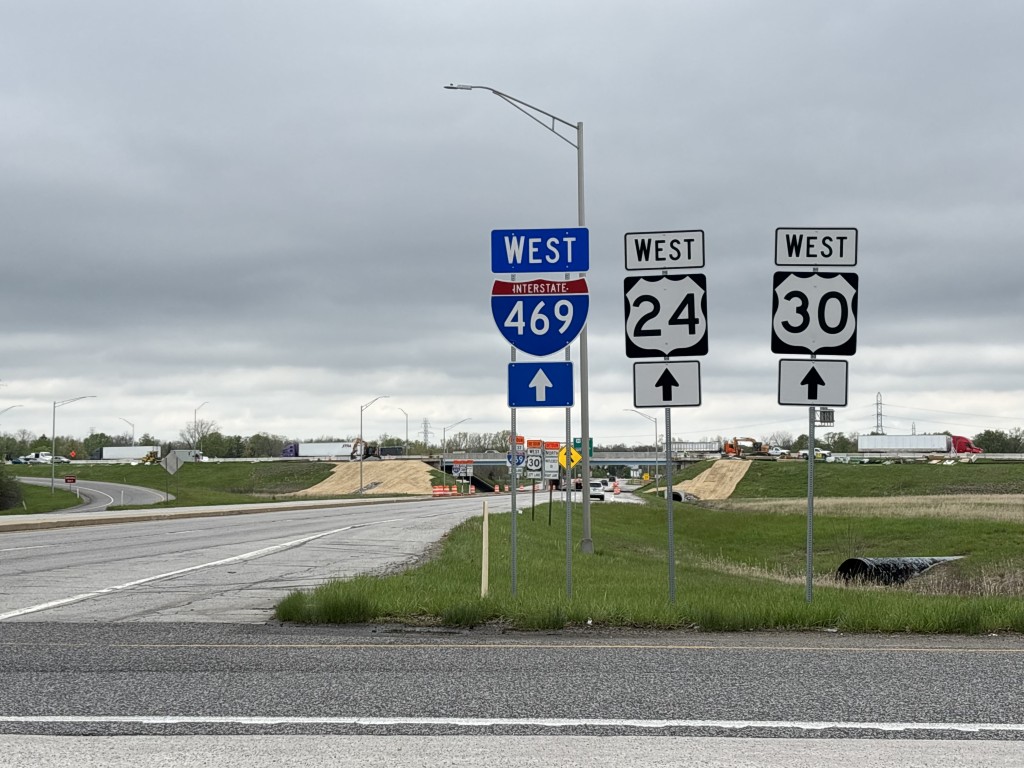
alleviated through traffic from parts of Fort Wayne. However, with the rise of remote and hybrid
work, the interstate allows people to work remotely in outlying communities while remaining
economically connected to Fort Wayne. (Joshua Schipper)
At the beginning of this series, I walked to work to better understand the experience of those who rely on walking to access employment and other necessities. What I found was not just an infrastructure problem, but rather a geometry problem. Even if Fort Wayne had a perfectly connected network of sidewalks and trails that let me walk in a straight line from my house to my (now former) job, my commute would have still taken over two hours on foot. Even perfect infrastructure cannot overcome distance.
That reality highlights a fundamental, ingrained constraint to local transportation solutions: density. Much of Fort Wayne’s development, particularly in the late 20th century, prioritized separating residential and commercial uses. That design decision, made decades ago, now shapes transportation outcomes in ways that are difficult to reverse. Research from the World Bank suggests that transit systems are most effective when supported by higher-density development and strong connections between housing and employment. How do you retrofit an existing city to function in a way it was never designed to?
Moving Fort Wayne Forward Reader Survey
Hey! We could really use your help making sure we can continue producing journalism that informs and inspires. Taking a few seconds to answer these questions will ensure we’re on the right track and that our funders understand our impact.
This leads to one of the most persistent questions in this series: Do we build infrastructure first, or do we wait for demand? For example, residents in areas near the Cherry Hill neighborhood face a nearly an hour and a half walk to access existing bus routes. Expanding service could solve that, but only if people use it. What if the demand never materializes? Are the transportation questions that Fort Wayne faces driven by a lack of appropriate infrastructure for people to use? Or is it really a lack of demand for that infrastructure or alternatives to driving a car that counterbalances calls for more trails and public transit?
This is the central paradox of the series: Without usage, expansion appears wasteful. Without expansion, usage cannot grow.
From the outset, I knew I would face some cognitive dissonance in writing this series. While I am strongly inclined to see the benefits of a better-connected, walkable city, I also approach many of the solutions proposed by advocates with strong skepticism, particularly when they lack real-world evidence or solid funding plans.
This has left me in an unusual position. At times, I feel like an outlier with both advocates and opponents of transportation change. Advocates regularly emphasize urgency and safety, while opponents emphasize cost and practicality. I have found myself asking: What actually works, under what conditions, and is there enough data to support pursuing the solution?
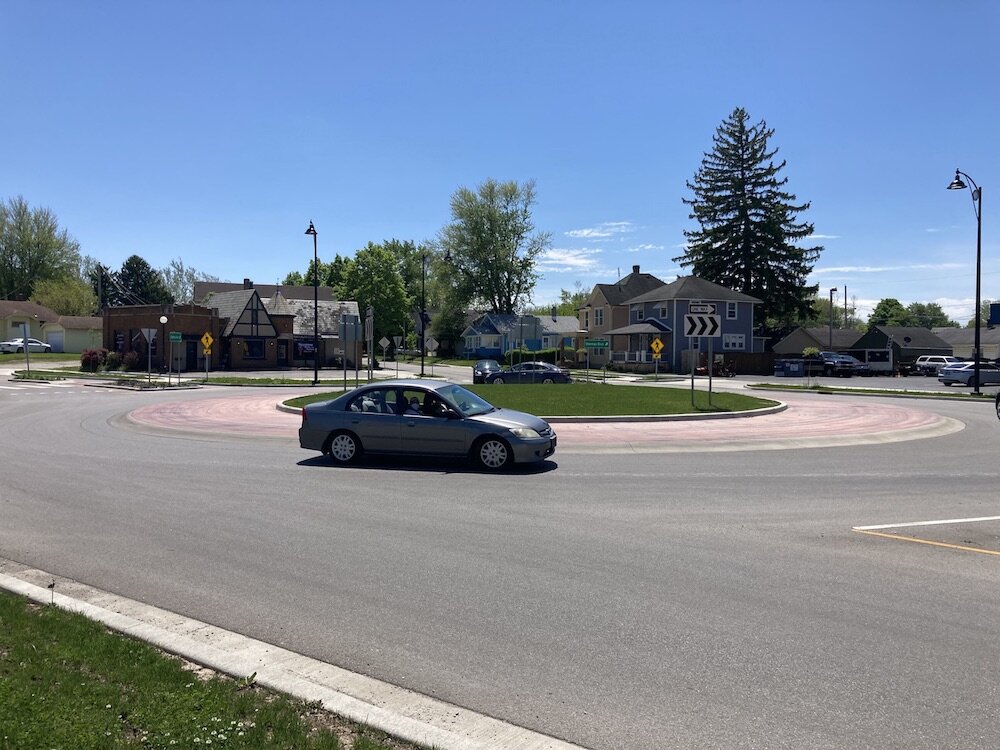
That internal conflict becomes especially intense when public perception conflicts with data. Public discourse regarding roundabouts is a clear example. Despite intense skepticism in our community, studies consistently show that they reduce total crashes, injury crashes, and fatal crashes compared with traditional signalized intersections. They also improve traffic flow and reduce long-term maintenance costs. And yet, public skepticism remains. That disconnect between perception and measurable outcomes has been one of the most consistent themes I’ve encountered. For some solutions, the data is clear, even if the public opinion is not.
Nearly every solution explored in this series runs into another constraint: funding. Transportation improvements require sustained investment, and public appetite for that investment varies widely and remains contentious both locally and statewide. Even among those who support alternative transportation options across the political spectrum, the disagreement appears to arise over how to pay for improvements and what tradeoffs are acceptable with limited public funds.
This creates a pattern where the most viable solutions are usually not those that dramatically expand systems, but those that reduce costs, improve efficiency, or leverage existing infrastructure in new ways. Private-public partnerships are a common theme in increasing the viability of alternative transportation solutions, like we found with Citilink’s Medlink partnership with Parkview and Fort Wayne Trails’ partnerships with trail-friendly businesses.
At some point, all of these challenges converge on a more difficult hurdle. Fort Wayne is unlikely to ever eliminate the need for a car. Some trips, like long-distance travel, certain errands, and unpredictable schedules, are difficult to replace with alternative modes of transportation. If a car is still necessary for even part of daily life, it raises a challenging question: Why would any alternative transportation ever overcome this threshold of convenience? When a car is already sitting in the garage, ready to go at any time, the bar for replacement is extraordinarily high. Even meaningful improvements to transit, trails, or the possible return of rail service must compete with that baseline. However, that threshold is not universal. Despite that, for residents without access to a car, alternative solutions and incremental improvements still matter. For them, solutions do not have to compete with the convenience of driving a car, but with whether they can go anywhere at all.
I remain hopeful that Fort Wayne will continue to make progress, but that progress, already underway in many parts of the city, will probably remain incremental for now. Moving Fort Wayne Forward began with a simple question: how do we build a more complete transportation system? The answer, I have discovered, is complicated. These challenges do not mean solutions explored throughout this series will prove ineffective. Rather, it changes how they should be understood. In Fort Wayne, progress is incremental, and each solution can expand access, improve safety, or reduce friction for a specific group of users. Those changes will not replace the car for most people, but they can substantially improve how the system works for many. And as we continue reporting on solutions, the opportunity for positive, exponential change is not impossible. Success will not come from replacing the whole system, but from improving how it functions within ingrained constraints.
Thanks to our Presenting Partner, Parkview Health, our Lead Sponsors, WindSwell Foundation and Community Foundation of Greater Fort Wayne, and to our sponsor, Citilink, for making this story possible.

Author

Related Articles
Help shape future coverage – join our upcoming listening session
Join Input Fort Wayne at Tall Rabbit for coffee, conversation, and a chance to share the issues, people, and neighborhood stories you think deserve more attention.
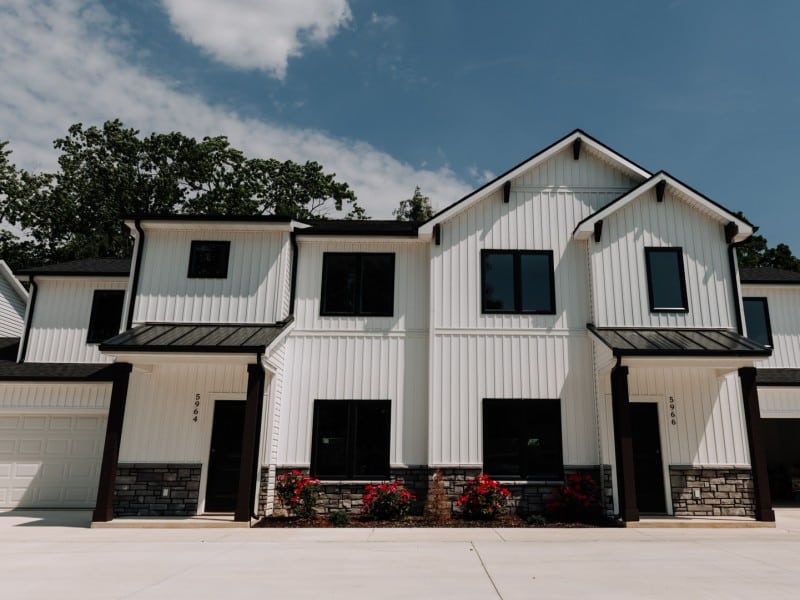
Can proximity solve a transportation problem?
Some developers, planners, and neighborhood advocates believe bringing destinations closer together could expand transportation choices.
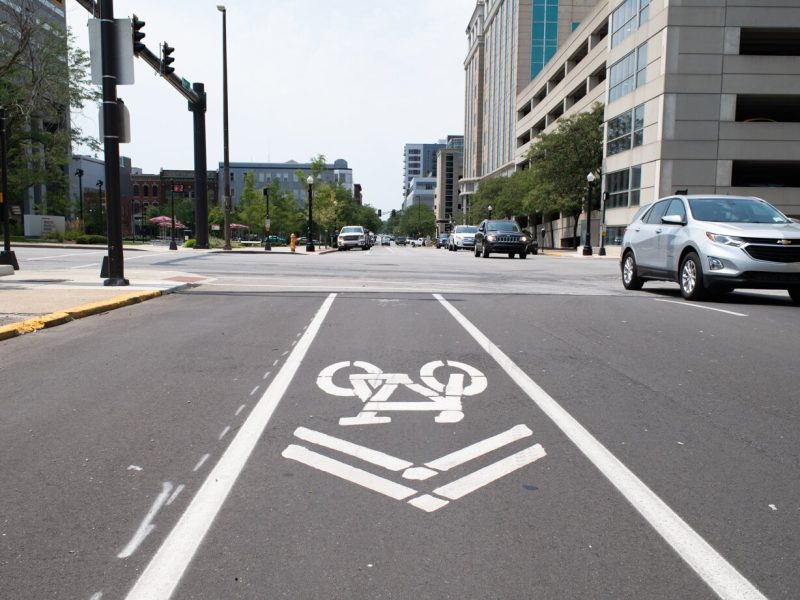
How we got here: The role of transportation in Fort Wayne’s growth
From portages and streetcars to highways and subdivisions, transportation shaped the way Fort Wayne grew.