How early introduction to alternative transportation could help change Fort Wayne’s car-centric mindset
Fort Wayne is a city with a car-centric mindset. Early exposure to biking and transit could help, but a lack of density could limit long-term habit change.
This story is part of Moving Fort Wayne Forward, a year-long reporting effort to engage residents, employers, and community leaders of Greater Fort Wayne around the possibility of a more modern, multimodal transportation system. Read the full series here.
A feeling of independence and freedom swept over Fort Wayne elementary schools in early May as students across the city rode their bicycles to school as part of national “Bike to School Day” festivities. After meeting up at a local church — and escorted by Fort Wayne Police Bike Patrol Officers — the students pedaled to school. Jasmine Youngblutt is an assistant principal at Northcrest Elementary, a neighborhood school in Northwest Fort Wayne that participated in Bike to School Day on May 6.
Youngblutt, who previously shared her experience using Fort Wayne’s trail system for Moving Fort Wayne Forward, says that Bike to School Day helps expose children to the breadth of uses for their bicycles beyond their neighborhood streets and helps “plant that seed early” for alternative transportation.
“I definitely think, in order for kids to really develop a true concept of something, giving them a hands-on experience is the best way.”
She adds that kids are typically working toward greater independence, and enhancing their ability to travel to more places complements learning and development toward that goal.
“I remember being a kid. Everybody wants independence and freedom,” she says. “That’s what kids are typically working toward, is becoming independent, and this is just another way that they can become independent and have a little bit of ability to get from point A to point B.”
Citilink, too, helps to enable that freedom during the summer months as well, offering a $25 summer youth pass to kids beginning at age five.
Despite children’s eagerness to ride their bicycles to more places, most people in Fort Wayne use cars for even short trips. Kids working toward independence will soon earn their driver’s license, and the convenience of driving — especially in a city with lower density than places where cycling and public transit dominate — is a hard threshold to overcome.
Even with significant limitations to alternative transportation in Fort Wayne, could early exposure to the benefits of cycling and public transit be a long-term solution to an ingrained car-centric mindset?
Recent transportation research suggests that travel habits formed during adolescence and early adulthood can persist later in life when supported by their environment and access to alternatives. A 2024 study examining young adults during major life transitions — including entering the workforce and relocating — found that participants moving to more urban environments were more likely to adopt transit and active transportation options, while many entering the workforce shifted toward car use. The study also cited research that transportation habits formed earlier in life were more likely to persist when reinforced by supportive environments, suggesting that early exposure to walking, biking, and transit may shape whether they choose those options in adulthood.
They concluded that “first, efforts should be directed at those people who are not yet car-dependent to help them maintain their environmentally sustainable travel habits rather than persuading car-captives to alter their travel behavior. Second, the habit theory suggests that some components of habitual behavior, which were developed at earlier stages of life, may be demonstrated by individuals later in life within supportive situations.”
While Bike to School Day and the Citilink Summer Youth Pass expose schoolchildren to active transportation and transit, planting the seeds for future choices, widespread exposure to walkable environments often comes in college. Universities expose students to more walkable and transit-oriented environments than they experienced growing up, and campus mobility advocates argue that those experiences can influence how students view car dependence later in adulthood.
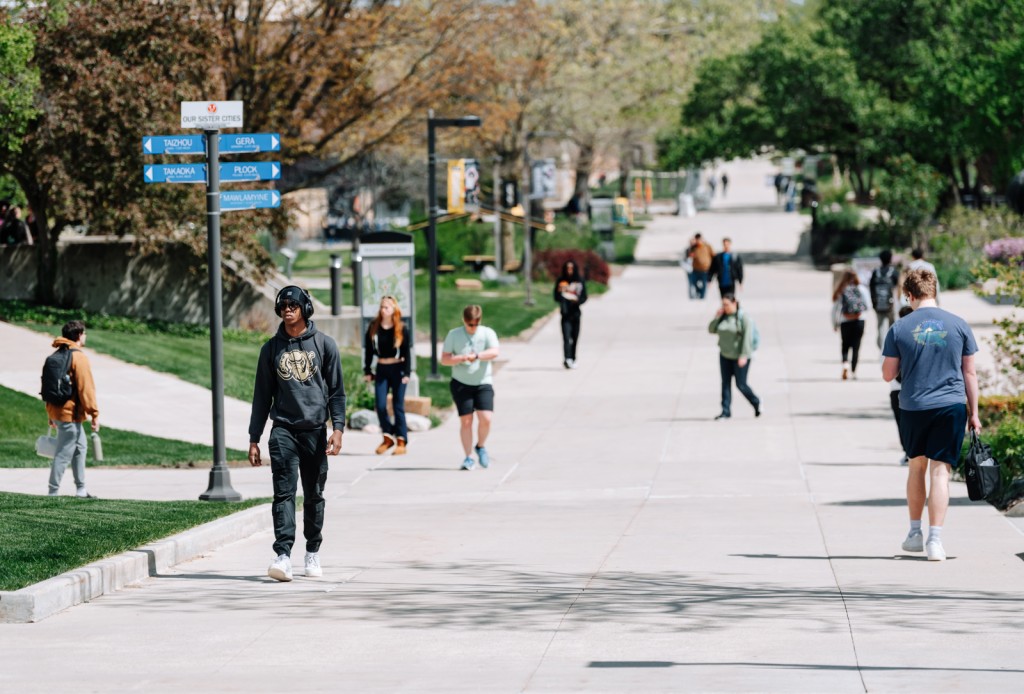
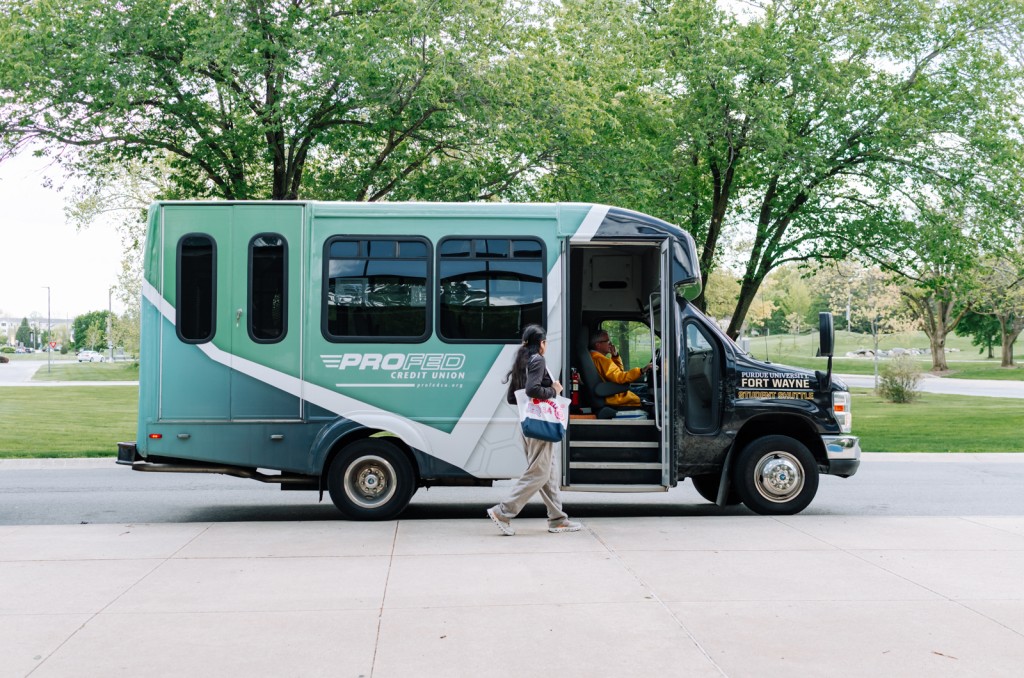
Fort Wayne’s colleges and universities share a focus on walkability and have been actively improving transportation as their campuses grow. Purdue University Fort Wayne will open a new 600-bed dorm building in the fall. Many of the students who will live in campus housing are not native to Fort Wayne, and only a small portion of students living on campus will have a parking pass, including those living in the new dorm. This expansion of housing and the limitations that students face have made bolstering intra-campus transit a priority as PFW becomes less of a commuter campus, with around 25% of its student population living on campus.
Dr. Marcus Weemes, executive director of housing and dining services at PFW, said in an interview that he frequently sees students walking, using scooters, biking, and taking advantage of a recent campus shuttle program.
“We only have about 34% of our students that live in housing that have a parking permit for student housing, so there’s still a number of students that do not drive.”
In the spring of 2023, the university launched a shuttle program to bring students from nearby apartments to campus and to the grocery store. During its pilot semester, drivers counted about 50 rides per week. Abbey Wang, director of student life and leadership, said in an interview that the program now carries up to 600 passengers per week across about 1,000 trips.
In addition to offering alternatives to students who need them, Wang theorizes that by reducing the costs of car ownership and rideshare services for students, PFW could see increased retention by alleviating financial strain. As gas prices increase, she said the impact can spread to students who own cars as well.
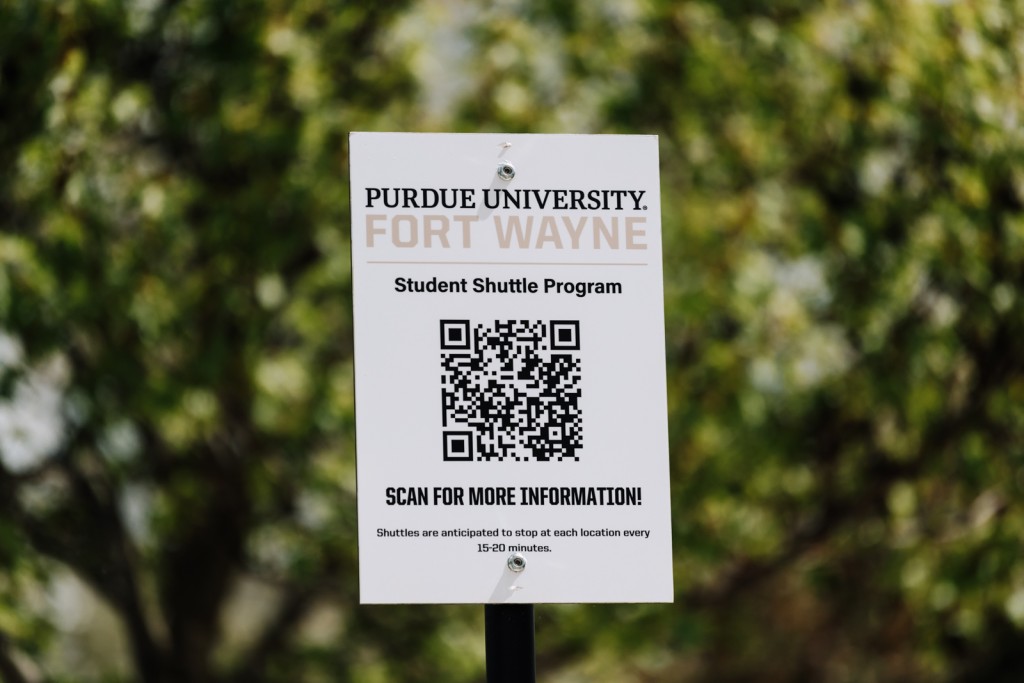
“Typically, the majority of our passengers are international students, just because most of them don’t have vehicles. It’s harder for them to come here and get a license and get a car while they’re paying their way through college.”
Even at PFW, limitations to collegiate transportation solutions can impact potential mindset shifts. Students without a car still have to rely on classmates or expensive ridesharing to get to off-campus internships. Using Citilink might not be the best answer either, as tight class schedules may not align with Citilink timetables, and a potentially long walk from the closest bus stop can limit opportunities. Sweetwater Sound, a popular internship destination for PFW students, would take 1.5 hours for students to reach by bus, including a 37-minute walk without a sidewalk, likely while hauling an instrument. Then they have to make their way back to school.
Even elementary school students excited about riding their bikes might become discouraged at this reality. Magnet schools — public schools not bound by a neighborhood — would be out of reach for those who want to bike to class. Parents may grow weary at the thought of their kids crossing major roads or traveling along streets without sidewalks. And if it starts raining at the end of the school day, the car becomes the only option again.
While exposure to walkable campuses and alternative transportation may shape how students think about mobility, the realities of daily life in Fort Wayne can still pull many graduates back toward car dependence despite their mindset shift. Those new habits usually depend on the support of the surrounding environment.
Moving Fort Wayne Forward Reader Survey
Hey! We could really use your help making sure we can continue producing journalism that informs and inspires. Taking a few seconds to answer these questions will ensure we’re on the right track and that our funders understand our impact.
Ayden Esslinger, a mechanical engineer who will graduate from PFW this month, gave some insight into the limitations of trying to change mindsets early. Esslinger lives with his mom about a 10-minute drive from campus, and he drove to class for all four years. Living at home, he said, helped to keep the cost of attending school down.
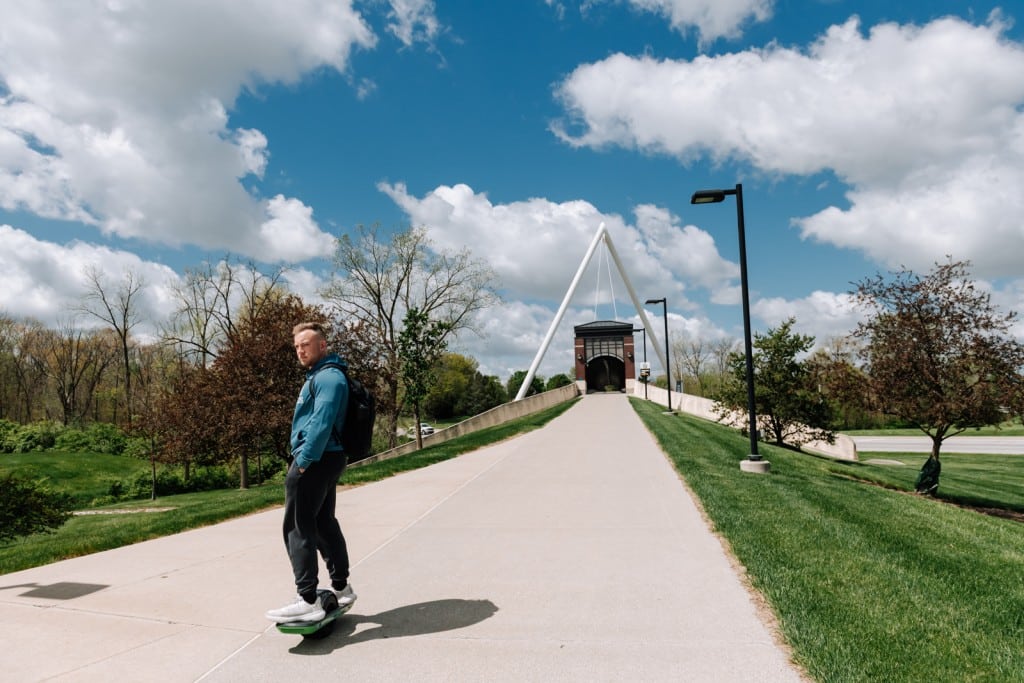
Esslinger has a job offer in Huntington and plans to move there if he accepts it. As for his mode of transportation in Huntington, his car will be essential not only to get back to Fort Wayne, but also because Huntington lacks the density to make alternative transportation practical as well. He thinks he would embrace walkability and alternative modes of transportation if the infrastructure and density supported it.
“I think if everything was closer together — I’ve been in cities where, more downtown, urban areas — where everything’s within a few blocks that you would need,” Esslinger told Input Fort Wayne.
Esslinger’s experience reflects the tension that researchers identified: exposure to walking, biking, and transit may influence how people view transportation later in life, but those habits are often shaped — or limited — by the environments in which they ultimately live.
For students who rode their bicycles to school, their morning commute was less about policy or infrastructure than about independence and fun. Whether those lessons survive adulthood in a car-centric city remains uncertain. But those early experiences can still matter by shaping what feels familiar, accessible, and possible long before adulthood begins.
Thanks to our Presenting Partner, Parkview Health, our Lead Sponsors, WindSwell Foundation and Community Foundation of Greater Fort Wayne, and to our sponsor, Citilink, for making this story possible.

Author
Related Articles
‘A big deal’: Art This Way celebrates 10 years, trades annual art crawl for a larger free festival
As Art This Way reflects on a decade of public art, the program replaces its annual art crawl with a free two-day festival and looks toward the future.
Partner Partner Content How Parkview is building brighter futures at the Better Future Clinic
The Better Future Clinic provides follow-up medical care for children who may have been abused or neglected. The goal is to provide timely and ongoing care, foster connections to vital resources, and build brighter futures for children, parents, and the community.
Partner Partner Content Bringing neighbors together: Q&A with Réna Bradley on the Inspire Neighborhoods Conference
Neighborhood Planner Réna Bradley explains how the Inspire Conference supports local change-makers by connecting residents and sharing tools for building resilience.