Doing something different: Family farm thrives in LaGrange
Get to know Gunthorp Farms, the sustainable sensation selling pork and poultry to some of the nation's top chefs.
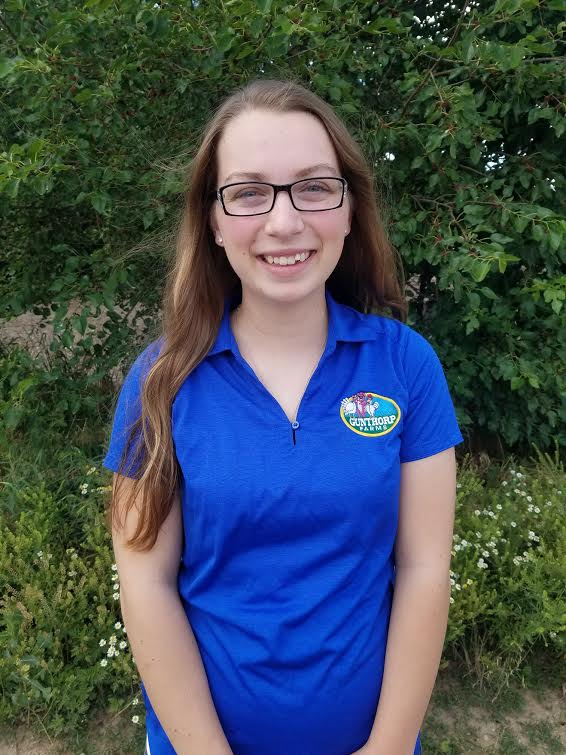
As a fifth generation farmer at age 23, Kara Babinec wishes she could see the northeast Indiana farm community in its heyday, back when farm families gathered for weekly events, and when someone got hurt, you looked after his field.
“Now there’s not enough family farms to do that,” Babinec says. “You’re wondering when the guy next to you’s land is going to go up for sale because you need it.”
Since the industrialization of farming in the 1970s, the midsize, family farms that once dominated rural Indiana and fed our country have been on the decline, largely giving way to the “get big, or get out” mentality of modern farming.
Among hog farmers alone, Babinec points to data that shows drastic consolidation, with 90 percent of farmers disappearing since 1980.
“In 1980, when my dad was a kid, there were over 600,000 hog farmers in the US,” Babinec says. “When I was a kid in the 2000’s, that number settled around 60,000 hog farmers.”
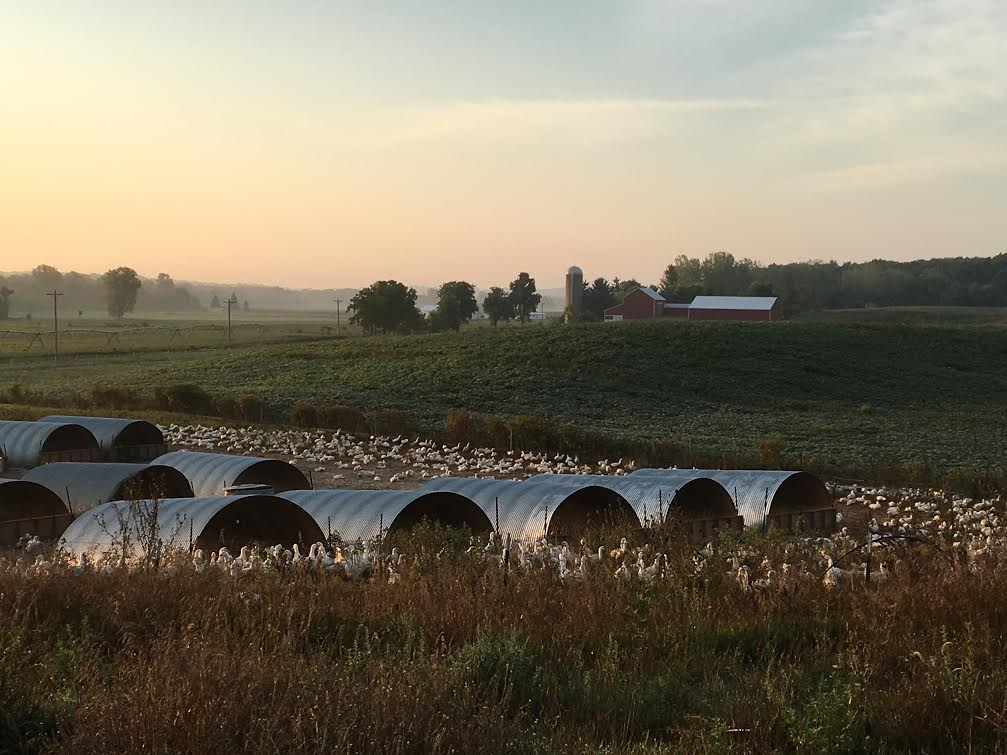
And yet, with a small, niche, sustainable farm run by all five family members on only 260 acres of land in LaGrange, her family’s Gunthorp Farms have managed to beat the odds their own way.
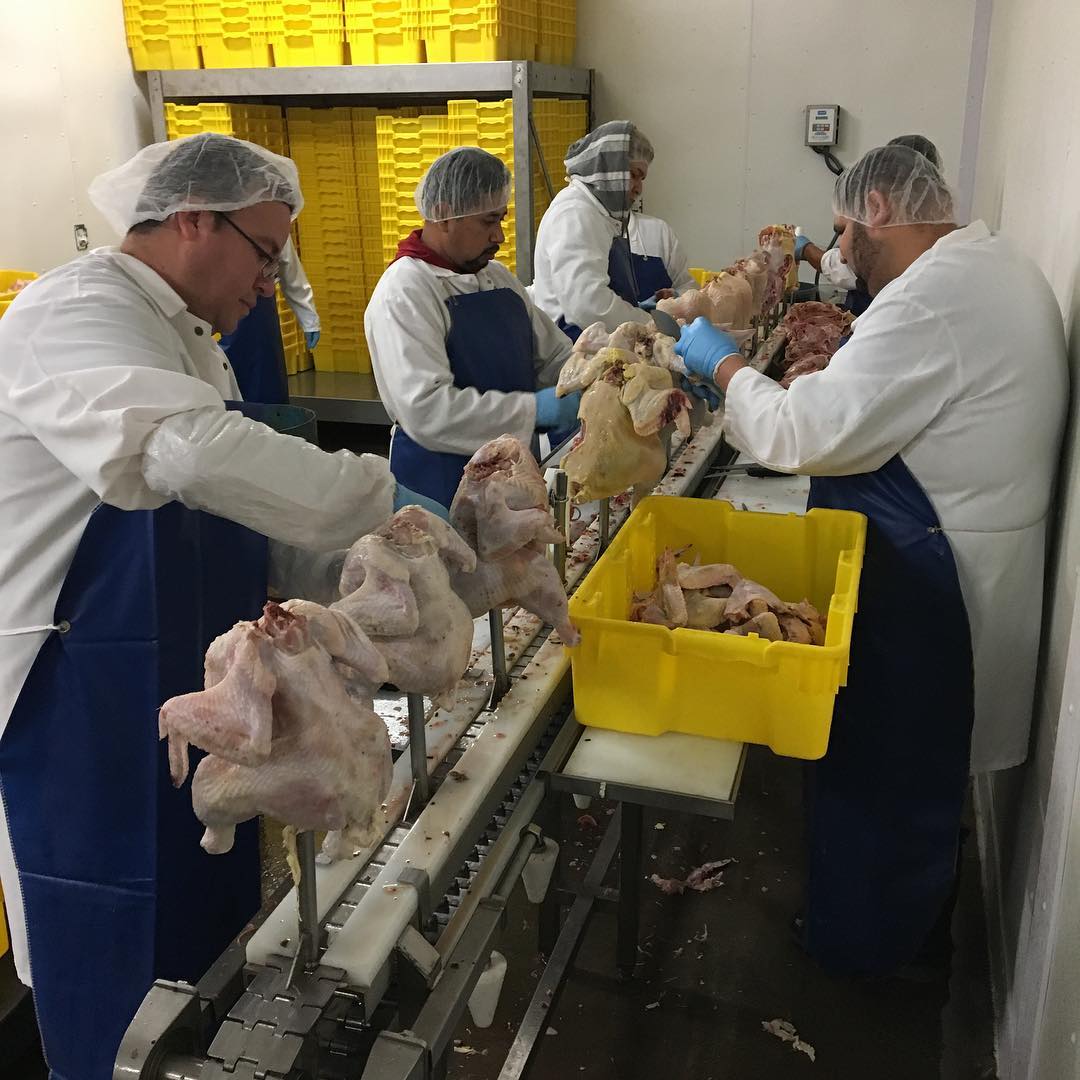
For generations, the Gunthorp family raised pastured hogs, and in 1998, Babinec’s father, Greg Gunthorp, took things a step further by building his own USDA-inspected slaughter and processing facility on site to produce pork the way he thought it should be made: economically, environmentally, and socially responsible.
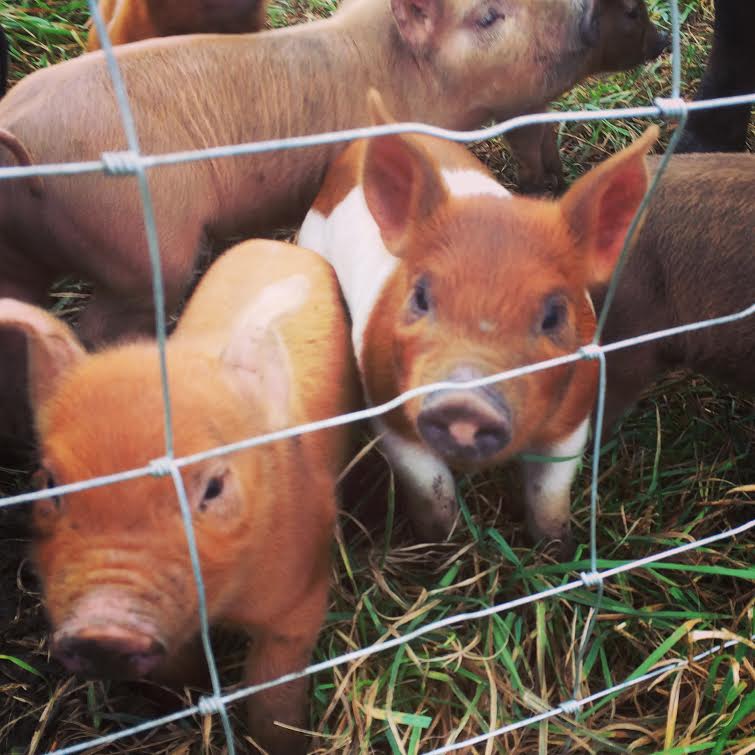
Over the years, Gunthorp Farms has expanded to raise thousands of pastured hogs, chickens, turkeys, and ducks. And while many in the farming community didn’t immediately understand their philosophy, they’ve managed to impress some of the nation’s superstar chefs in Chicago, including longtime customers Rick Bayless and the late Charlie Trotter.
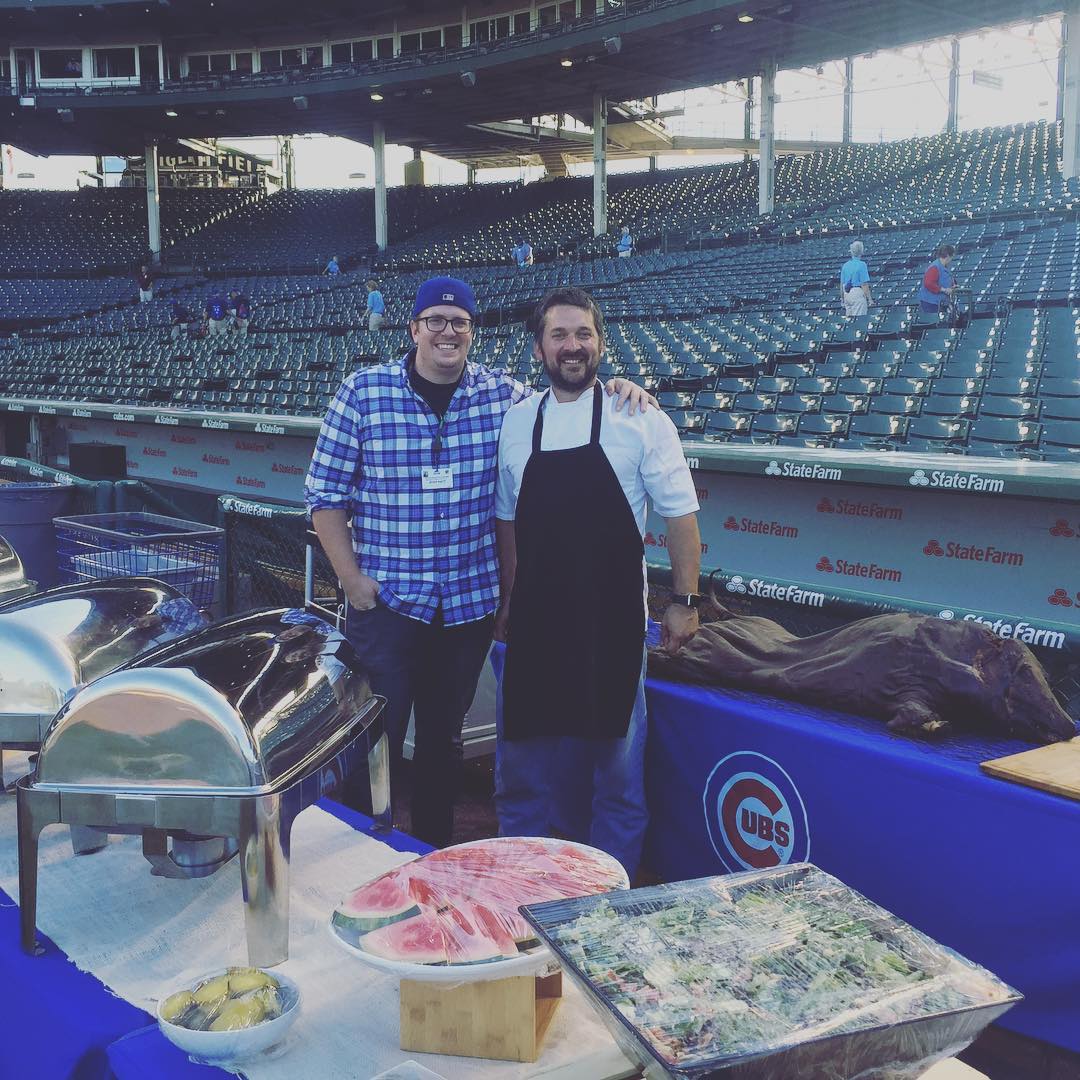
These days, the Gunthorp’s are even roasting pigs for the Chicago Cubs on Wrigley Field, and their work is putting the LaGrange community on the map for top chefs as one of the most desired high-end meats brands in the nation.
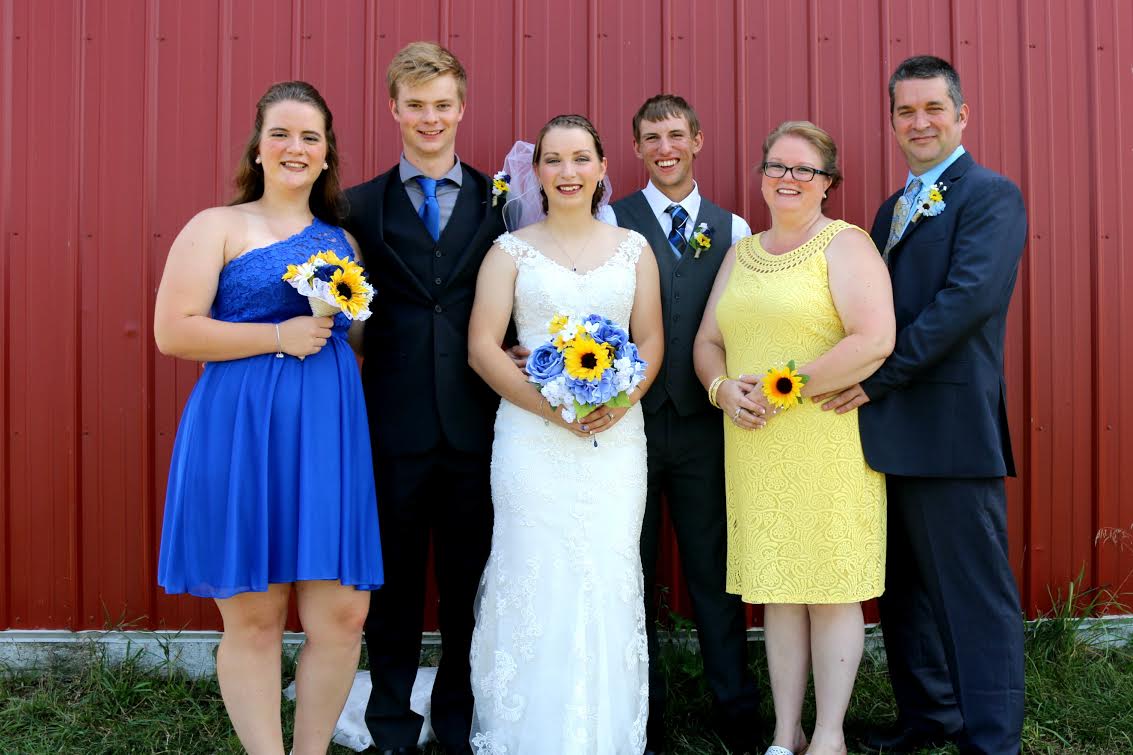
As the Gunthorps’ eldest child, Babinec sat down with Input Fort Wayne to tell us more about her family’s story.
IFW: Your entire family works on the farm together. What are everyone’s names and ages?
KB: My parents are Greg and Lei Gunthorp. I’m the oldest Kara Babinec, 23. My husband, Ed Babinec, is 24. My brother Evan Gunthorp is 21, and my younger sister is Cassidy Gunthorp, and she is 17, still in high school.
IFW: Does your whole family live on the farm?
KB: I live about a mile south of the farm, so I can see the farm outside my window across my grandpa’s cornfield.
My grandma and grandpa farm corn and soybeans, and they have around 900 acres that are next to our farm. My aunt and uncle live on the other end of their property. My brother just moved into the house dad grew up in on grandma and grandpa’s property.
So we’re all around here.
IFW: What is it like to live and work so closely with your family?
KB: We spend so much time together, and we’re all really close because we’re working together nonstop. The business that we’re in is so crazy; we deal with live animals and perishable products. Everything is so time sensitive. The fact that we understand that really brings us closer, and it’s great to always be surrounded by people who understand how crazy it is.
It’s really been fun, and there have been a lot of changes in the past few years as our generation steps in. We’ve been talking about where this is going because the opportunities are endless.
IFW: For a long time in farming, the trend has been “get big, or get out.” But to this day, your family farm supports itself, and many others, on only about 260 acres. Is that correct?
KB: Purdue University actually states that in order to be a fully functioning farm that can support one family unit, you need to have 1,500 acres in modern farming. We support my parents, my brother, me, and my husband full-time. Plus we have 30 or 40 employees who help us throughout the day, so we’re a lot more socially and economically sustainable.
What we do here is just so different than what everyone else is doing. This niche market of sustainable, organic foods is expanding now because consumers are really interested in their food.
IFW: Part of being sustainable is managing the product yourselves from start to finish. Your dad started Gunthorp Farms in 1998, doing all of that, and since then, the business has grown, and your family has grown. Now that your generation is taking over, the duties are divided among multiple people. What does everyone do?
KB: Gunthorp farms is comprised of three entities. The farm that raises the animals. The processing plant that slaughters, processes, and packages the animals, and then we have the sales and distribution.
My husband Ed and I both graduated from Purdue in May 2016, and Ed started with us in May 2017 as the farm manager.
My brother, Evan, who’s younger than me has been working at farm since he was 17 years old. He’s our processing plant manager, so he runs everything from the slaughter to when the product leaves, and is packaged, and goes out on the trucks.
I graduated with degree in agriculture business and a concentration in food marketing, and I started working right away, too. I’ve always kind of worked at the farm, but after college, I started full-time. I jumped into director of sales and marketing, so I sell all the meat and make sure it gets to the customers on time.
Then dad gets to oversee all of it, and my mom does all of the accounting and finances.
IFW: Your dad’s original claim to fame was selling a pig to the famous chef Charlie Trotter in Chicago. Tell us about that experience.
KB: I was four years old when dad took the first pig to Charlie Trotter in 1998. He was speaking at a conference (out of state), and after that, he randomly met this farmer who said, ‘My friend in Oregon is selling milk-fed pigs to a chef in Chicago.’
That chef was Trotter, and he actually picked up the phone himself at 2 p.m. on a Tuesday when my dad called. He never answers the phone, but he said, “Yeah, bring me a pig next week.”
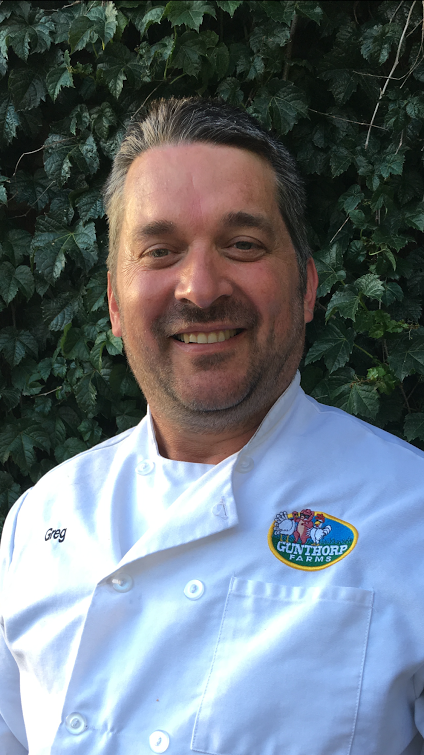
Dad had never been to Chicago, other than a field trip in sixth grade, so he was so out of his element.
We ended up selling to Charlie Trotter the month he was named the best chef in the country in Food & Wine magazine—the very month he was at the top of his game.
Business has just grown since then, and it sounds like a lot of luck, but I know the work that dad put in to make his own luck, and he hit so many dead ends before everything just all clicked at once.
We don’t spend any money on advertising, so it’s just been word of mouth and relationship-based.
IFW: The LaGrange community seems relational, in general. Tell us about living there.
KB: The LaGrange community is a really tight-knit community. Everyone knows everyone. We’re just south of the Pigeon River game preserve. People come from all over the community to go canoeing on Pigeon River. We’re actually just east of a really big Amish community, too. It’s mostly Shipshewana and Topeka, so we have an Amish neighbor, and a handful of Amish ladies who help us during chicken slaughter on Mondays.
Along with that, the whole county has been very progressive on waste treatment. They promote building constructed wetlands that filter the waste naturally for both residents and commercial operations. Purdue actually does studies with LaGrange County, and uses it as an example of a progressive waste treatment.
IFW: Speaking of technical details like waste management, your family prides itself on raising animals on pasture and having a USDA-inspected processing plant. What do these distinctions mean to consumers?
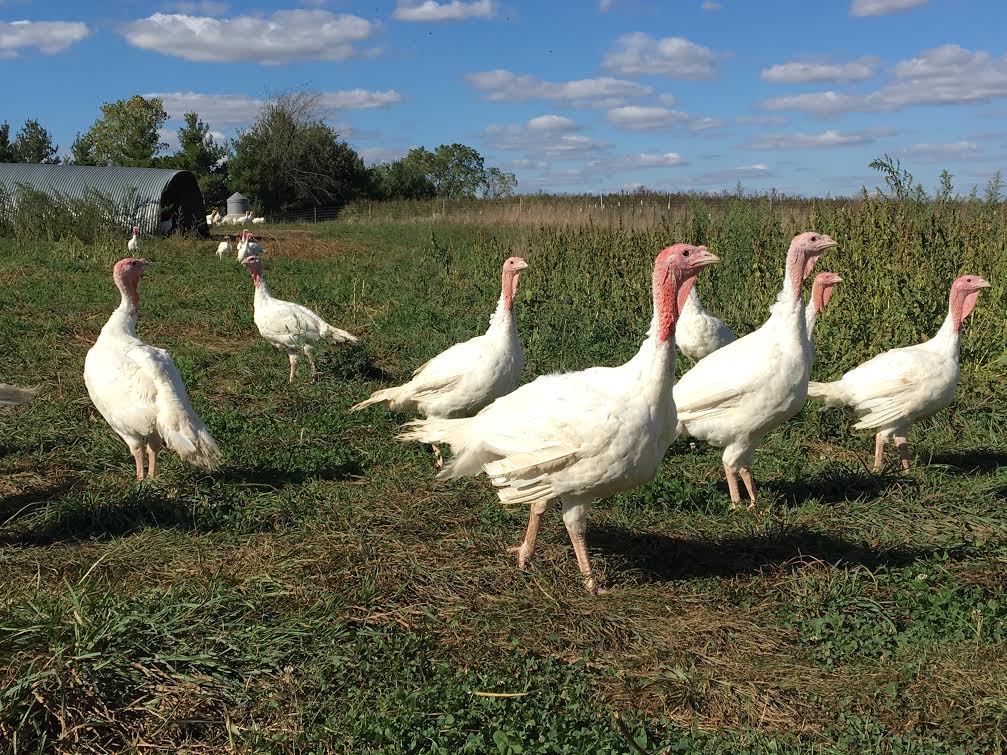
KB: Our animals are all raised on pasture, which is different from free range. Free range might just mean they have access to an outside concrete slab. All of the labeling these days is so hard to differentiate.
We raise our animals on pasture mostly due to ethical reasons. We believe that animals should get the chance to behave like animals. In our experience, the animals outside have fewer problems with sickness and respiratory problems—issues that can come from overcrowding and poor air quality in a barn.
We also think that animals raised outside on pasture do taste better. They breath fresh air, and they get to eat natural pastures, and that translates to a cleaner tasting meat.
Then we built a USDA processing plant on the farm, mostly because there weren’t any other USDA options in Indiana. The closest one is in Chicago.
Building our own processing plant has given us the opportunity to process our animals the way we expect them to be handled, and we can get really particular on what special cuts of meat our chefs want. So we can be as customized as they need.
IFW: Like you mentioned, with the growing popularity of sustainable, all-natural food, there are many confusing labels on the market. How do you show consumers the added value of your products?
KB: It’s a constant battle, but I think every business is going to have that. You’re always going to have the commodity level products, and they’re always going to try to make themselves appear like the best bang for your buck.
But dad actually wrote an article for Edible Michiana on the greenwashing and the incremental change that’s hurting this industry because every single label does have “natural” or lots of green grass on it.
Most pigs that make it to slaughter never see green grass in their entire life. It’s a struggle, but since what we do is so relationship-based, it hasn’t played a big role in our core customers.
We also do a lot of farm tours to educate people about our products. Most of our restaurant clients will bring their kitchen staff out, and let their servers look at things, so they know what’s going on. We rely a lot on relationships.
IFW: It sounds like a lot of your success comes from your relationships and sustainable practices. How do you define sustainable agriculture?
KB: What we define sustainable agriculture as economically, environmentally, and socially responsible. It has to cover all three of those to be truly sustainable.
To be environmentally friendly, we don’t want to dump all of our pig manure into the river by our property, we are using a constructed wetland to take care of our waste, and we pump it onto the land, so it’s regenerating the soil.
Economically, we’re supporting 30-plus employees, in addition to my family, and we’re all able to make a living here at the farm just on our 260 acres. This is the definition of rural development.
And then there’s socially, and this is the big one that industrial agriculture gets a lot of flack for: Who wants to live next to a pig barn?
You have to be able to be good neighbors because it goes back to that quality of place. We’re proud to say our neighbors enjoy living next to us.
It’s more expensive to do all of these correctly, but we’re in an affluent enough society to be able to pay for our food, so we should choose to do things in ways that are sustainable, not in ways that pollute the environment.
While we’re on the subject, another challenge is farm subsidies. Farm subsidies are basically the government paying farmers to produce the food they think the country needs.
Out of the approximately $75 billion net farm income last year, $27 billion of that came from government subsidies, and since a large portion of these proceeds are going to cover the farming of hydrogen-aided oils and refined carbohydrates, a lot of it’s going to making high fructose corn syrup.
Farms like us, and Seven Sons Farms, and Hawkins Family Farm, we don’t get government funding. Supporting small farms is the healthier, more socially sustainable option that’s not draining on the government.
IFW: Speaking of social responsibility, what are some of the ways that Gunthorp Farms gets involved in the LaGrange community?
KB: We think it’s really important to hire high school kids and younger individuals because we really think that, when family farms and mom and pop street businesses disappeared, that really took away local kids’ opportunities to learn life skills.
One of best things small farms used to produce were kids who didn’t stay in farming. They took that work ethic with them to the working world. So we really like to employ students on the farm, and give them the skills they can take and apply elsewhere.
Along with that, we donate to a lot of the local food banks and local organizations doing fundraisers. This fall, dad took the grille out for the local Heritage Festival. He also cooked ribs for the local girls’ basketball team, and wings to support local theatre productions.
IFW: Even so, it seems like the local community hasn’t always understood what you’re doing compared to customers in bigger cities like Chicago.
KB: The big hindrance in smaller communities is hitting the right price point. You go to Indy or Chicago, and people almost expect their food to cost more. They know this is going to be a higher ticket meal, and I don’t think the smaller communities have as much wiggle room in their food budget to switch completely to local food.
For a long time, we were looked at as the crazy hippie granola crunching farmers here. It’s really taken up until the last five years or so that its swung the other way, and what were doing is looked at is progressive now.
It’s funny, a few years ago, I was at an event in Chicago with my dad, and someone from back home texted us a picture of dad on the front page of the local papers. We were at this big event in Chicago, and he was like, ‘Look at this! I’m on the front page of my paper back home!’ When years before that, there was a full spread on dad in Chicago magazine.
What we do has taken awhile to catch on here, but it’s definitely a lot more normal now than we started.
IFW: As regional consumers, where can we find your products?
KB: Geographically speaking, we are not super close to our main markets. We sell most of our products to Indianapolis and Chicago. Fort Wayne has been growing as well, but even that is an hour away.
We’re starting to do more locally. We don’t have a retail location at the farm yet, so that’s one of our goals for 2018. Now, we do sales through Facebook. I list what we have available for the week, and people come pick it up.
The closest place to the farm that we sell to is Bon Appetit at Trine University. Matt Rogers at 800 Degrees Three Fires was our first customer in Fort Wayne, and he’s always been a great supporter.
Since then, we’ve starting selling to Tolon, Bravas, Trubble Brewing, and Junk Ditch Brewing Co. all in Fort Wayne. We sell to Cerulean at Winona Lake, Joseph Decuis in Roanoke, and the Emporium (at Joseph Decuis) carries our product in their retail shop.
We sell to Seven Sons Farms, and they carry our poultry to their buying clubs. They have an online market that they actually allow other farmers to use for a monthly subscription program. The 3 Rivers Co-Op also offers our stuff, and Green Bean Delivery offers our stuff, even though they’re based out of Indy.
Like I said, we’re hoping to put in a retail shop here at the farm to sell more locally in this upcoming year.
Author

Related Articles
How creating space for connections can drive neighborhood development
Fort Wayne’s neighborhood leaders use a shared space to crowdsource solutions and share ideas. These connections lighten the workload and stretch resources.
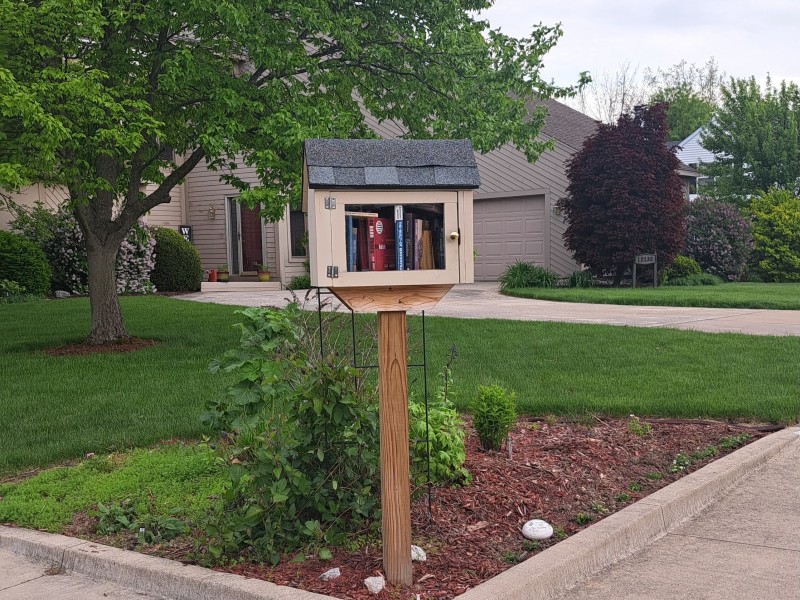
A Community-wide initiative is underway to restore Fort Wayne’s Little Free Libraries
It’s been ten years since Little Free Libraries were built in Fort Wayne. Now one local club is reassessing their conditions and is asking for your help.
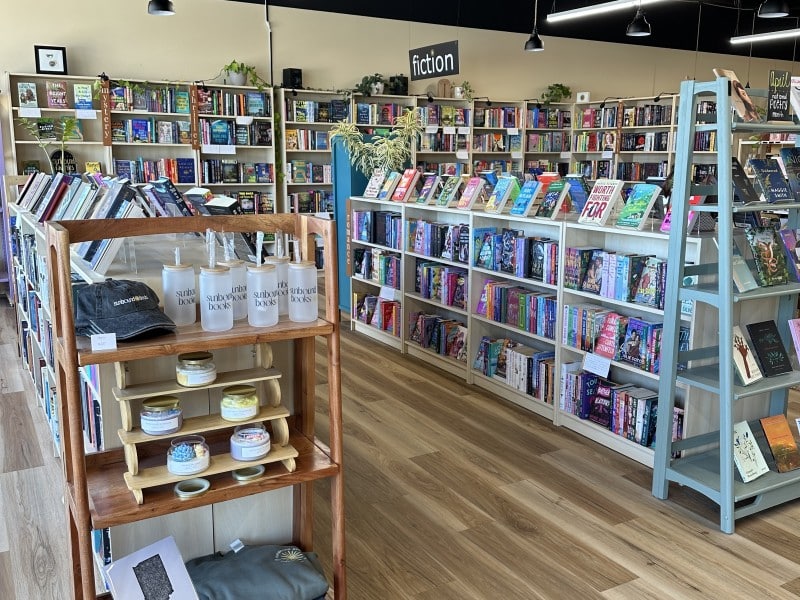
#PlacesofNEI: Spend the day browsing the shelves at Sunbound Books
Sunbound Books is focused on highlighting female authors, stories about women, and children’s books.