How creating space for connections can drive neighborhood development
Fort Wayne’s neighborhood leaders use a shared space to crowdsource solutions and share ideas. These connections lighten the workload and stretch resources.
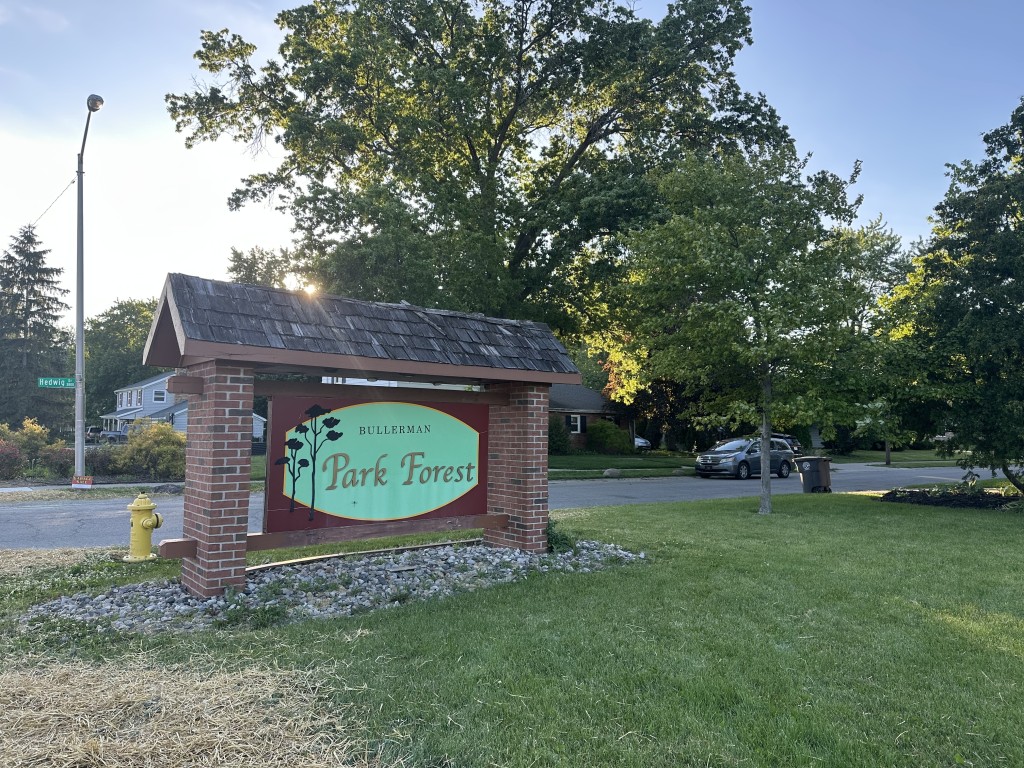
For 25 years, Mary Lou Leonard has been a resident of Bullerman Park Forest, a neighborhood of more than 200 homes located between Stellhorn and Trier Road.
By her account, the neighborhood previously had an active association, offering garage sales twice a year, dumpster days, lawn-edging days, and more. Leonard had even served on the board for a couple of years.
But four or five years ago, it “just kind of dissipated,” although it was not officially dissolved. By her estimate, residents have not paid voluntary dues to the association in the last seven years.
“I remember one year in January, years ago, I asked [the neighborhood president], ‘Are we going to pay dues this year?’ And he said, ‘I’ve got to get those newsletters out,’” she recalls. “Well, he never did.”
Last year, Leonard retired and approached the president of the association to let him know that she and a few other neighbors were interested in serving on the board. When she didn’t hear from him, she and Kelli Simon, who has lived across the street from Leonard for 14 years, found themselves wondering what had happened to the dues they had previously paid if the association was inactive, but still existed on paper.
“That’s what piqued my interest, I’ll be honest,” says Simon. “I’ve paid into it for 10 years.”
Leonard and Simon sought out answers, but were met with closed doors and roadblocks. Of the listed board members for the Bullerman Park Forest Neighborhood Association, they discovered one listed board member was deceased, one was deployed in the military, and another now lives in LaGrange. The current president is still a resident of Bullerman Park Forest, but according to Leonard and Simon, he’s been uncooperative in their attempts to find out information.
This new information left them with more questions than answers. Leonard and Simon note that they’re not blaming anyone or making accusations. They just want a way to move forward. Both say they envision an active association again and intend to serve on the board.
‘Somehow you end up connected.’
What Simon and Leonard have been working on for the past few months is not a one-off problem. In fact, when it comes to questions about neighborhood associations – starting them, reactivating them, maintaining them – finding the right answers is not a matter of Googling it.
“This is the hard thing, because connecting people to information they don’t know is very, very difficult,” explains Holly Muñoz, resource coordinator for Fort Wayne’s Department of Neighborhoods.
Long before she worked for the city, Muñoz had her own experience leading a neighborhood association, including serving as the chairman for the Packard Park Initiative that led to the reopening of the park last year following years of organizing and fundraising for an update. Now, as a resource coordinator, Muñoz fields a lot of questions.
When a resident calls 311, the hotline where residents can ask questions, submit requests or report issues, inquiries related to neighborhoods are sent to her, but as a city employee, there are boundaries to what she can help with. For example, she’s not allowed to give legal advice. Everything from how to host meetings to understanding covenants or bylaws ends up on Muñoz’s desk.
She adds that updates to the Engage Website make it easy to navigate and find answers. The department has also made a conscious effort to maintain a presence online and in the media.
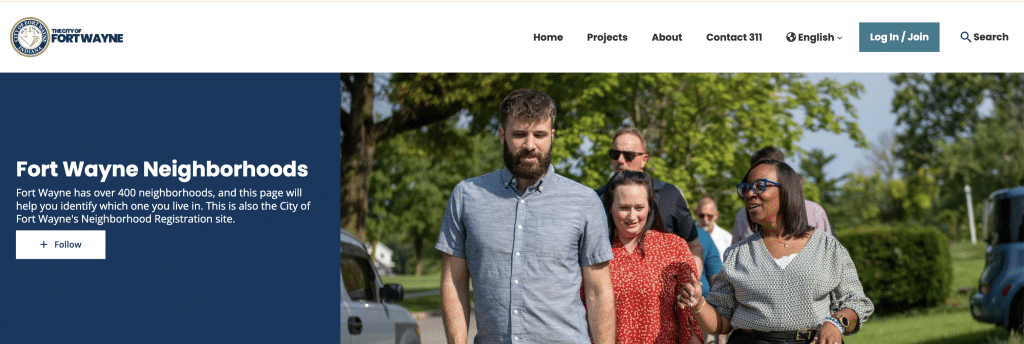
“We’re trying our best to get the word out as many ways as we can,” she explains. “But again, you can’t know what you don’t know.”
In Muñoz’s experience, people who are motivated find their way to the proper information eventually.
“Someone’s going to end up on 311. Someone is going to end up on our engage page,” she says. “Someone is going to ask a neighbor about a thing…and somehow you end up connected.”
That “somehow” came in the form of a letter from the president of a neighborhood adjacent to Leonard and Simon’s. He had been attempting to contact Bullerman Park Forest’s president for months about a collaborative project, but was striking out. The letter was a call to action for residents to nudge their president if they were interested in the project.
Shocked by this and not waiting to miss out on the opportunity, Leonard and Simon continued to search for a way to reactivate their neighborhood association.
They spent months attempting to contact the listed board members to find answers about bylaws, bank accounts, records, and more. With help from one of the board members, the duo was able to obtain the bylaws and other records, which in turn, helped them understand the steps they had to take to take over their association.
And with a connection to a neighborhood president with some experience, Leonard and Simon were, for the first time, able to ask questions and receive advice firsthand. He made some recommendations about how to move forward, including registering the association with the city, which Leonard did. Now, they’re waiting for the process to play out and investigating other issues in the meantime, like how to gain access to an association bank account where only one of the three listed names on the account is still alive.
Each step they take has been the result of months of work, a collaborative effort by the two longtime neighbors, who want to see their neighborhood improve. They share hopes of offering coordinated garage sale days, dumpster days, and an increased sense of community. As Simon explains, she feels there’s been a decline in the care of properties in their neighborhood, and while that cannot be definitively tied to the neighborhood association, they both estimate the downward trend began around the time the association became inactive.
Creating space
The reactivation of Crestwood Colony, a neighborhood of over 900 homes, bordered by I69, North Clinton, and East Washington Center, followed a similar path as the one Bullerman Park Forest is on.
In 2024, a changing economy brought an influx of homeowners to Crestwood Colony. By the current board member’s account, the idea of starting, or rather restarting, an association was brought up. Crestwood Colony used to have an association, but Amber Barnes, now the association’s secretary, says she wasn’t aware of it even after a decade of living in the neighborhood.
“Our association used to be active,” she explains. “There was another association before this one, and there was some controversy with it, and then the president passed away, so it disbanded after that.”
Crestwood Colony’s current vice president, Mike Franio, says before its dissolution, “You’d have like two people show up for a meeting – and they’re related.”
This is how, in 2024, Amber Barnes, Mike Franio and Amber Sherman, who is now Crestwood’s president, met on a porch to talk. They found themselves asking questions like, “What can we do?” and “How do we even go about activating this?”
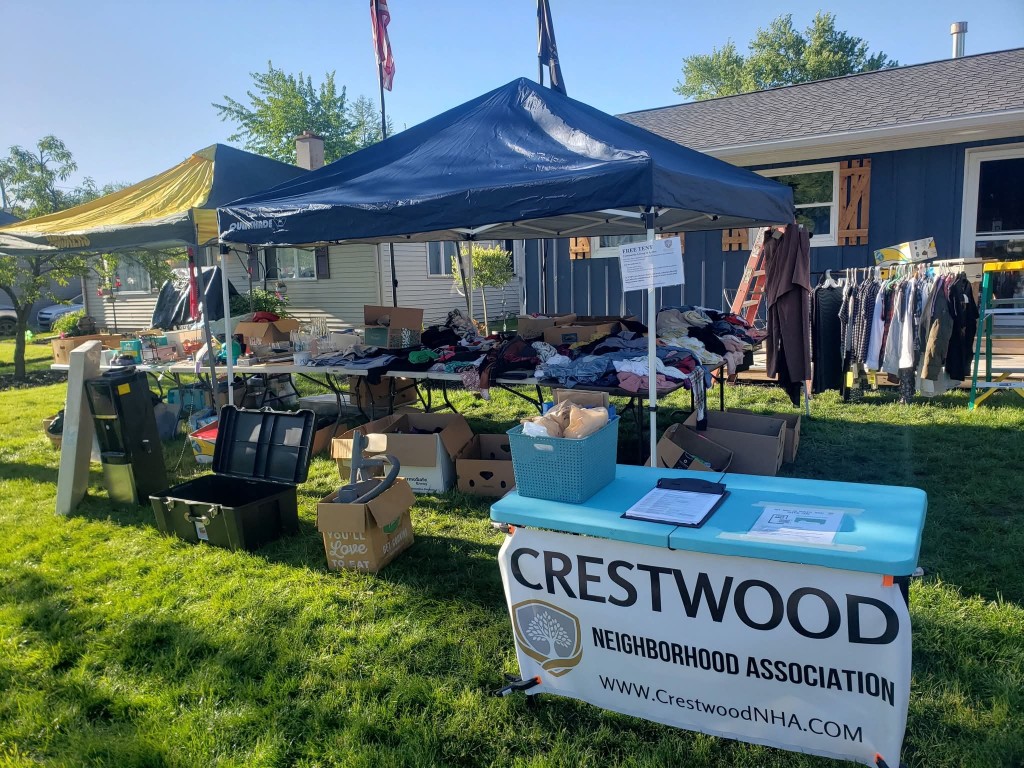
In addition to their own research, the Crestwood Colony Neighborhood Association’s board reached out to the city early on, and Muñoz was assigned as their liaison. With the department’s help and a willingness to try, Crestwood Colony has made leaps and bounds since 2024. What was once distrusted by residents and hardly active has transformed into a trusted resource and successful, growing organization.
As Barnes puts it, the board does its best to listen to its residents to understand how it can best serve them. This has led them to expand the neighborhood, absorbing two adjacent neighborhoods where residents expressed interest in joining. Muñoz says there’s been a lot of this recently, but the conjoining makes sense when you figure Fort Wayne has over 400 neighborhoods and large cities, like Chicago, only have 57.
“If you can be effective for your one block, can we expand that and be more effective for a larger area?” Muñoz explains. “It gives us the ability to connect directly and more one-on-one when we have one group instead of five groups.”
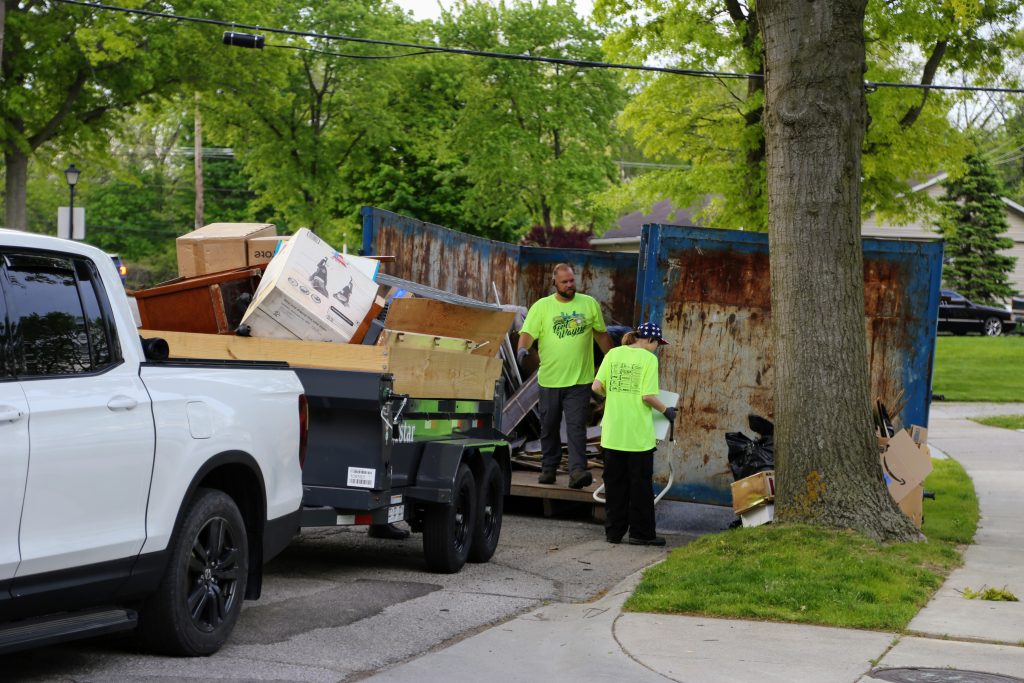
Crestwood Colony has also coordinated dumpster days, garage sale days, and days to help neighbors with yard work. Muñoz points to another item their board has excelled at, saying, “Out of all the neighborhoods, even the longest running, established neighborhoods with consistent leadership do not have that level of events.”
Last year, Crestwood Colony was awarded an engagement grant to host a block party. After a meeting, they were handed their grant packages and told they had ten days to submit their vendor invoices. For a volunteer crew that had never planned an event like this, the timeline seemed daunting.
“We didn’t even know where to throw the party in the neighborhood,” Barnes says. “We didn’t know, like, as far as vendors, or food – we didn’t know anything. In the chaos of trying to figure out who to use or contact even, I reached out to Arlington because I knew that was a very established neighborhood.”
A board member from Arlington was able to point them in the right direction, but the interaction left Barnes thinking, “What if there was a spot where we could all talk and kind of bounce ideas like that off of each other?”
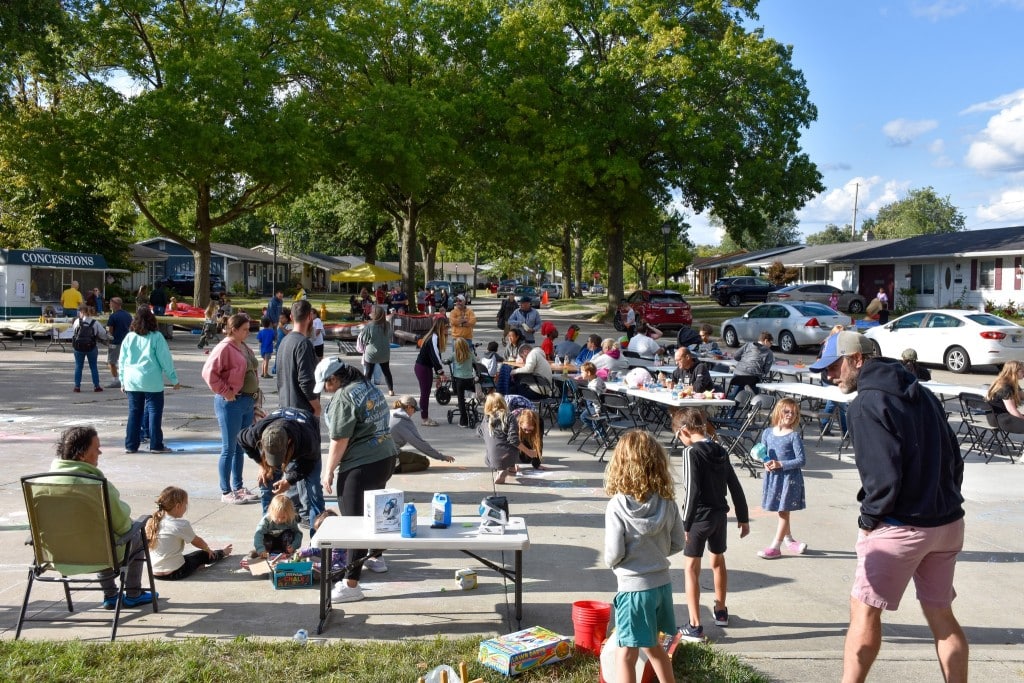
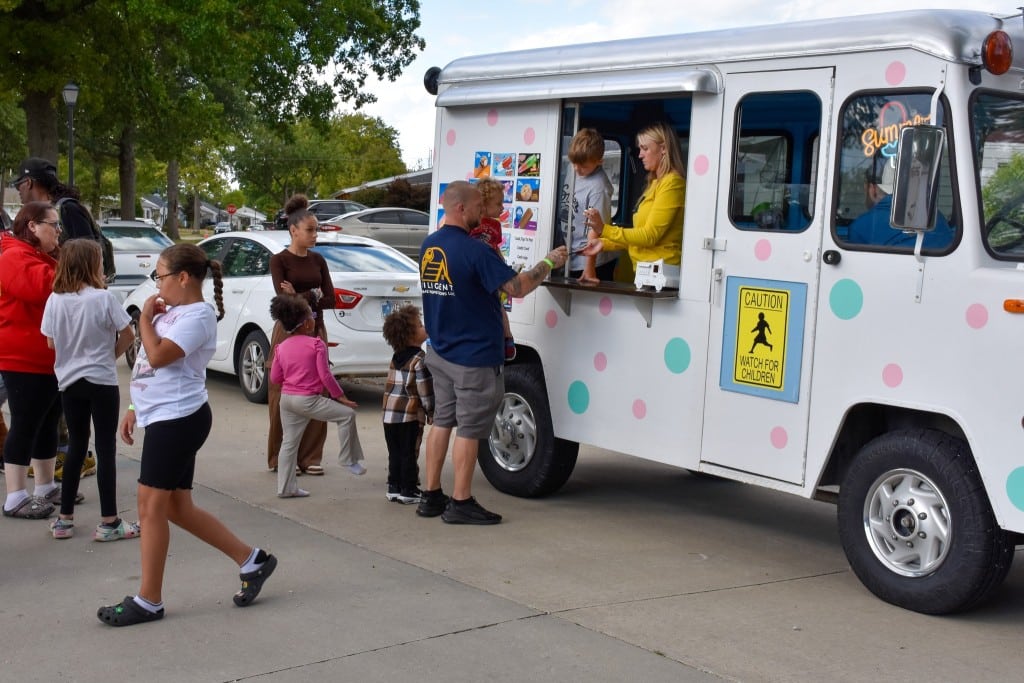
From this, a Facebook group, Neighborhood Association Board Officers – Fort Wayne, was created, giving neighborhood leaders across the city a place to share ideas and ask for guidance.
“It just started this year,” Barnes says of the group, which now has over 80 members representing more than 50 neighborhoods across all four quadrants of the city. “It’s become a place where we ask each other, ‘Hey, what do you do for this?’ or ‘What do you do for that?’”
Sherman, president of Crestwood Colony, says space has been “invaluable” to them and given them ideas like using a Google Voice account to field voicemails and text messages, rather than relying on the personal phone number of a board member.
So far, the group has been successful in providing suggestions for contractors, advice on budget templates, ideas for events, and other recommendations. Barnes even created a flow chart to explain the steps their association took to become a 501(c)(3) – something other neighborhood associations will need to take on to receive grants from the neighborhood department.
While the city’s neighborhood department is not involved in the Facebook group for legal reasons, Muñoz says the ability for leaders to connect this way matters.
“One of the things we talk about in our department is shared stories, shared interests, shared resources, shared tools – all these things matter to neighborhoods who are actually doing the work on the ground themselves.”
She points out that the department can host meetings and workshops, inviting people to learn, but the ability to ask these questions from your home at your convenience is important when you consider that the majority of neighborhood board associations are run by volunteers.
“Volunteers have the time when they have the time,” Muñoz says. “We can host a million meetings and a million workshops and we can invite and educate people, but to be able to, from your couch, say, ‘Hey, what has worked for you?’” she says. “When a neighborhood can just ask another neighborhood, ‘Hey, I saw that you guys got new signs. How did you do that?’ It’s just one more way to put people in the right direction and help them achieve the goals that they have.”
Year of the Neighborhood Reader Survey
Hey! We could really use your help making sure we can continue producing journalism that informs and inspires. Taking a few seconds to answer these questions will ensure we’re on the right track and that our funders understand our impact.
In her work, Muñoz says this sort of collaborative effort and shared space has proven effective, helping neighborhoods achieve goals and preventing burnout.
“When you have the ability to talk to others, you kind of get out of that I’m alone mentality,” she explains.
Collection and collaboration: An effective strategy
Connection is a simple and proven strategy for the Department of Neighborhoods. It can be seen in planning efforts like the Waynedale 2040 Plan, which includes over 20 neighborhoods, and the Historic Northeast 2035 Plan, which includes three neighborhoods, or in programs like the Connected Neighborhood Initiative, which asks neighborhoods to work together to develop ideas and bring resources to their neighborhoods. In order to be awarded money, neighborhoods had to have a minimum of three connected neighborhoods signed on.
As Mayor Sharon Tucker said in a press release announcing the winners of the Connected Neighborhoods initiative, “We’re a stronger and more resilient city when we work together and engage with residents and neighborhoods on meaningful and lasting efforts to enhance the quality of life for everyone as a fun, family-friendly, and safe community.”
Regardless of the project, plan, or the entity behind it, these concepts all share the same belief: pooling resources, ideas, and tools creates a better outcome for everyone. A 2023 study out of Australia found that participatory storytelling in a Facebook group of this sort produced “agentic comprehension and diverse sensemaking of a new challenge, thus gaining a sense of self-efficacy while caring for community building.”
Community Development Researcher Emily Kombe says in a 2023 article that when people can share their own experiences, it creates a positive ripple effect. She writes that in her work, shared stories have led to the ability to establish mutual desires across communities, build trust, and create a sense of hope.
While shared stories can often point people in the right direction, the varying sizes and covenants of the city’s 400-plus neighborhoods also complicate the matter. One neighborhood president might be able to provide a blueprint for how they achieved something, but it is likely the process is not going to be duplicated exactly as is for another neighborhood. Regardless, it provides a starting point, giving neighborhood leaders the chance to start a few steps ahead rather than at zero.
Just like the resources offered by the city, Barnes’ Facebook group only benefits those who know about it.
After creating the group, Barnes emailed an invitation to every neighborhood association listed on the city’s website. At this year’s first quarterly Neighborhood President’s meeting hosted by the city, they gave the group a mention. But the group could be missing a demographic that would benefit the most from it, those who are in the process of making connections and seeking out resources for the first time.
In Bullerman Park Forest, Leonard and Simon could have benefited greatly from the opportunity to speak with more experienced neighborhood leaders about their predicament when they started seeking answers months ago.
Leonard says now that they’re connected, she looks forward to hearing more ideas and getting advice from fellow neighborhood leaders about ways to engage her neighborhoods and better the environment around them, which seems to be a sentiment shared by others across the city.
Muñoz says, by chance, she was assigned as liaison to three neighborhoods that are located next to one another. That opportunity provided, yet another opportunity to see how connecting neighborhoods, whether across the street or across the city, serves everyone.
“I was actually like, this is how it should work because now…I can help work with each other more, utilizing project dollars or funding,” she says. “It’s really again, bringing people together in a connected way, so that we have better outcomes.”
This story was made possible through reader contributions. If you enjoyed this article and want to see more community reporting like this in Input Fort Wayne, please consider supporting us.
Author

Related Articles
Partner Partner Content How the Fort Wayne Urban League and Alliance Health Centers are closing gaps in access to healthcare
The new clinic offers prenatal and postnatal care, behavioral health services, developmental support, and pediatric therapies in one accessible location at the Fort Wayne Urban League.
FORT-ify Accelerator strengthens community in the digital age
The FORT-ify Neighborhood Accelerator empowers local associations with connections to funding, resources, and face-to-face engagement opportunities to build stronger communities.
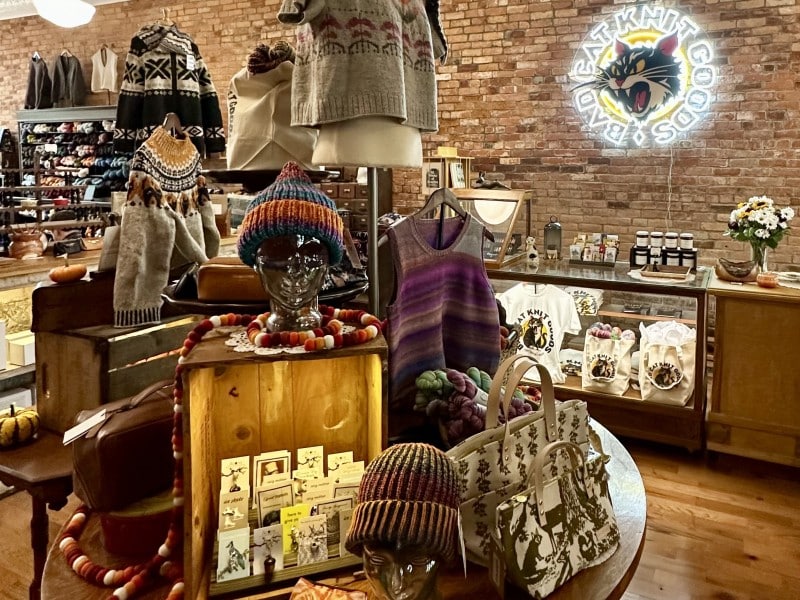
#PlacesofNEI: Bad Cat Knit Goods on Broadway
Check out Bad Cat Knit Goods, a fiber arts store, located at 1309 Broadway, Fort Wayne, Indiana 46802.