Slow down and savor: Snail Café opens in West Central
Snail Café offers a variety of drinks and freshly-baked pastries in its West Central location.
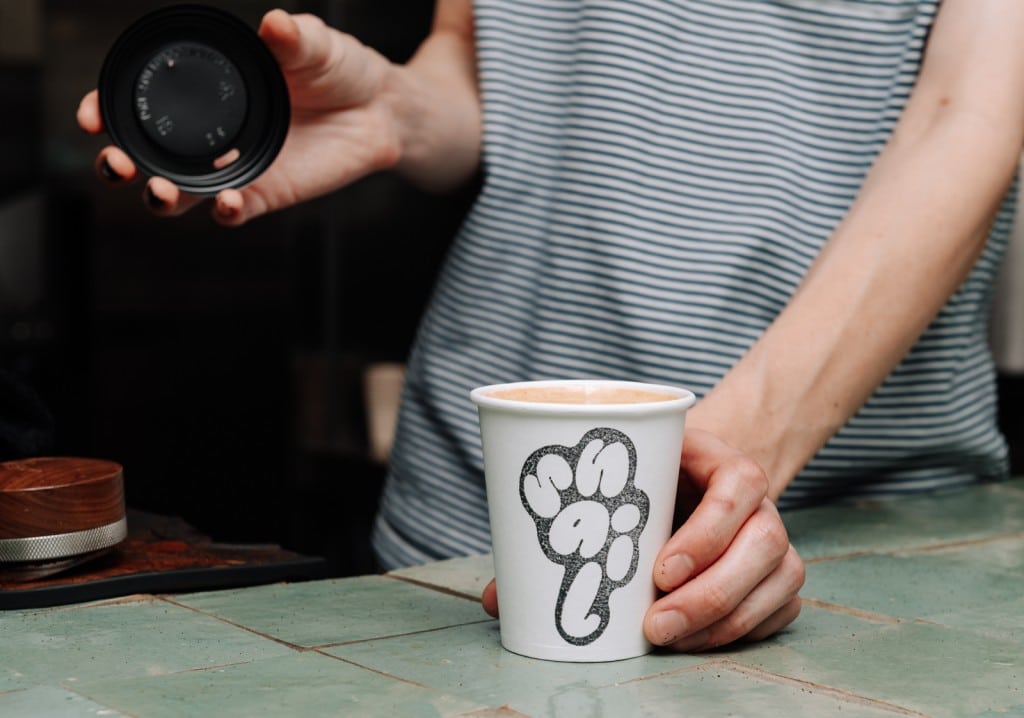
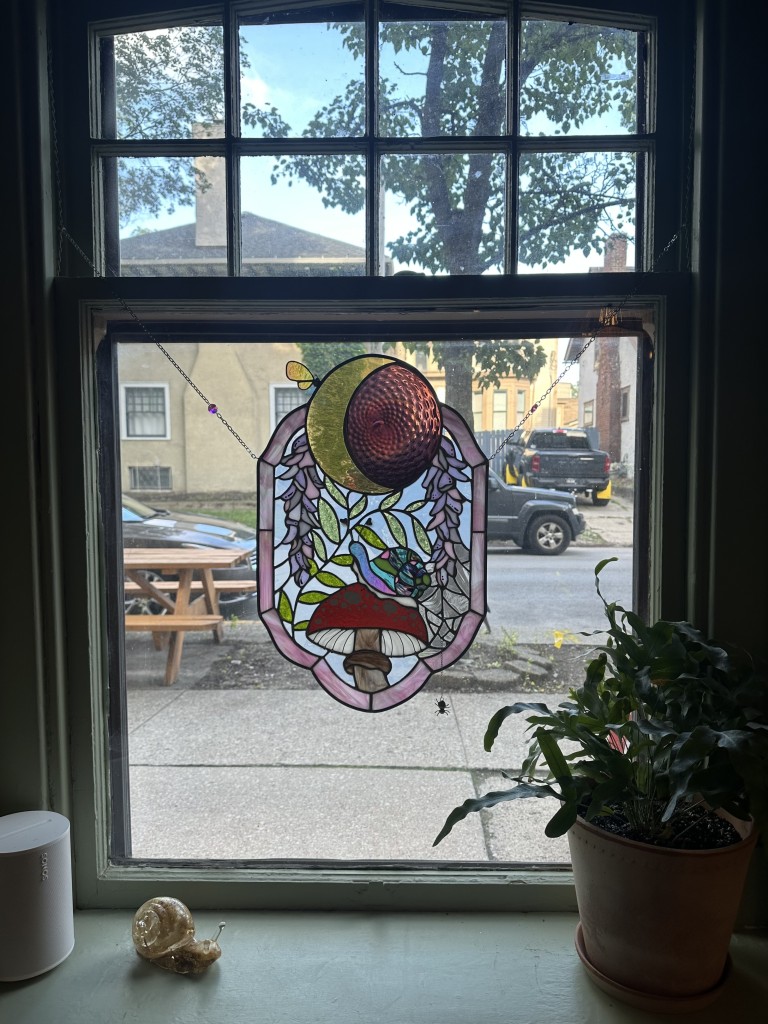
Snail might seem like an unusual name choice for a coffee shop, but for Emily Falk and Joshua Heckelsmiller, the name just makes sense. Snails are a recurring motif in the couple’s life, from their matching snail tattoos to the large snail sculptures found at some of their favorite spots.
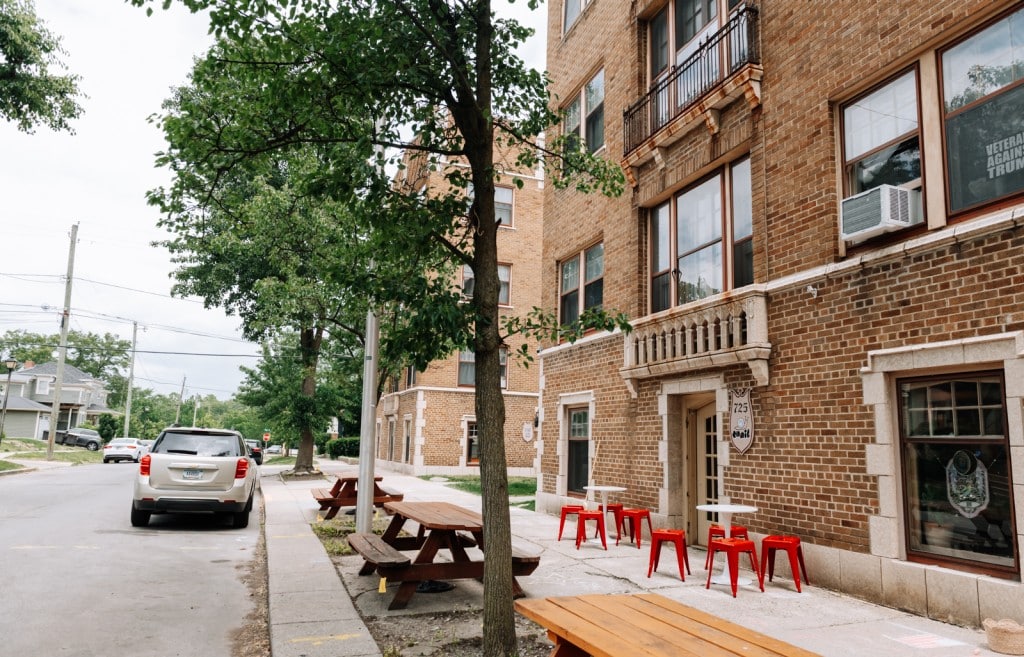
Earlier this year, they opened Snail, a café and coffee shop nestled on a tree-lined street in West Central, home to the former Brooklyn Pints Creamery.
The origin story, or “snorigin” as the co-owners joke, began years ago when they met at the coffee shop where Heckelsmiller worked. Heckelsmiller, whose five years in the coffee industry include stints at local joints such as Conjure and Penny Drip, bonded with Falk over a shared curiosity about coffee. The two began dating, and soon after, started talking about opening a coffee shop of their own.
“It felt so far-fetched in the beginning,” Falk says.
One evening, while dining at Rune, Falk and Heckelsmiller began throwing around potential names for the café. Falk recalls asking, “What if we called it Snail?”
The name stuck.
A snail is also used as the logo for Slow Food, an intentional food movement founded in Italy in the 1980s and popularized in the US by chefs like Alice Waters. Slow Food prioritizes quality ingredients, ethical production methods, and intentional consumption. It’s an ethos that resonates with Falk and Hecklesmiller.
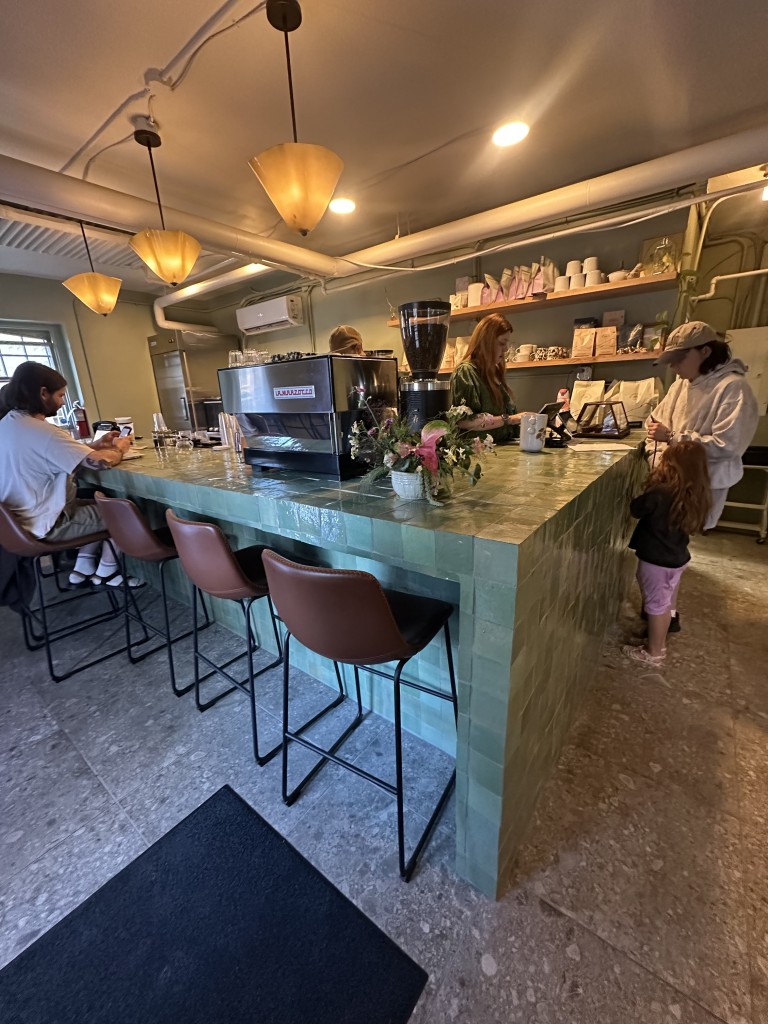
Attention to detail and intentional choices began with the physical space, where Falk, who previously worked in high-end residential design in Phoenix and Los Angeles, leveraged her expertise to create a warm, inviting, and organic feel for the café. She knew the space should “have a tranquility to it.”
Falk chose hand-painted Moroccan zellige tiles for the bar area, and found light fixtures with natural shapes and fibers to add to the café’s organic feel. “I love the imperfections and individual variations in the tile,” she says.
That focus on quality is especially evident with the Snail’s coffee offerings.
Snail sources from Wonderstate Coffee, a Wisconsin-based operation whose roastery is 100% solar-powered. Wonderstate also has a Fort Wayne connection: its director of coffee previously held the same position at Utopian. Heckelsmiller notes that it’s a “high-quality product with intention behind it.”
Coffee beans are nuanced, just like wine: the growing conditions, location, and flavors all matter and contribute to the experience. Discussing these qualities provides another way for Heckelsmiller to connect with guests.
“I light up when people are curious about coffee,” he says.
Espresso drinks are made with the café’s 2012 La Marzocco machine, which was purchased from McClish Service Company. It’s a manual machine, which takes a little more skill than an automatic machine, and creates a tactile experience for employees.
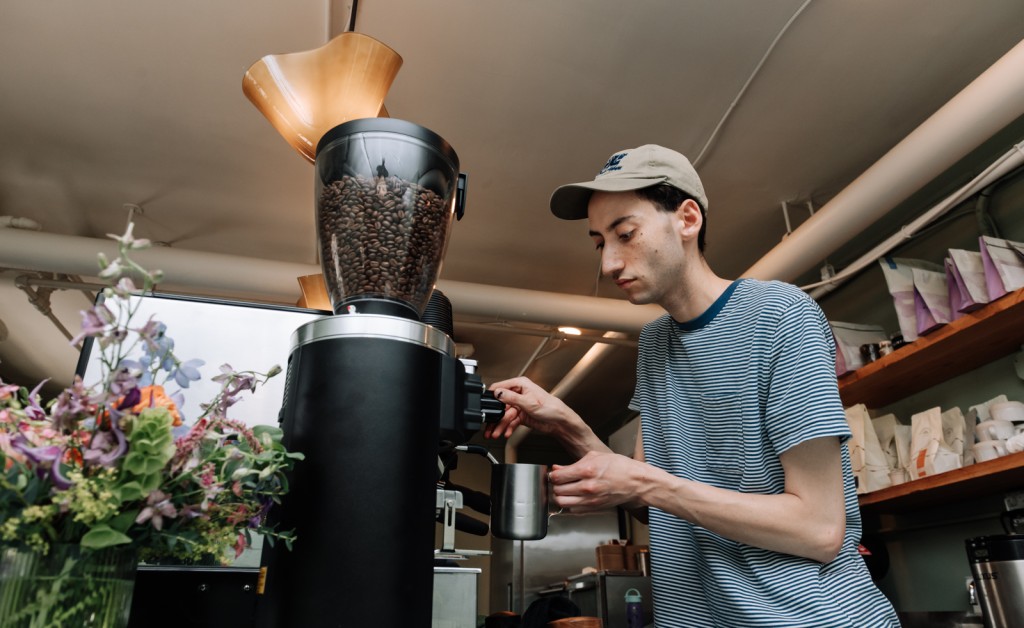
“There’s something very fun about that process…It’s a meditation of sorts,” Heckelsmiller explains.
Snail also offers pour-over coffee, showcasing the more subtle notes of single-origin beans. Pour over is a slower process, creating a personal cup of coffee. Snail is “very intentional and careful to get that really perfect cup of coffee… People are into that,” Heckelsmiller says.
“This changes what I thought coffee could taste like,” he says.
For non-coffee drinkers, Snail provides tea sourced from Spirit Tea out of Chicago, which produces farm-direct loose-leaf tea. Options go beyond the usual flavors, including a Formosa Green Snail blend, with notes of honeydew, as well as herbal blends, which Falk describes as “funky, really interesting, and out of the norm.”
The café also makes a variety of homemade syrups in flavors like cardamom vanilla, pistachio rose, and miso caramel, which complement the coffee and tea drinks.
“I love to encourage people to take something they like and introduce something new and different… maybe after enjoying cardamom vanilla syrup, a customer will venture out and try our cardamom buns,” Falk says.
The pastries, baked in-house by Emily Ross, vary throughout the week. Ross, a self-taught local baker, built up a “solid reputation” in Fort Wayne, according to Falk, who had followed her on social media and “loved what she was doing.” So far, Ross has made baked goods like canelés, almond croissants, cardamom buns, and cookies, which have sold out quickly. Ross has “a lot of creative freedom to try new things,” Falk says, including a recent ham and cheese croissant concoction, topped with a cornichon.
Running a business entails all kinds of challenges, even when it’s as intentionally crafted as Snail. “It’s hard and very demanding… But we had such a clear vision in mind. We really believed in what we were building,” Falk says.
Tapping into the support system of the local hospitality industry has buoyed Snail, especially during the long and arduous process of renovating the café’s space and getting necessary permits. When dealing with an issue regarding Board of Health approval, Falk and Heckelsmiller received help from the owners of The Packard Taphouse and then worked with the city to find a feasible solution.
The neighborhood was an important part of Falk and Heckelsmiller’s vision. Since its inception, Snail’s owners wanted the café to be a place that would benefit West Central.
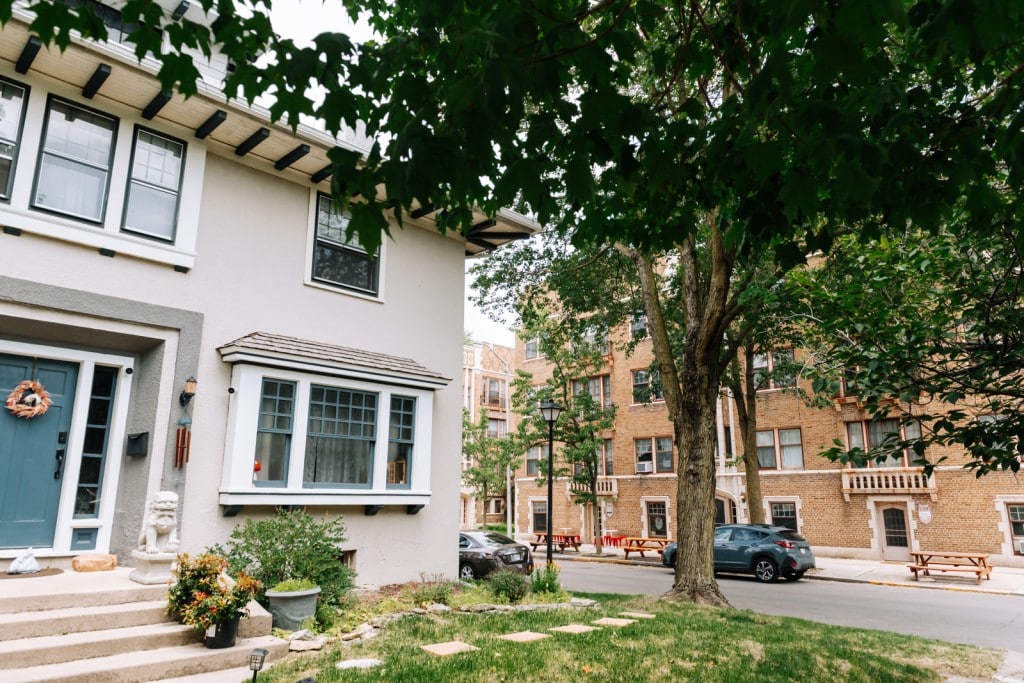
While opening a new business is always daunting, Falk and Heckelsmiller have been pleasantly surprised by the community support. They already have regulars and have seen organic social media support.
“You never know how it’s going to turn out,” Heckelsmiller says. “But people have consistently shown up, day after day.”
Snail’s owners share that eventually they hope to add wine to their café as well, among other dreams for the future.
“We have a lot of exciting things in the works,” Falk says. “We’re really trying to take things slow and make sure we’re doing it the best way we can.”
Snail is located at 725 Union St, Fort Wayne, IN, and is open Monday through Friday from 7 a.m. until 3 p.m. and Saturday and Sunday from 8 a.m. until 3 p.m.
Author

Related Articles
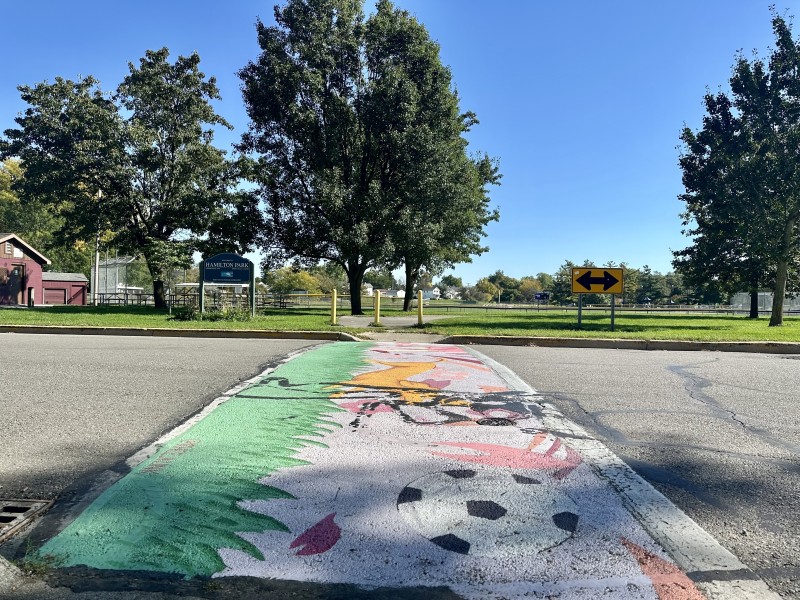
FORT-ify Accelerator strengthens community in the digital age
The FORT-ify Neighborhood Accelerator empowers local associations with connections to funding, resources, and face-to-face engagement opportunities to build stronger communities.
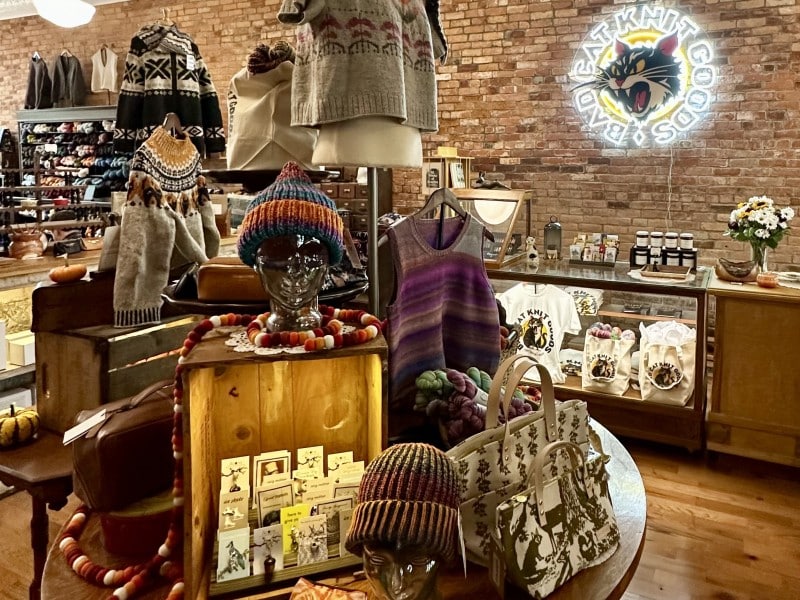
#PlacesofNEI: Bad Cat Knit Goods on Broadway
Check out Bad Cat Knit Goods, a fiber arts store, located at 1309 Broadway, Fort Wayne, Indiana 46802.

More than miles: How Fort Wayne run clubs are building community
Across Fort Wayne, run clubs are gaining momentum. By prioritizing social connection over competition, these groups are building community one mile at a time.