Fort Wayne bets big on the future of its music economy
The formation of the Fort Wayne Music Office is the culmination of research, dialogue, and practicality.
Fort Wayne has launched its own Music Office, and city leaders believe it could reshape its self-perception and elevate its stature on the national stage.
According to Jessa Campbell, Visit Fort Wayne’s director of destination development and communications, the new office is the first of its kind in Indiana. The Fort Wayne Music Board — also a new development — pulls together an unusual mix of private and public partners, including Arts United of Greater Fort Wayne, City of Fort Wayne, Embassy Theatre, Greater Fort Wayne Inc., Surack Enterprises, Sweetwater, and Visit Fort Wayne. In other cities, it’s more common to house a music board inside a local government institution or have it under the purview of a nonprofit.
The Music Office’s efforts will target priorities ranging from concert accessibility to student talent retention. Its mere creation sends a clear message: music is no longer a side note in Fort Wayne’s story. It’s a strategy that will guide the city as it evolves.
The strategy came out of a year-long partnership with consulting firm Sound Diplomacy. The firm surveyed residents, musicians, and music organizations, then weighed Fort Wayne against other destinations. The result was a set of 17 actionable recommendations. Seating a dedicated music office sat near the top of that list.
Campbell and her team knew a plan alone wouldn’t be enough. They had watched other cities let strategies gather dust.
“With other communities, partly because of the pandemic, they created a strategy, and it just sat vacant on the shelf, not really being activated or used,” she says. “We knew we didn’t want to do that. We knew when we launched it, we had to have some early successes, but also a place for people to go to and connect with the strategy.”
Campbell says most music offices live inside the city government. Fort Wayne went a different direction, somewhat to the surprise of experts. According to Campbell, the public-private dynamic broke the mold.
“That is not the norm. It kind of confounded Sound Diplomacy a little bit,” she says. “We’re definitely one of the first of their clients who have struck this opportunity, having public and private support.”
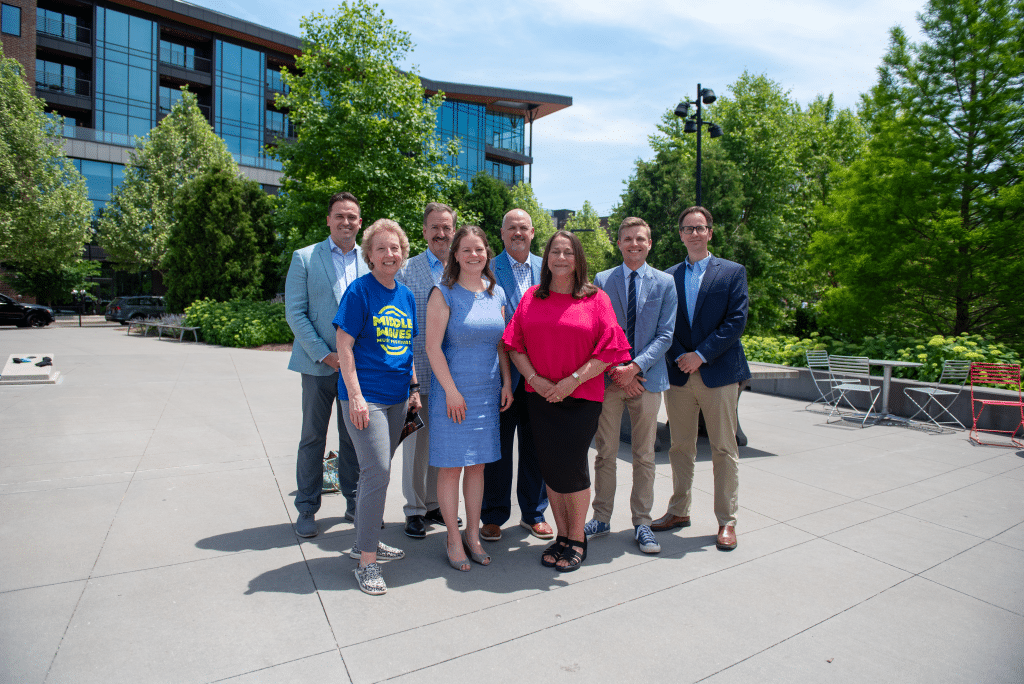
Part of that came from practicality. With funding constraints tied to Senate Bill 1, housing the office inside city government wasn’t the strongest option, so the partners explored other possible homes for it. As the conversations widened, people kept showing up.
“It was really impactful to see everyone see the value in music and wanting to be a part of that,” Campbell says. “Everyone really came around the table.”
The seven board member entities have committed to supporting the office for three years. That initial period will give leaders time to test what works and figure out the office’s long-term future. This includes the hiring of an executive director.
“This balance helps bring everybody to the table,” she says. “It has the business mindset, but also the public mindset — arts as well as economic development. It just felt like the perfect place to be able to bridge some of those gaps.”
The timing wasn’t an accident. The Music Office grew out of years of research, conversations, and a community that kept asking for exactly this.
“Music was identified as a priority with Greater Fort Wayne Inc.’s Economic Development Action Plan, and that was already on our radar that we would lead that,” says Campbell.
Around the same time, Visit Fort Wayne realized it needed a 10-year Tourism Master Plan. So stakeholders paused the music work and let the bigger plan take shape. During the process of drafting the master plan, music surfaced again as something the community wanted to prioritize and grow.
The strategy zeroes in on challenges and opportunities. For one, Fort Wayne has plenty of professional artists and up-and-comers in the scene. What it lacks, Campbell says, is the connective tissue in between. She offers specific examples: the managers, the artist relations people, and production support that other cities take for granted.
There’s also a student pipeline to court. Local colleges produce talented music and music technology program graduates every year, and the office wants to keep that talent in town. Since 2007, Sweetwater has provided material support to students and faculty, and helped create a four-year degree program in Music Technology at the University of Saint Francis. In 2024, Purdue Fort Wayne and the Surack Family Foundation announced plans for a $25 million, 26,000-square-foot facility located on the college campus, known as the Sweetwater Music Industry Building.
As these institutions churn out more talent, the question Campbell and her peers are asking might have a multi-layered solution: How do we keep them here and support that next step, the growth to employment?
That’s why partners like Sweetwater, Surack Enterprises, the City of Fort Wayne, and Greater Fort Wayne matter so much. Marketing a destination is Visit Fort Wayne’s wheelhouse. Building music businesses is not.
“It’s not an expertise that Visit Fort Wayne has,” she says. “We need their expertise to help guide those conversations on how we can better support the growth of our economy.”
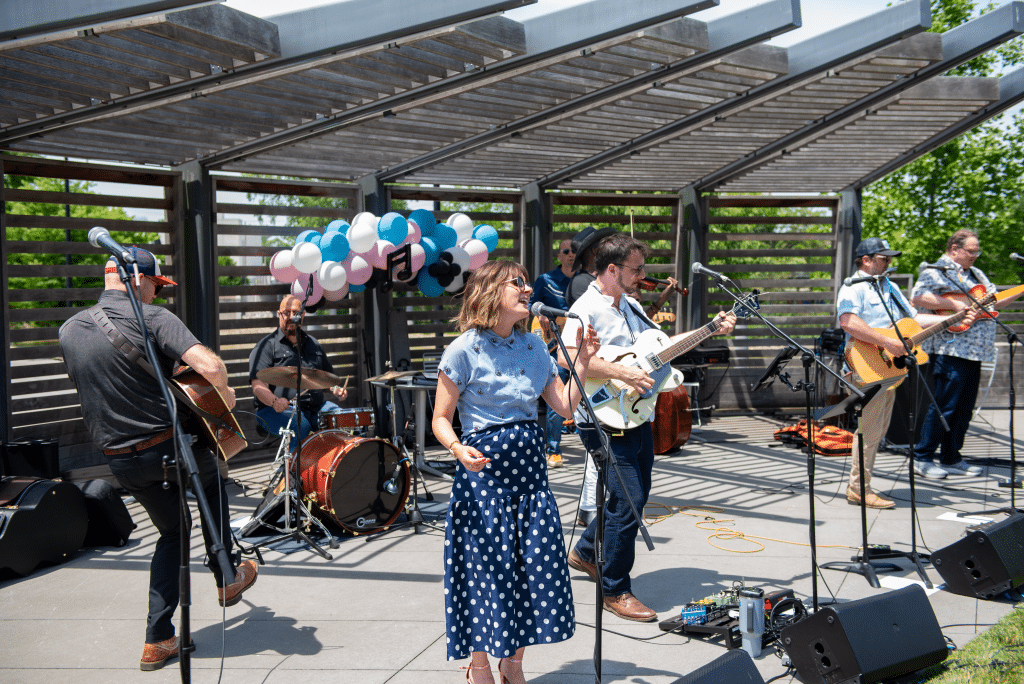
According to Campbell, it’s important to the board that the economy works for everyone. Accessibility runs through the entire 10-year plan, and the Music Office is no exception.
“Music is for everybody, and there’s a sound for everyone,” she says.
That means thinking carefully about the concert experience. Someone who needs an interpreter, for instance, shouldn’t be forced into one section just to use that service.
“Maybe there’s an opportunity to highlight how picture-in-picture or screen-in-screen, where an interpreter is seen on a screen, can help support all abilities enjoying a concert,” Campbell says. “It’s very important to our community to keep that as a part of every strategy that we have.”
The vision spans the full range of Fort Wayne’s music life, too. The Fort Wayne Philharmonic, Embassy Theatre, and testing gear at Sweetwater offer inroads to experiencing arts and culture.
“It’s the production, it’s the creation of it, it’s the support of it,” she says. “It runs the whole creative economy.”
The community response so far? Loud applause.
“It’s just always been positive—people are excited to see that we’re doing something, that we’re trying to make movement,” Campbell says.
There will be mistakes along the way, and Campbell knows it. Building something new always means a little trial and error. But the momentum is real, and the optimism feels tangible.
“It’s really early to tell what it will look like,” she says. “But people are really positive to see and hear that something is happening.”
For a city ready to claim its own sound, that something has finally arrived.
Author

Related Articles
So Brunch Babe: “The Myth of Authenticity”
In this self-titled column, Thomas Beckman — known online as @SoBrunchBabe – explores the intimacy of modern adulthood through social commentary, cultural reflection, and personal narrative.
FORT-ify Accelerator strengthens community in the digital age
The FORT-ify Neighborhood Accelerator empowers local associations with connections to funding, resources, and face-to-face engagement opportunities to build stronger communities.
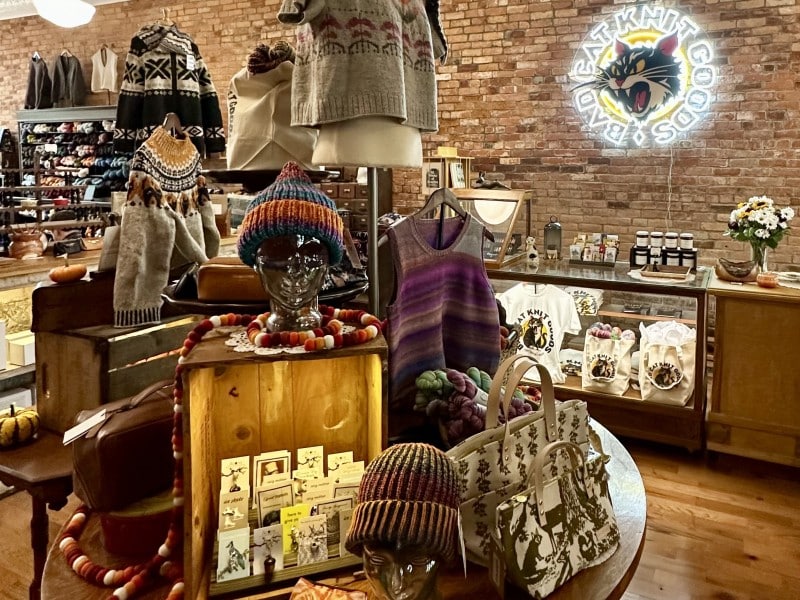
#PlacesofNEI: Bad Cat Knit Goods on Broadway
Check out Bad Cat Knit Goods, a fiber arts store, located at 1309 Broadway, Fort Wayne, Indiana 46802.