How an Indiana organization is defending voting rights through education and advocacy
Count US IN offers tools to increase voter turnout and political participation, especially in minorities and marginalized communities.
In a time when election experts are concerned about voter suppression and scare tactics at the polls, Fort Wayne-based Count US IN is proving to the community that every voice matters.
Count US IN operates as the first and only Black and disability-led nonpartisan nonprofit in the state, two distinctions that speak to the intersectional nature of today’s most pressing issues. The organization is the brainchild of Fort Wayne resident and lawyer Jalyn Radziminski-Hooks, who now serves as its executive director and lead policy director.
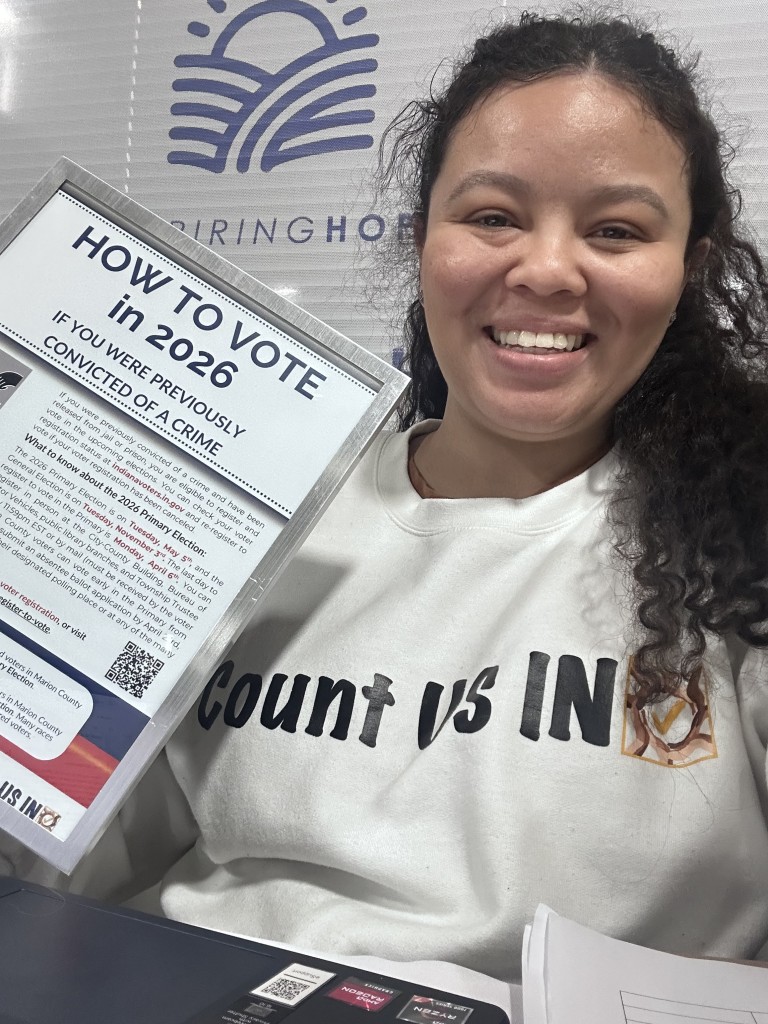
Under their leadership, the organization has grown significantly over the past five years, moving from a completely volunteer-led, grassroots effort to one with a full-time staff. This move has allowed the organization to broaden its reach and deepen its impact in populations often overlooked by more mainstream civic efforts.
One group that’s often left out of the conversation is those impacted by the carceral system. Count US IN is trying to change that through its Decarcerate Democracy curriculum and related events, which empower justice-impacted individuals to know their rights and how to exercise them. Per Radziminski-Hooks, the curriculum is designed for and developed by people with lived experience in the justice system.
The curriculum is delivered directly to participants, often meeting justice-impacted people where they are. Think transitional housing, community organizations, or even reentry support groups.
“The program is really formed around those communities,” says Radziminski-Hooks, stressing the importance of peer-to-peer learning and lived experience.
Speaking of experiences, Radziminski-Hooks says this population faces unique and often misunderstood challenges. For example, many people wrongly assume that any interaction with the carceral system permanently strips away their voting rights. Count US IN works to correct false narratives like this.
“If you’re in pretrial, you still have the right to vote,” they say. “There’s misinformation, or just lack of information, we’re constantly combating through Decarcerate Democracy.”
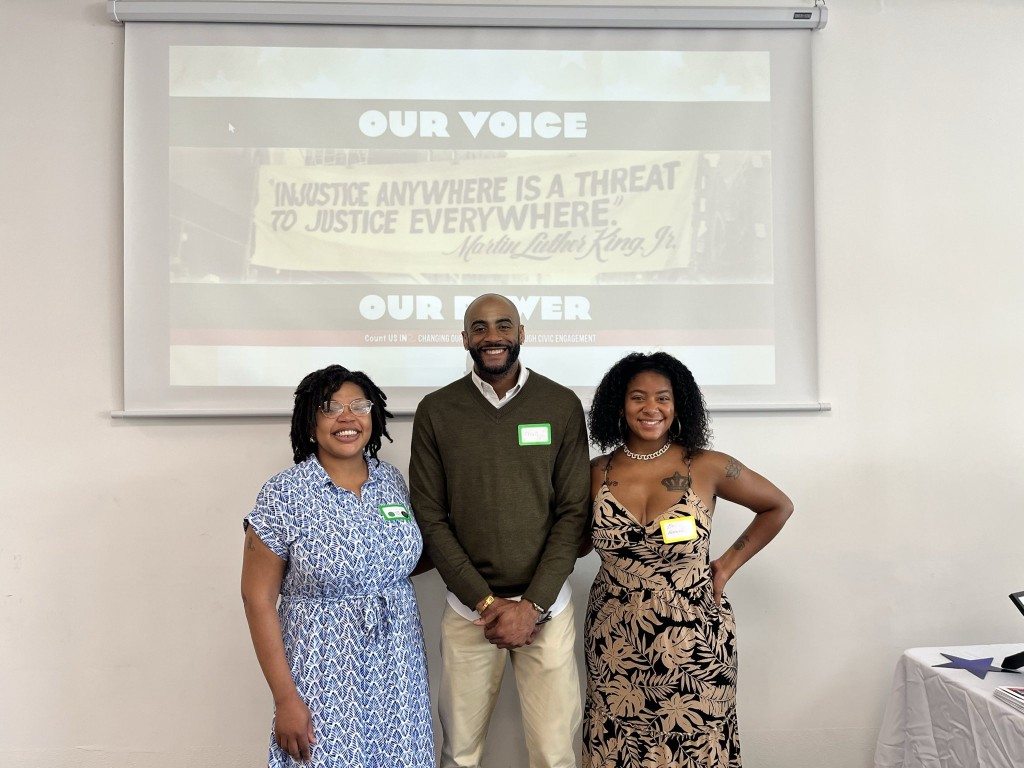
According to their research, nearly 70% of people in Indiana’s carceral system are currently in pretrial. About 1,000 people are released from the Indiana Department of Corrections each month. Many are eligible to vote but don’t know it, a gap that Count US IN is determined to close.
Along with reaching and educating this target population, Radziminski-Hooks says it’s important that Decarcerate Democracy also encourages broader community discussions. The goal is to provide a way for people to envision the impact of increased civic engagement in their neighborhoods.
In their experience, marrying these personal stories with hard numbers gives advocacy a greater dimension.
“Without data, sometimes people ignore the narratives,” they say.
Speaking of data, Count US IN gathers facts, conducts surveys, and facilitates community conversations to demonstrate that justice-impacted citizens form a large, powerful voting block with clear priorities. Its dedicated fellowship program, which pairs training with hands-on research, helps gather these insights and turn them into actionable advocacy. The most recent cohort was composed entirely of individuals directly impacted by incarceration.
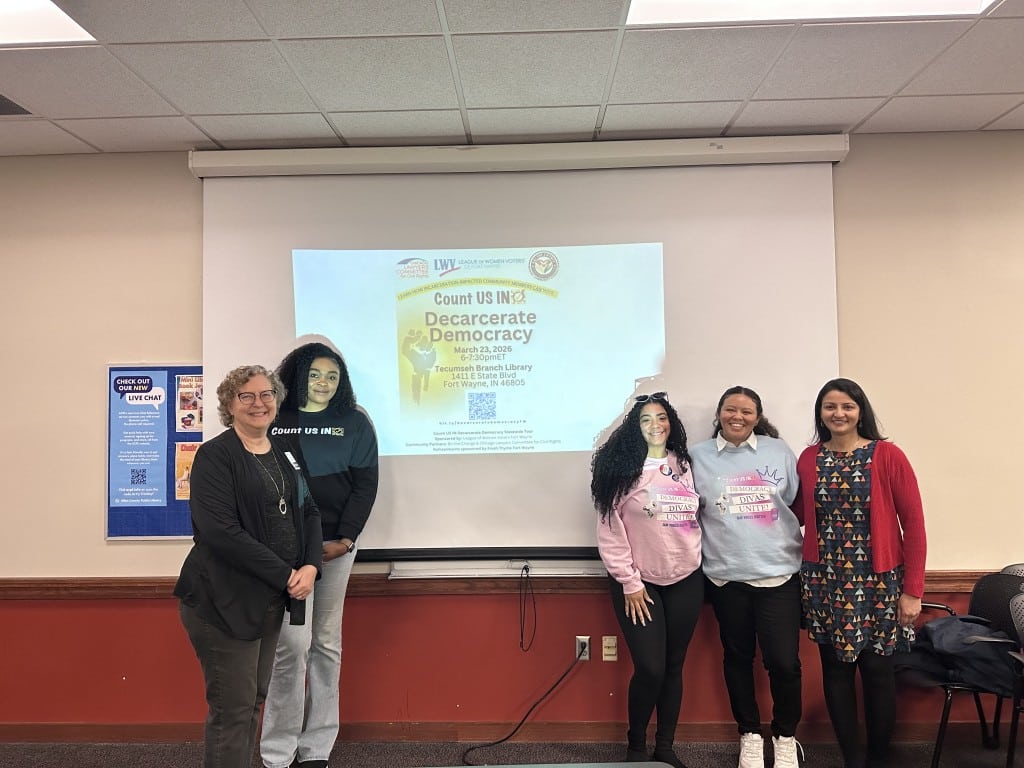
Fellows learn about civic engagement while participating in peer education, leading workshops, and contributing to the ongoing advocacy work.
“We want people who have been directly impacted to be leaders in their communities, because oftentimes that community is closest to the solutions and has lived experience. It’s really powerful,” Radziminski-Hooks says.
Sometimes solutions are brought to the fore from or by the people and groups most affected. According to Radziminski-Hooks, the 2025 Racial Justice and Accessibility (RJA) fellowship cohort collected data spanning 17 different Indiana counties and produced a report that now informs much of Count US IN’s strategy.
Count US IN’s advocacy work also shows up in its Election Defenders initiative. Election Defenders inform people of their rights and are an in-person connection to the Election Protection Hotline. Being an Election Defender means being a witness to voting, offering emotional support, helping people feel safe, connecting people to resources, and supporting voting accessibility. In March 2026 alone, Defenders registered 200 voters and verified nearly 500, according to a March Instagram post.
Radziminski-Hooks describes these volunteers as “cheerleaders at the polls” who help people feel joyful and confident while voting. Defenders assist both brand-new voters and returning voters. The latter must re-register after time spent incarcerated, as their names are typically removed from voter rolls. The presence of Defenders who themselves may share this lived experience helps break down stigma and encourage participation.
“People who are coming out want to get civically engaged, and they’re excited when they discover they have that right,” says Radziminski-Hooks.
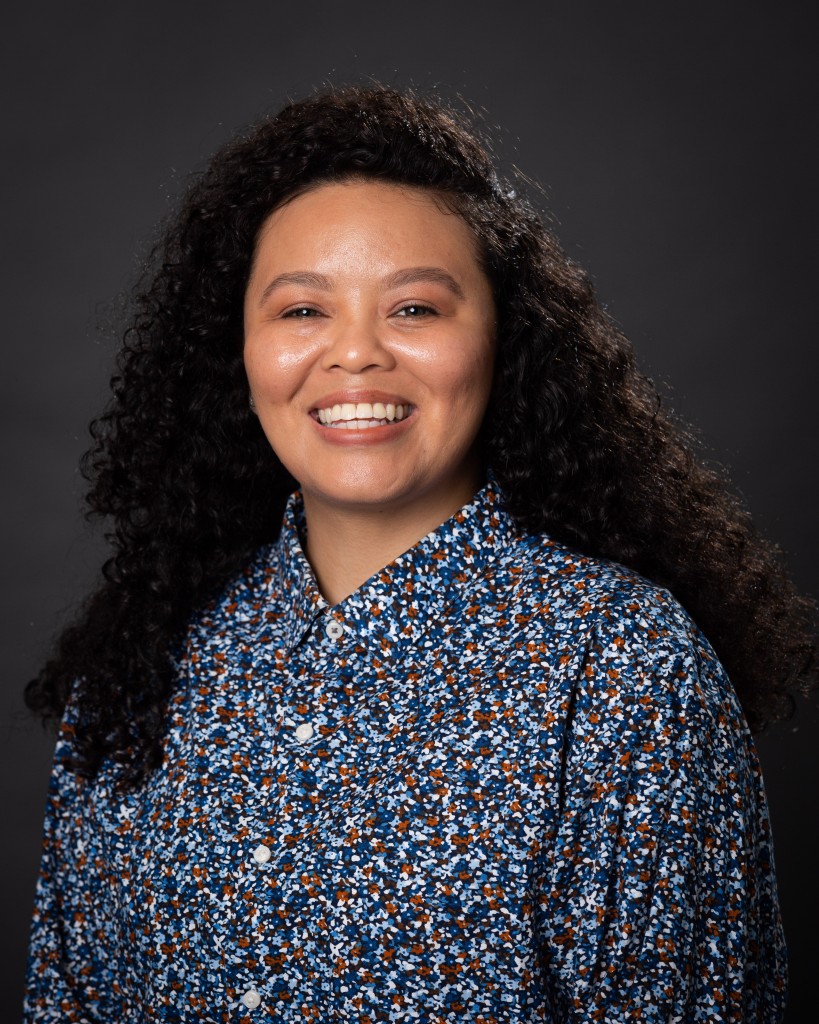
Volunteers complete specialized learning tracks before working at the polls. This education sets them up for success in helping people navigate confusing rules regarding state IDs, residency, and provisional ballots. Because many Defenders also come from justice-impacted backgrounds, voters often feel more comfortable asking them for help.
In Radziminski-Hooks’ words, “A lot of times these are…returning voters. They could have been adamant about voting before, but maybe [they] got caught up in something…and.. were incarcerated. Now they’re back, so making sure they’re re-registered — that’s vital for our community.”
Looking ahead, Count US IN isn’t slowing down. The organization recently started an Election Defender tour in Monroe County, and it’s prioritizing communities with high numbers of justice-impacted and disabled residents. Radziminski-Hooks invites the public to join monthly calls to align people and groups and strategize between election cycles. For anyone seeking a nonpartisan “political home,” they welcome people into the movement year-round.
In their words, “That’s how you gain power in organizing.”
Note: The next Election Defenders in-person training is scheduled for April 28 at 6 pm at the Allen County Public Library. Find additional details and register here.
Author

Related Articles
Help shape future coverage – join our upcoming listening session
Join Input Fort Wayne at Tall Rabbit for coffee, conversation, and a chance to share the issues, people, and neighborhood stories you think deserve more attention.
Myaamia Heritage Foundation is hosting the first Myaamia Cultural Fest in Fort Wayne
The event will celebrate the culture, history, language, foodways, arts, and ongoing revitalization of the Miami Tribe of Oklahoma — whose homelands include Fort Wayne and northeast Indiana.
Erin’s House for Grieving Children: Supporting families through loss
Erin’s House provides free grief support for Fort Wayne youth. Events like their BMW giveaway and 5K run fund these life-changing services.