‘Out of reach’: Inside Indiana’s Affordability Crisis
Strategic advocacy and targeted action are creating tangible solutions to help working families.
For thousands of Hoosiers, the dream of affordable housing feels increasingly out of reach. A widening gap between stagnant wages and rising housing costs has created a statewide affordability crisis. As a result, families must make impossible choices between rent and other basic needs.
Unsatisfied with the status quo, some community leaders and organizations have stepped up. Prosperity Indiana, a statewide membership association for community economic development, champions policy changes at the highest level.
The need for action is clear, as the data paints a stark picture of material conditions for Hoosiers. According to Prosperity Indiana’s Senior Director of Policy and Strategy, Andrew Bradley, the state is facing a severe housing affordability challenge that affects hundreds of thousands of residents.
“Our members are telling us that Indiana has an affordability crisis,” Bradley says.
For context, Bradley points to the National Low Income Housing Coalition’s “Out of Reach” report, which found that a Hoosier must earn $22.18 an hour to afford a modest two-bedroom rental. Meanwhile, the average renter’s wage is just $18.05 an hour.
The effects of this gap are felt acutely in places like Allen County, per the report’s data. In 2023, the housing wage needed for a two-bedroom home was $17.52 an hour. By 2025, that figure jumped to $23.06.
“That is an increase over two years of $5.54 an hour,” Bradley explains. “However, the average renter wage in Allen County… has gone up 30 cents.”
This disparity leaves the average renter household nearly $11,000 short annually, forcing them to make difficult trade-offs between housing, healthcare, food, and transportation.
The crisis impacts more than just renters. Community-based organizations are also feeling the strain. Bradley notes that budget and policy changes have forced many nonprofits to eliminate programs, reduce staff, and limit the number of clients they can serve, even as community needs grow.
Recognizing that siloed efforts can only go so far, Prosperity Indiana is pushing for a coordinated, high-level response via its 2026 policy agenda. For example, Prosperity Indiana’s policy leaders are calling for the creation of a Governor’s Commission on Housing. Bradley says the goal is to bring together state agencies, courts, and community stakeholders to align resources and develop comprehensive recommendations.
“Housing is an unaddressed crisis in Indiana, and it deserves and needs a commission in order to align available resources, bring together the stakeholders who are closest to the issue, and maximize those resources,” he says.
The proposal is modeled after a successful effort that improved the status of children in the state. Bradley contends that creating this commission through an executive order would be a powerful, immediate step that doesn’t require new funding.
While statewide policy is crucial, local innovation is where change often takes root. In Fort Wayne, the a LOT to LOVE program is a prime example of a creative, community-focused response to the housing shortage, transforming vacant lots into homes.
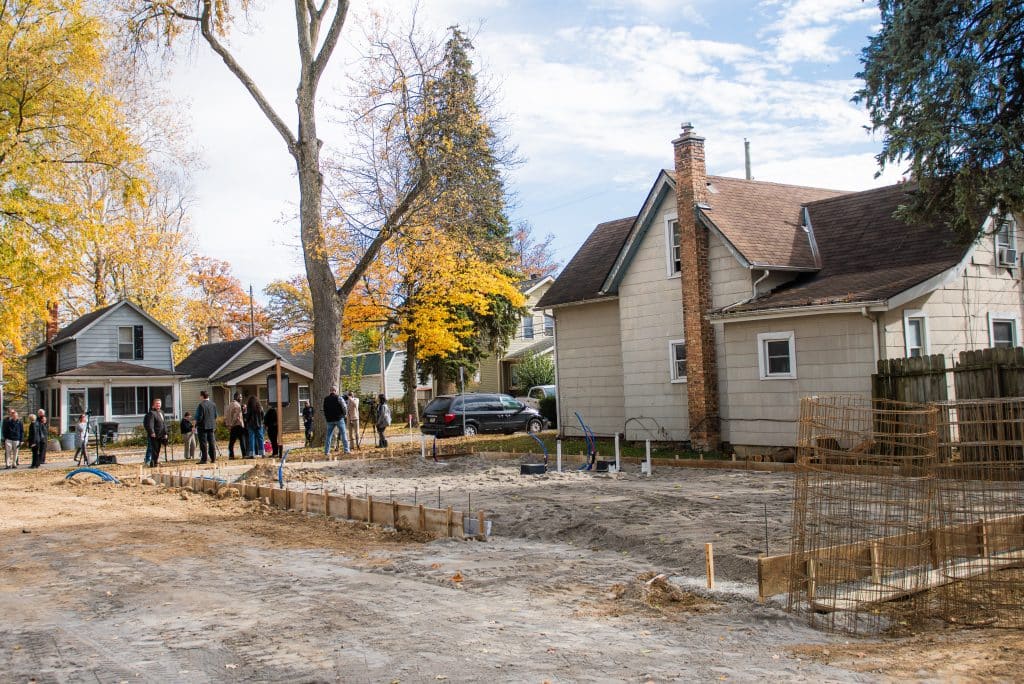
The city of Fort Wayne, a Prosperity Indiana member, owned a significant number of vacant residential lots, many of which were prime for development but sat empty. Launched as a pilot earlier this year, the idea behind a LOT to LOVE is to make it easier for developers and homeowners to invest in new construction.
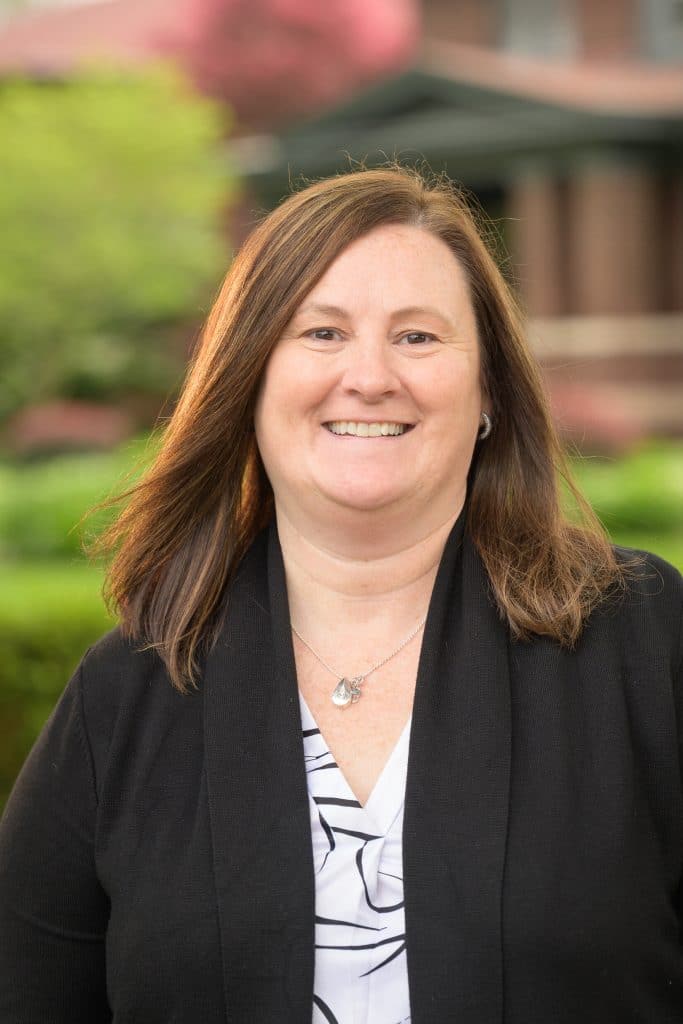
Kelly Lundberg, deputy director of housing and neighborhood services for the city of Fort Wayne, says the goal was clear.
“We really wanted to get these lots back on the tax rolls, get more housing built to build up the supply, but also rebuild our neighborhoods.”
The program addresses several key barriers for small, entrepreneurial developers who are often invested in the very neighborhoods they want to rebuild. The city offers these city-owned lots at a deep discount — up to 90% off the appraised value — and provides a financial incentive of up to $25,000 per project. The incentive funds come from the Fort Wayne New Market Tax Credits program, meaning taxpayer dollars are not used for this part of the program. The initial investment of $250,000 in incentives is projected to generate $6 million in private investment, a significant return that adds housing stock and boosts the local tax base.
“We know that by reducing acquisition costs, we can help make projects more feasible,” Lundberg says.
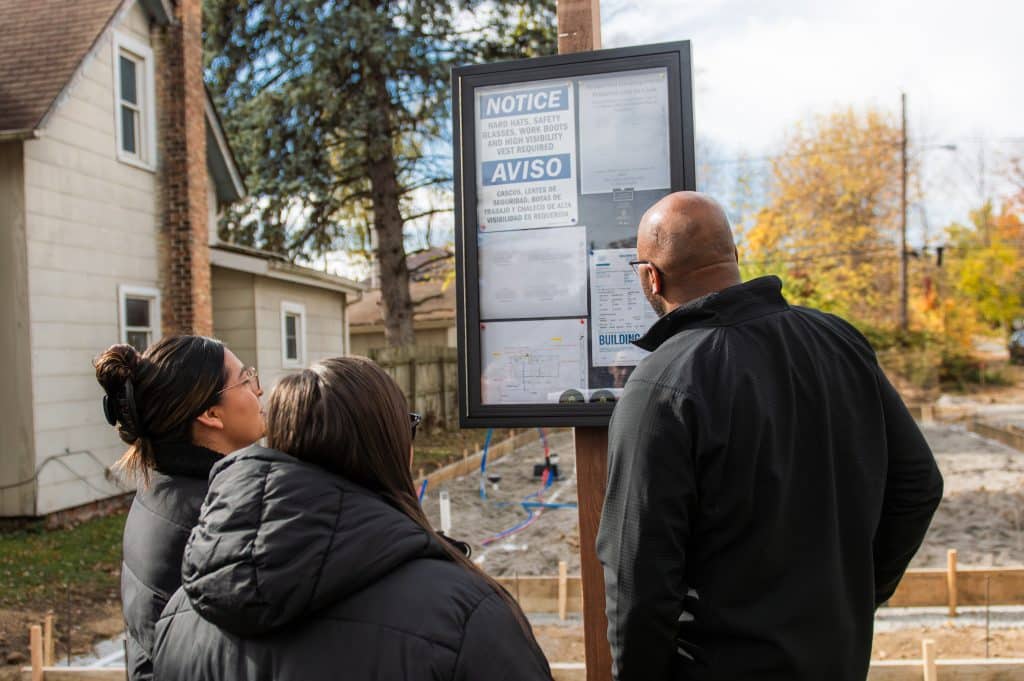
The city also took steps to de-risk development by performing soil borings and using ground-penetrating radar on the lots to identify potential unknown issues from previous demolitions.
So far, the response to a LOT to LOVE has exceeded all expectations.
“I thought we might get two or three applications. We got 20,” Lundberg says, noting the pilot program’s first round is expected to generate approximately 10 new housing units. Two homes were already under construction by late 2025, with more planned for the following spring.
The program prioritizes homeownership units for households earning up to 120% of the area median income (AMI). This addresses the “missing middle” — residents who earn too much for traditional subsidies but are still priced out of the current market.
“The reality is, somebody making 100% of AMI also needs an affordable product,” Lundberg explains. “We all need a housing product that is within our means.”
More than just building houses, the program is about revitalizing communities. For instance, one developer is building a home in the neighborhood where he grew up, on a lot with a view of his old elementary school. Lundberg says this local engagement is key.
“He’s really excited to be back investing in his childhood neighborhood,” she says.
This story is made possible by Brightpoint.
Author

Related Articles
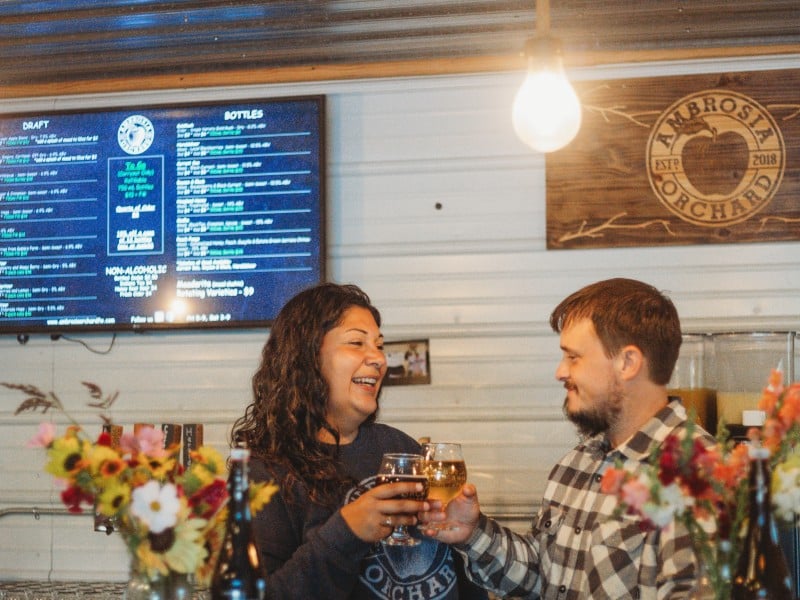
How Brightpoint helps local businesses adapt during challenging times
While businesses face challenges such as rising costs and changing demand, Katey’s Café, Ambrosia Orchard, and Icing for Izaac are determined to survive.
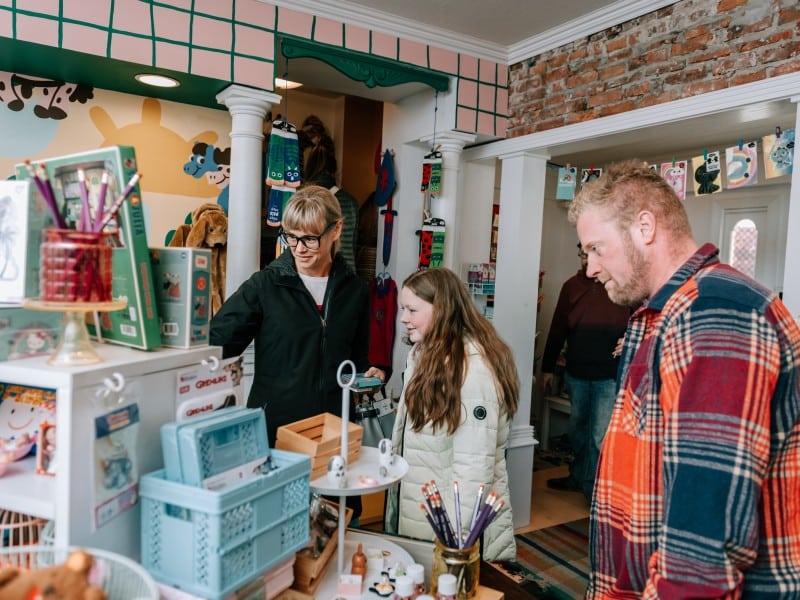
#PlacesofNEI: A second chance for Holly Shopping in downtown Fort Wayne
After heavy snow on Small Business Saturday that lowered attendance, Holly Shopping is coming back to downtown Fort Wayne again on Dec. 20.
Partner Partner Content How Visit Wabash County Strengthens Community, Economy, and Quality of Life
Visit Wabash County drives community pride, economic vitality, and storytelling across the county.