Accuracy
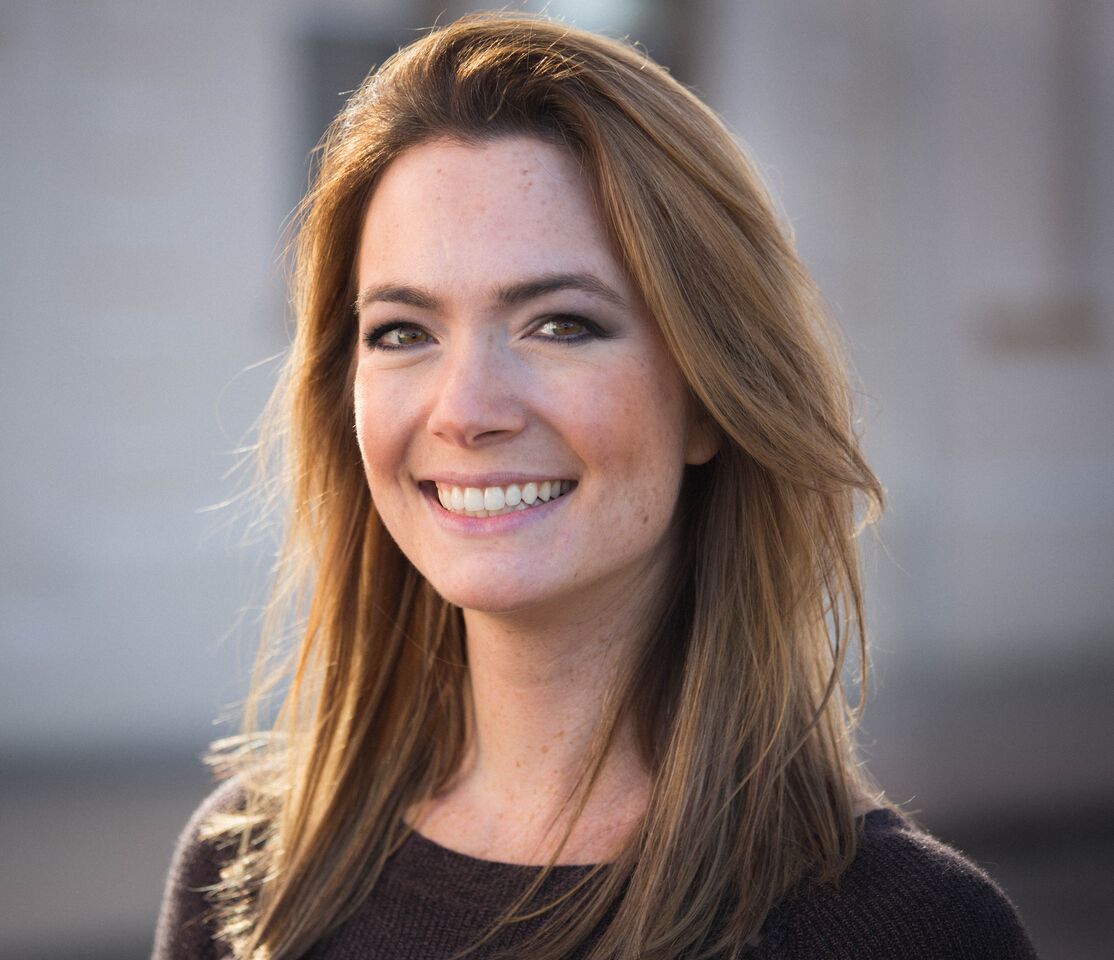
Input Fort Wayne's Managing Editor, Kara Hackett, writes about the importance of accuracy in Fort Wayne's future.

When I landed my first “big city” reporting internship in New York, I remember calling one of my co-editors on our college newspaper staff back in Indiana.
I was telling him about an article I was writing, proving how I was going to be “fair and accurate” by reporting “both sides” of the story.
“Both sides?” he asked. “That’s terrible. There are a thousand sides to every story.”
He was right. Once my initial embarrassment subsided, I began to consider objectivity and accuracy in my work differently than I had before. Instead of thinking about stories as boxing rings for two conflicting ideologies to duke it out, I began to think of stories as lights, illuminating the facts and revealing that which is not easily seen. I also began to think of stories as research projects.
While each report may not contain the myriad of “sides” to every issue, I made it a point in my research to seek out many facts and views, distilling what I found into what I verified and deemed important to craft the most accurate account I could manage. But as we’ve seen in 2020, like many years leading up to it: Accuracy in the media is a controversial topic.[1]
For decades, the perception of accuracy and, therefore, trust in the American press has been declining.[2] Just before the onset of the COVID-19 pandemic in the U.S., Gallup and Knight Foundation concluded a study to assess the damage.[3] Of 20,000 Americans surveyed, they found that 88% say accuracy is “critical” or “very important” in news reporting. Yet, a majority also say the media is performing poorly at achieving this goal, largely due to “misrepresenting” (52 percent) or “making up” (28 percent) the facts. Sixty-eight percent say they see “too much bias” in news that should be objective as “a major problem.”
While the challenges facing modern media are many,[4] and while I am implicitly biased, being the managing editor of a news magazine in Fort Wayne, I want to unpack one challenge complicating accuracy in our media and, by extension, our community. What you might be surprised to learn is that, sometimes, the perpetrator behind inaccuracy is that same, errant notion of objectivity I once subscribed to: Reporting both sides of the story.[5]
Take, for example, a headline from the Atlanta Journal-Constitution in the early hours of the 2020 presidential election, when no clear candidate (Donald Trump or Joe Biden) had yet been named: “Trump: I have Won, Biden: It’s not Over.”
While perhaps attention-grabbing, these types of he-said, she-said narratives not only create false equivalencies, but also emphasize the often binary, polarizing viewpoints around a matter (Trump and Biden’s statements) rather than the facts of the matter at hand (votes are still being counted). In doing so, they risk confusing readers and politicizing facts (the election is not over), which should be acceptable to people from both parties.
To improve accuracy in the news, writer and Professor of Journalism at New York University Jay Rosen suggests what we actually need is not more objective news itself.[6] Instead, we need to remember the role and limits of objectivity in journalism.[7] While objectivity is critical to the process of reporting — to digging up facts, interviewing multiple sources, and verifying information — presenting the story from this objective, “neither-nor” perspective can end up obscuring facts that are established. Thus, Rosen suggests reporters put in the time and do the hard work of journalism. Then focus their stories on facts rather than the cacophony of voices around them, bringing readers into the process by being transparent about how they reached their conclusions.[8]
As we enter the next era of our community’s growth amidst a historically divisive political climate, our city — like our media — is facing an accuracy crisis. What brought this idea home for me was another product of 2020: A report in Politico called “When the Culture Wars Hit Fort Wayne.”[9]
Written by the Pulitzer-prize-winning journalist and former Fort Wayne resident, Charlie Savage, the story investigates City Councilman Jason Arp’s successful attempt to pass an annual General “Mad” Anthony Wayne Day in Fort Wayne, and it presents an excellent starting point for us to delve into the deeper meaning of “accuracy” in our community. Arp’s Wayne Day resolution, proposed in February 2019, contains several factual errors and mischaracterizations of our city’s namesake, as well as its native tribes. These inaccuracies were clearly outlined in Savage’s report,[10] so I won’t belabor them here. But two among the most prominent were that 1) by capturing Stony Point in the Revolutionary War, Wayne allegedly “foiled a bold British attempt to capture General George Washington,” and that 2) Wayne’s troops subjugated and destroyed the villages of “British-led” native forces, as opposed to a sovereign multi-tribal alliance desperately defending their homeland from invaders.
Upon Arp’s insistence that questioning the merits of Wayne or Wayne Day would not be “patriotic,”[11] City Council hastily passed the measure, 6-3, without verifying any of his fact claims. But Savage was not so easily fooled. Along with conducting detail-oriented interviews with Arp and others — both for and against Wayne Day — he also checked Arp’s claims about history with numerous sources, cited in Politico.[12]
Among his findings were several problematic revelations, including that Arp’s account of Wayne essentially saving Washington was unsubstantiated — and likely fabricated based on a fictional AMC TV show.[13] But beyond this blatant inaccuracy and City Council’s blind acceptance of it, what troubles me about Savage’s report is the deeper level of inaccuracy it reveals in Fort Wayne’s community. It’s an inaccuracy that is not cleanly confined to one erroneous tale or embarrassing blunder, but one that lives among us comfortably, pervasively, and often silently.
Throughout the report, Savage reflects on his own upbringing in Fort Wayne — a city dominated by Wayne’s image and trite mentions of his name, yet with little apparent knowledge of the sometimes-uncomfortable history behind our namesake or the tribes he displaced. While it is tempting to say that these issues only afflict people less educated or less interested in accuracy than myself, what strikes me about Savage’s story is my own compliance. I, too, grew up in Fort Wayne, so Wayne’s name has been around me most of my life without me questioning its backstories or trauma until now. Ignorance is a privilege that those of us who are white in Fort Wayne all too easily accept.
Yet, it is not merely personal negligence that causes Americans to perpetuate inaccurate, incomplete, or sanitized history; it’s also a lack of accuracy that has been baked into U.S. historical accounts and monuments by design.[14] In researching the Fort Wayne region, Savage learned the factual history of the Little Turtle Memorial, squeezed between two houses in the city’s Spy Run area.[15] While labeled for Little Turtle alone, it is actually a major Native American burial ground, where multiple bodies — including Little Turtle’s — were dug up, looted, and displaced a short 100 years or fewer after they were buried. Early residents built houses on the gravesite, which remain today.[16]
In a follow-up post to his original story, Savage suggests that calling this site the Little Turtle Memorial for the past 60 years has misled Fort Wayne’s community, downplaying the area’s actual history, which is obscured, forgotten, and “almost literally covered up.”[17] Case in point, when he asked Mayor Tom Henry about this burial ground in our city being more than just Little Turtle’s gravesite, the Mayor’s response was that he did not know.[18]
Cultural amnesia about the hard facts of U.S. history is not unique to Fort Wayne; it’s not confined to white-indigenous relations either. Until 2020, generations of knowledge about systemic racism and slavery had been suppressed in our society — both nationally and locally — as evident in the protests that erupted after George Floyd’s murder.
So why is factual history about the U.S. and Fort Wayne obscured? And why is accuracy a challenging subject for us to broach without being called “anti-American,” as Arp might say?[19] After all, we value accuracy and objectivity in our news,[20] so why is accuracy in our history so repulsive?
Author and Professor of History Hasan Kwame Jeffries presents a theory in the 2018 report, Teaching Hard History: American Slavery, by the Southern Poverty Law Center.[21]
He writes: “We the people have a deep-seated aversion to hard history because we are uncomfortable with the implications it raises about the past as well as the present. We the people would much rather have the Disney version of history, in which villains are easily spotted, suffering never lasts long, heroes invariably prevail and life always gets better. We prefer to pick and choose what aspects of the past to hold on to, gladly jettisoning that which makes us uneasy. We enjoy thinking about Thomas Jefferson proclaiming, ‘All men are created equal.’ But we are deeply troubled by the prospect of the enslaved woman Sally Hemings, who bore him six children, declaring, ‘Me too.’ Literary performer and educator Regie Gibson had the truth of it when he said, ‘Our problem as Americans is we actually hate history. What we love is nostalgia.’”
If we take the time to question our history — if we transcend the bias we were born into and assume an objective view in processing this information — I believe we will begin to see an accurate path forward amidst these culture wars that divide us. But getting to that point will not be easy. Along with the desire to conceal, omit, avoid, or sanitize historical fact, there’s also the very real desire to heal uncomfortable history prematurely in cities like Fort Wayne — making sure the “suffering never lasts long,” as Jeffries might say.
As the fallout of Wayne Day continued throughout 2019, the Miami Tribe of Oklahoma — Fort Wayne’s displaced residents — appealed to City Council, not to cancel the celebration, but merely to correct the factual inaccuracies about their ancestors in Arp’s resolution.[22] City Councilman Geoff Paddock took a sympathetic ear to these requests,[23] but instead of correcting Arp’s original resolution, he did something else. He reached out to Todd Maxwell Pelfrey, Executive Director of the nonprofit History Center in Fort Wayne, for help drafting a new resolution: This time, a holiday to celebrate Native American heritage in the city.
Pelfrey dutifully gathered input from more than 60 tribes and historical experts across the U.S. to draft the resolution,[24] which was passed by City Council in Nov. 2019, establishing November as Native American Heritage month.[25] But well-intentioned as it may be, Council’s move to establish a second holiday in Fort Wayne before addressing factual inaccuracies in the first is also problematic. It’s a prime example of telling “both sides of the story,” while allowing us to evade the facts.
While Pelfrey points out that the new resolution corrects some of Arp’s original claims regarding native tribes, unchecked facts about Wayne and other aspects of U.S. history remain in the Wayne Day resolution as part of public record and an annual holiday.[26]
“We’re now 21 months removed from City Council voting on the non-binding Wayne Day resolution, and there still has not been any kind of request for the History Center to review the entire content of it,” Pelfrey says.
City Council has mentioned the possibility of retiring the resolution “after the dust settles from the 2020 election.”[27] But look at what it has taken for us to get to this point. Look at the years, and the letters to the editor,[28] and the City Council meetings, and the national media attention, and the local media attention.[29] And still, the answer to whether or not verifiable historical fact will be upheld in our community is a solid maybe.
Savage’s report says members of the Miami Tribe told City Council that Native American Heritage month resolves their concerns regarding Wayne Day.[30] Even so, it should not absolve Fort Wayne’s elected officials from the duty of seeking out and defending the historical accuracy of our own community’s founding. As novelist, essayist, playwright, and poet James Baldwin once said: “Not everything that is faced can be changed. But nothing can be changed until it has been faced. History is not the past. It is the present. We carry our history with us. We are our history. If we pretend otherwise, we literally are criminals.”[31]
Soon after Paddock initially voted to approve Wayne Day in 2019, he received a letter from a retired pastor in his district, requesting a copy of the resolution for fear that it might contain “white nationalist” sentiments.[32]
Savage reports that Paddock passed the request on to Council Administrator Megan Flohr, who responded: “There’s no win on this one. If it failed, you all would have gotten dragged for not supporting history. But passing it is bringing up these points. No win.”
I would argue that the “win” we can achieve together is building a community, like a respectable news story, based on verifiable fact, as well as another critical element of journalism: Correction.
Cities of the future will not be those that parrot victor’s tales and craft carefully “balanced” measures to quiet dissension, but those that put in the hard work to seek out and wrestle with the unbridled truth, which underpins authentic community growth.[33] For those interested in improving historical accuracy in Fort Wayne, Pelfrey’s team at the History Center is a nonpartisan resource able and willing to help. It is our duty to utilize their knowledge.
Like effective news stories, powerful community narratives are not achieved by refereeing “two sides” of a conflict. They’re achieved by recognizing that a thousand sides exist — perhaps 267,633 sides, give or take. But what unifies the complexity of our many sides is the one element they have in common: Verified fact.
The choice to take accuracy for granted is the choice to remain a city divided against itself.
This essay is part of a citizen-led book project in Fort Wayne called FORTHCOMING: Considering the Future State of Our City. To learn more and read additional essays, visit the Foreword and Preface.
Kara (Hackett) Metzler is the Managing Editor of Input Fort Wayne, a weekly online magazine in Northeast Indiana that uses solutions-based, narrative journalism to connect residents to some of their community’s most visionary people, businesses, and organizations. Kara is fascinated by what’s next for Fort Wayne and how it relates to other places around the world. After earning her bachelor’s degree in Professional Writing from Taylor University and working briefly in New York City and Indianapolis, she moved back to her hometown where she has discovered interesting people, projects, and innovations—and has been writing about them ever since. Her work has appeared in The Journal Gazette, Living Fort Wayne, Glo Magazine, FoxNews.com, and The Huffington Post.
Author

Related Articles
How Brightpoint helps local businesses adapt during challenging times
While businesses face challenges such as rising costs and changing demand, Katey’s Café, Ambrosia Orchard, and Icing for Izaac are determined to survive.
#PlacesofNEI: A second chance for Holly Shopping in downtown Fort Wayne
After heavy snow on Small Business Saturday that lowered attendance, Holly Shopping is coming back to downtown Fort Wayne again on Dec. 20.
Partner Partner Content How Visit Wabash County Strengthens Community, Economy, and Quality of Life
Visit Wabash County drives community pride, economic vitality, and storytelling across the county.