Partner Partner Content Amani Family Services’ Naturalization and Legal Assistance program turns immigration support into economic strength
By directing immigrants toward pathways for long-term success, a naturalization and legal assistance program can increase stability for local families and help maintain a strong economy.
This story was created in partnership with the St. Joseph Community Health Foundation.
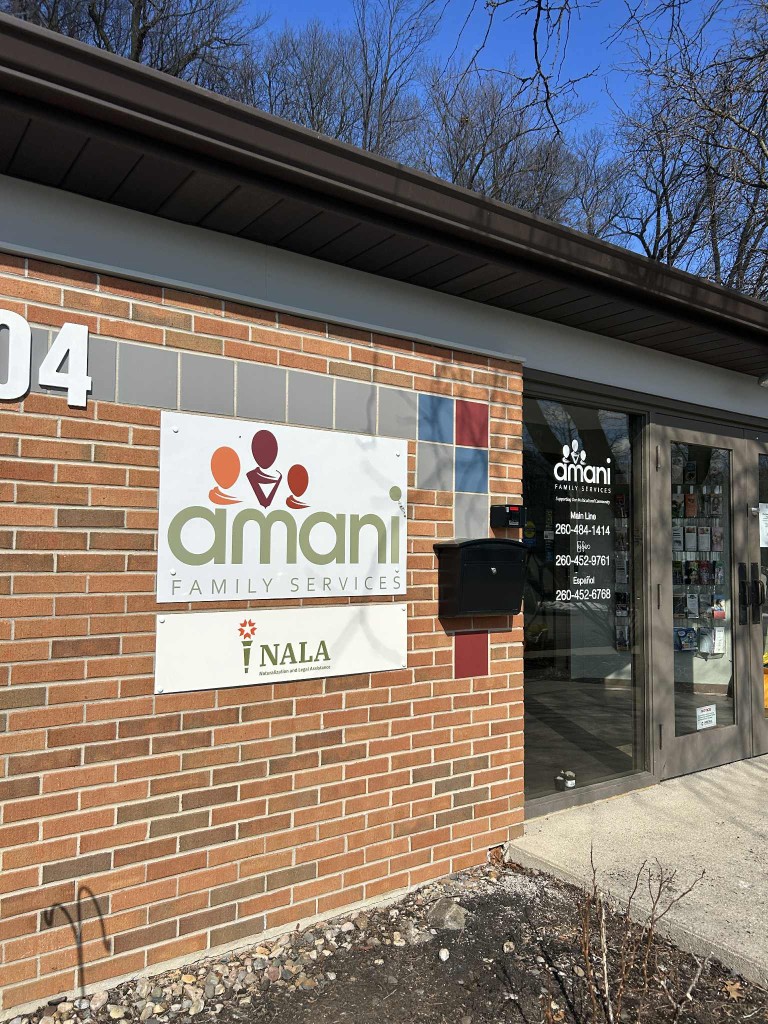
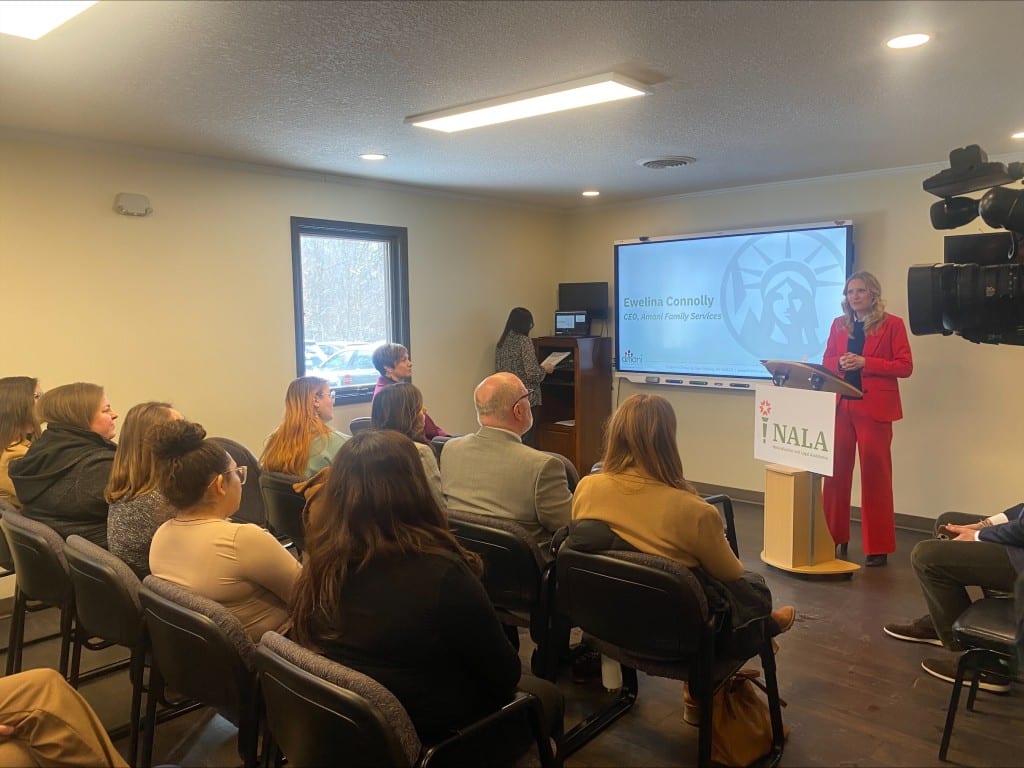
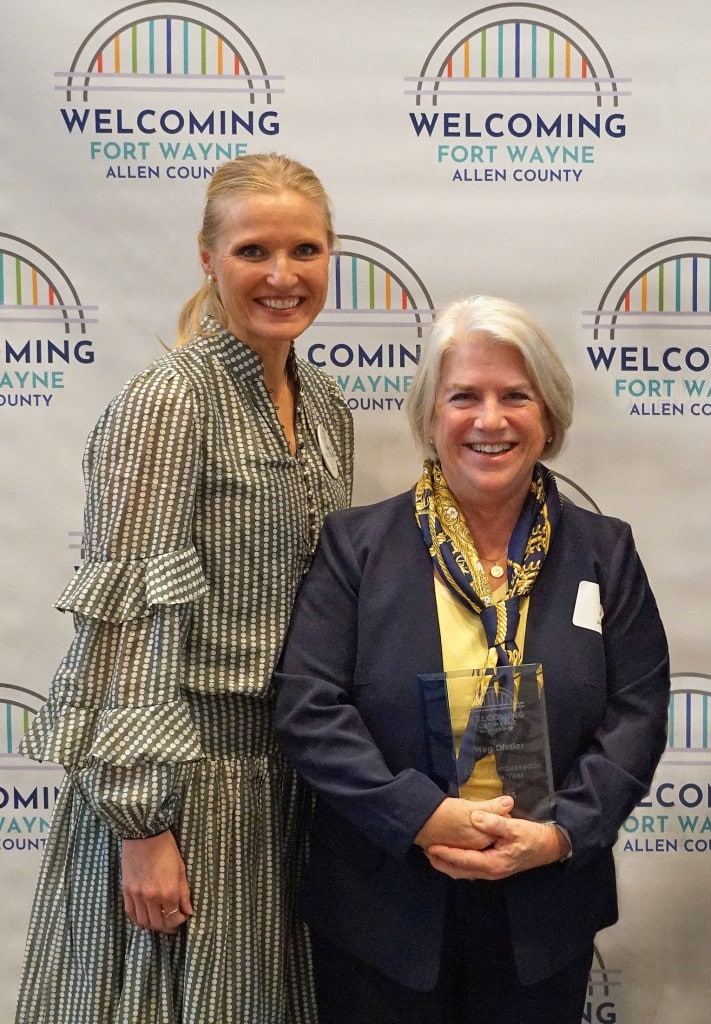

For nearly a decade, Allen County has experienced year-over-year population growth, part of which is attributable to immigrants and refugees. According to the American Immigration Council, immigrants made up 24% of the county’s population growth between 2014 and 2019. Those numbers have continued to grow as Fort Wayne has become a top resettlement location.
Research also shows that this influx drives workforce development and economic success in the communities where immigrants settle — but many of them come in at a disadvantage, not knowing what they have access to or how to pursue the opportunities available to them.
When local leaders noticed a significant influx in arrivals to the Fort Wayne community about five years ago, they began to consider whether the number of people coming exceeded the capacity of their support systems. To address this challenge, organizations like Amani Family Services engaged in research and discovery sessions to explore the expansion of legal and naturalization resources in Fort Wayne.
Immigration support has been a core focus for Amani Family Services for nearly two decades. When the organization was founded in 2006, it was originally called Crime Victim Care of Allen County. Many of their clients who had been victimized were immigrants and refugees. These people often had pathways to citizenship because of their experiences, but they didn’t know where to start.
Historically, Amani Family Services worked with Neighborhood Christian Legal Clinic (NCLC), a statewide nonprofit specializing in free legal services and education to people who otherwise couldn’t afford it. After the pandemic in 2020, NCLC’s Fort Wayne location had to close its doors, and Amani leadership found themselves with no resources for their clients in need of immigration support.
“When NCLC closed, we started having community conversations around the steps we needed to take to develop a local resource for immigration and naturalization support,” says Ewelina Connolly, CEO of Amani Family Services. “Through the Welcoming Fort Wayne initiative, we launched a community study and community survey, which identified the growing foreign-born population in Allen County.”
As immigrants and refugees continued to settle in Fort Wayne, Amani Family Services received calls from employers who had questions about the status of foreign-born employees, how to hire people to sustain the workforce, and more. At the time, Amani had no specific resources for immigration and naturalization, but people reached out to them because they had a reputation in the community for serving refugees.
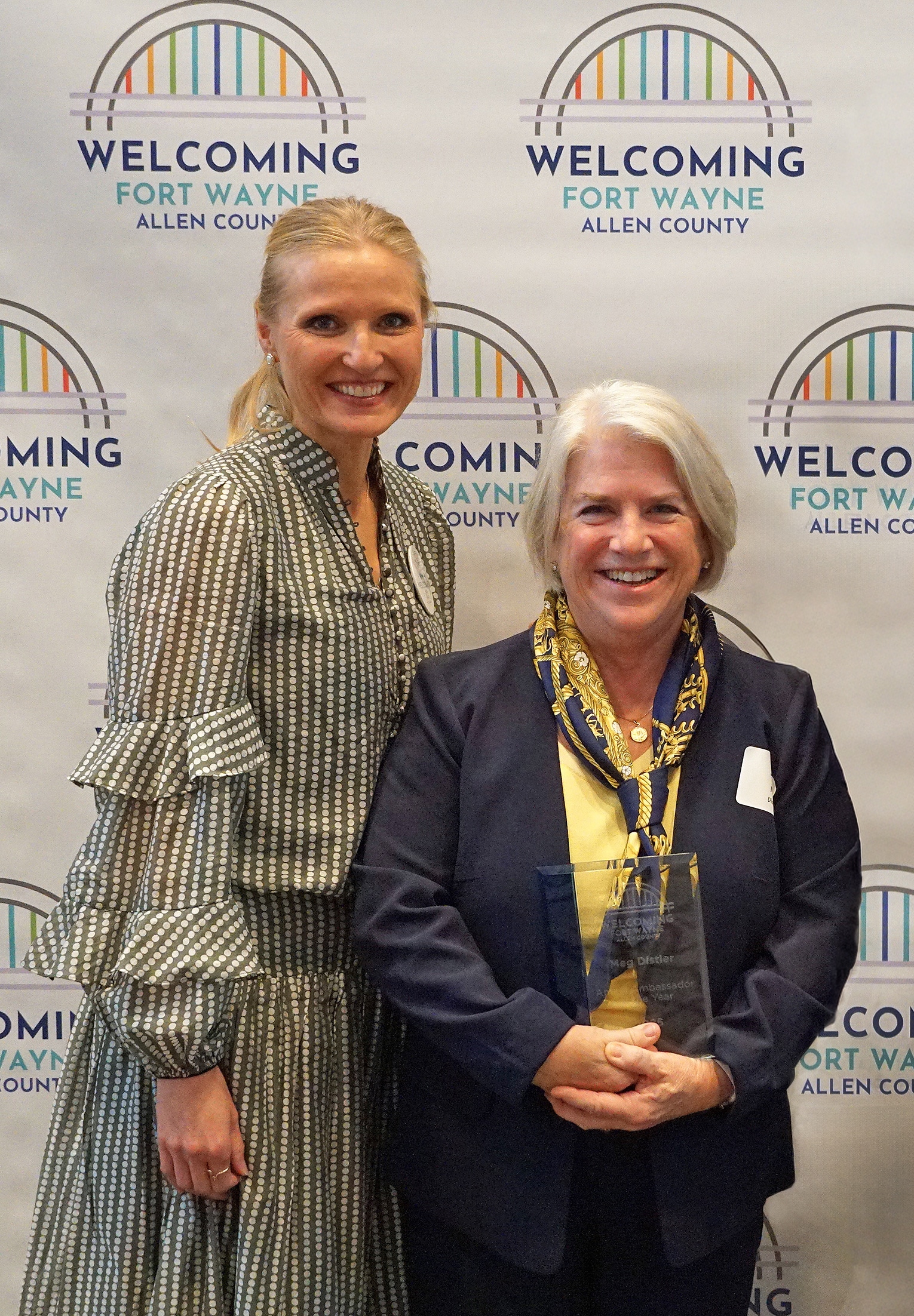
“With our country’s complex, often-changing immigration laws and the influx of people entering the country with various statuses, it has become a challenge for good, honest people to navigate our systems,” says Meg Distler, executive director of the St. Joseph Community Health Foundation. “Naturalization and legal assistance services can provide a framework of support to help us grow our community and our economy in Northern Indiana.”
Through a series of community conversations, it became clear that Amani Family Services was best suited to launch a naturalization and legal assistance (NALA) program due to its existing reputation in the community. Rather than starting a new model from the ground up, Amani was able to provide the administrative framework to get the program started.
In December of 2023, the St. Joseph Community Health Foundation provided Amani Family Services with a grant to fund the initial stages of the new program, from research on effective models to the initial finances required to get a legal clinic up and running. The NALA program soft-launched in November of 2024, followed by the official grand opening in February of this year.
The NALA program can help immigrants and refugees obtain work permits or green cards, petition for family members to come to the country, or renew documentation. It can also reduce barriers on the pathway to citizenship through the naturalization classes offered to clients.
“We’ve committed to a two-year pilot program for our naturalization and legal assistance resources,” says Connolly. “Our goal is to develop a self-sustaining clinic that provides affordable and accessible services.”
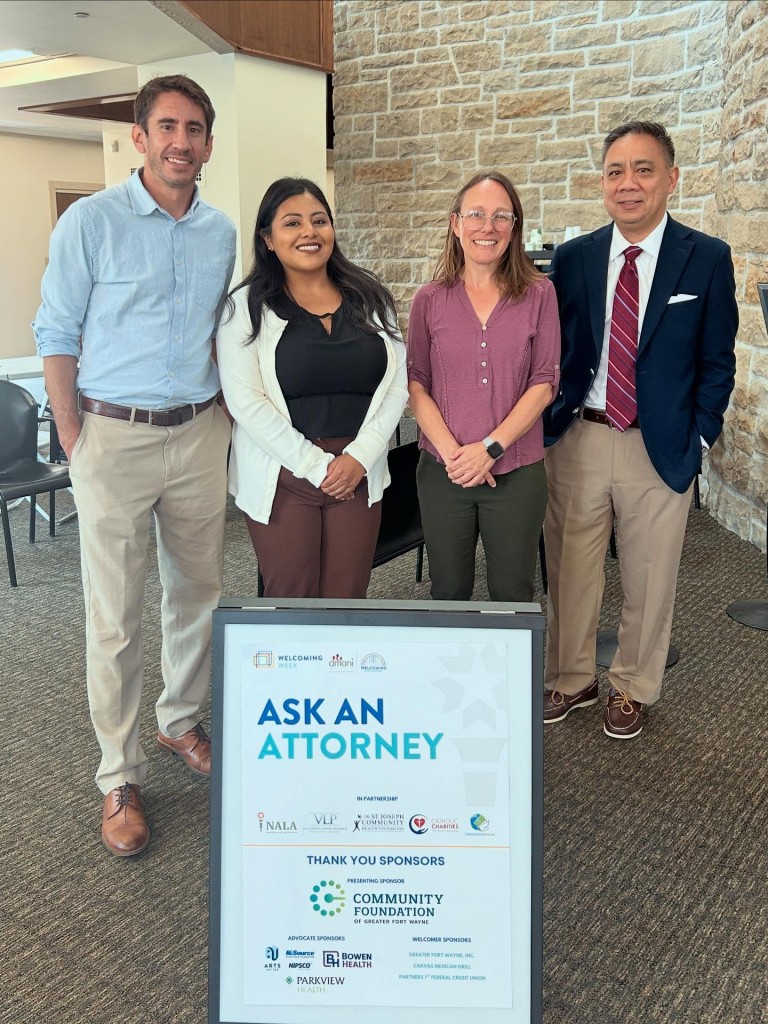
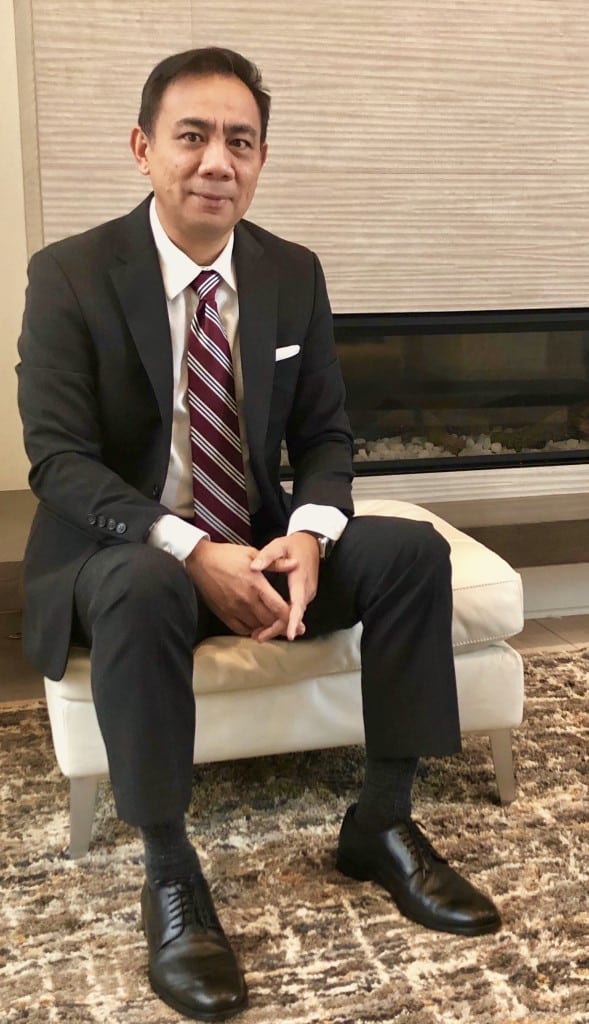
One of the top priorities in launching the NALA program was bringing a licensed attorney with experience in immigration law on staff. Through a series of happenstance events, Connolly found the ideal candidate in Jarry Valcarcel, a first-generation immigrant who has been exclusively practicing immigration and naturalization law since 2007.
Valcarcel moved to the United States when he was 26 years old, having been born and raised in the Philippines. He first lived in California, where he passed the bar exam and worked at a boutique immigration law firm in San Francisco prior to opening his own immigration law practice in 2015.
When Valcarcel’s siblings invited him to join them in Fort Wayne, where they worked as physicians at area hospitals, Valcarcel began splitting his time between Indiana and California. He moved to Fort Wayne just before the pandemic, going back to his office in California every two weeks. Then, when everything shut down during COVID, he found himself stuck in Fort Wayne with no clients.
“I was literally walking the streets of downtown, wondering where I was going to find clients, and I saw the Neighborhood Christian Legal Clinic,” says Valcarcel. “I volunteered there regularly until they closed, and through that work, I got connected with Ewelina and Amani Family Services. When Ewelina asked me if I’d be interested in coming on staff as an attorney if they opened an immigration clinic, I knew it was a good fit for me.”
Currently, Valcarcel is the only attorney on staff at Amani Family Services, which means the program does not have the capacity for larger-scale legal services like immigration court, removal defense, and investor visas. For cases like these, Amani Family Services may refer clients to the private sector for legal services.
Opening doors to create a generational ripple effect
The NALA program supports immigrants and refugees on their path to naturalization through services like affirmative asylum, immigrant relative petitions and humanitarian support for options like U Visas, trafficking visas, Special Immigrant Juvenile Status (SIJS) visas and residency through the Violence Against Women Act (VAWA). While working through the naturalization process, migrants can also take steps to increase their financial stability.
“Some types of applications allow immigrants to get a work permit from the Department of Homeland Security (DHS) while they’re waiting on approval,” says Valcarcel. “For example, if you’re a U.S. citizen in the middle of a spousal petition, and your foreign spouse is here waiting to see the process through, they have the opportunity to secure a paying job. Similarly, if you’re applying for asylum, you can get a work permit while waiting for your interview
With a work permit, immigrants have access to a host of other opportunities they wouldn’t otherwise have, such as getting a social security number, securing a driver’s license and opening a bank account. In the few months since its launch, the NALA program at Amani Family Services has supported several immigrants and refugees through the process of applying for a work permit and securing life-changing resources.
“The effects of our work through the NALA program go beyond the practical advantages,” says Valcarcel. “We’re helping people step out of the shadows and achieve a sense of belonging. That reality has a multigenerational effect. It doesn’t just improve the life of a single person; it improves the lives of that person’s children, and their children, and it just goes on. It’s an honor to be part of this team and help people chase the American Dream.”
Developing a sustainable program model
In the earliest days of vision-casting for the NALA program, one clear goal took shape: The initiative would have to be sustainable and sufficient on its own; it could not rely on fundraising for long-term success. A nonprofit model for legal services had already failed in Fort Wayne when the Neighborhood Christian Legal Clinic closed its doors, so any new initiatives needed to take a different approach.
While the NALA program is not designed to generate a profit, the fee structure Amani Family Services has established will allow them to cover their expenses and ensure the program can be sustained, even with the ebbs and flows of government assistance and other funding sources. Connolly considers this a key strategy for stewarding the resources available to them and allowing their program to grow naturally over time.
“Part of the design for this project is to accomplish accreditation through the Department of Justice,” says Connolly. “When we’re accredited, we can take advantage of a program that allows us to train paralegals to do immigration work.”
According to Connolly and Valcarcel, there are few immigration attorneys available to do this work at such a limited cost. Bringing on more paralegals allows the NALA program to continue offering its low-cost services as the demand grows, while also being an effective training resource for young people who want to gain experience in immigration law. Eventually, they hope to partner with area law schools to develop an incubator for young professionals, which would allow Valcarcel to move into a role more focused on supervision and oversight.
What’s next for the NALA program?
As the NALA program approaches its second year, Connolly, Valcarcel and the Amani leadership team have had to face a shifting immigration landscape. Changing regulations and requirements can force them to adjust their strategy at a moment’s notice. Even through those changes, they feel hopeful about the NALA program’s ability to grow and continue to drive economic stability and workforce development.
“In year two, we hope to start working with employers in the area because the business community has asked us for support,” says Connolly. “They want to know how to engage better with the foreign-born workforce who may not understand the nuances of the hiring process.”
Up to this point, Amani Family Services has been able to engage local employers in cultural competency trainings, providing insight on how to attract and retain good workers. As the NALA program grows, they want to offer more in-depth partnerships that can support HR departments with questions about immigration and how it intersects with employment law.
“We’re really excited about the prospect of the NALA program offering support to local employers who are navigating the complexity of hiring immigrants and refugees,” says Distler. “It can be very complicated if you don’t understand the laws and how they apply to people with different statuses. The NALA program can open doors for employers and immigrants alike as it enters its second year.”
Since its inception, the NALA program has not fit into any kind of mold. There was no blueprint for Amani Family Services to follow as they developed their goals for the two-year pilot. But the demand for affordable legal services and support showed the value of investing in an initiative that could be a driver for economic growth in Allen County for years to come.
“Everything we’ve done for this program so far has been an experiment in innovation,” says Connolly. “A project like this can only happen because of collaborative work and community support. If our partners didn’t show up for us, this program never would have been able to launch.
To learn more about the NALA program, visit https://amanifamilyservices.org/nalafw
This story was created in partnership with the St. Joseph Community Health Foundation.
Author

Related Articles
Indiana health center trains local residents as dental assistants to fill workforce gaps
HealthLinc, a federally qualified health center in Valparaiso, covers training costs while preparing local residents for dental assistant jobs, strengthening workforce pipelines and expanding access to care.
Community Loan Centers combat predatory payday lenders
Organizations are working to protect consumers from predatory lending practices by pushing for changes at the statehouse and offering alternatives.

How Brightpoint helps local businesses adapt during challenging times
While businesses face challenges such as rising costs and changing demand, Katey’s Café, Ambrosia Orchard, and Icing for Izaac are determined to survive.