Purposeful design: How two architectural gems of Fort Wayne’s past can influence its future
What makes great design? A local architect shares his thoughts and two local examples.
Architects often find themselves in an interesting paradigm, designing buildings for tomorrow’s generations, while also keeping one foot firmly rooted in the past.
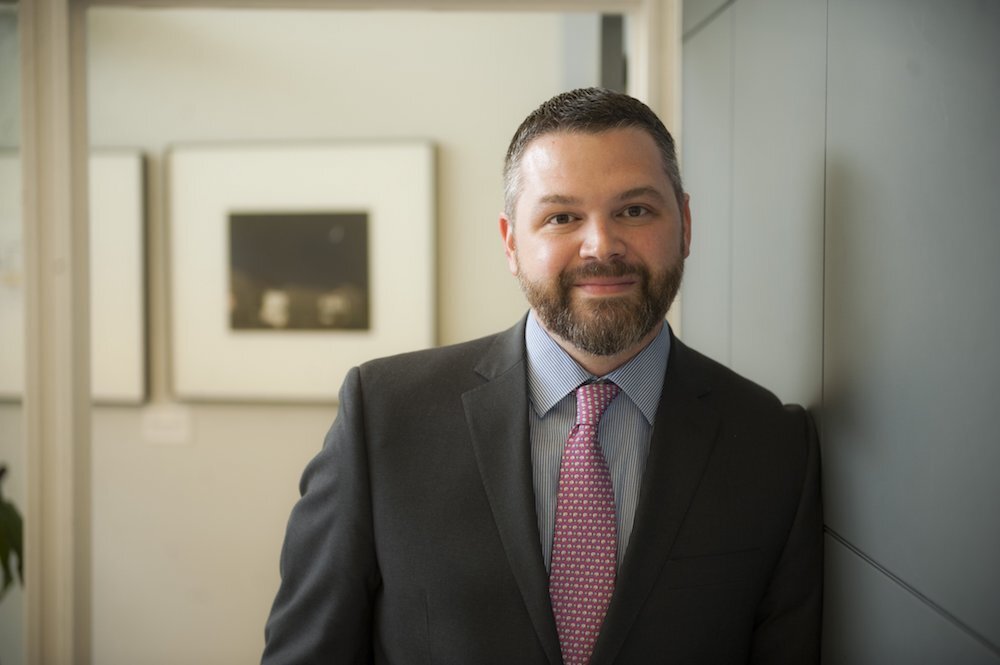
It’s a paradigm that captivates the creative spirit of Zachary Benedict, Architect and Principal of Fort Wayne’s MKM architecture + design.
Benedict has been passionate about architecture for as long as he can remember. After graduating from Ball State University’s R. Wayne Estopinal College of Architecture and Planning, he pursued a career at MKM, which has a niche in the healthcare sector, designing state-of-the-art surgery centers, retirement communities, and hospital departments.
Benedict says MKM creates spaces in which people spend some of their most joyful or heart-wrenching moments, so his team strives to create people-driven designs that marry form and function.
But healthcare isn’t the only place where design impacts people’s lives. Across the city, well-designed spaces elevate Fort Wayne’s quality of life in many ways. Two structures, in particular, that stand out to Benedict are the Concordia Theological Seminary and the Arts United Center.
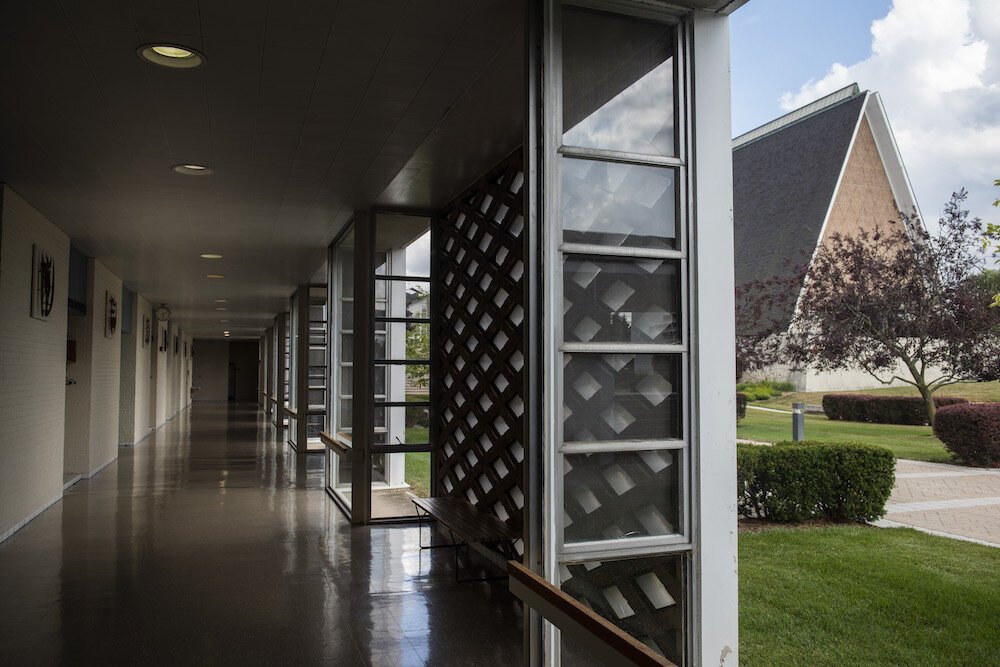
Tucked away in the woods the north side of town, Concordia Theological Seminary is one of Fort Wayne’s crown jewels of design. The campus was born out of the creative vision of the famous Finnish-American architect Eero Saarinen, who designed in what could be best described as a mid-century modern style.
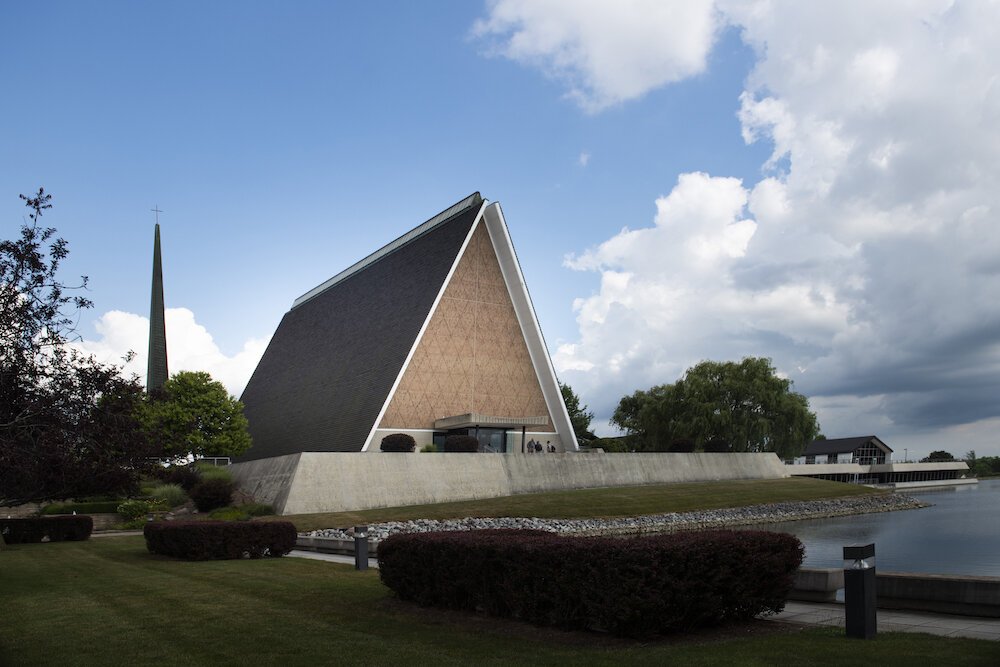
Saarinen arranged the seminary campus to evoke the feeling of a pastoral German village with the chapel at the center and a series of pitch-roofed buildings around it–all oriented in the same direction. The campus has a communal, yet introspective atmosphere with its benches, vegetation, and reflective pools of water.
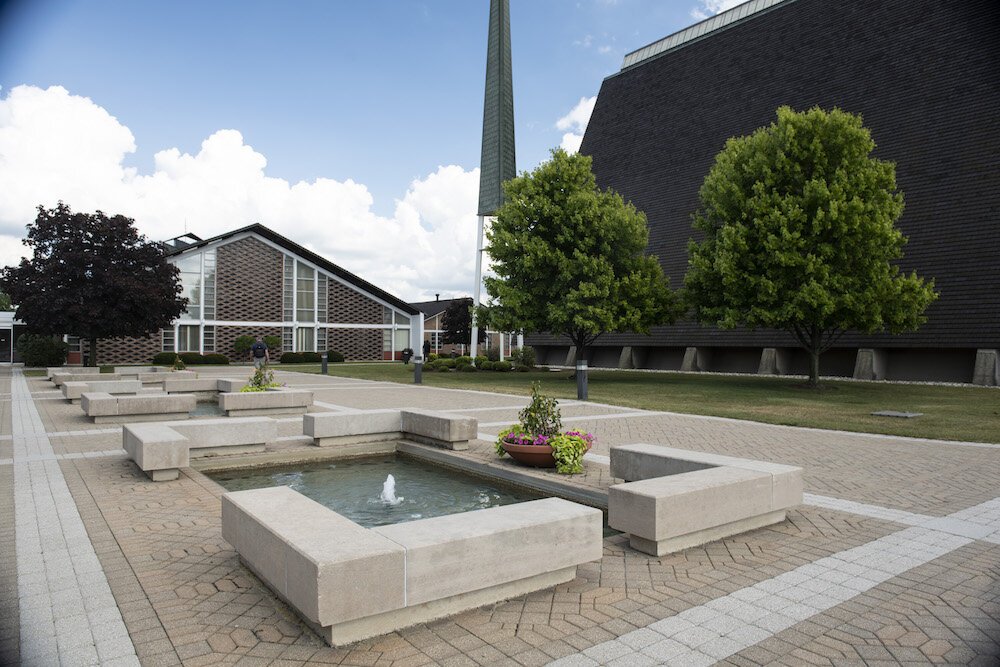
If there’s one word that describes Saarinen’s approach to the design of Concordia’s campus, it’s “detail,” Benedict says.
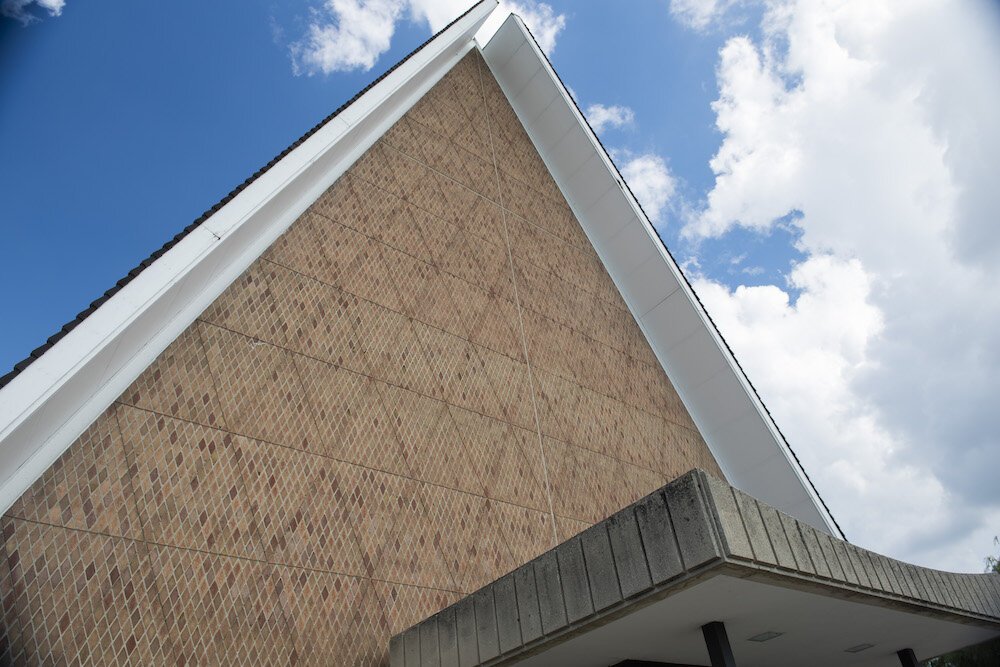
“He designed everything down from the door handles to the brick, to be custom to the campus,” he explains. “You can’t help but notice the diamond-shaped bricks that make up the chapel. The form is supposed to suggest someone is holding hands with God.”
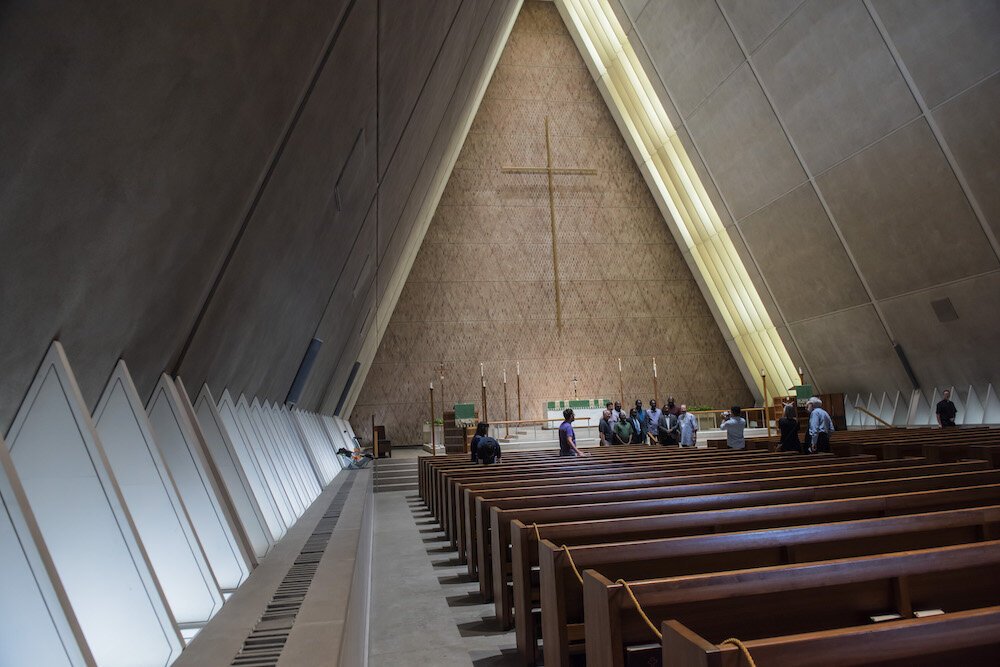
The sunlight streaming through the chapel windows is a near-spiritual experience in itself, he says.
Another place where architecture elevates the quality of life in Fort Wayne is the Arts United Center, designed by Louis Kahn, Benedict says. This downtown arts facility was originally designed as part of a campus to rival Lincoln Center, the world’s leading performing arts center, in New York City.
Today, it serves as the home to Fort Wayne’s community theatre and arts programs alike, hosting performances by the Fort Wayne Civic Theatre, The Fort Wayne Youtheatre, Fort Wayne Ballet, Fort Wayne Dance Collective, Fort Wayne Philharmonic, numerous community organizations, as well as classes and a wide variety of events.
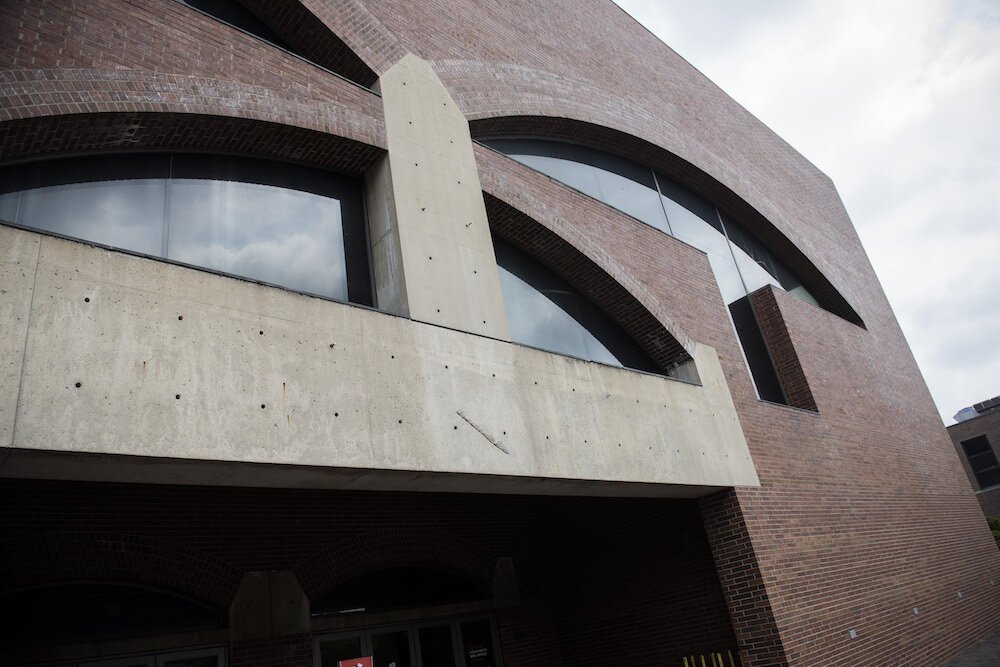
From an architectural standpoint, the Arts United Center is an example of the Brutalist style, known for its use of functional reinforced concrete and steel, its modular elements, and its utilitarian feel. As such, it offers a classic case study for how design can complement and advance a building’s purpose.
For example, the grand brick arches and folded concrete walls of the Arts United Center create a grand impression from the moment you walk in, Benedict says, setting the stage for bold, creative performances.
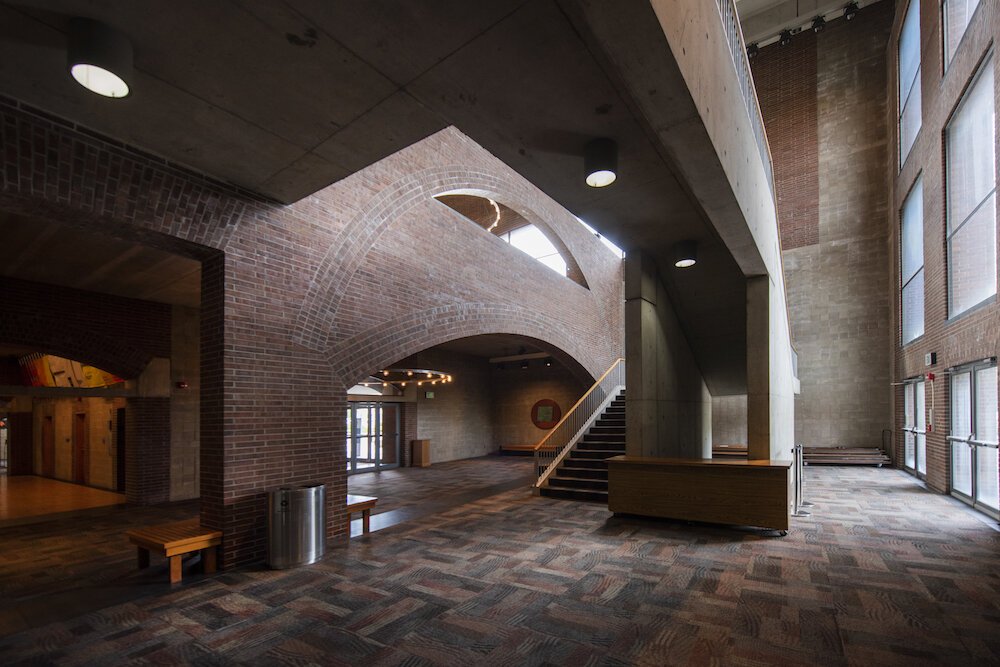
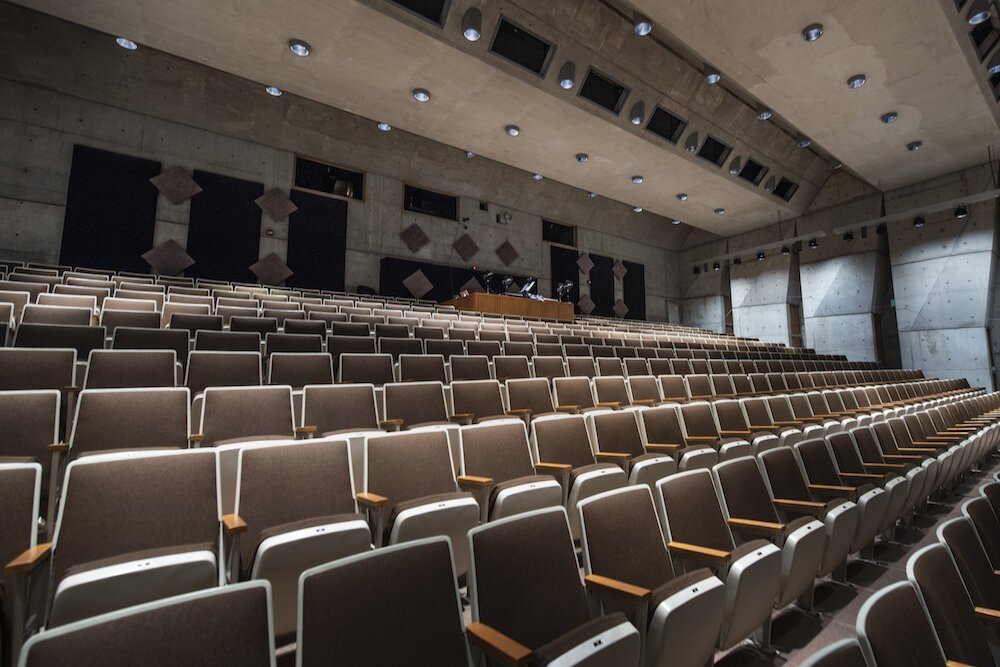
Kahn himself admitted to going to great lengths to ensure the design would serve the varied needs and uses of its occupants.
“I came to the conclusion that one must regard the auditorium and the stage as a violin, a sensitive instrument where one should be able to hear, even a whisper, without any amplification,” he writes. “The lobbies and all other adjunct spaces may be compared to the violin case. The violin and its case are completely different.”
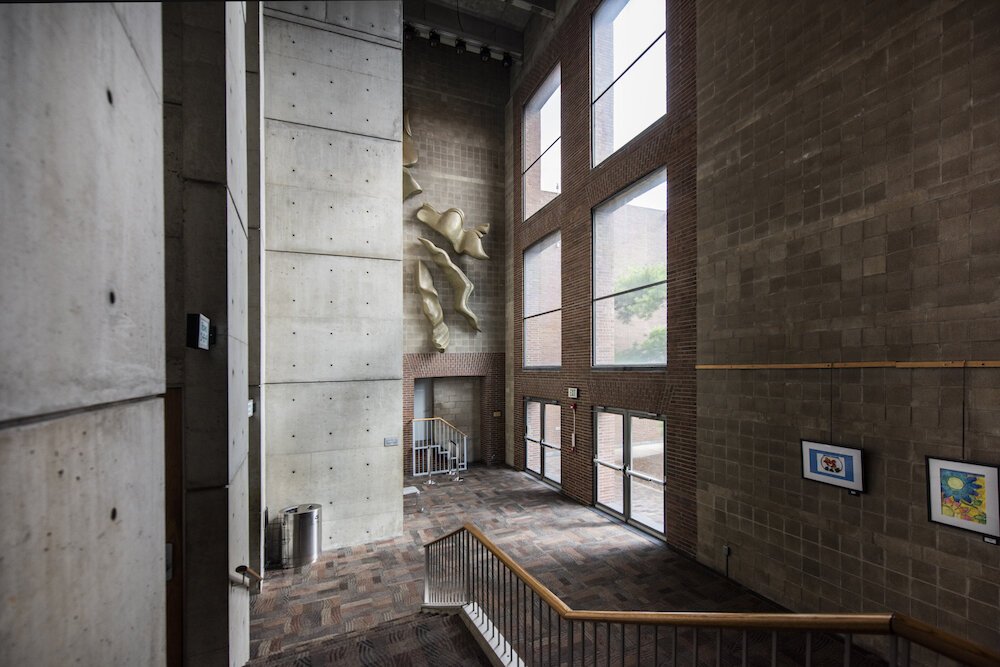
In Benedict’s opinion, Kahn was successful in achieving what he set out to do. Like the seminary campus, he says the Arts United Center has a great “visual connection” to people’s senses.
“It’s hard to walk through the building and not touch the wall,” he says.
Although both places Benedict admires are vastly different, he sees common themes in their structures and creative visions.
Both the seminary campus and arts center have buildings of great substance, and both architects possessed “the discipline of understanding how people move through spaces,” he explains.
As Fort Wayne designs spaces it for its future, it should carry on these important elements of its architectural past.
Author

Related Articles
Help shape future coverage – join our upcoming listening session
Join Input Fort Wayne at Tall Rabbit for coffee, conversation, and a chance to share the issues, people, and neighborhood stories you think deserve more attention.
Partner Partner Content Bringing neighbors together: Q&A with Réna Bradley on the Inspire Neighborhoods Conference
Neighborhood Planner Réna Bradley explains how the Inspire Conference supports local change-makers by connecting residents and sharing tools for building resilience.
How public art is showing up in Fort Wayne’s neighborhoods
Neighborhood leaders say art installations help evoke and maintain a sense of place, identity, and pride.