
Why Fort Wayne’s sidewalks aren’t fully ADA-compliant — yet
More than 30 years after the ADA, gaps in sidewalk accessibility remain. The reasons lie in how the law was written, how infrastructure gets rebuilt, and the limits cities face in fixing everything at once.
This story is part of Moving Fort Wayne Forward, a year-long reporting effort to engage residents, employers, and community leaders of Greater Fort Wayne around the possibility of a more modern, multimodal transportation system. Read the full series here.
It can be easy to miss accessibility issues when navigating Fort Wayne’s sidewalks if you don’t rely on those features to safely navigate. Uneven pavement and missing sidewalk slopes can make traversing the city difficult for people with physical and visual disabilities.
Congress passed the Americans with Disabilities Act in 1990 — over 35 years ago — so why does inaccessible infrastructure persist in the public right-of-way? It turns out, numerous factors have led to accessibility improvements occurring gradually, as cities work with constrained resources and evolving regulatory guidance to update infrastructure built long before the ADA existed.
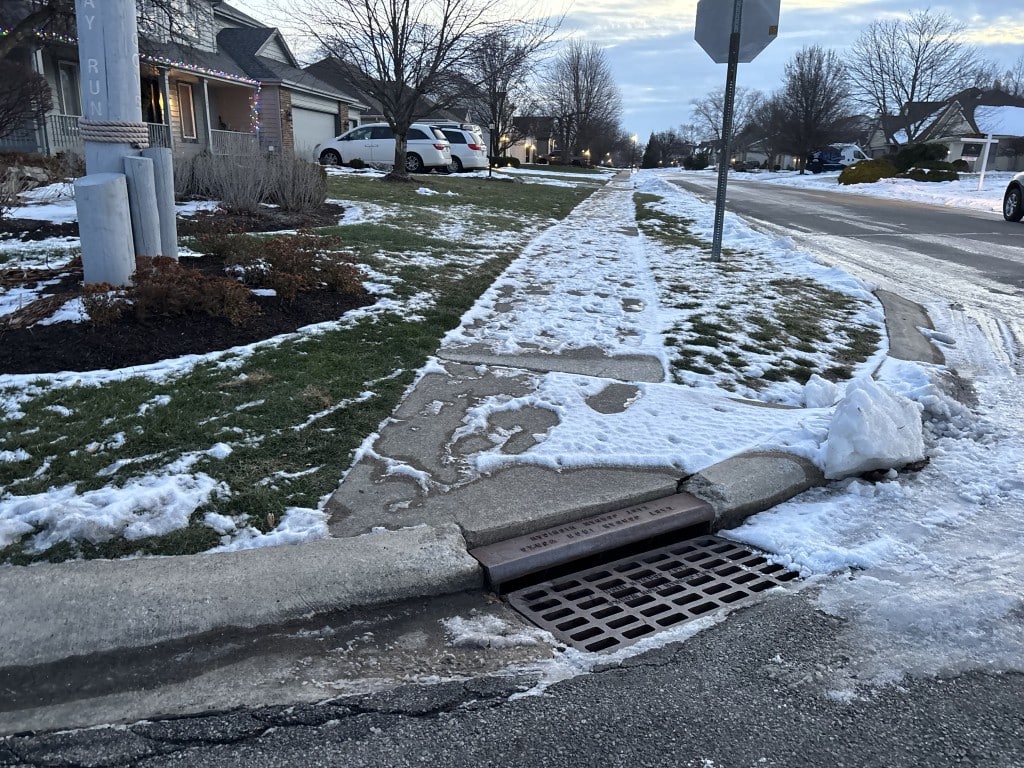
The first reason relates to the legislative process itself. While the act went into effect in July 1990, the Title II regulations under the ADA that dictate how the act is applied by cities became effective in January 1992. Then, over the succeeding years, nuanced regulations were clarified in the judicial process. The process became more specific with the publication of technical guidance for building accessible infrastructure, beginning with draft guidelines in 2002 — 12 years after the act’s initial adoption.
These guidelines, known as the Public Rights-of-Way Accessibility Guidelines, or PROWAG, were developed by the U.S. Access Board to explain how sidewalks, curb ramps, and intersections should be designed. However, the guidelines do not automatically carry the force of law.
Instead, PROWAG becomes enforceable only when it is formally adopted by another authority. For example, the U.S. Department of Transportation did not adopt PROWAG as an enforceable standard until January 2025. Fort Wayne has also adopted PROWAG as its design standard in the city’s ADA Transition Plan, applying it to new and altered infrastructure.
Second, and perhaps the most prominent reason, is that the ADA does not require immediate reconstruction of existing infrastructure. Rather, these changes become a legal priority for reconstruction when a trigger event takes place. Triggers for bringing the right-of-way into compliance include significant alteration of that infrastructure, new construction of infrastructure, or if the non-compliant sidewalks and intersections deny meaningful access to a public program.
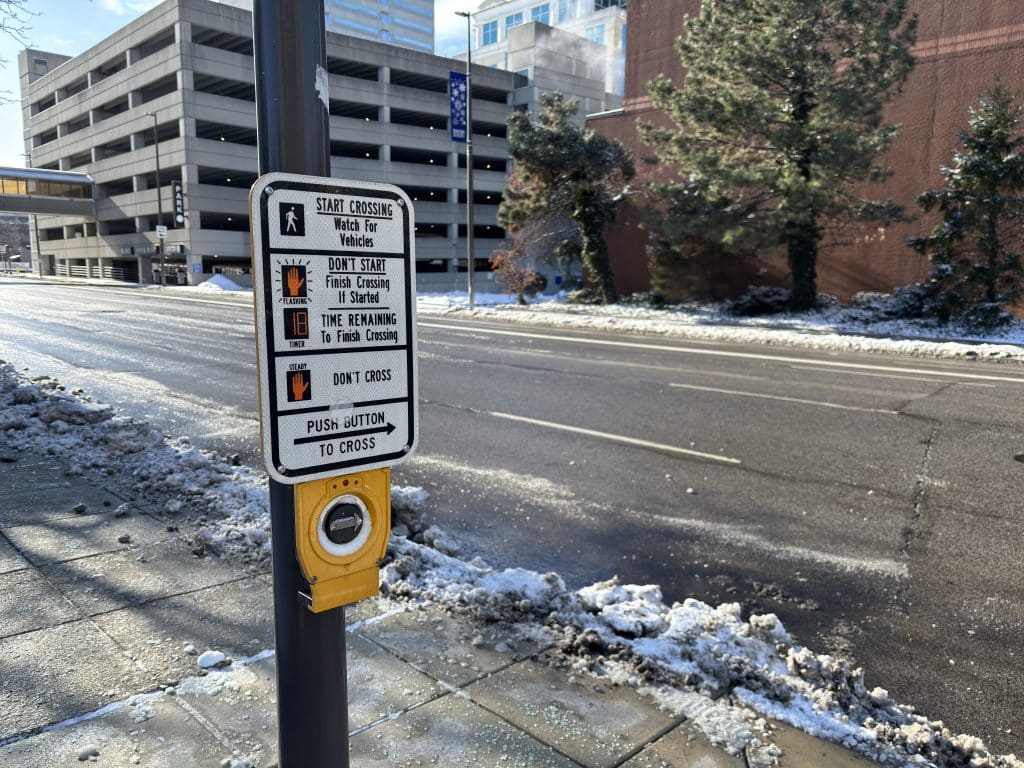
What counts as an alteration? Street resurfacing, for example, would trigger a municipality to bring the adjacent sidewalks and crosswalks into compliance with curb ramps.
Nick Jarrell, right-of-way manager for the City of Fort Wayne, also notes that unincorporated areas that were later annexed into Fort Wayne were often built under different jurisdictions, where sidewalk and street standards, including how ADA guidance was applied and enforced, differed from those used by the city.
Additionally, cities often have insufficient data on where the most deficient infrastructure exists, and therefore cannot allocate limited resources to the areas that need it most. With more than 4,400 city-managed, pedestrian-involved intersections to maintain in Fort Wayne, keeping an updated inventory with accurate priorities presents a significant challenge.
Jarrell says that Fort Wayne has become more efficient and intentional in storing this data, now located in a GIS database that can display detailed intersection data on a map, and volunteer groups across the country have supported their cities’ databases through walk audits of their neighborhoods.
“We are utilizing technology to make sure we don’t just guess, and we aren’t just putting it on a chart. We have an interactive map that we’re using that indicates which ones are officially complete and which ones are not. That way, we can put funds into those spots.”
Funding these alterations presents another challenge: cities with tight budgets and limited staff, even equipped with willpower and data-driven insights, are faced with financial limits that ultimately determine the quantity and scope of making the public right-of-way more accessible.
While three departments in Fort Wayne build sidewalk ramps, and the right-of-way department has constructed 1,488 since 2018, with up to eight ramps needed for each intersection, the effects of resource constraints appear more clearly.
“There just is not enough funding to update all of them at once,” Jarrell says, “so we are just taking chunks out every year. But there is a plan, and we do intend on getting every ramp updated at every intersection eventually.”
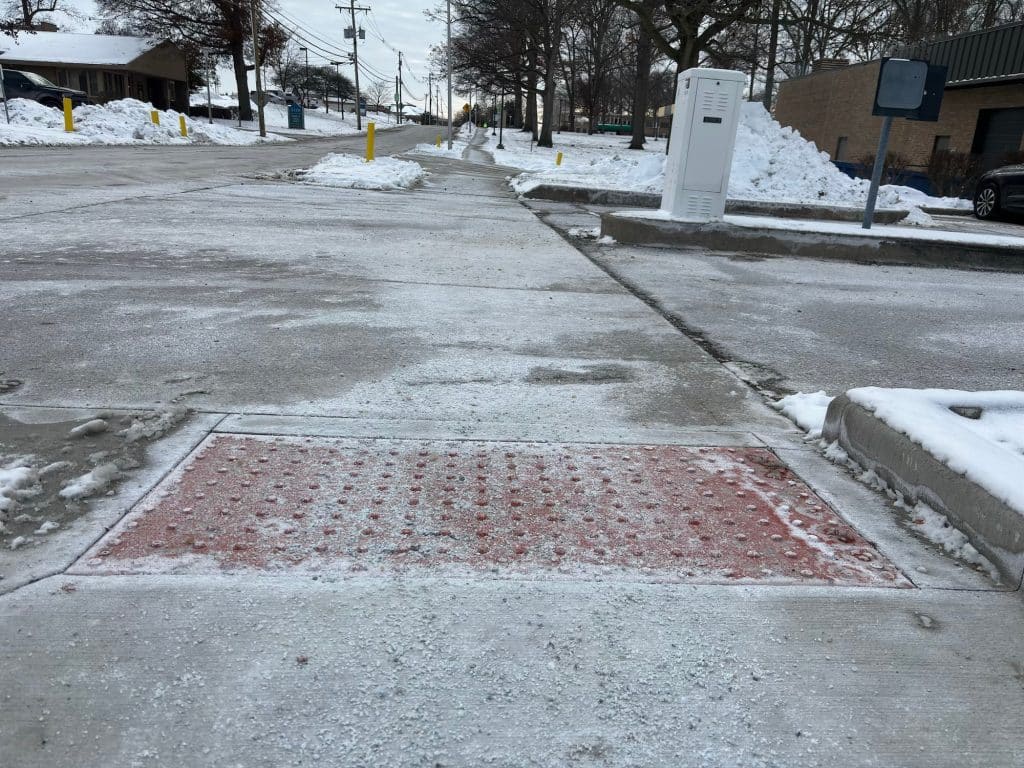
When a piece of infrastructure enters the planning phase of reconstruction, utility relocation invites additional challenges to not only the logistics of making the change, but also incorporating other decision makers into the process, which extends the scope and timeline of bringing the right-of-way into ADA compliance.
Thankfully, Fort Wayne has corrected, or marked for improvement, existing issues, but the process to update the right-of-way into ADA compliance is limited by the resources — both staff time and funding — available to do so. Therefore, even if Fort Wayne wanted to proactively update the right-of-way for ADA compliance ahead of the legal triggers to do so, limited funding is allocated first to complying with the requirements of the law before a proactive approach could be taken.
The city, by law, maintains an ADA transition plan that notes the condition of sidewalks, outlines the strategy to install curb ramps, and cites some limitations to doing so. It also gives guidance for the prioritization of projects and allows for resident requests for ADA upgrades.
Ultimately, the persistence of non-compliant public sidewalks and intersections in Fort Wayne appears to be less the result of neglect but rather a slow, rule-bound process further constrained by physical logistics and financial and human resources. While the ADA has transformed some parts of Fort Wayne’s map into something more accessible, it is still catching up to a built environment created long before accessibility became a legal requirement.
Understanding this process and the city’s commitment to continuous improvement helps to explain why some barriers to accessibility remain, and why accessibility improvements, while steady, rarely happen all at once.
Thanks to our Presenting Partner, Parkview Health, our Lead Sponsor, AWS Foundation, and to our sponsor, Citilink, for making this story possible.

Author

Related Articles
CTN puts out urgent call for new drivers as new funding boosts capacity
A new grant offers the opportunity to increase the number of rides Community Transportation Network (CTN) offers, but they need to fill seven vacant driver positions to make it happen.
What do Citilink’s route changes mean for Southeast Fort Wayne?
Officials say the changes, which took effect in early March, will provide more predictable and direct service in the quadrant.

How volunteers and local businesses are supporting 160 miles of trails
Fort Wayne Trails counters thin budgets by launching volunteer “soft maintenance” and partnering with local businesses for trail amenities.