Why Did Fort Wayne’s Scooter Program End?
A look inside the rise and sudden fall of shared micromobility downtown.
This story is part of Moving Fort Wayne Forward, a year-long reporting effort to engage residents, employers, and community leaders of Greater Fort Wayne around the possibility of a more modern, multimodal transportation system. Read the full series here.
For four years, Fort Wayne residents had access to a shared fleet of rentable scooters and e-bikes that offered a new way to connect a growing downtown. Then, in 2023, the city pulled the plug.
Veo, a shared micromobility provider that services a rentable scooter and bicycle program to municipalities, partnered with the City of Fort Wayne in 2019. At the time, Dan Baisden, then-City of Fort Wayne planner, said in a statement that the program aimed to “increase transportation options for residents; promote travel to local landmarks, restaurants and shops; encourage physical activity; provide options for visitors and tourists to explore our city; improve air quality and reduce traffic congestion; and connect neighborhoods.”
Seeing mutual success, Fort Wayne allowed Veo to expand service in the years following the 2019 announcement. However, that suddenly changed four years into the program.
Despite around 15% of residents using the service in the preceding six months, and 110,000 unique riders in 2020 alone, the city announced the termination of the partnership at the end of August 2023, a move that Veo said blindsided the company.
The city’s statement about the dissolution of the partnership noted that residents and businesses had “raised concerns about safety and proper usage and issues have arisen with some riders using scooters recklessly and negligently.”
Alex Keating, head of policy and partnerships at Veo, pushed back on the idea that general rider misbehavior led to the end of the partnership, instead claiming that the discontinuation of service stemmed from a concern “raised from the police department to the mayor about what they perceived as youth congregation in certain areas of the downtown that involved micromobility.”
“And I think it’s fascinating,” continued Keating, “because it sort of was a precursor to a lot of what we saw this last summer, which was nationally described as ‘teen takeovers’. And we can say, with 100% confidence, that e-bikes and scooters do not cause teen takeovers — they’re not the driving force, but that our vehicles are sometimes present in the picture.”
Now, without a shared micromobility service provider solving short trips, residents are left to walk, drive, or invest in their own micromobility devices. That, Keating believes, presents additional safety concerns.
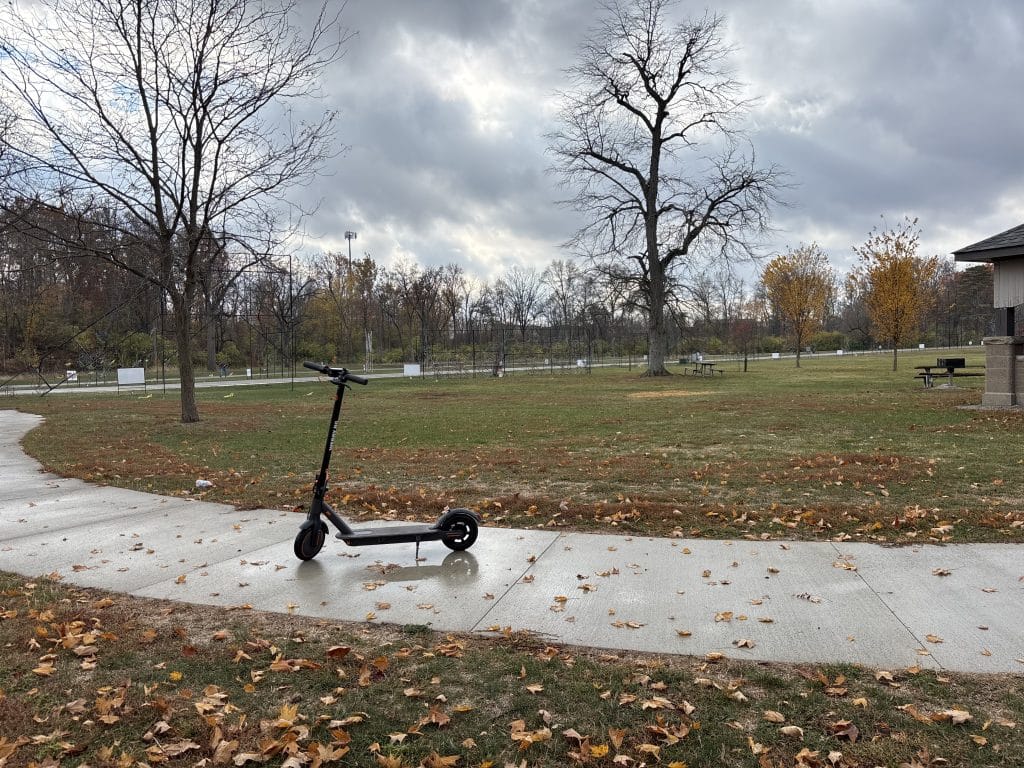
“Our vehicles are subject to far greater control and regulation than a private one,” he says.
Without a party responsible for regulating a fleet, e-scooters and e-bikes can enter zones that were previously geofenced by Veo, a method that restricted access to high-traffic pedestrian zones. Additionally, while Veo capped their scooters at 15 miles per hour, private e-scooters can reach speeds of up to 30 miles per hour, with some pushing beyond that. Private e-bikes can reach around 40 miles per hour.
He adds that the local conversation in 2023 revolved around better encouraging and enforcing rider behavior norms, and that many options had actively been considered as solutions to enforcement.
“Unfortunately, at that time,” Keating says, “the city administration was not looking for answers. They were looking to end the program.”
Fort Wayne is not the only city to experience this apparent disconnect between high usage of shared micromobility and negative public perception of these services. Since Input’s discussion with Keating, Pensacola, FL, also ended their partnership with Veo on Oct. 31, after Mayor D.C. Reeves announced the decision in August. However, he leaves the door open to future micromobility solutions. The Pensacola News Journal reported that the decision came after a survey showed that 51% of residents wanted the scooters removed. That same survey, though, also found 54% thought the scooters “provided a benefit to residents,” and that 16% of respondents said they had used the scooters.
In fact, of the 15,935 residents reached by the emailed survey, it only recorded 617 responses — a 3.87% response rate. Veo’s data for Pensacola showed that 30% of residents had used their services in that city.
In comparison, Fort Wayne’s usage reached nearly 42% of residents during 2020.
Keating says that, if Fort Wayne wants to give shared microtransit another shot, defining what success looks like at the program’s inception and a workable regulatory environment are key in overcoming some of the previous hurdles, in addition to improved infrastructure.
“What are you trying to achieve and what metrics show you that you’re succeeding? I think being really thoughtful about why you’re bringing this project in is key because that can then serve as a ‘North Star’ for when the going gets tough.”
Social media commentary from residents shows mixed feelings about the shared mobility program. On one hand, commenters cited safety concerns about irresponsible riders, as well as improperly parked scooters blocking sidewalks, while other commenters expressed disappointment that these issues led to the cancellation of the entire program.
Overall, Veo feels that the city’s decision to end the program felt more reactive than strategic, but not irreversible. Both Keating and local advocates believe the door remains open if Fort Wayne is willing to define what success looks like upfront, set expectations early, and invest in infrastructure that protects both riders and pedestrians.
For now, the city’s short-trip challenge remains unsolved: Not a crisis, but a missed opportunity. And the question of whether scooters were the problem or just a symptom is still up for debate.
Thanks to our Presenting Partner, Parkview Health, our Lead Sponsor, AWS Foundation, and to our sponsor, Citilink, for making this story possible.

Related Articles

How volunteers and local businesses are supporting 160 miles of trails
Fort Wayne Trails counters thin budgets by launching volunteer “soft maintenance” and partnering with local businesses for trail amenities.

Fort Wayne Trails: A merger that changed how the city moves
Fort Wayne Trails, established in 2011, unified trail advocacy groups, building over 160 miles of trails for recreation, commuting, and safer transportation.
Citilink is testing a new tool at its bus stops to make them more accessible
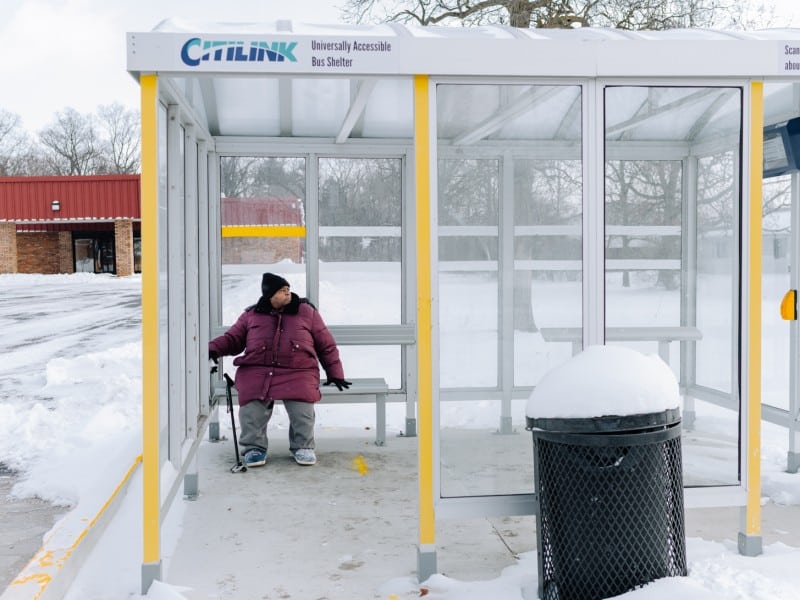
In collaboration with local partners, the local transit agency is piloting a low-maintenance, low-energy display that can communicate route information to riders at two bus stops.