Victim Assistance: Extending safety, support, and solidarity for survivors
The Fort Wayne Police Department’s Victim Assistance program provides meaningful support for survivors and their families following a traumatic incident.
When a crisis strikes, the moments that follow are often a mix of confusion, fear, and trauma. For victims of violent crime, navigating the immediate aftermath and the complexities of the legal system can feel impossible and even crushing. This is where Kristy Lindeman and her team at the Fort Wayne Police Department’s Victim Assistance program step in, offering a lifeline during what can be a person’s darkest hours.
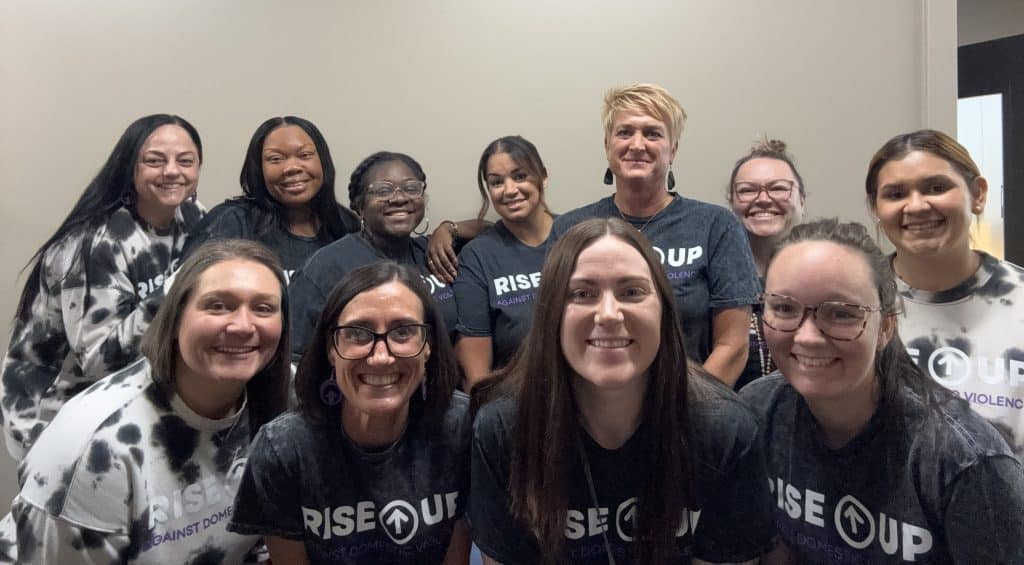
As the director of Victim Assistance, Lindeman leads a team of twelve dedicated advocates who represent and support victims of violent crimes, including domestic violence, homicide, sexual assault, and child abuse. Their work begins the moment a crime is reported. Her staff responds directly to crime scenes, hospitals, the Sexual Assault Treatment Center, and the Dr. Bill Lewis Center for Children. They get to work to connect immediately with victims and their families.
“We are on call, 24 hours a day, seven days a week,” Lindeman says. “Our general purpose is to represent and advocate for victims of violent crime… and kind of be a liaison between the police officers and the family and explain the process.”
This immediate, on-scene response is a key advantage of their program being police-based, a surprisingly rare structure, with only 11% of victim assistance programs nationwide operating within law enforcement agencies.
“The benefit to being law enforcement-based is that we are able to get involved right away,” says Lindeman. “Typically, it’s either going to be on-scene response or at the very latest, it’s within 24 to 48 hours.”
This is a stark contrast to prosecutor-based programs, which may not get involved for weeks, long after the initial shock has worn off, but before the path forward is clear. Lindeman explains this early intervention leads to more cooperation and trust from victims. In turn, advocates can better understand the full context of their situation so they can provide more targeted resources and support. It also makes it easier for victims to navigate the criminal justice process and increase the likelihood of successful prosecution.
A unique aspect of their program is that their database is separate from the police department’s. This is intentional.
“We want to maintain that privacy and protection of a victim,” Lindeman says. “If there’s something that they want to talk to us about and get support for, but are not completely ready to move forward with when it comes to charges… we have that ability to kind of be a little bit of a buffer.”
The program’s support continues long after the initial crisis. Advocates sit with victims during police interviews and court hearings, help them write victim impact statements, file for victim compensation, and connect them with resources for counseling, housing, and therapy.
This comprehensive support is funded through a mix of federal grants and the City of Fort Wayne’s Police Department budget, supplemented by fundraising for direct victim needs like food, clothing, and holiday assistance.
The scope of their work is vast. Each morning, the team sifts through 100 to 120 police reports, identifying new cases that need their attention. Lindeman says in 2023 alone they served more than 14,700 victims, with domestic violence cases making up a staggering 73% of their caseload. Fort Wayne/Allen County receives over 10,000 domestic-related calls annually. So far this year, the Victim Assistance team has worked with a total of 3,688 victims of domestic violence, with a total of 4,506 cases of domestic violence.
Lindeman points to a disturbing trend: a recent spike in domestic violence-related homicides in Allen County. Out of 24 homicides, 11 were domestic violence-related. This is a significant increase over previous years, and Lindeman attributes this rise to the immense stress families are under. She cites factors like financial pressures and the pervasive negativity in the news, all of which weigh heavily on mental health.
This is why education and prevention — while delicately navigated due to grant restrictions — are vital. This month, in recognition of Domestic Violence Awareness Month, they’ve focused specifically on teen relationships. The team partners with community agencies and offers classes to translate their work into real-world impact.
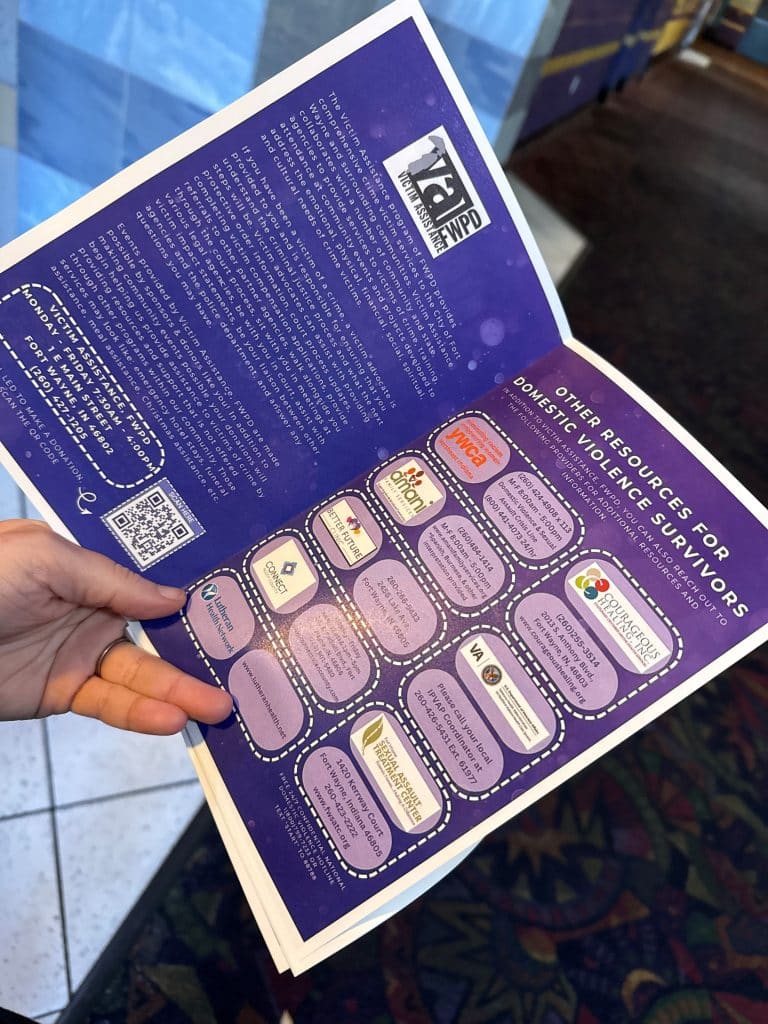
“We’ve seen a rise in teen violence and teen-related domestic violence as well,” Lindeman says. “So we’ve partnered with some area community centers, and we are offering classes on healthy relationships.”
According to Lindeman, the team also works closely with the Fort Wayne Police Department Academy, training new officers and lateral transfers on domestic violence response and how to work effectively with victim services. They’re planning safety planning workshops for school staff and regularly present on human trafficking awareness.
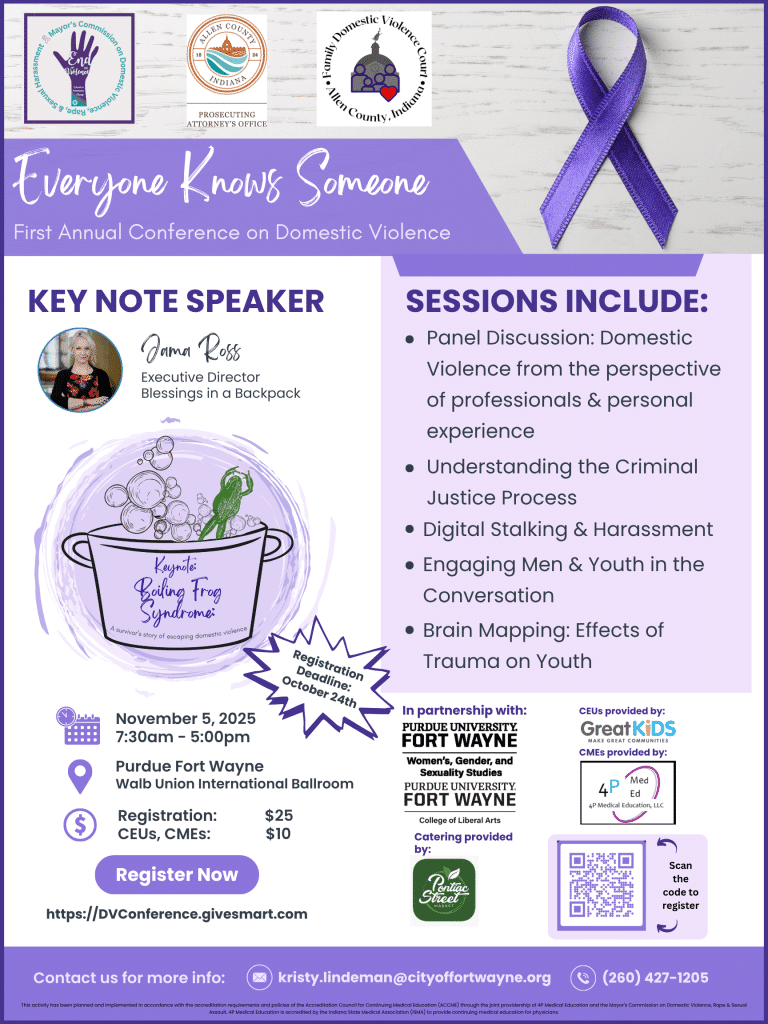
On the note of education, Fort Wayne is set to host its First Annual Conference on Domestic Violence on November 5 at Purdue Fort Wayne. It’s organized in partnership with the Mayor’s Commission on Domestic Violence, Rape & Sexual Harassment, Family Domestic Violence Court, and the Allen County Prosecuter’s Office.
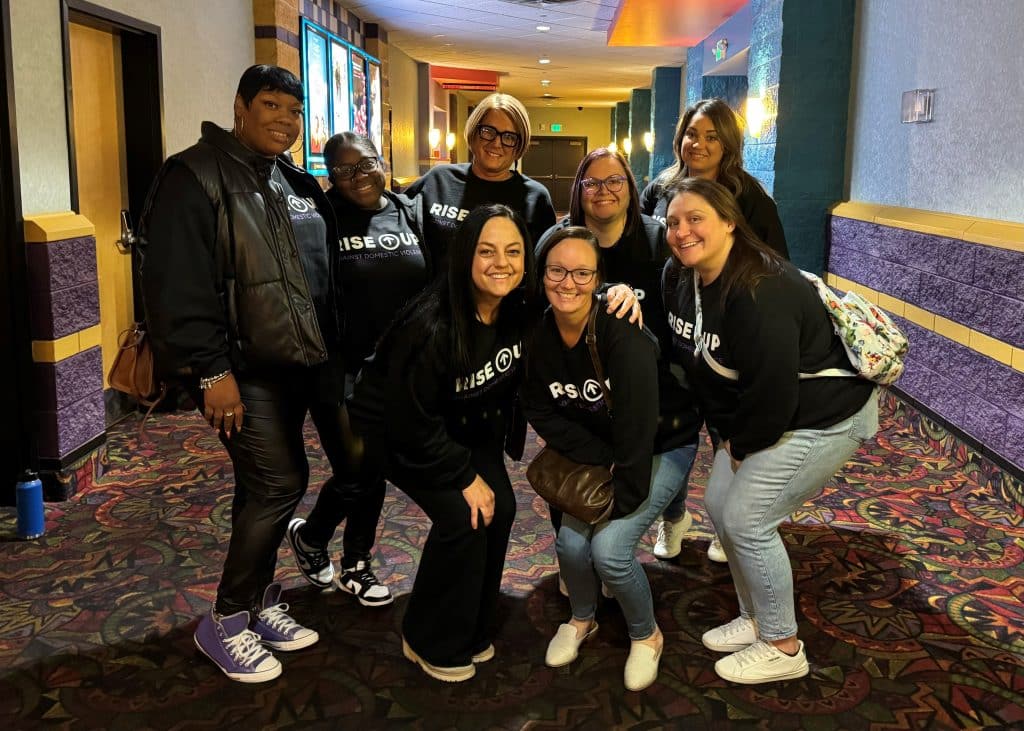
The all-day conference targets frontline staff, caseworkers, and healthcare professionals — anyone who might be a first point of contact for domestic violence victims. Lindeman says the program will cover recognition, intervention strategies, available resources, and the impact of domestic violence on children.
The conference will feature guest speaker Jama Ross, a community leader who’ll share her personal journey through domestic violence. According to Lindeman, her testimony is a powerful reminder that abuse affects people from all backgrounds and positions in society.
One of the biggest hurdles advocates face is the common misperception surrounding domestic violence, encapsulated by the question, “Why didn’t you just leave?”
“I think it’s very easy to make that assessment or to judge somebody’s situation if you’ve never experienced it yourself,” Lindeman says.
She explains that relationships rarely begin violently. Instead, they begin with a “honeymoon phase,” and the abuse creeps in slowly, often starting with verbal and emotional manipulation before escalating. Victims cling to memories of the good times, believing they can rectify the situation. Factors like children, financial dependence, and isolation from friends and family create a complex web that is incredibly difficult to escape.
If someone suspects they’re a victim or is concerned a friend or family member might be, Lindeman advises people to trust their gut. Other red flags include a partner who’s constantly checking your phone, questioning your whereabouts, or controlling your finances. An abuser might attempt to create barriers between you and your friends and family. Another hallmark is praise followed by cruel criticism.
For those who suspect a loved one is in a precarious situation, she recommends asking direct questions like, “Are you safe?” and letting them know you are there to support them without judgment.
“Being that support person and saying, ‘I’m here for you if you need me’… maybe even setting up a code word that they can text to you… that would be something to indicate, ‘I’m in danger.'”
Victim Assistance will host its first annual first annual Conference on Domestic Violence on November 5 in partnership with the Mayor’s Commission on Domestic Violence, Rape, and Sexual Harassment, The Family Domestic Violence Court and the Allen County Prosecuting Attorney’s Office.
When: November 5, 2025, 7:30 a.m. to 5 p.m.
Where: Walb Union International Ballroom
Price: $25 registration fee, or $10 for CEUs and CMEs.
Author

Related Articles
Indiana health center trains local residents as dental assistants to fill workforce gaps
HealthLinc, a federally qualified health center in Valparaiso, covers training costs while preparing local residents for dental assistant jobs, strengthening workforce pipelines and expanding access to care.
What will Dekalb County do with the historic Sunny Meadows property?
Sunny Meadows, a county residential home, is now closed, but the building’s future is up for debate.