The big reason for tiny houses
How a trendy lifestyle choice is drawing attention to the housing market's "missing middle."
Kati Todd bought her first house when she was 23.
It was a roughly 20-foot by 20-foot lake cottage in LaGrange County, and she called it the “American Honey Hideaway” after the popular song by Lady Antebellum.
More than a money-saving tactic, the hideaway was an embodiment of Todd’s ideal lifestyle—a return to the simple sweetness of close-knit communities and fewer material possessions.
With the money she saved on the mortgage, she renovated the house into a dreamy getaway with floor-to-ceiling windows and a loft just big enough to fit her bed.
But when she moved to Fort Wayne for work a few years ago, she had to leave her hideaway behind for an 1,800-square-foot house, and she began to resent the upgrade.
“My house payment was more. All my bills were more. My rooms were empty, and all the empty rooms made me sad,” she explains.
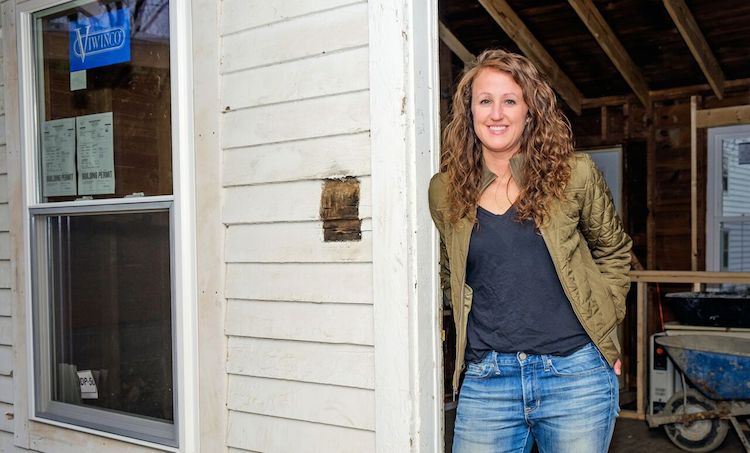
Instead of pouring time and money into a house that didn’t fit her needs, she decided to downsize in a big way.
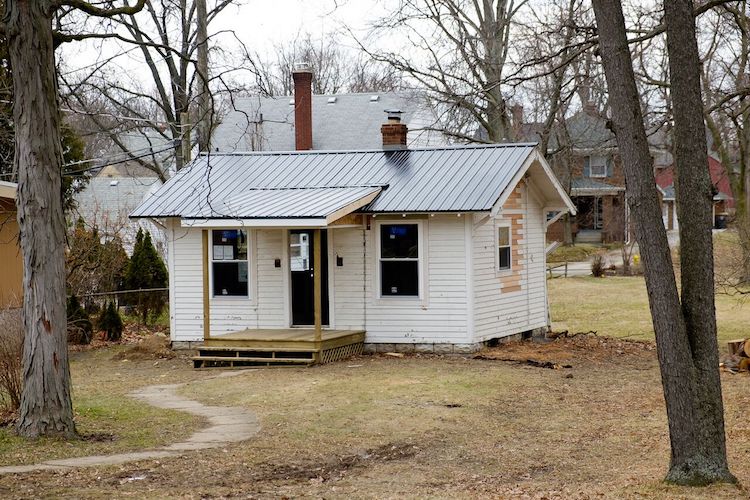
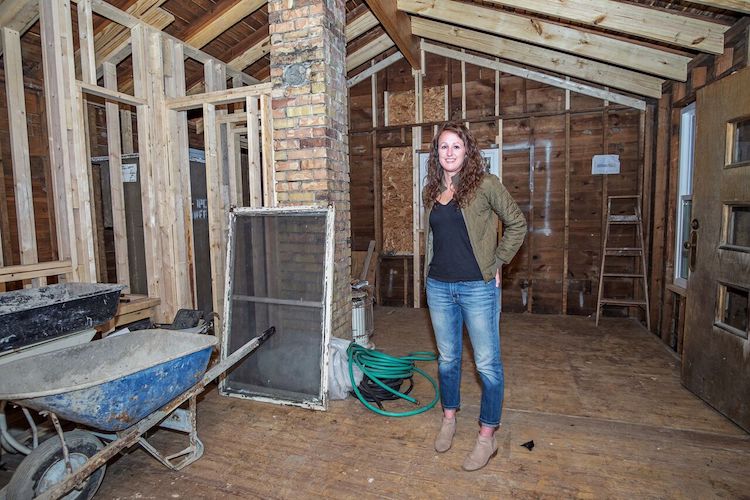
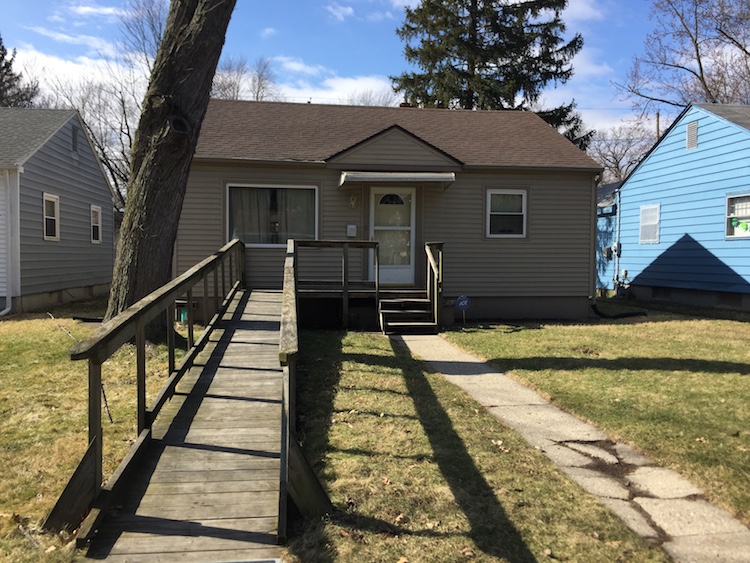
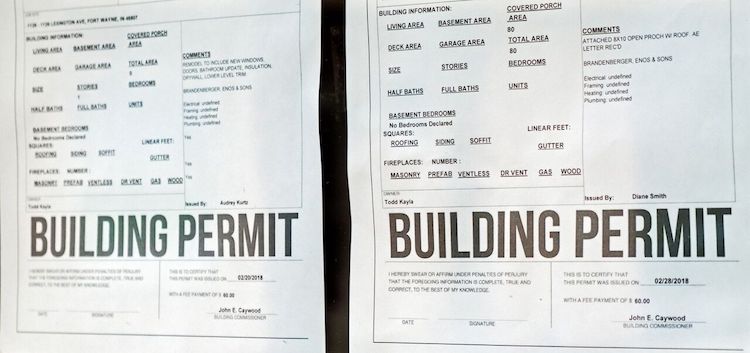
She submitted an application to HGTV’s “Tiny House Hunters” show and began what would become a two-and-a-half-year process to create the tiny house of her dreams in Fort Wayne—in roughly 400-square-feet of space.
But while Todd was successful in finding a house and being featured on HGTV’s show (set to air this summer), she ran into a few roadblocks along the way.
While the so-called “tiny house movement” has been sweeping the nation for the last several years, it’s still a challenge to finance, build, or renovate small houses in Allen County because building and zoning regulations haven’t been updated to allow them.
And some residents think it’s time for things to change.
***
In many ways, Todd is the type of tiny house owner you would expect to see on HGTV—a young, ambitious DIYer intrigued by small spaces.
She recalls trying to make a bedroom of her closet as a child, or squeezing into a cabinet under the kitchen sink on family vacations.
Her future home shows evidence of this, as well, with plans for a bed suspended from the ceiling and a clothing closet in the kitchen.
But while people like Todd make ideal candidates for TV shows, painting them as this new wave of homeowners flooding the market causes confusion about what’s actually happening in the housing industry, says innovative housing expert Marianne Cusato.
“In a way, this whole tiny house thing is a fallacy,” she explains. “The number of people who really want to live like that is few.”
Instead, as an associate professor at the Notre Dame School of Architecture, Cusato helps communities across the country build houses on a slightly larger scale that’s more appealing to mainstream homebuyers. And her work has earned her a ranking as the No. 4 most influential person in the home building industry by Builder magazine.
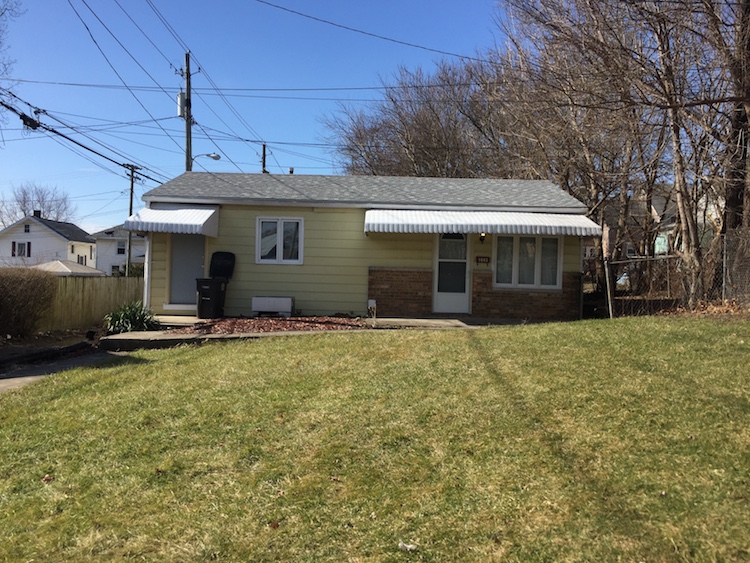
While the average American house is roughly 2,600 square feet and tiny houses are between 100 to 400 square feet, the houses Cusato designs are roughly between 400-1,200-square feet. Big enough to live comfortably, no ladders required.
She believes these “just big enough” houses are the true future of the housing industry, and getting them into the market starts with asking a few critical questions.
“It’s essentially saying what we do really need to live in?” she explains. “Do you need a 2,000 square foot home? How do we design a home around what we really need to live?”
As a research assistant at Brighpoint, Andrew Applegate came across Cusato’s work in his search for a way to help low-income residents in northeast Indiana break into the housing market.
While Fort Wayne’s housing is among the most affordable in the nation, houses are often still out of the question for low-income residents, so Applegate was researching ways rent-to-own tiny houses could help these residents build equity.
The problem is, under Allen County’s current building and zoning regulations, you can’t build a new single-family home with fewer than 950-square-feet or on a lot smaller than 50 feet.
Even if you purchase an existing structure, most tiny houses are too cheap to qualify for bank loans, so you have to pay out of pocket or go through a nontraditional lender.
To start the conversations needed to change these codes, Brightpoint hosted northeast Indiana’s first Tiny House Showcase last October, bringing a few Tiny Houses on Wheels, also known as THOWs, to downtown Fort Wayne for residents to tour.
Applegate expected millennials and other ambitious homeowners come out for the event. Instead, he says some of the people most interested in tiny houses were the elderly who wanted ways to age independently.
But while he was surprised by this turnout, Cusato was not. She explains that tiny houses aren’t just for low-income residents or millennials. They actually have a broader appeal than you might think.
“What Brightpoint is doing is not a fad,” she says. “They’re looking their community, and saying where are the gaps? The thing that I love about the tiny house movement is it opens the door to this conversation, which is the real conversation we need to be having.”
Houses—like much else in America—have simply gotten bigger over the years, and now, people are starting to wonder why.
***
Building and zoning regulations in Allen County require single-family homes to be at least 950-square-feet.
But Kimberly Bowman, Executive Director of Allen County Planning Services, says there’s not a real reason for this rule in the first place.
There’s nothing particularly special about 950-square-feet. That’s just the way it is.
“It’s been like that for so long, but I’m not sure why,” she admits. “It’s one of those standards that just gets carried forward year-to-year.”
Bowman says builders can apply for a variance with the Board of Zoning Appeals to accommodate smaller houses, or Allen County’s legislative bodies can change the requirements in the zoning ordinance for everyone.
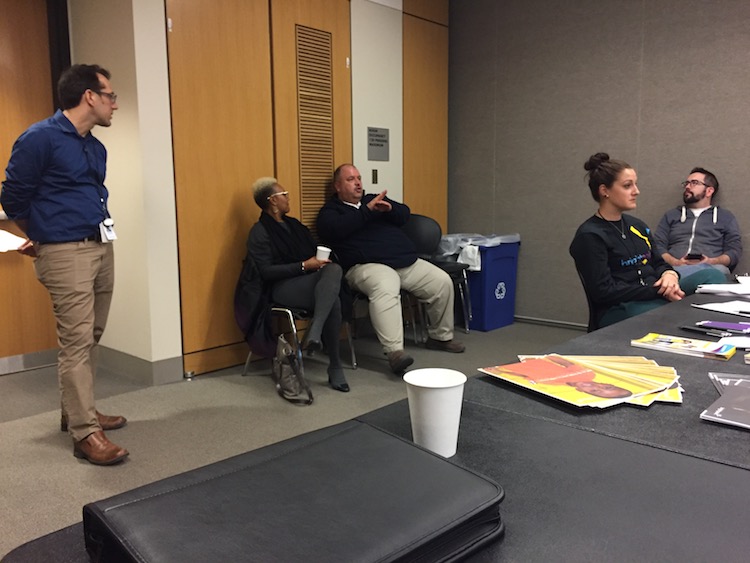
Applegate and others at Brightpoint are hosting meet ups for residents who want to discuss these options and continue the conversation on making tiny houses an option in Fort Wayne.
After all, things weren’t always this way.
Before the 1940s, American neighborhoods offered a mix of housing options all within the same area.
You could buy your starter home, upgrade to your family home, and move into a mixed-use loft all without leaving your community, Cusato explains.
But in the auto industry boom and suburban sprawl after World War II, Americans started driving instead of walking where they wanted to go. Houses got bigger and bigger, and neighborhoods became divided into types of houses and types of people.
You moved in when you fit the type; You moved out when you didn’t.
These changes in the housing market caused structures like tiny houses to largely fall through the cracks in city planning nationwide, as neighborhoods with larger houses fought to uphold property values.
“We stopped prioritizing the connection to others, and we lost a lot of building types in the process,” Cusato explains.
It’s a phenomenon architect Daniel Parolek calls the “missing middle,” and it’s a loss that residents feel today not only in their physical structures, but also in their lives.
Cusato discovered this while designing tiny houses after Hurricane Katrina devastated Louisiana.
Her mentor challenged her to create a more dignified alternative to FEMA housing that would allow disaster-struck regions rebuild stronger communities.
What she came up with were her nationally renowned Katrina Cottages, which are permanent tiny houses with strong neighborly character.
While she was designing her 300-square-foot prototype at a warehouse in Jackson, Mississippi, she remembers an older woman coming up to her with envy in her eyes.
“She said, ‘I didn’t lose my home in the storm, but I want one of these,’” Cusato recalls.
She explains that when you introduce tiny houses into a market, more people than you’d expect come out because many homeowners are craving a change, they just don’t realize what it is until they see it.
“The general public genuinely feels something missing from the way that we’ve evolved in building real estate and our communities,” Cusato says.
Another part of that missing factor is regular human interaction and connection to people of all types.
“Tiny houses create this opportunity for connection that is very hard to find in today’s built environment,” Cusato explains.
And sometimes, building smaller simply makes sense.
***
Allen County Building Commissioner John Caywood grew up in a house of fewer than 900-square-feet near Franke Park, and he recalls how it influenced his family’s lifestyle.
“I remember the increased importance of being organized and sharing everything,” he says. “Coincidentally, living near public parks or public areas for recreational opportunities made all the difference in how we lived.”
Today, Caywood thinks making tiny houses an option in Allen County could make a difference here, and not just for the community-building factors, but also for the county’s land use.
For instance, the Allen County Zoning Ordinance requires lot sizes to be at least 50-feet for a primary residence.
However, the Allen County Community Development Corporation (ACCDC) currently has acquired hundreds of lots available for purchase, many of which are small, urban lots only 35-feet wide.
“This makes these urban lots attractive only to neighboring properties looking to expand their yard space,” Caywood says. “My opinion, not policy, is that there is potential with smaller urban lots being able to accommodate a smaller house without squeezing between existing houses.”
It’s focusing on building smarter, not bigger, says Cusato, and she believes this type of mixed-use development is what cities need—whether they realize it or not.
When many people hear the term tiny house, they immediately think “affordable housing,” and they immediately say, “no.”
But while the communities she’s working with have been initially resistant to mixed housing, she finds that this reaction is largely rooted in the failures of the current housing system.
“Recent history shows that when you make changes in communities, in many cases, the negative side wins out,” Cusato says. “But this is actually the argument for building like this because the previous equation didn’t work. When you look at a more diverse range of housing options, your whole community grows.”
***
While Todd may not be the most common type of tiny house dweller, she is one of Fort Wayne’s first to take on the challenge of this niche lifestyle.
But while purchasing and financing an existing tiny house is difficult in itself, changing people’s perceptions about tiny houses has been arguably harder.
She says that while her new neighbors have been supportive and excited to see someone moving into the vacant house, assessors and contractors have not been as gracious.
Todd recalls getting laughed at by people who didn’t think her project was worth what she was putting into it.
Now, she is proving them wrong, and proving that Fort Wayne could be a sweet spot for tiny house hopefuls of all types.
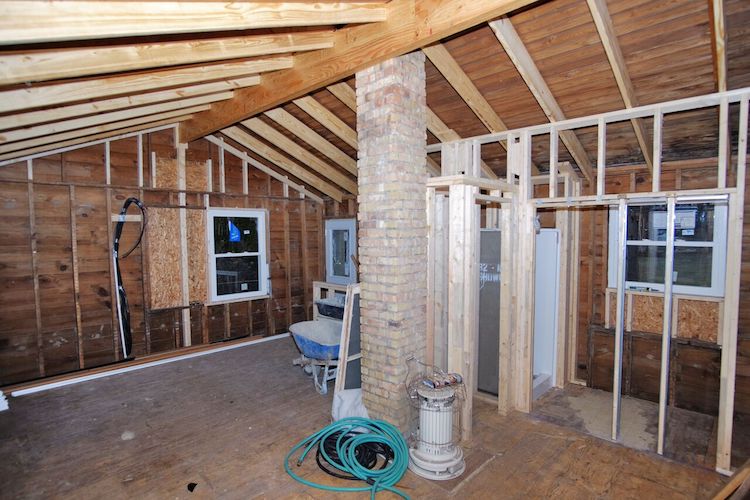
While national data shows that tiny houses end up costing homebuyers more money in high-density areas, like Washington D.C., where land prices are high, lower density cities like Fort Wayne could make tiny houses profitable.
Todd purchased her house for $11,000, and is putting in $35,000 of renovations for a total cost of $46,000. Her property was appraised for $51,000.
But more than saving money, she’s interested in saving time.
As a member of the Northeast Indiana Regional Partnership’s Emerging Leaders Alliance and Talent Development Committee Co-Chair, Todd wants to spend less time on home maintenance and more time investing in her community.
“The less time I’m cleaning a house, the more time I’m getting involved,” she says.
A tiny house gives her the dual benefits of building equity while sidestepping the hassles of traditional homeownership, which may be keeping other busy residents in apartments.
She hopes her story helps people see tiny spaces in a different light.
“Some people have a really negative opinion of the term ‘affordable housing,’” Todd says. “I hope I can help change that perception. There are a lot of different reasons people are attracted to living this way.”
Author

Related Articles
FORT-ify Accelerator strengthens community in the digital age
The FORT-ify Neighborhood Accelerator empowers local associations with connections to funding, resources, and face-to-face engagement opportunities to build stronger communities.
Help shape future coverage – join our upcoming listening session
Join Input Fort Wayne at Tall Rabbit for coffee, conversation, and a chance to share the issues, people, and neighborhood stories you think deserve more attention.
Partner Partner Content Bringing neighbors together: Q&A with Réna Bradley on the Inspire Neighborhoods Conference
Neighborhood Planner Réna Bradley explains how the Inspire Conference supports local change-makers by connecting residents and sharing tools for building resilience.