‘This Affects All of Us’: A Closer Look at Higher Ed Through a Fort Wayne Teach-In
Members of the AAUP and faculty from local universities gathered earlier this month to start conversations about the future of higher education in Indiana.
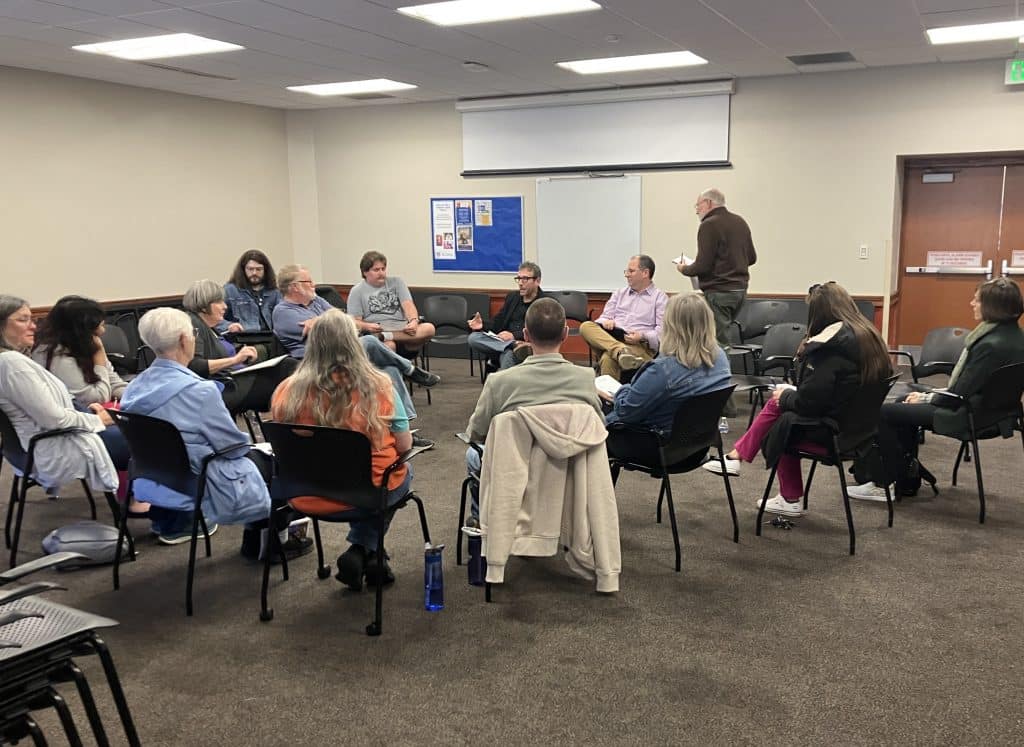
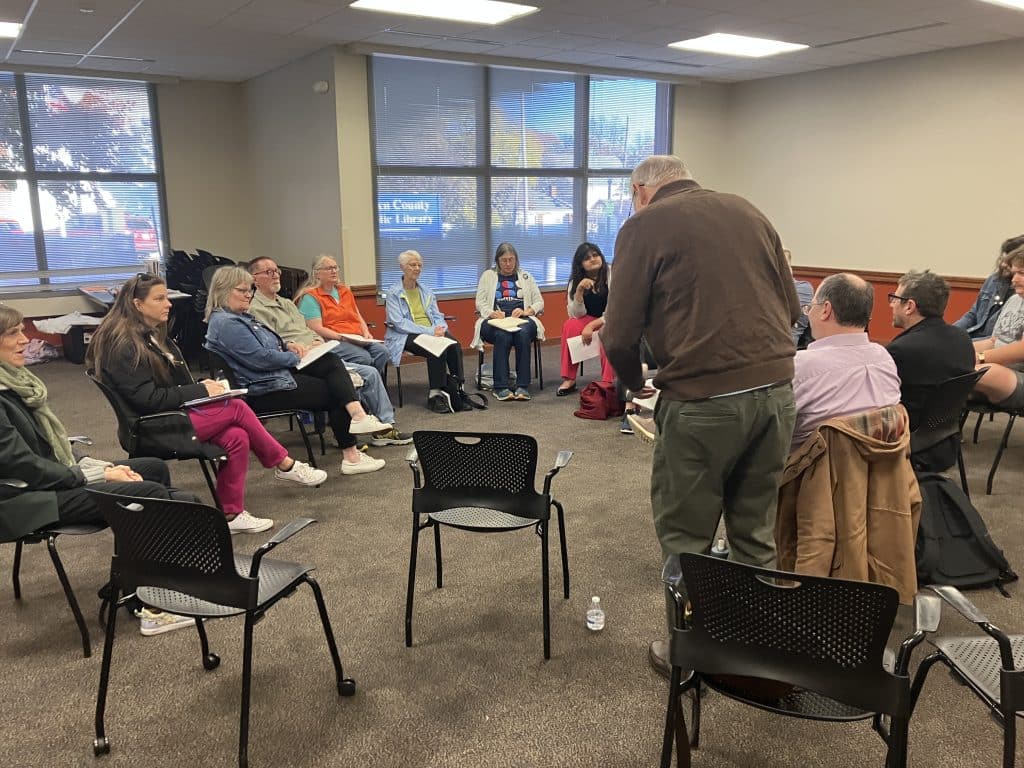
On a Friday afternoon at the Tecumseh Branch Library in early November, a group of faculty, students, alumni, and educators gathered around pushed-together tables for what organizers described as a “community teach-in.” It was a modest event, with about sixteen people in attendance, but the goal was larger: to spark a serious local conversation about the future of higher education in Indiana.
The teach-in was part of the national Day of Action for Higher Education, a coordinated effort led by the American Association of University Professors (AAUP) and the American Federation of Teachers (AFT). Similar gatherings took place across the country. In northeast Indiana, where several institutions have endured program cuts, staffing reductions, and budget constraints, the conversation felt particularly timely.
Why a Teach-In, and Why Now?
The event was organized by local members of the AAUP, including faculty from Purdue Fort Wayne (PFW), the University of Saint Francis, and Manchester University. One of its organizers, Leonard Williams, a retired political science professor at Manchester, said he drew inspiration from teach-ins of the 1960s and from a colleague who recently organized a similar event at the Smithsonian. He says the idea reminded him how powerful community-driven forums can be in moments of cultural or political strain.
Holding the event at a public library rather than on a campus was intentional. Organizers said the choice was meant to emphasize that the challenges facing higher education extend beyond faculty and students, touching citizens, taxpayers, and the broader community.
The teach-in featured a series of short presentations that illustrated both national pressures on higher education and how those pressures are being felt in northeast Indiana. The crowd itself was intentionally broad, with students, alumni, K-12 educators, and local journalists in attendance — a mix organizers hoped would break the “silo effect” that often isolates campus conversations. Williams opened with an overview of the Day of Action and the statewide policies contributing to program cuts and greater political influence over curriculum. PFW faculty member Steve Carr drew historical parallels to past attempts to control universities, noting the dangers of imposing political loyalty tests. A PFW student spoke about rising costs and uncertainty around whether programs will remain intact long enough for students to graduate, while a local alum reflected on how a liberal arts education shaped their life and why the marginalization of humanities programs is troubling. When the discussion opened to the room, participants raised concerns about DEI cuts, program eliminations, threats to tenure, and misinformation about “indoctrination” that has eroded public confidence. According to organizers, the atmosphere was serious but collaborative, as attendees worked to bridge gaps between campuses and the wider community.
Indiana’s Higher-Ed Landscape: A System Under Pressure
The concerns raised at the teach-in mirror wider trends across the state.
Indiana’s public colleges and universities are currently reviewing, consolidating or eliminating more than 400 degree programs that fall short of new enrollment and graduation thresholds.
Many of the targeted programs are in liberal arts and humanities, which are fields that often struggle with enrollment but provide the kind of civic and democratic education faculty say is essential.
These changes come as Indiana faces a significant decline in college enrollment. According to the Indiana Commission for Higher Education, the percentage of high-school graduates who go on to college has dropped from 65% in 2015 to 53% in 2023.
Meanwhile, Senate Bill 202, passed in 2024, expands political oversight of tenure reviews, requires regular evaluations tied to “intellectual diversity,” and invites greater legislative involvement in classroom decisions. These changes have occurred alongside broader efforts to roll back diversity, equity, and inclusion (DEI) initiatives across state agencies, including higher education, creating a coordinated shift in how campuses are governed and what kinds of work are publicly supported.
Williams says these overlapping pressures limit institutions’ ability to prepare well-rounded, civically engaged graduates. “[Program cuts] limit students’ ability to take liberal arts courses that help them think and act in informed ways,” Williams says, also noting that research freezes restrict scholars from contributing knowledge for the public good.
A Crisis of Public Confidence
At the teach-in, Noor O’Neill, professor of anthropology at PFW and president of the Indiana Conference of the AAUP, spoke about what she described as a “crisis of public confidence” in higher education. She said years of rhetoric suggesting universities indoctrinate students have eroded trust and distracted from the work educators are actually doing.
A central topic was the Compact for Academic Excellence in Higher Education, sometimes referred to as a “loyalty compact,” promoted by the Trump administration. O’Neill said faculty nationwide have opposed the compact because it conditions federal funding on accepting political oversight of campus operations.
PFW has not received or signed such a compact, O’Neill explains, but faculty leaders are working to ensure administrators reject any future offers. Nationally, the Trump administration initially offered the compact to nine universities, and seven have publicly declined. For O’Neill and other AAUP leaders, those refusals are an encouraging sign that institutions can hold the line — but only if faculty, students, and community members stay vigilant and unified.
The Economic Stakes for Northeast Indiana
Beyond the political climate, educators emphasized that higher education remains a cornerstone of Indiana’s economic future. Colleges and universities contribute billions in spending and thousands of jobs statewide, acting as economic anchors in many regions. Williams noted that universities are often among the “leading employers” in their communities and that their faculty and staff fuel local economies through their spending. Research from the Indiana Business Research Center further shows that communities with higher levels of educational attainment experience stronger wages, greater innovation, and more stable long-term growth. O’Neill added that the impact is not only economic but also social, describing higher education’s benefits as a “ripple effect” that enhances well-being across entire communities.
Looking Ahead
Despite the gravity of the issues discussed, both organizers say they have hope. Williams said the teach-in was just a beginning.
“You have to start somewhere,” he says. “The idea is to get the ball rolling and inspire others to get involved.”
O’Neill says a second event is already planned for the spring, and organizers intend for it to be more student-centred. The goal is to elevate student voices, highlight the challenges they are experiencing firsthand, and create space for them to shape the conversation. She says the next teach-in will involve participants from multiple area colleges and will focus more directly on student concerns such as affordability, program stability, campus climate, and the value of a broad-based education. By bringing students from different institutions together, organizers hope to build momentum for a more coordinated regional effort.
For both educators, the path forward begins with recognizing that higher education is still a cornerstone of Indiana’s communities and civic vitality. Or, as Williams put it, “There’s a story to be told about higher education, and if no one else is telling it, we can step up to tell it ourselves.”
Author

Related Articles

Developing animation talent and providing opportunities: PQC Trains Toon Boom Classes
“We did all of our homework, and now we just need people to know that we’ve got this great program. It’s a win-win for everyone.”
Partner Partner Content Parkview partners with local universities to address shortage of registered nurses
“The program supports the mutual goals to ensure our communities have the number and quality of nurses needed to care for the region."

Driving Collaboration: Indiana Tech’s Zollner Center renovation aims to spark industry partnerships
“For our students, they are getting real-world, hands-on experiences working on key projects for innovative companies. For corporations and entrepreneurs, they are gaining access to facilities, research and development services that are making a difference on their bottom line. The regional economy here in Northeast Indiana benefits from both of these things.”