The sacred and the creative: How Fort Wayne churches champion the arts
Three local church leaders share how their congregations are showing up to advance the arts and cultural scene.
In an era where community and gathering spaces are more vital than ever, several of Fort Wayne’s faith institutions are embracing the centuries-old role of being patrons of the arts.
However, far from being confined to stained glass or sculptures, three houses of worship in “the city of churches” are cultivating vibrant cultural hubs. From professional theater and contemporary art galleries to dynamic music series, church leaders say their art is a means to inspire, connect people, and stay relevant.
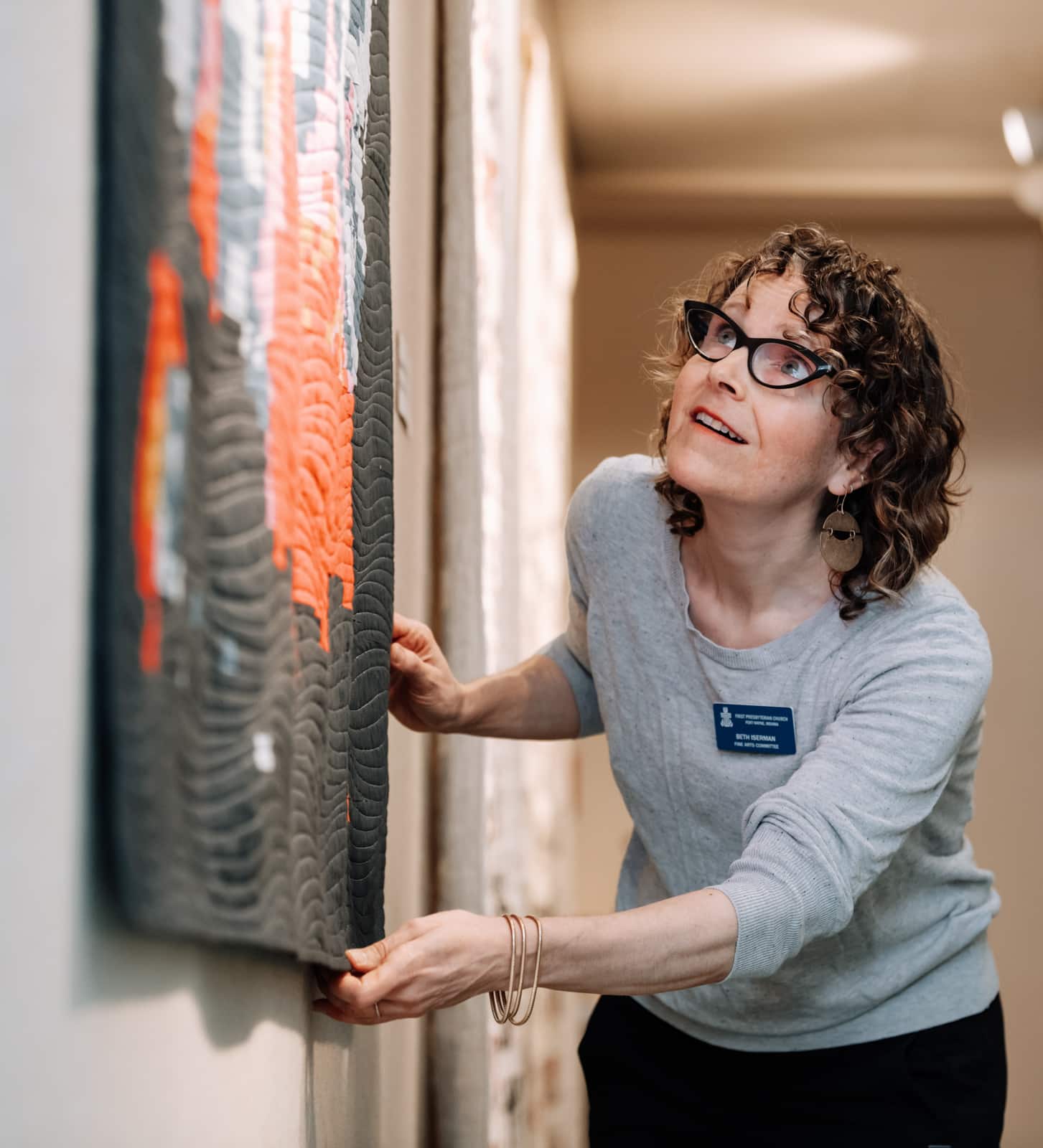
For First Presbyterian Church in downtown Fort Wayne, a commitment to the arts is deeply embedded in its identity. According to its pastor, Rev. Dr. Annie Epling, the church is one of only two in the country with its own fully equipped, 300-seat theater. This unique feature dates back 55 years, when the congregation chose to build a performance space instead of a gymnasium.
“The church decided that we didn’t need another gymnasium in a church in downtown Fort Wayne, so let’s put in a theater,” Epling says.
This decision has allowed them to host productions that provoke thought and explore complex societal issues.
“We can address issues that people are thinking about and reflecting on in their daily life that we may not be able to on a Sunday morning in the sanctuary,” she says.
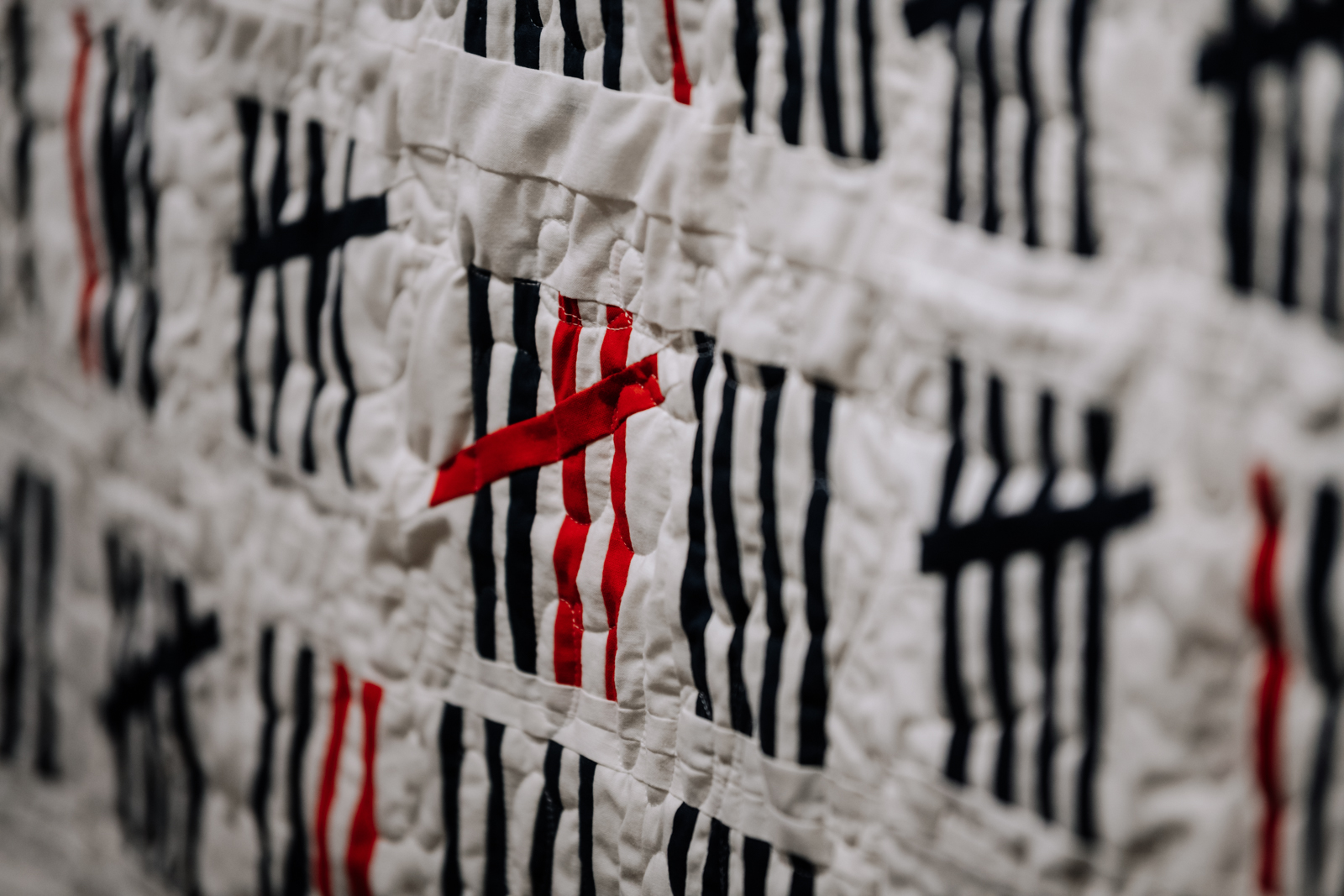
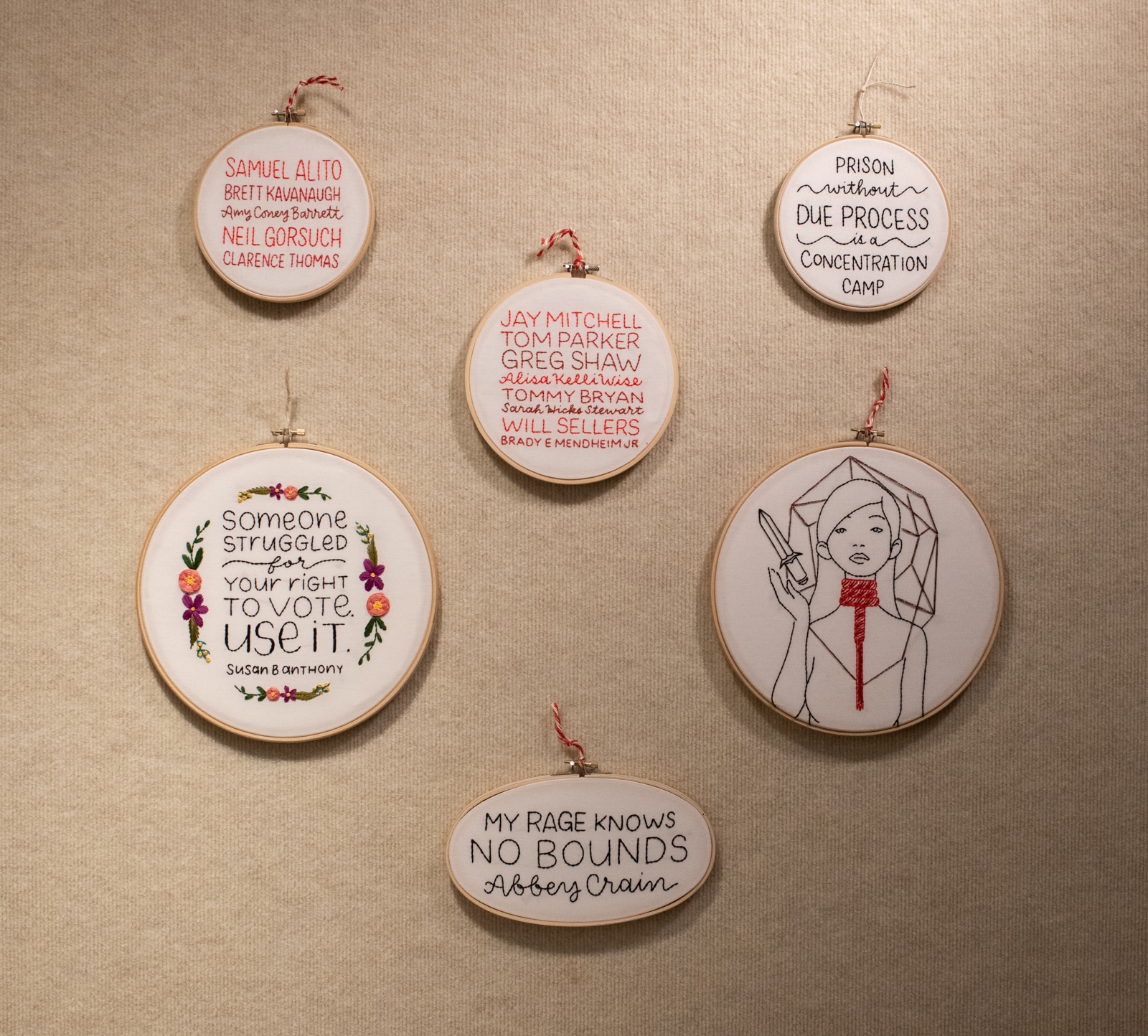
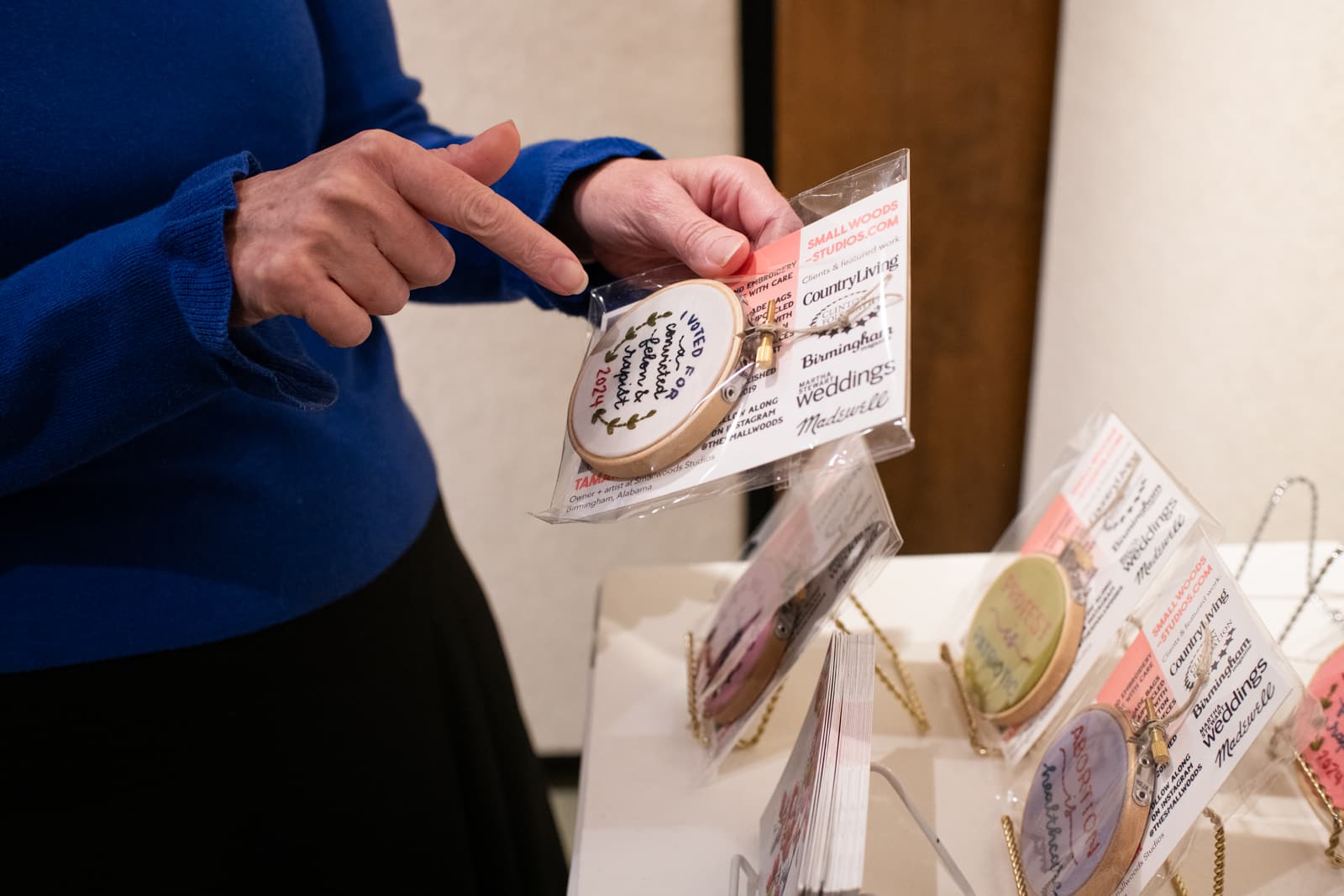
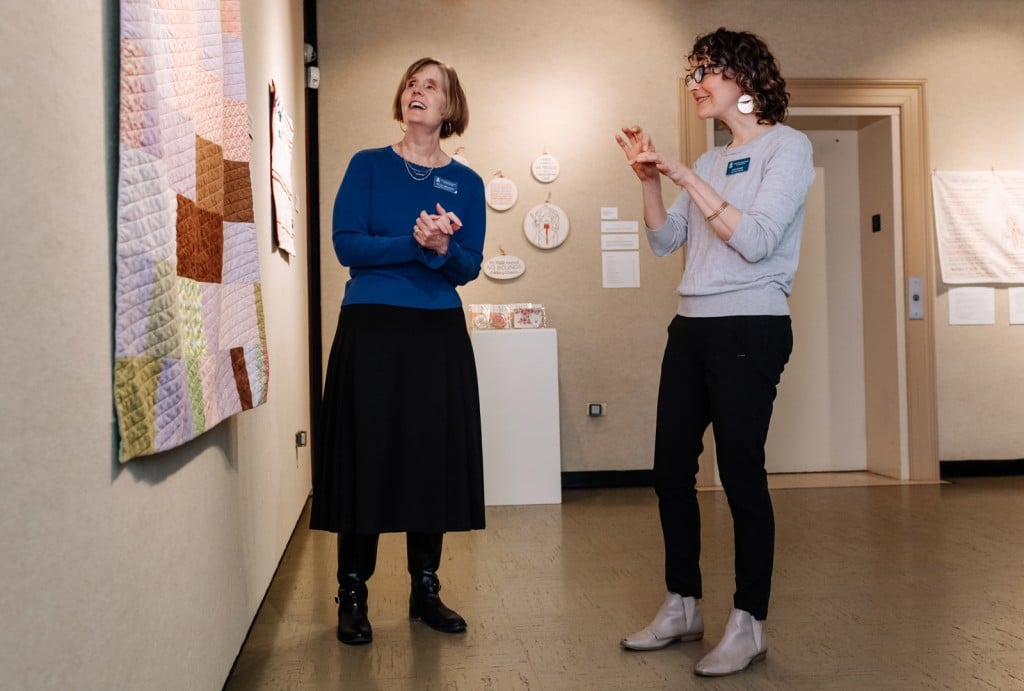
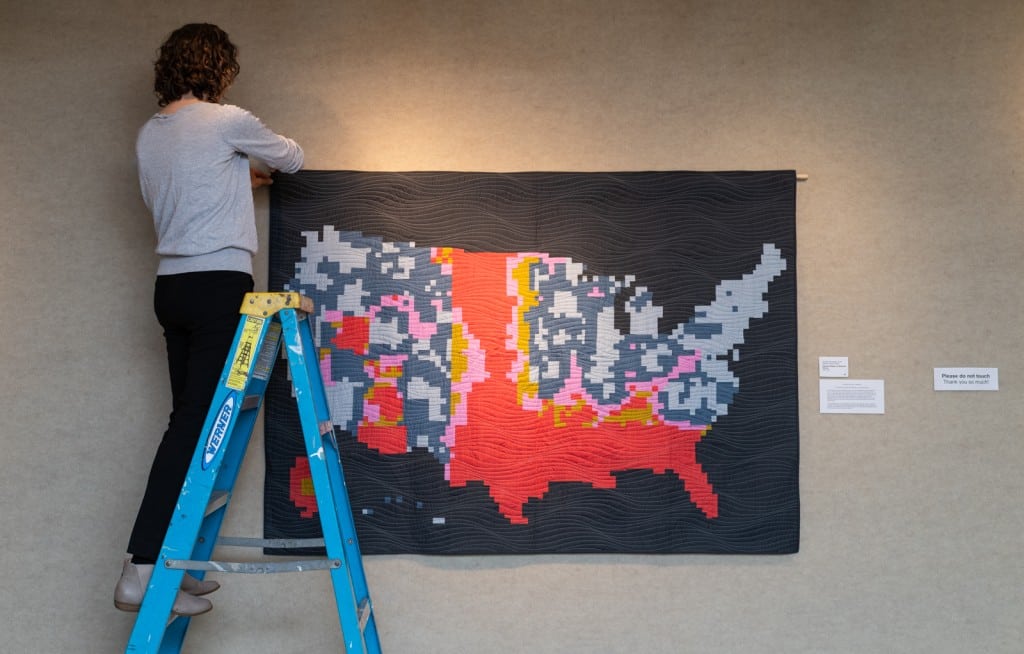
This mission is evident in their programming, which has included shows like What the Constitution Means to Me and The Prom. The theater lobby doubles as the art gallery, which hosts five to six shows a year. A recent exhibit, Craftivism, featured quilts commenting on mass shootings and reproductive healthcare access, demonstrating the church’s willingness to engage with timely and sometimes contentious topics.
In Epling’s words, “it’s more than just hanging pretty paintings in a gallery, though there’s certainly a place and time for that.”
Just a few blocks away, Plymouth Congregational Church on West Berry also has a rich history of arts programming, one that is deeply intertwined with its focus on social justice. Director of Music Robert Nance has been with Plymouth for 26 years, after a decade at First Presbyterian. The virtuoso sees a clear connection between supporting artists and building a better community.
In his observation, artists have dedicated themselves to enriching our culture. Though talented, they’re often poor. He believes that faith communities have a responsibility to address this disparity.
“This is a city of churches, for heaven’s sake. We cannot ignore the fact that there are people who are suffering in our community and not do something about it.”
As far as solutions, Nance suggests churches pay artists living wages so they aren’t forced to live at or below the poverty line. He also believes in creating and maintaining a professional arts presence via programming like a vocal company or regular music series, so vocalists and other artists have sustainable, visible opportunities. He feels equally strongly about advocating for the value of the arts to the congregation and wider community, so people are willing to pay for and invest in artistic work.
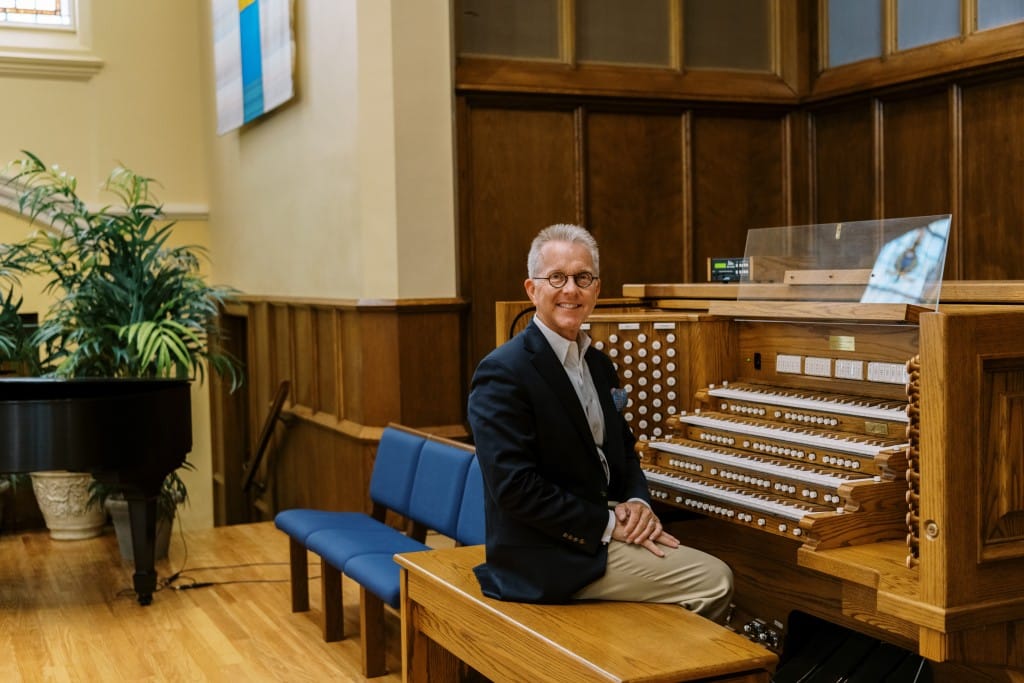
Meanwhile, the church’s music series, which is open to the public, has shifted its focus to supporting local musicians. Concerts often explore themes like immigration. Church leaders like Nance believe these encounters with art can provide a powerful medium for reflection.
“That’s where the arts can be used to make a point, to give people something to chew on, you know, emotionally and spiritually,” he says.
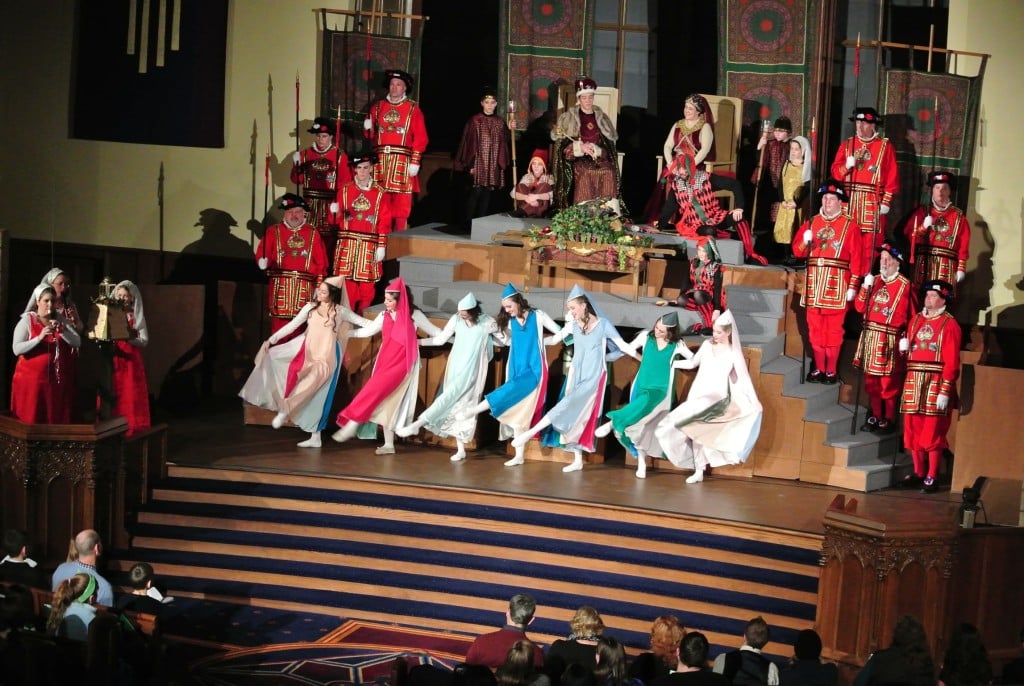
Plymouth is also home to the beloved Boar’s Head and Yule Log Festival, a 50-year tradition that Nance calls “a wonderful gift to the community.” The annual event is an ancient Christian Christmas pageant, dating back to 14th-century England. It blends medieval pageantry, music, and dance to symbolize the triumph of light over darkness and good over evil.
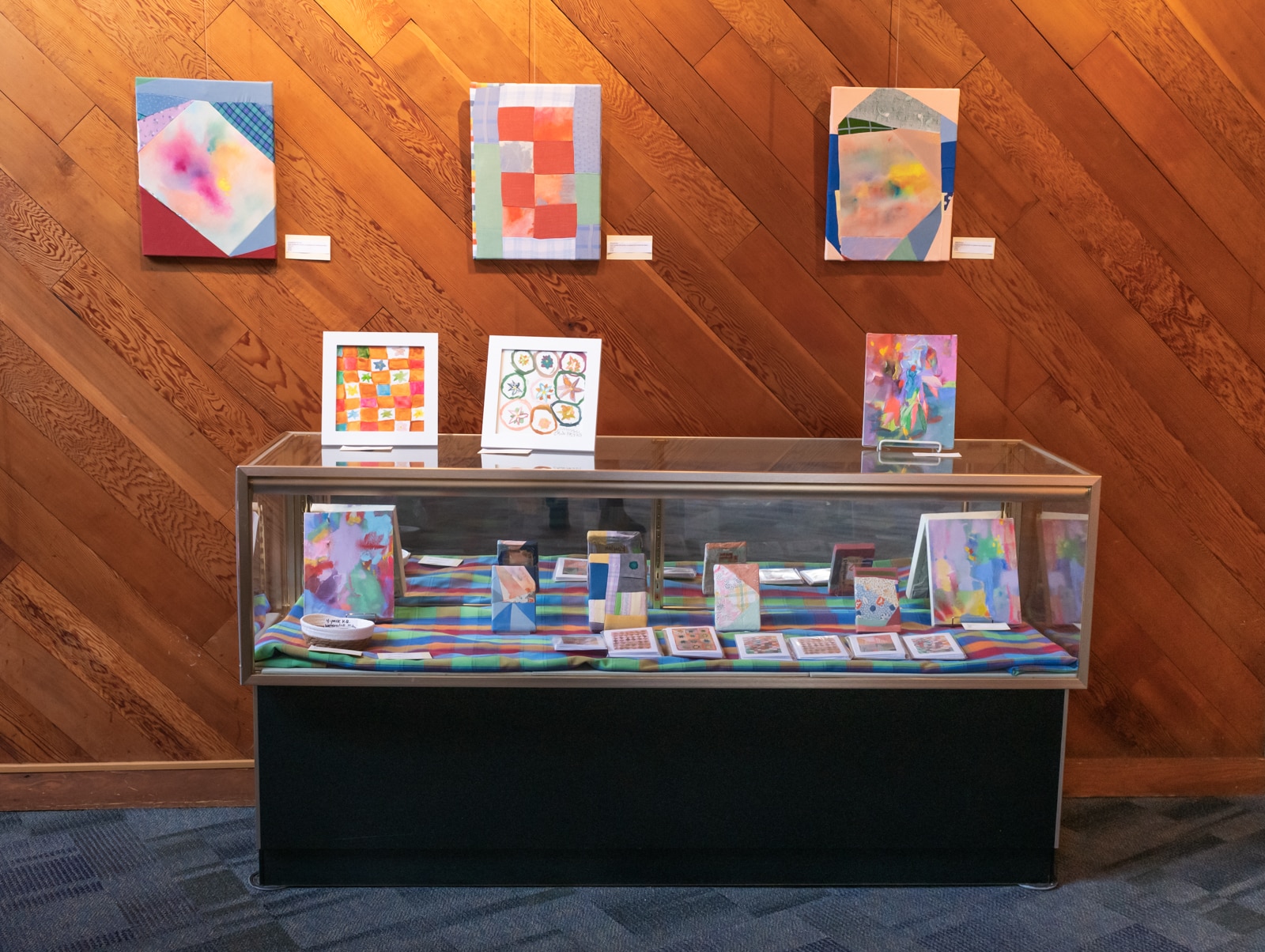
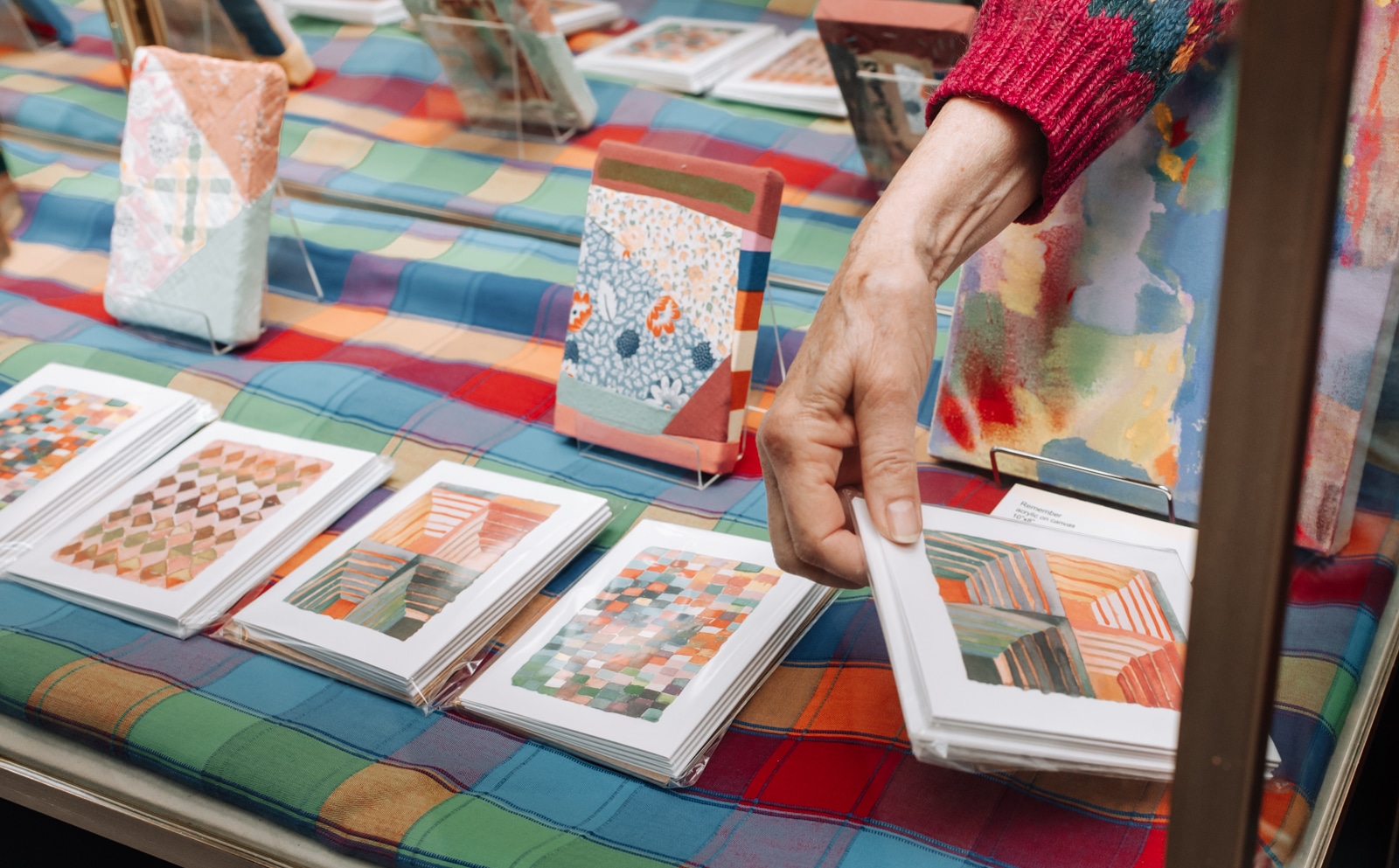
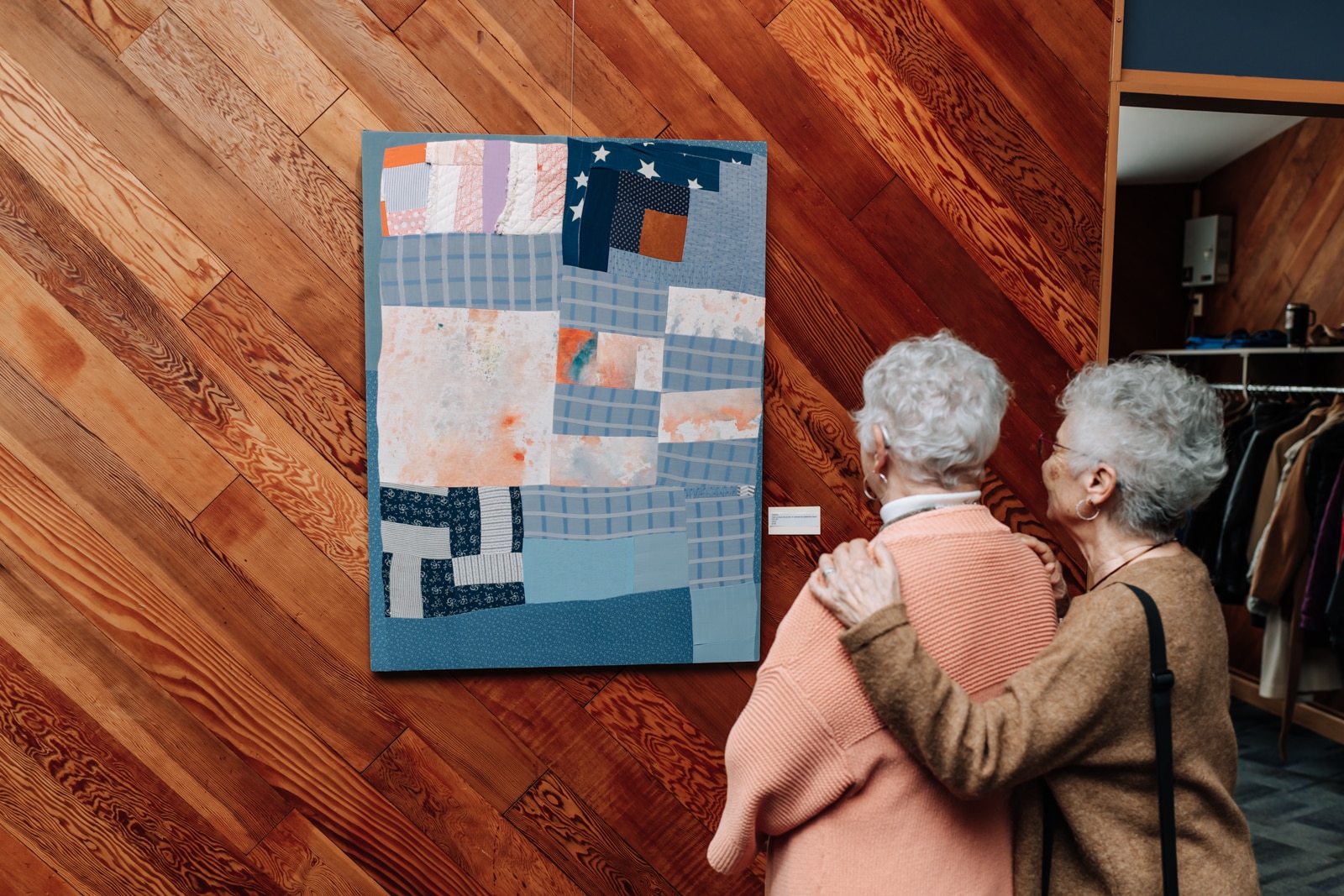
The Unitarian Universalist Congregation of Fort Wayne on Old Mill Road has fostered its own creative space for nearly 30 years with the Langheinrichs Gallery. Named for a former pastor who was an enthusiastic arts patron, the gallery is a testament to the congregation’s belief in diversity and open expression.
“I believe a healthy community is one where creative thinkers are free to be nurtured and encouraged,” says Gallery Director Cathie Rowand, a former photographer who’s been involved with the space since 1995.
The gallery’s mission is to connect with the Fort Wayne community by showcasing local artists and groups, from tattoo artists to textile collectives. The congregation also has permanent works, like mandalas by Diana Thornhill Miller, on display in the sanctuary. The church partners with other groups for exhibitions and community programming to help people interact with the arts in meaningful ways.
Whatever the medium, Rowand sees a natural alignment between art and faith.
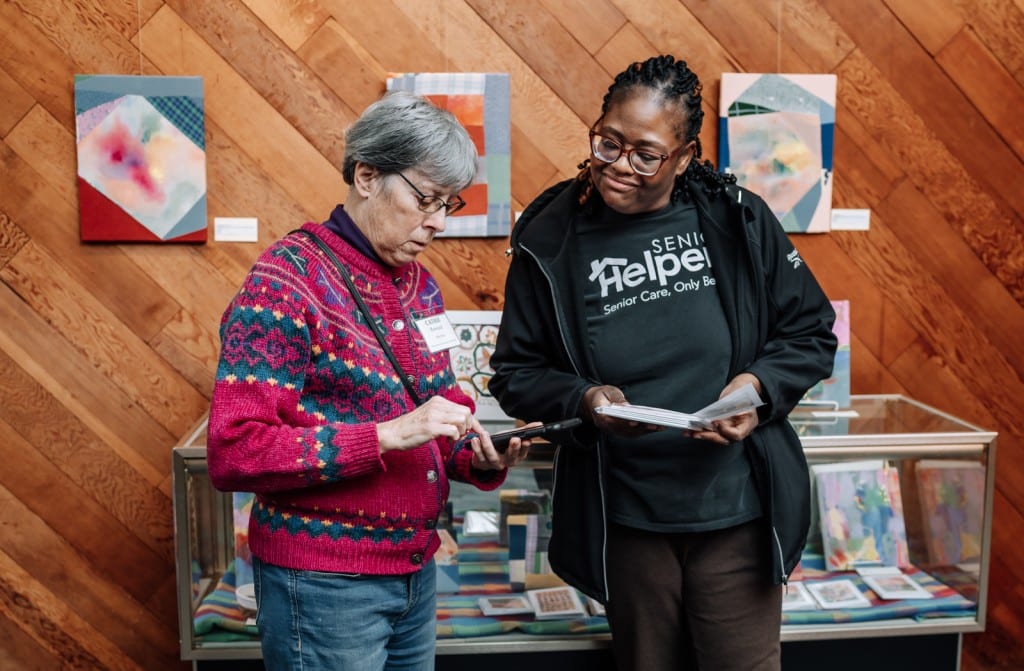
“Sharing art makes perfect sense in a church, because I think it helps us understand what exists beyond the natural world, and it helps us make sense of our world,” she says.
The gallery provides a platform for diverse voices and perspectives, reinforcing the Unitarian Universalist principle that truth can be found in many places.
“It gives a lot of people a voice,” Rowand says. “And it’s a very diverse voice that we allow to be expressed.”
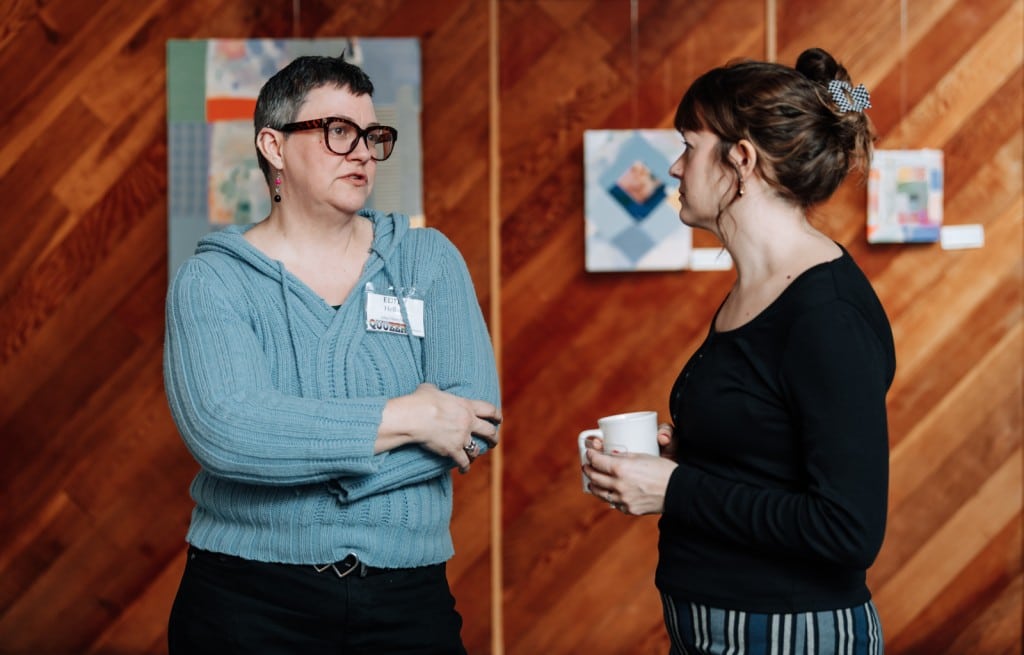
Shows change approximately every six weeks. The gallery is open to the public on Sundays from 9 a.m. to noon. Patrons may contact the gallery director to make an appointment.
Author

Related Articles
Meet Dottie Davis, a domestic violence survivor who’s challenging men to break the silence
Dottie Davis’ newly released book, “STRANGLED: A Survivor’s Plea To Men Who Look The Other Way,” is a culmination of her advocacy work.
‘Come as you are’: Fort Wayne Civic Theatre’s ‘Footloose’ production is setting a new standard for accessibility
Leveraging Arts United Center renovations and a ‘come as you are’ approach, Fort Wayne Civic Theatre’s Footloose is pioneering a new benchmark for inclusivity.
Meet the Fort Wayne native channeling Harriet Tubman through storytelling and connection
Children’s author Caroline Brewer uses the power of literacy to introduce young readers to important themes.