Regional studies advance preventive healthcare
Local researchers are collecting groundbreaking data on cardiology and teen mental health.
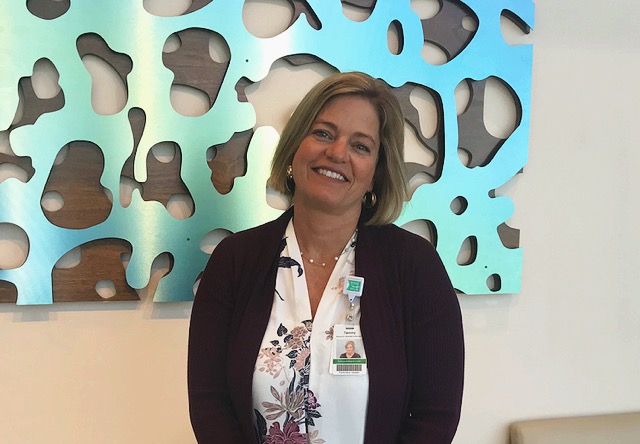
When you’re dealing with a difficult problem, people might try to mitigate your stress by telling you it’s not a matter of life and death.
For Tammy Toscos, it often is.
As a researcher on the informatics team at the Parkview Mirro Center for Research and Innovation, Toscos is studying issues like heart failure and teen suicide rates, which are higher in Indiana than in many other states.
And with a team of about 10 local researchers, she’s contributing her findings to national studies that move the medical industry forward.
Cardiologist Michael Mirro, MD, founded the Parkview Mirro Center as a multi-use, one-of-a-kind facility in northeast Indiana.
As a clinician for 30 years, Mirro felt the stress of managing his patients and trying to do clinical research on the side to advance his work. So he created the Center as a place where specialized researchers could focus on studies full-time to assist healthcare providers.
Toscos says there are currently three teams at the Mirro Center that handle different types of research for Parkview, from testing drugs and devices to evaluating medical procedures.
She sat down with Input Fort Wayne to tell us more about her groundbreaking research on the informatics team.
IFW: What is informatics?
TT: Informatics is really computer science applied to everything. It’s about how you use data and information to understand and generate knowledge.
In our case, we’re using data and technology to come up with information to support decision-making in healthcare.
Think of something as simple as a FitBit. You might wear a FitBit. It’s a consumer-based technology for health that works with your smartphone, and it’s collecting data for you automatically without you thinking about it. Then it’s presenting that data to you through an app, so you can make the decision about whether you should go to the gym tonight or not—about whether you have 10,000 steps or not.
So there’s hundreds, if not thousands, of consumer-based technologies for things besides fitness that are very specific that we look at.
We don’t work with fitness trackers, but we’re looking at two other major tracks right now.
We do work in cardiology, and we do work in mental health.
IFW: Tell us about your work in cardiology.
TT: In cardiology, we’re really focused on people who have cardiac implanted devices to keep their heart working.
That device has over 300 data elements in it, and it’s super complex. A regular cardiologist can’t even interpret it. It takes a special cardiologist to be able to interpret all of that data.
But there is some data that would be helpful for patients to see—that would help them take care of their disease, and no one has ever presented that information to patients before we did it here at Parkview.
About five years ago now, we did the first study where we pushed that device information to patients.
There’s lots of complex data that patients don’t need to see. But that’s also part of the research we’ve been doing.
We’ve been working with patients, and presenting them with all these data options, and we’ve been asking them how they want to see it.
How can we present it in a dashboard that makes it easy for them to understand and make decisions?
Right now, patients come in when they notice symptoms. When they’re feeling tired or have pain. But having this data themselves allows them to receive preventive care.
IFW: Can you give us an example?
TT: A good example is one of the studies we’re working on right now with patients who have heart failure.
They’re very tired. Their heart is not pumping like it should be, and it’s because the heart tissue is dead, and it’s never going to become alive again.
So there’s lots of therapies for it, and one of them is having an implanted device called a CRT that keeps the heart pacing closer to 100 percent.
If the device stops working correctly, for whatever reason, there’s a lot of things that could happen. The wires can break off.
These devices have wires (called stents) that go right into the chambers of the heart, so if this device starts dropping off below 85 percent, then patients’ stents can start to deteriorate, and their heart tissue can die further.
Patients need that information from their device that tells them you’re starting to deteriorate.
They’re monitored remotely by a clinic here at Parkview, so there are people looking at their data, but sometimes things can get missed. And sometimes the physician doesn’t see the data that comes in from the medical records.
There’s lots of gaps in care around people with heart failure, so we want to put the power back in the patients’ hands and have them recognize what’s happening with their device, so if something’s going wrong, they can call the office, and they come in and get it adjusted more quickly.
Again, it’s the FitBit model. It shows patients what they need to know, so they can make decisions effectively.
With that data, a heart patient can discern whether they’re feeling more tired because they have the flu, or whether their device is for some reason not pacing at the rate it’s supposed to pace at.
We’ve done a lot of work in that space.
IFW: Very interesting. Tell us about your work in mental health.
TT: We stumbled into this quite by accident.
Three years ago we began this study recognizing that in northeast Indiana, we had a real problem with youth who were suicidal.
(Indiana is) actually at the top of the nation for youth who have contemplated suicide or attempted. And so, as a team, we decided well we’d like to have a look at how technology can be part of the solution for getting kids into care sooner because one of the major problems is there’s a stigma around getting help. There’s also a lack of access.
Technology is often part of the problem, too, quite honestly.
We just wanted to understand how youth might use technology when they’re struggling with some kind of emotional distress.
So we were not studying youth who are already in care, or have profound mental health problems. But we were looking at youth who were struggling with ordinary stressors in high school and in college.
We were looking at ages 14-24, and we did three phases of that study. It all culminated in a survey of 4,000 youth where we exposed them to a variety of technologies that were designed specifically for mental health—anywhere from apps to online anonymous chat, to blogs, to online self-help sites, to video conferencing with a healthcare professional.
We had 30-some questions, and we also used some standardized instruments to evaluate whether our clients were currently depressed or had been suicidal or had been in care prior. So we have a lot of interesting data around this problem.
Our data for this study came from the region. But because this study was funded by the Robert Wood Johnson Foundation, we’ve really connected nationally.
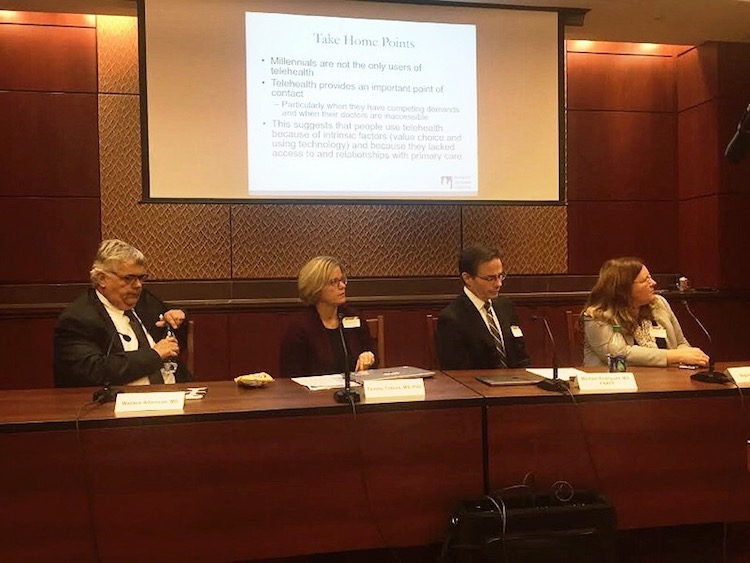
I was invited to participate in a four-person panel on Capitol Hill in November to offer our findings.
IFW: What are some of your most interesting findings?
TT: One of the most shocking things that people have a hard time swallowing is that when we asked if these youth had a problem, and they had the option of using technology to reach out to someone or being face-to-face, more than 50 percent of our youth wanted to talk to someone face-to-face.
There’s a lot of assumptions made about youth that they all prefer to use technology. But this isn’t the case.
Technology is not the silver bullet. However, that said, about 50 percent of the youth were interested in using technology when they were experiencing stress, especially those who indicated they were anxious, or had anxiety or depression.
Among those technologies, most youth prefer the self-help technology versus the others.
The other thing that we found overwhelmingly when we asked them who do you turn to when you need help, 70 percent selected peers as their top choice. Then parents and family members was down in the 40 percentile. Then the less than 10 percentile was teachers, counselors, coaches, and healthcare professionals.
We have a lot of expectations as parents that the school is going to fix things for our kids, but that’s not who our kids are turning to, so that’s really important to know.
IFW: Your findings on this issue are making a difference in the local community. Tell us about that.
TT: That particular finding (on who teens turn to when they need help) was used in a grant submission to the state of Indiana, where we secured funding to bring a validated program to high schools in this are called Sources of Strength.
It has teachers and high school kids going through this program, which really is designed to create resiliency in youth, and give them a partner to talk to when they’re experiencing stress, and try to create this network for kids. It’s going very well.
I think we’re in four schools right now, and in fact, I just learned they’ll probably do at least four more with another grant they got.
So that was a really cool outcome from our study.
IFW: What advice do you have for parents and schools dealing with teen mental health issues?
TT: Sit down and talk to them one-on-one. Our program (Sources of Strength) has been very successful. We’ve studied it, and it’s shown to have a positive impact.
It’s creating a culture shift around mental health, and dispelling some of the myths around it.
A big thing is creating more sensitivity in our youth, telling them it’s OK to take it seriously when someone is telling you they’re suicidal. It’s not just for attention.
I have three teenagers, and you really can’t keep track of (everything that’s happening online) as a parent. There really has to be something that comes from within those peer groups to mitigate this problem, and that’s what we’re working on.
IFW: So why are there more youth in northeast Indiana contemplating suicide?
TT: It’s very difficult to capture, but our next study will be looking at ways that bullying impacts the problem.
IFW: Why is northeast Indiana a good place to conduct these groundbreaking studies?
TT: We have the support of our health system, and to even have this facility is very unique.
This is a super unique unit to have the financial resources for this team running here.
The other thing we’re recognizing as we talk to people on the national front working on youth mental health, is that our community is not putting up barriers.
A lot schools in other places don’t want to have anybody dealing with mental health in their schools. They don’t want Sources of Strength because they’re afraid it will make them look bad.
People have a lot of fear in dealing with mental health, but our community has been very receptive, and I think that’s unique. Our schools are incredibly supportive.
Doing a study like this was not easy because we have to go through our human review board for subject protection that we don’t hurt anybody when we’re doing a study, and when you’re working with kids and mental health it’s super touchy.
But we felt a lot of support all around. We’ve conducted very unique studies, and we’ve gotten a lot of attention for it.
Author

Related Articles
Partner Partner Content Why early detection for cancer matters
Parkview Health’s “Show Up For Them” campaign aims to boost early detection rates through outreach and education.
CTN puts out urgent call for new drivers as new funding boosts capacity
A new grant offers the opportunity to increase the number of rides Community Transportation Network (CTN) offers, but they need to fill seven vacant driver positions to make it happen.
Partner Partner Content Prenatal & Infant Care Network informs and connects
Ahead of Prenatal & Infant Care Network’s next luncheon, leaders reflect on their work to support case managers and providers locally.