The ‘pink wave’ is rising in northeast Indiana
A volunteer group is getting local women more involved in politics, public life, and civil conversations.
“Unfortunately, my story is like a lot of women’s,” says Courtney Tritch.
Before she announced her intention to run for Congress in Indiana’s 3rd District last July, challenging the incumbent Rep. Jim Banks, she was giving a presentation at a women’s expo about finding your voice as a woman in the workplace.
In her presentation, she quoted a statistic she thought was particularly powerful.
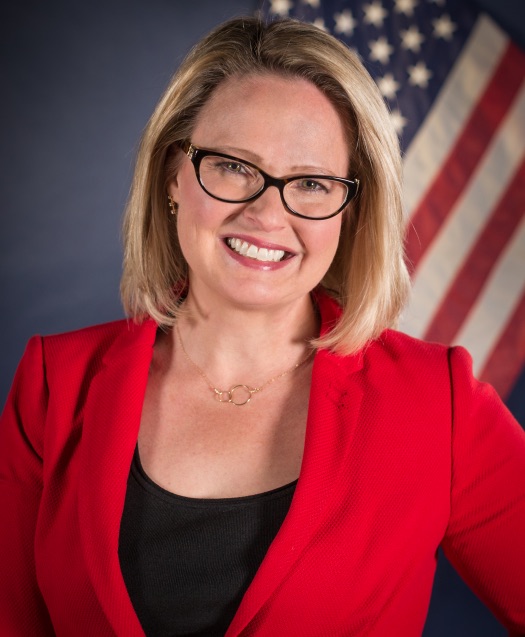
“Men will apply for a job if they meet 60 percent of the criteria. But women will only apply if they meet 100 percent of the criteria,” Tritch says.
The figure comes from a Hewlett Packard internal report that has been oft-quoted in books and articles. To Tritch, it’s a sign that women need to aim higher and realize their full potential.
So she was telling her audience to stretch themselves—to think of themselves as contenders for high-ranking positions in the workforce.
And little did she know she needed to take her own advice.
“I would have never entertained the idea of running for Congress if someone hadn’t asked me,” Tritch says. “Apparently, I needed to stretch myself.”
Today, she laughs at the irony, but also acknowledges her experience as part of a social norm that quietly influences many aspects of American culture—from dating, to job seeking, to running for public office.
While men often see opportunities, women often wait to be asked.
So a local nonpartisan group called AVOW decided to start asking.
Short for Advancing the Voices of Women, AVOW began as a way to get women more involved in Indiana’s public life, which is largely dominated by men.
Today, the volunteer group launched a new website to make themselves more accessible across the region.
And women and men alike are responding.
“Women’s issues are people issues,” Tritch says. “I think it’s really indicative of what’s happening nationally, and our culture is beginning to see that here.”
A civil response
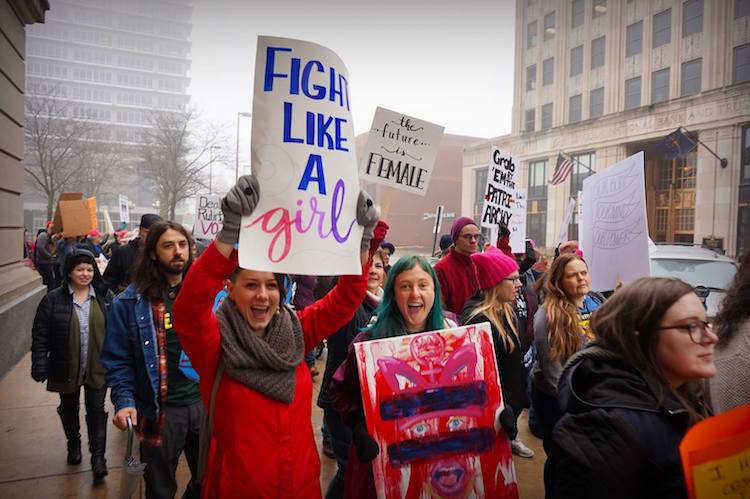
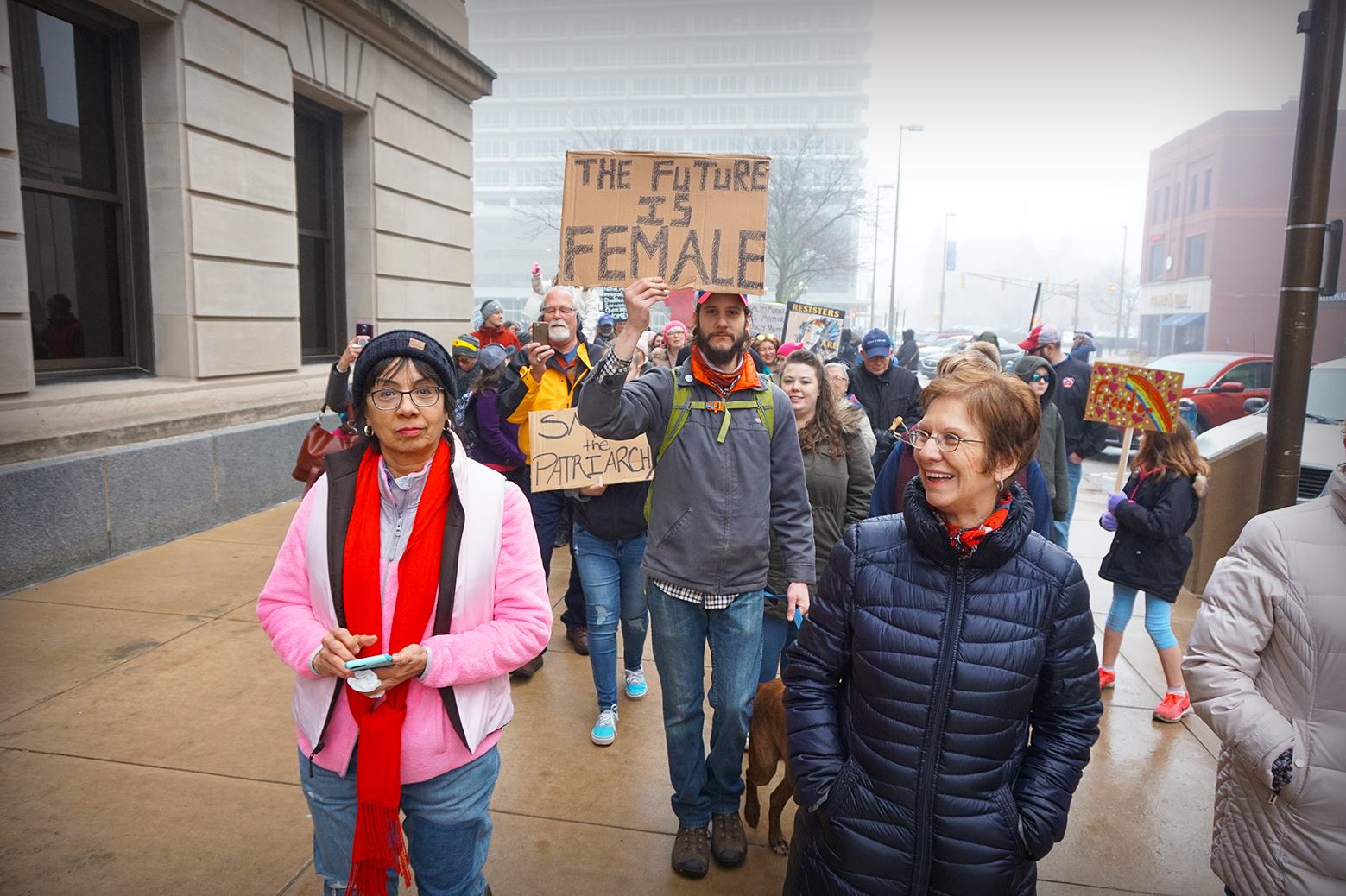
In January 2017, the Women’s March on Washington was likely the largest-single day demonstration in recorded US history.
Some 200,000 women stormed the nation’s capital, and more than 2.5 million gathered around the world.
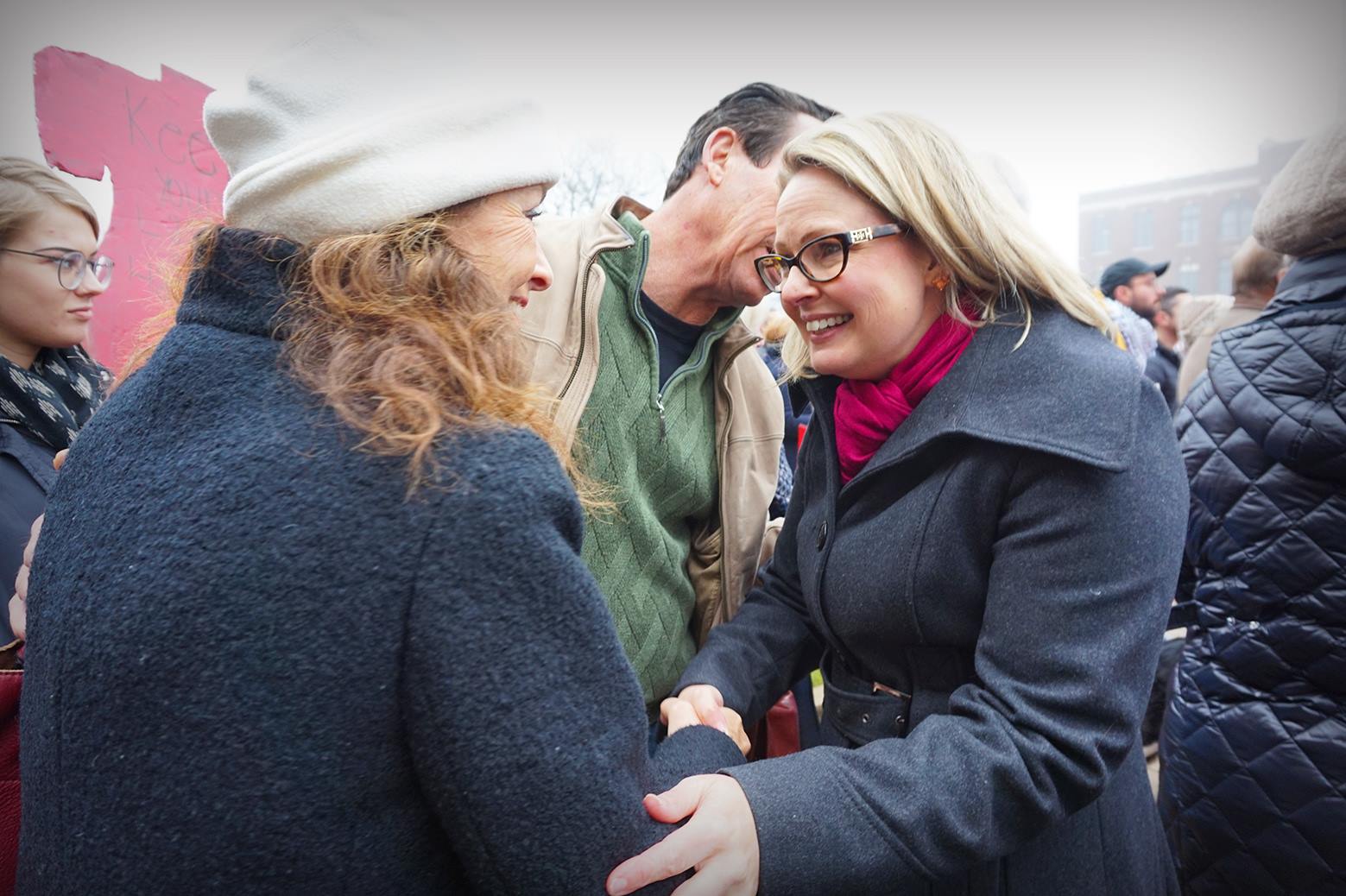
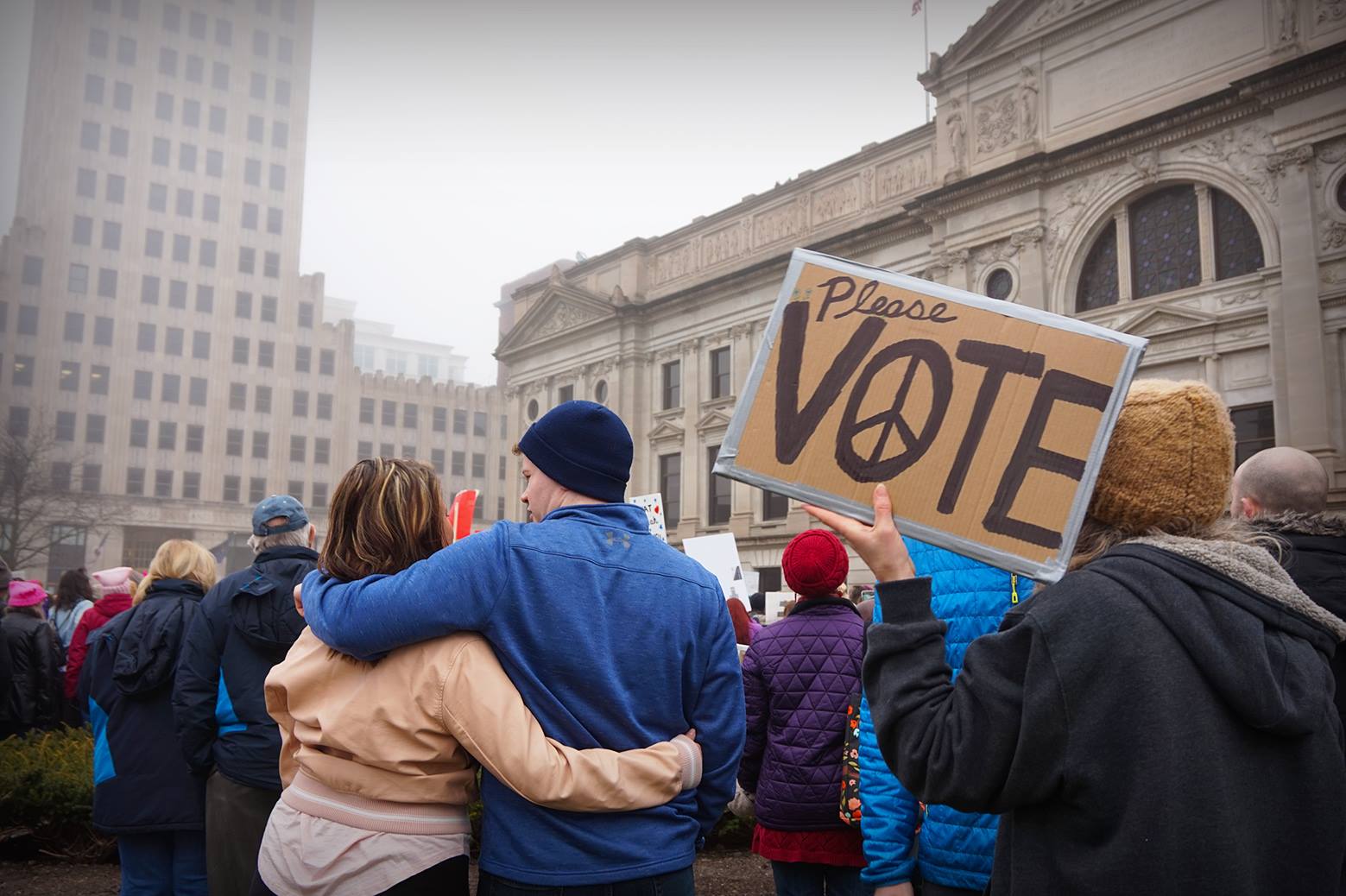
In Fort Wayne, hundreds of residents across the region crowded the lawn of the Allen County Courthouse, and while many described the day as empowering and “electrifying,” the thing about marches is that they’re here, and they’re gone.
The energy dissipates. The people go home, and life eventually settles back into its routines.
But four women in Fort Wayne wanted a way to keep the energy going on a local level.
So they met and started brainstorming ways to get women more involved in local life, and what resulted was a volunteer organization called AVOW.
“We thought, what could we do in our corner of the world to make a difference and to really promote civil conversation and leadership and because we were just so appalled at all of the uncivil discourse happening around the country,” says Marilyn Moran-Townsend, a co-founder of AVOW.
Together, she and other Fort Wayne women, Rachel Tobin-Smith, Patti Hays, and Faith Van Gilder, started AVOW with three main goals: First, getting more women to write articles in the Fort Wayne Journal Gazette; second, starting more civil conversations on hot button issues; and third, encouraging more women to run for public office.
To accomplish these goals, AVOW began reaching out and working with other organizations that support women, locally and nationwide. They used an organization called Sally’s List in Oklahoma as a model.
“Organizations like ours have popped up all over the country,” says Tobin-Smith. “I think women in Indiana need to know that Fort Wayne has our organization here to help, and we’re nonpartisan.”
Being a nonpartisan organization is a crucial point, Tobin-Smith says.
She explains that she and the other women who founded AVOW each have different political beliefs, but that doesn’t keep them from coming together around the common goal of seeking to understand one another.
“We span the continuum,” she says. “We really are committed to nonpartisanship. At the same time, it would amiss for us to not say that we are a part of the ‘pink wave.’”
The ‘pink wave’
“Day by day on the Indiana Elections Division website, you see the names,” writes Brian A. Howey for Howey Politics Indiana. “Tobi Beck, Dee Thornton, Courtney Tritch, and Liz Watson at the congressional level, with more on the way.”
As of January, 389 women are running for the U.S. House of Representatives, 49 women are running for U.S. Senate, and 79 women are running for governor in 2018, according to the Center for American Women and Politics at Rutgers University.
In Indiana alone, the difference between this year and the last few years is startling.
Since 2016, the number of women who have filed to run for Congress has doubled from five to 10, and this flood of female candidates from both parties is called the “pink wave.”
“To me, the ‘pink wave’ is women who have said it’s time for us to make sure that we’re heard and involved,” says Tobin-Smith.
Around the nation, it’s a time of female empowerment, of #metoo moments, and record-breaking women’s marches.
But this flurry of activity in the “pink wave” is also a response to a lack of female involvement in past, and the women of AVOW know that experience well.
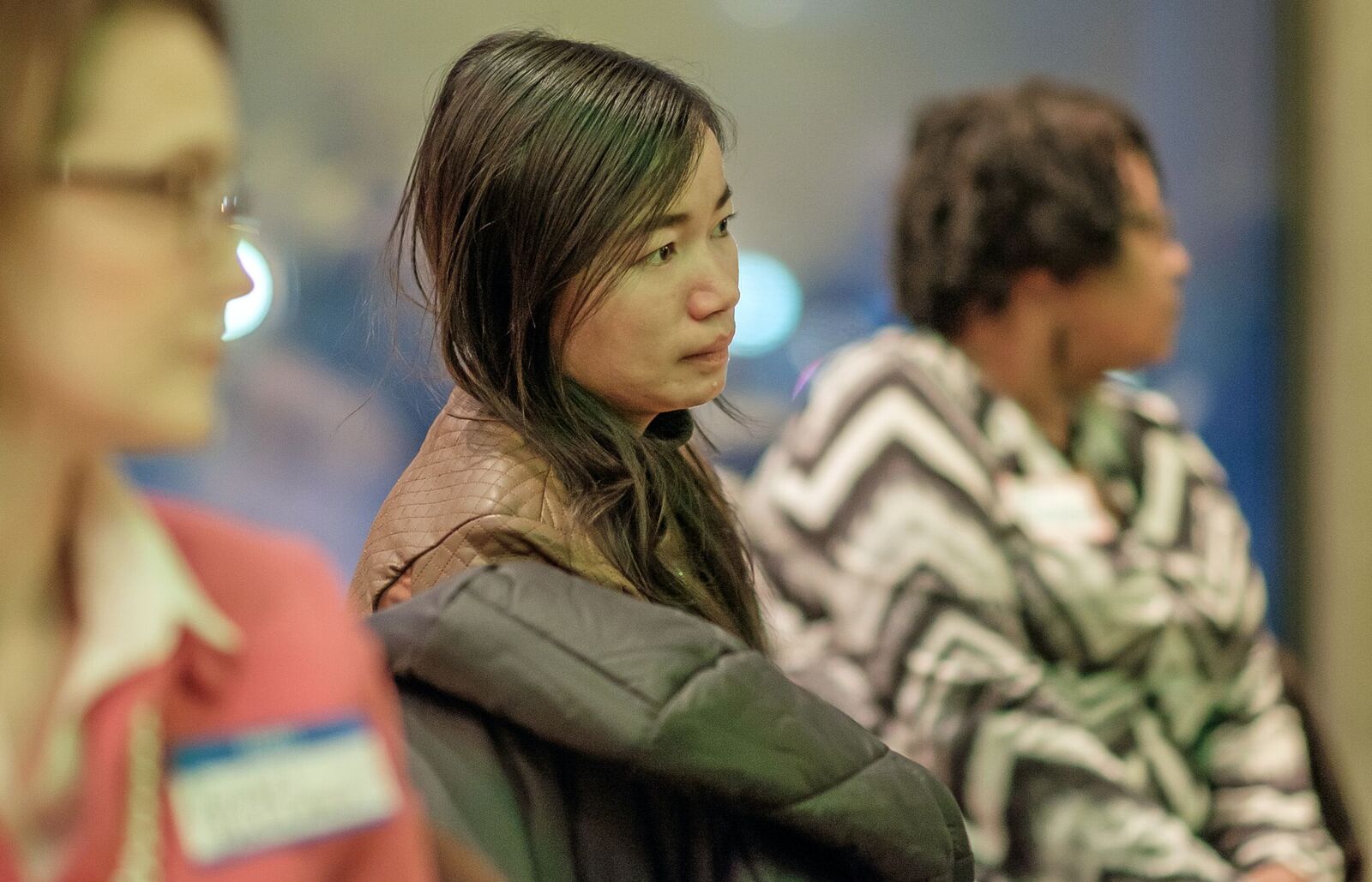
Indiana has never had a female governor, and out of 150 Indiana legislative seats, only 30 are held by women (22 in the House and eight in the Senate).
Locally, the statistics aren’t much better.
Fort Wayne has never had a female mayor, and there are no women currently on City Council.
When AVOW met with the Journal Gazette to discuss their plan for recruiting women to write op-eds, they learned from the editorial editor Karen Francisco, that for every 6-10 opinion pieces she receives from men, she only gets one from women.
“Women wait for her to ask them to write,” Tobin-Smith says.
So when a subject is hot in the local news, AVOW has started calling up women who are experts in that subject, and encouraging them to write well-researched opinion pieces for the Sunday paper.
“We’re trying to get women to start to think their voice matters,” Tobin-Smith says.
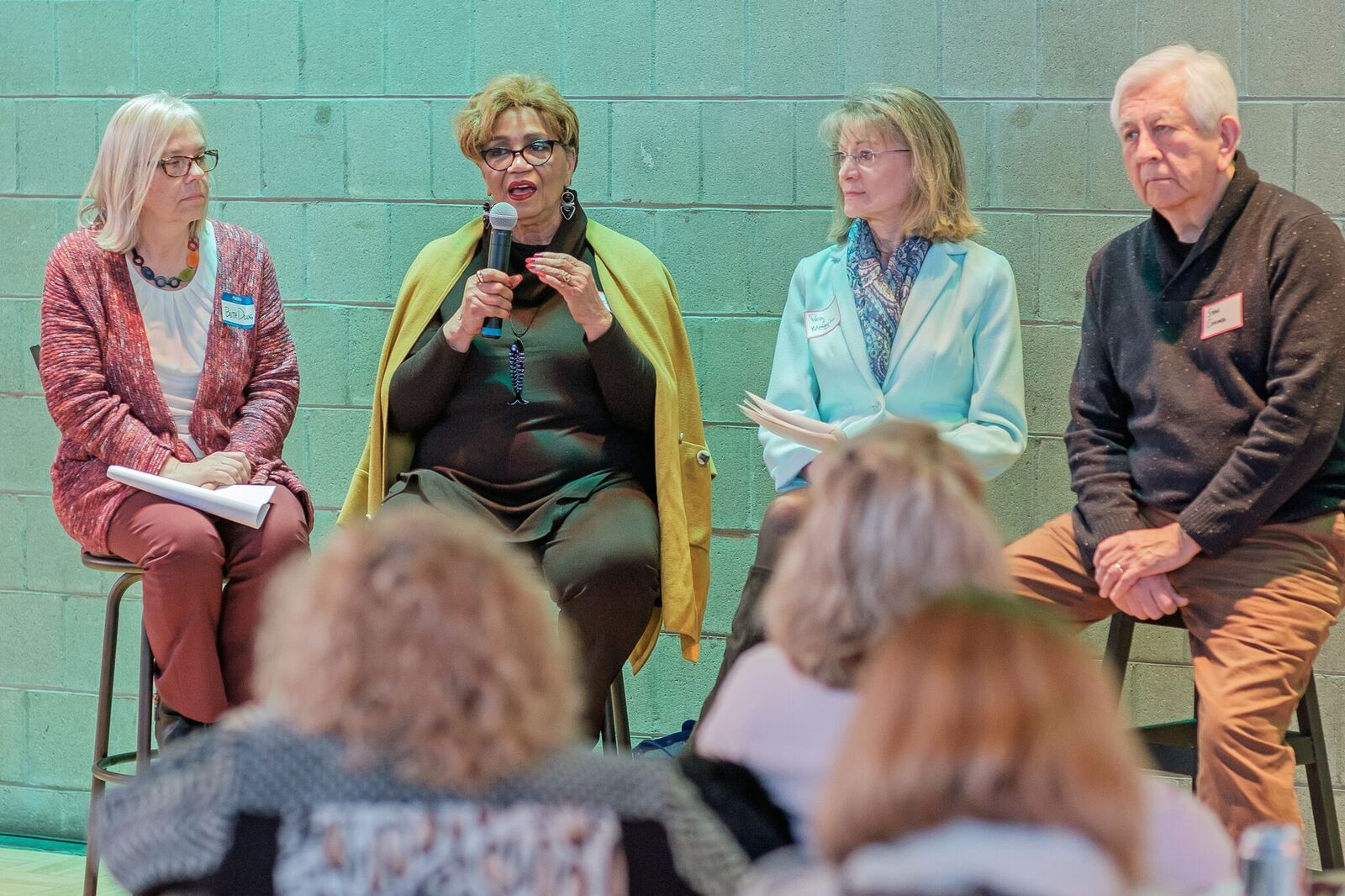
As a former editor at Fort Wayne Newspapers, Van Gilder edits the articles and prepared them for publication.
Since February 2017, the topics have ranged from reducing infant mortality rates, to improving mental health, and better utilizing talent in the region.
But the women of AVOW don’t want to stop there.
With funding from the Journal Gazette Foundation, they’ve started hosting public events where men and women alike come together to discuss controversial matters in a civil manner, and they call these events Civil Conversations.
Starting conversations
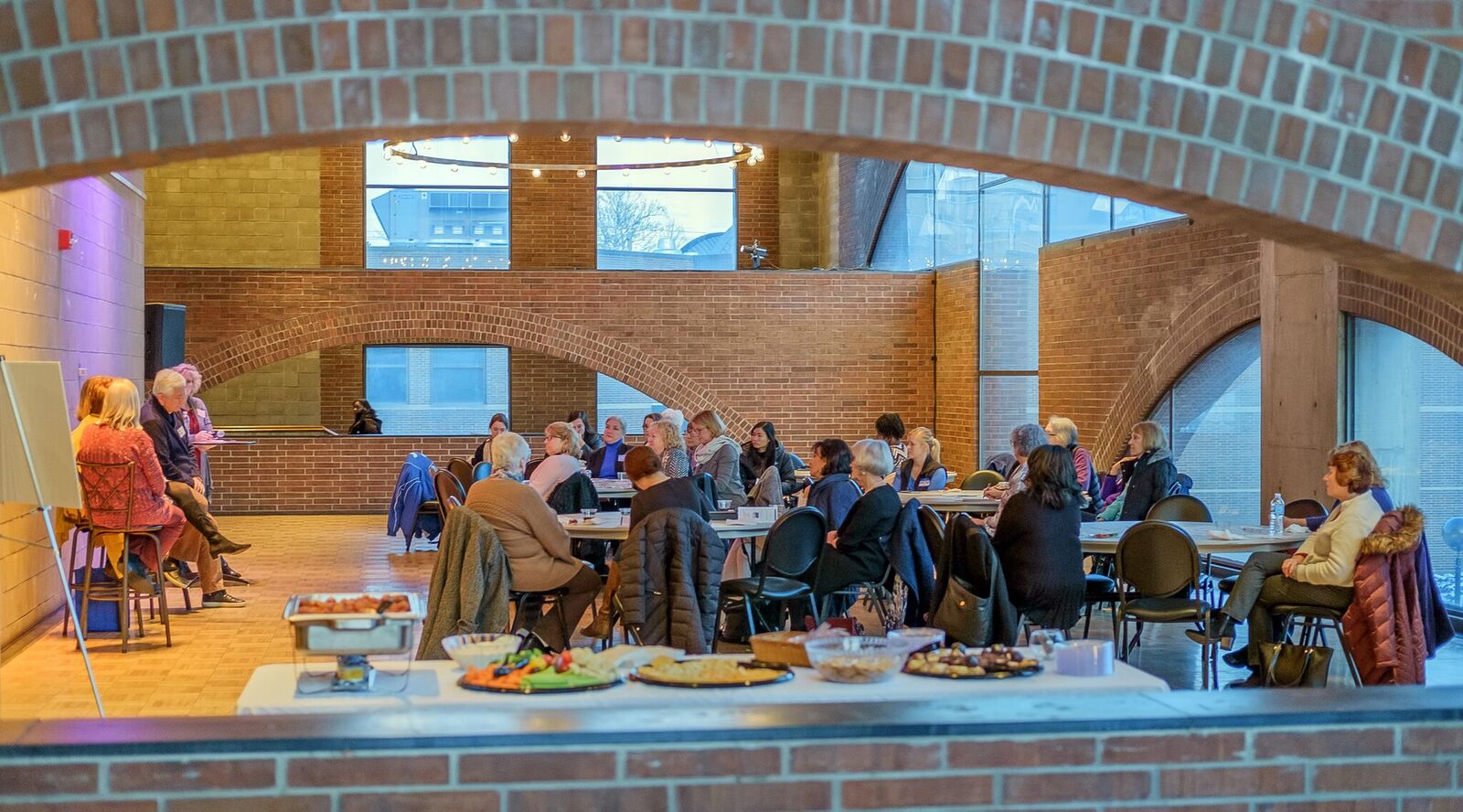
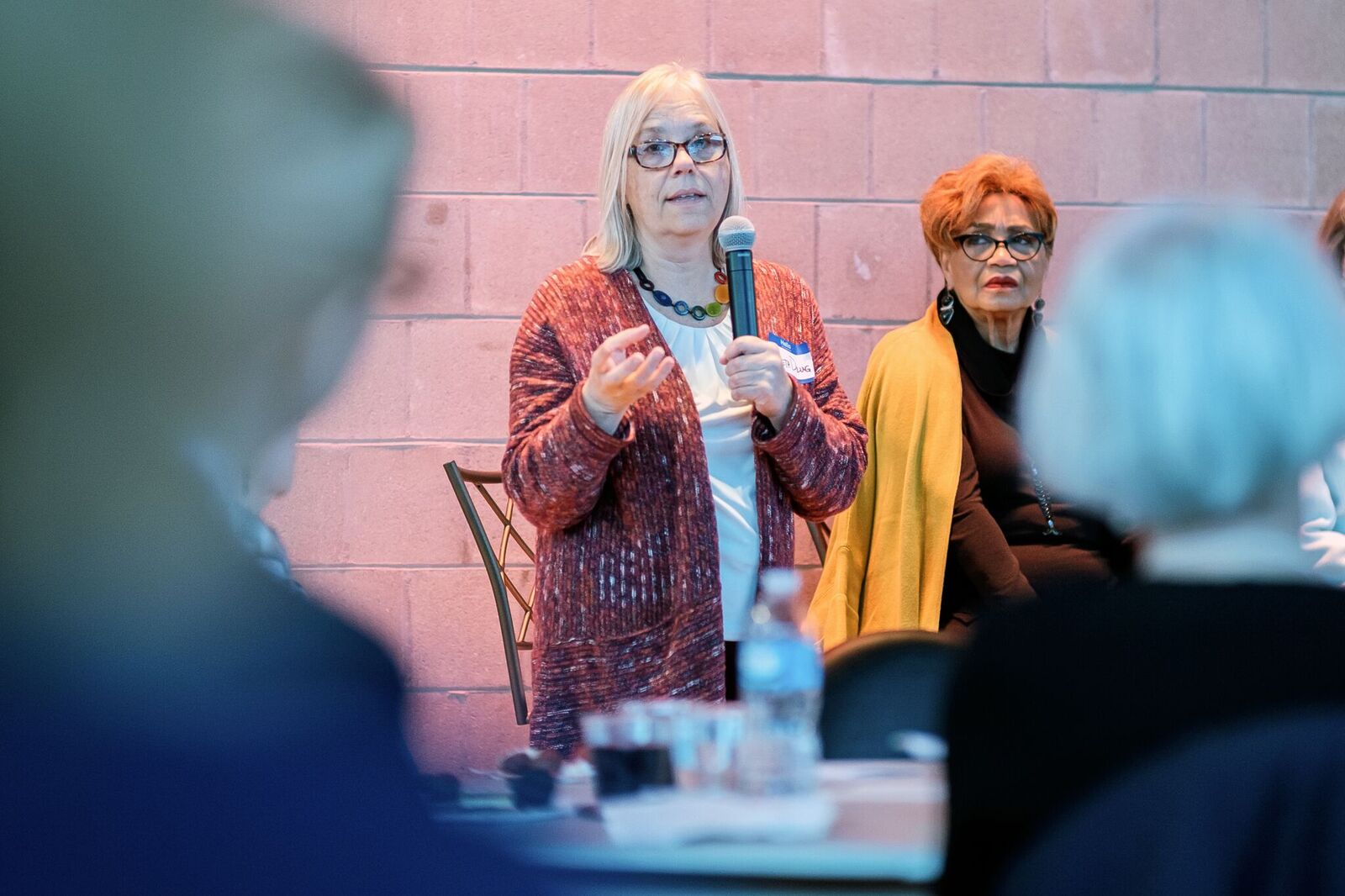
It was a Thursday night in the Ian Rolland Gallery of the Arts United Center, and the space was filled with about 35 women, crowded around tables.
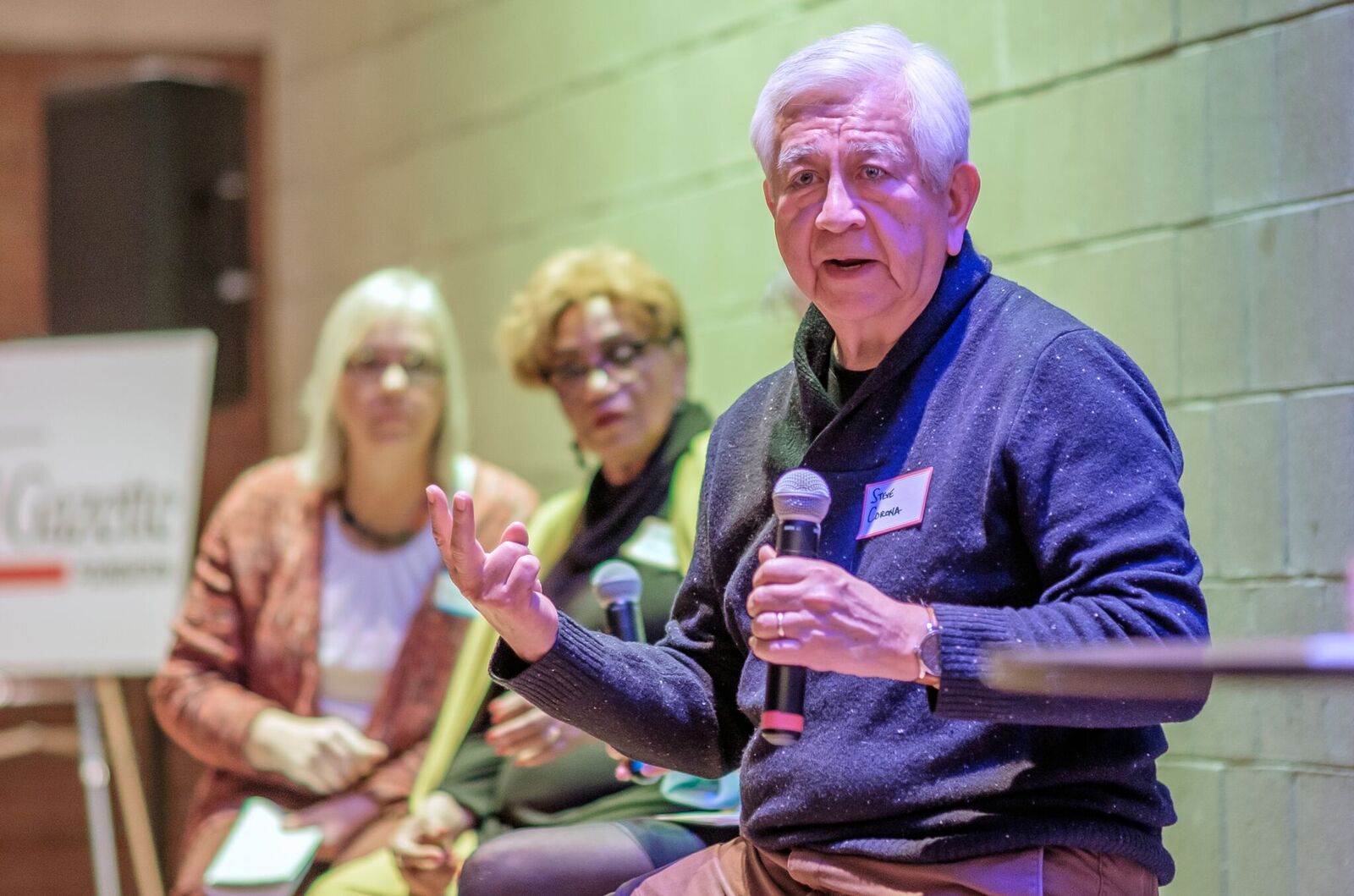
One man, Steve Corona, was part of a four-person panel up front.
The topic of the evening was: “Does your vote count?” And as a longtime school board member, Corona was telling the audience about a time when he had to meet with a politician he didn’t like.
This politician was a member of the opposite political party, and someone Corona disagreed with in almost every way.
Leading up the meeting, he says he began to get nervous. He wasn’t sure if he could even hold a conversation with this guy, and the feeling made him leery.
“I thought we would never have anything to talk about,” Corona says. “Then after about 15 minutes or so, we found common ground.”
Common ground. It’s a concept you don’t very hear often in the divisive realm of politics and public life. And yet, as Corona stood behind the microphone sharing his story at a Civil Conversations event, heads around the room began to nod in agreement.
To some extent, we’ve all been there.
We’ve encountered people we disagree with—people who vote for the opposite parties, or whose opinions annoy us on Facebook. And before we even meet them, we paint a picture of them in our minds.
Then we finally confront them, and they’re not who we expected.
Instead, we discover that they are more like us than we realized. They are common, complicated people, and we have common ground.
“That’s what civil conversations do,” Moran-Townsend says.
They remind us we’re all human.
AVOW hosts Civil Conversations every month, similar to the one where Corona shared his story.
They usually have a panel of experts up front to discuss controversial topics, with time for questions and conversations at the end.
Tobin-Smith says the events are open to men and women alike, and the crowd varies depending on the subject.
In the future, she says AVOW plans to host more events like breakfasts for working professionals.
Overall, they want to help people reach across the aisle by simply listening to each other in person, Moran-Townsend adds.
“We identified both the need for a safe space where women could come together and talk about tough issues, and also a place where women could learn to speak with people with whom they have a very different perceptive and not demonize each other, but learn from each other and try to find places of common ground,” Moran-Townsend says. “Even when common ground isn’t possible, we want people to still better understand the other.”
Hosted by Patti Hayes, AVOW’s Civil Conversations don’t take on easy topics where people are likely to agree, Moran-Townsend says.
Instead, the events purposefully wade into deeper waters, bringing people together to discuss hot button issues, from gun control to gerrymandering and sex abuse.
“It’s easy to have civil conversations on things everyone agrees on, but it’s not as easy on these tough topics,” Moran-Townsend says. “The point is to take on tough topics.”
And for women in Indiana, one tough topic is running for office.
Running for office
As an outgrowth of its work writing editorials and starting Civil Conversations, AVOW also hosts training sessions for women considering a run for public office.
Working with former Fort Wayne Mayor Paul Helmke, now director of the Civic Leaders Living-Learning Center at Indiana University-Bloomington, AVOW hosted the first Paul Helmke School for Public Life last September.
The group offered a series of programs for women interested in public service, whether that’s serving on boards or commissions, running for office, or managing campaigns.
This year, Tobin-Smith says they’re expanding the program in August with the first Women’s Campaign Institute created to provide women with more intensive training on how to run for office themselves.
“We have an exciting lineup of people who will be helping teach,” Tobin-Smith says.
She explains that while many of the women who write editorials and participate in AVOW’s events are from the local area, the Women’s Campaign Institute will be open to women as far away as South Bend to engage candidates across the state.
In Fort Wayne, some local women are already taking their first forays into the political sphere.
Along with Tritch running for Congress, Melissa Rinehart is leading her first campaign in the race for Perry Township Trustee against the incumbent James McIntosh II.
Rinehart is the first woman ever to run for Perry Township Trustee in more than 100 years that the position has existed. She is also the first Democrat to run for the position in more than 50 years.
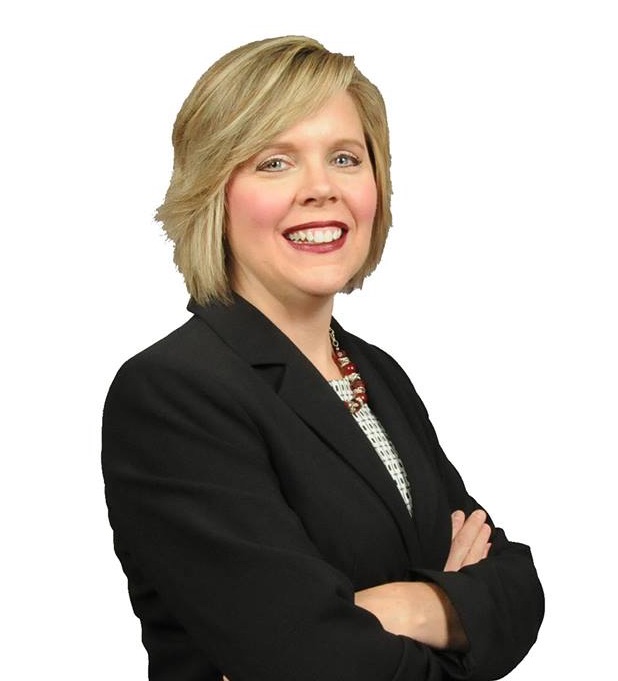
“Women don’t run because they feel like they aren’t qualified to do so,” Rinehart says. “But when I see the craziness of the government now, I know I can do better.”
Born and raised in Fort Wayne, Rinehart graduated with a degree in political science from IPFW, but she didn’t initially plan to run for office.
After college, she shifted gears to pursue her master’s degree and later her PhD in cultural anthropology, focusing on immigrant relations.
Then in December 2015, she co-founded a group to help refugees integrate into local culture called Welcoming Fort Wayne in partnership with Associated Churches and Allen County.
When Rinehart began to see national pushback against immigrants and refugees in the US, she decided to stop complaining about it and start doing something.
As a resident of the northwest side of town, she chose to run for Perry Township Trustee because it is the public office closest to the people—where she sees the most potential to make a difference.
“It’s the most boots-on-the-ground form of government we have in the country,” Rinehart says. “It’s a direct service. Policy-making is not involved in this office, so it’s really about helping people, and that’s a good fit for me.”
When it comes to advice for other women considering a run, Rinehart says she has two recommendations.
First, research to find out which office you want to run for. Second, make yourself visible and attentive to the public.
She started researching her position about six months before she announced her decision to run, and she says that time allowed her to get to know the office and the demographics of the area, so she knew what she needed to lead a successful campaign.
She also spoke with other elected officials and people who ran unsuccessfully to learn from their mistakes.
Perhaps most importantly, she sat down with family and friends to ask them what leadership qualities they see in her.
“That was a very humbling experience for me,” Rinehart says. “I had no idea what people see in me. I never asked my peers; I never asked my family.”
As AVOW takes on the challenge of increasing the number of women who run for public office in Indiana, developing and affirming women’s leadership qualities is key.
Van Gilder says they want to encourage women to have a voice in public life because although women make up roughly half of northeast Indiana’s population, they do not make up half its leadership.
“Basically, what we’re saying is democracy works better for everybody when there’s a choice and when different groups are represented,” Van Gilder says. “I see AVOW as being a small part of that.”
Attend a Civil Conversation
The next Civil Conversation event “Let’s talk about Guns” is scheduled for Tuesday, March 13, from 5:30 p.m. to 7 p.m. at the Arts United Center Rolland Gallery at 303 East Main Street.
All events are free, and open to the public.
Attend the Women’s Campaign Institute
Save the Date for the first Women’s Campaign Institute from Friday, Aug. 3, at 6 p.m. through Sunday, Aug. 5, at 2 p.m.
Details TBA. Apply online by May 31.
Author

Related Articles
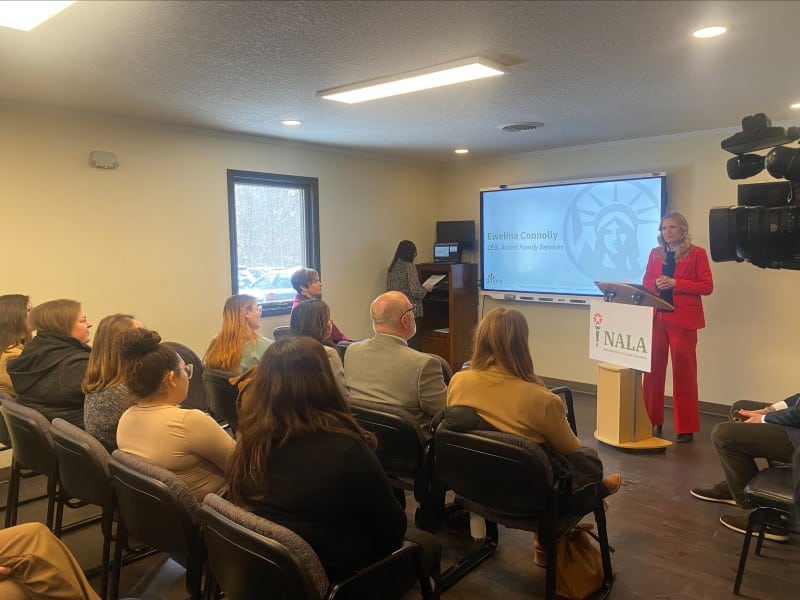
Partner Partner Content Amani Family Services’ Naturalization and Legal Assistance program turns immigration support into economic strength
By directing immigrants toward pathways for long-term success, a naturalization and legal assistance program can increase stability for local families and help maintain a strong economy.
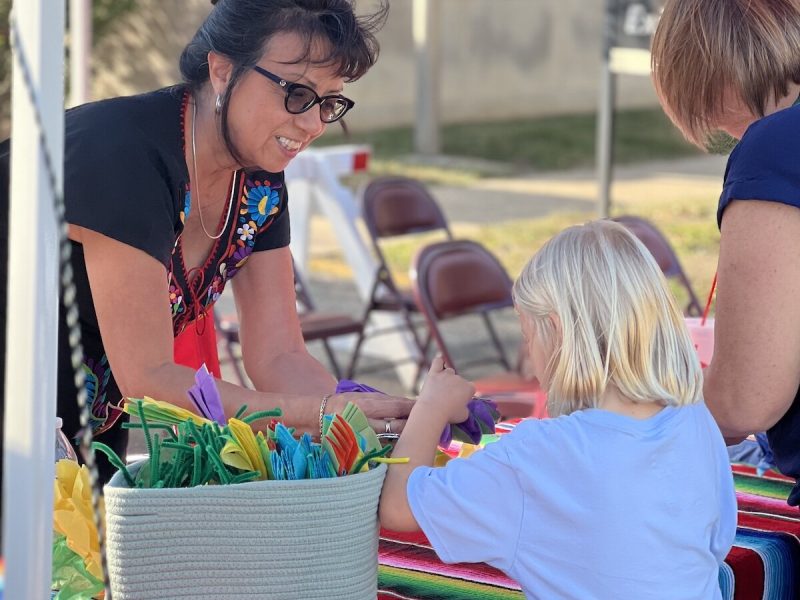
Partner Partner Content Wabash County’s Secret to Growth? Building a welcoming culture
“Our ultimate measure of success is whether our population grows. We want Wabash County to be a place where everyone feels they belong.”
Photo series: Celebrating Juneteenth in Fort Wayne
The Macknificent Freedom Fest is Fort Wayne's official, week-long Juneteenth celebration.