Partner Partner Content Parkview is connecting entrepreneurs to opportunity – and lowering healthcare costs along the way
Using Medicaid patient data, ten student teams from Bulter University were tasked to identify the biggest healthcare cost drivers in Indiana in partnership with Parkview Health and Hylant.
This article was made in partnership with Parkview Health.
In 2019, Gov. Holcomb called to decrease infant mortality in Indiana. At the time, Indiana had the second-highest infant mortality rate in the Midwest and ranked seventh nationwide, according to data from the CDC. Holcomb aimed to achieve the lowest infant mortality rate in the Midwest, and Parkview Health wanted to be a part of achieving that goal.
Ethel Massing, Parkview Health’s director of innovation and strategic enterprises, says this sparked Parkview’s global challenge series, an annual competition pushing entrepreneurs worldwide to come up with solutions to healthcare problems.
“It was just a kismet of a moment where we had the opportunity to contribute to what the governor had proposed at the time,” Massing says. “We hosted internal challenges at Parkview in the past. Rather than doing another internal competition, we thought we could expand our approach and really try to solve some real-world health problems.”
That year, Parkview partnered with the Indiana chapter of the Healthcare Information and Management Systems Society (HIMSS) to host the “Healthy Mom and Baby Datapalooza”. The challenge “brought together students, researchers, policymakers, health care professionals, and entrepreneurs to uncover insights into the state’s infant mortality data,” according to Parkview’s website. In the following years, Parkview partnered with Matter Health, a Chicago-based nonprofit, to host annual competitions to find innovative solutions to infant mortality, maternal mortality, infant and maternal health, and pediatric health.
After a year off, the global challenge returned with a shifted focus to lowering healthcare costs.
Parkview has focused on reducing healthcare costs for years, with the organization yielding over $1.1 billion in total rate reductions since 2020 via contract renegotiations with major insurance companies, according to a Parkview press release. Massing says the choice for the focus this year came in response to a need expressed by Hoosiers.
“There was a lot of talk legislatively about healthcare costs in Indiana,” she explains. “There’s been a lot of press around healthcare costs throughout the state, and we thought it would be a great time to think about tackling that problem.”
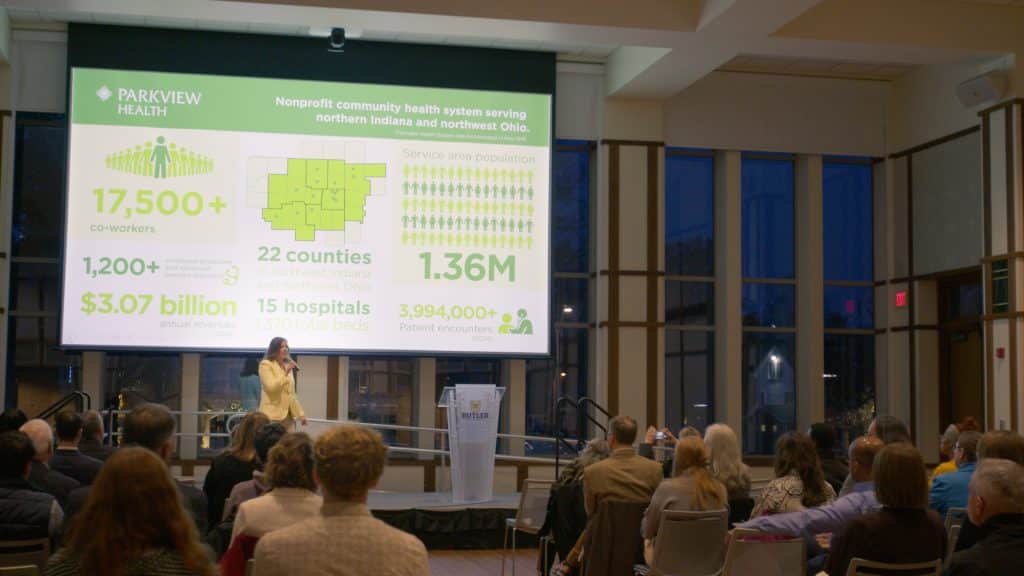
To tackle that problem, they first had to identify the root causes of the issue. Parkview partnered with Butler University and Hylant to host the “Total Cost of Care Data Challenge” at Butler University, which took place on April 8, 2025. Ten student teams were given Medicaid patient data, provided by the Indiana Family and Social Services Administration (FSSA), to identify the biggest healthcare cost drivers in Indiana. Massing described the results as both expected and surprising.
“We know chronic conditions always cause issues in Indiana,” the director says. “So we knew, obesity, diabetes, and premature births would be in the mix. But a surprise to us was how much was spent on seniors who experienced falls. So, we specifically added fall prevention to the competition because of the data challenge.”
The results of the challenge show that more than 30% of seniors experience falls each year, often resulting in expensive hospital stays, emergency care and rehabilitation. The students found that making fall assessments a routine part of annual senior checkups could save Indiana approximately $115 million annually, even if only 50% of seniors participated in the visits. It even had the potential to prevent an estimated 41 senior deaths each year, according to the Butler student data analysis.
Another key result of the challenge was the impact of physical activity on long-term health and healthcare costs. The analysis showed that only a quarter of adults aged 65 and older get the recommended amount of physical activity, leading to increased risk for cardiovascular disease, obesity, diabetes and cancer.
Parkview used the insights from the data challenge to guide their broader competition — the Healthy Care, Healthy Costs Innovation Challenge — which is the fifth installment in a global series from Parkview Health. The not-for-profit invited startups worldwide to come up with solutions to combat rising healthcare costs and improve patient care in a competition for mentorship and connections to future investors.
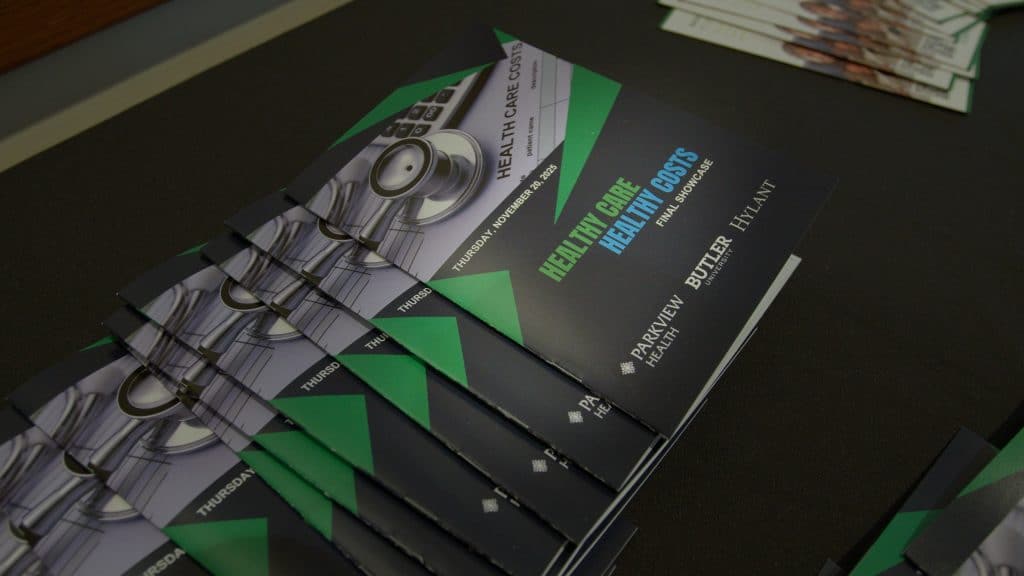
Entrepreneurs, researchers and healthcare leaders were challenged to propose solutions concerning chronic disease prevention and management, behavioral health and lifestyle-related cost drivers, access to care in rural and underserved areas, scalable early intervention models and cross-sector collaboration to reduce total healthcare spending. Preventive care was a central theme, Massing says, as preventing costly hospital stays and emergency visits is a large part of lowering healthcare expenses.
Applications for the challenge opened on May 1, and on July 7, nine semifinalists were announced. These startups went on to pitch their products to an expert panel of healthcare leaders, investors, and innovators in late August. The teams were judged on how well their solution addressed the problem, how implementable it was, how strong the team behind the solution was, and the expected impact within the state of Indiana.
Each company has a platform or product that addresses the Healthy Care Healthy Costs challenge statement to lower healthcare costs, usually through preventive care. Some aimed to reduce the likelihood of complications that extend the healing process and others focused on detecting problems early on. In the semi-finals, they were competing for a cash prize and a spot in the accelerator.
The winner of the semifinals, Bedside Bike, won a $10,000 prize. Bedside Bike is an early-stage mobility company developing exercise bikes that attach to hospital beds and allow bed-bound patients to exercise throughout the day without staff assistance. They plan to reduce healthcare costs by combating the complications of immobility and keeping patients active during their hospital stay.
“Bedside Bike has a strong team, and we believe they have the support needed to bring their device to market,” Massing says. “We also saw it as a great need. I mean, how many hospital beds are in the state of Indiana? Every single one of them could use a Bedside Bike device.
The other finalists included: Kilele Health, which is developing wearable blood chemistry sensors to turn chronic disease care from crisis-based to status-based; Septo, which is creating color-changing bandages that can alert caregivers to infections before overt symptoms arrive; TheraMotive, a New York City-based company that provides mobile physical therapy to communities across the city with fully equipped, AI-augmented clinics on wheels. Parkview paired these teams with mentors through their Accelerator program to refine and further develop their solutions.
“Every company that joins our accelerator program gets a needs assessment,” says Massing. “We look at the company’s current progress, their plan for the future and then what they need to get there. Every company is very different … they all need to talk to different subject matter experts.”
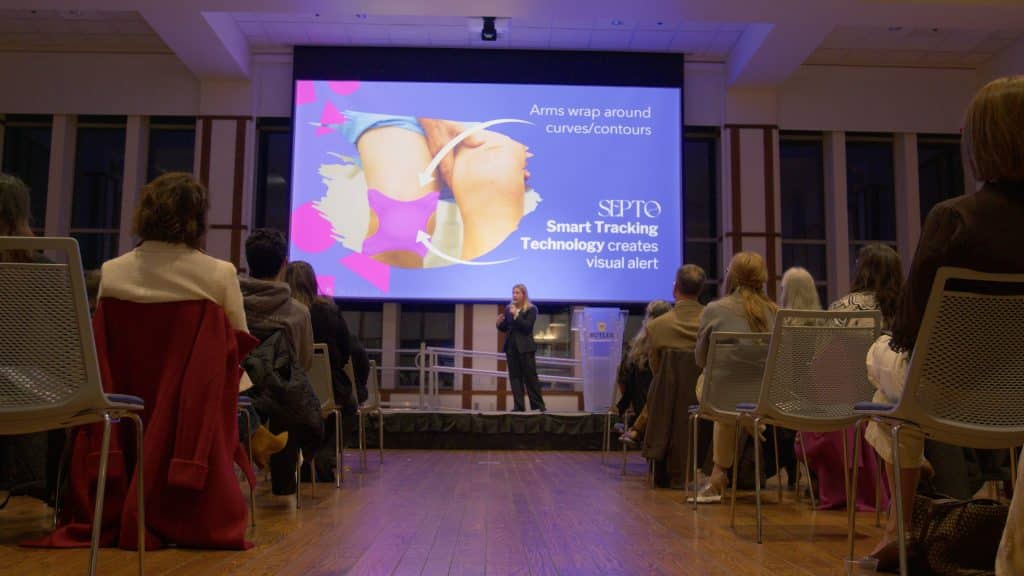
The mentors range from members of the hospital purchasing department, the informational services team, the biomedical team, marketing experts, and others, all to prepare the start-ups for their final pitch day. Mentors who guided teams during the accelerator praised the innovation and practical applicability of the solutions, underlining how startups can play a vital role in addressing chronic disease, early detection, mobility and rehabilitation, and more.
The final showcase was held on November 20 at Butler University in front of a live audience. Over the course of the evening, each of the four finalist teams, Bedside Bike, Kilele Health, Septo, and TheraMotive, presented their solutions to healthcare professionals, potential investors, and community innovators, highlighting how their technologies and care models could lower preventable healthcare costs and improve patient outcomes.
Rather than naming a single winner, the event emphasized connection and opportunity. Each finalist had the chance to field questions from industry leaders and engage directly with executives from Parkview, Butler University, and partnering organizations, as well as representatives from the broader healthcare and investment communities. This structure was intentional: the focus shifted from crowning a single winner to fostering collaboration, investment interest, and real-world adoption paths for all the companies involved, with the potential for pilot opportunities within Parkview and other health systems.
Organizers noted that several teams had already sparked interest from Parkview service lines and external partners even before the final pitches, demonstrating that the competition’s value lies not just in prize money but in the networks and real pathways to impact the challenge is creating. Parkview is currently working with the Bedside Bike team on a pilot study using the devices in their inpatient settings.
Massing said that the showcase exemplified Parkview’s mission to bring forward-thinking health solutions to underserved communities and everyday clinical settings, reinforcing that innovation isn’t just about new ideas, but about getting them into the hands of the people who need them most. With the finalists now poised to grow their ventures and pursue partnerships, the Healthy Care, Healthy Costs challenge supports Parkview’s commitment to lowering healthcare costs and improving health across Indiana and beyond.

These global innovation projects have been an opportunity for Parkview to expand the solutions it provides to the problems faced by its patients. In the last six years, Massing says they have met with over 250 startups from all over the world thanks to the exposure from these competitions.
“Parkview has seen this as an important intake for these great ideas that we’re getting,” she says. “The program really allows us to continue that mission-driven work in supporting people to live healthy lives.”
This article was made in partnership with Parkview Health.
Related Articles

How volunteers and local businesses are supporting 160 miles of trails
Fort Wayne Trails counters thin budgets by launching volunteer “soft maintenance” and partnering with local businesses for trail amenities.
Partner Partner Content Prenatal & Infant Care Network informs and connects
Ahead of Prenatal & Infant Care Network’s next luncheon, leaders reflect on their work to support case managers and providers locally.
Partner Partner Content More than a wig: Compassion, confidence and care at Parkview’s Wig Boutique
Receiving a cancer diagnosis can be a life-changing experience. Parkview Health provides an experience designed to restore confidence and a sense of self during treatment.