How volunteers and local businesses are supporting 160 miles of trails
Fort Wayne Trails counters thin budgets by launching volunteer “soft maintenance” and partnering with local businesses for trail amenities.
This story is part of Moving Fort Wayne Forward, a year-long reporting effort to engage residents, employers, and community leaders of Greater Fort Wayne around the possibility of a more modern, multimodal transportation system. Read the full series here.
Allen County residents have access to over 160 miles of trails. To put that in perspective, riding the entire system without stopping would take more than 12 hours by bike and nearly 48 hours on foot.
With that much trail, keeping vegetation trimmed, boardwalks safe, and corners visible, while also providing restrooms and water access, can stretch municipal staff and budgets thin, especially as funding for trails remains a contentious issue in local legislatures. But Fort Wayne Trails, the local non-profit organization dedicated to enhancing trail coordination among municipalities, has found solutions to mitigate the impact of both.
This year, the organization is launching a volunteer “soft maintenance” program to supplement municipal trail management by cutting back overgrowth, pulling weeds, and flagging potential safety concerns for municipal teams.
The solution is designed to free up municipal crews to focus on larger repairs, like pavement replacement and structural fixes, while volunteers handle lighter tasks that accumulate quickly: work that does not require heavy equipment or structural repairs.
Volunteer availability and skillsets may limit the reach of this program, but James Holm, director of community engagement for Fort Wayne Trails, says that these teams, while limited in ability, can have an outsized impact on the perception and usability of the local trail system.
“If your trail has got a bunch of weeds, it looks like you don’t care about it, and we do care about it,” he explains. With 162 miles of trail network, “it’s hard to be everywhere all the time.”
Kent Castleman, the organization’s executive director, adds that sometimes trail users will point out safety issues caused by the growth of vegetation, and that addressing these concerns with a team of volunteers will have a “direct correlation” to the trail experience.
“Sometimes, we don’t know that there are issues until a trail user says, ‘Hey, I had an issue in this corner and about got hit by somebody coming around the corner,’ or something along those lines. We want to be proactive in trying to address some of those safety concerns, too, by cutting that brush back on corners and areas that it makes sense to do that as well.”
Both Holm and Castleman praised local municipalities for their cooperation in fixing major issues like potholes and bigger trail concerns, and they want the program to focus on the smaller issues that accumulate quickly but might not be a high-priority project for communities with limited staff.
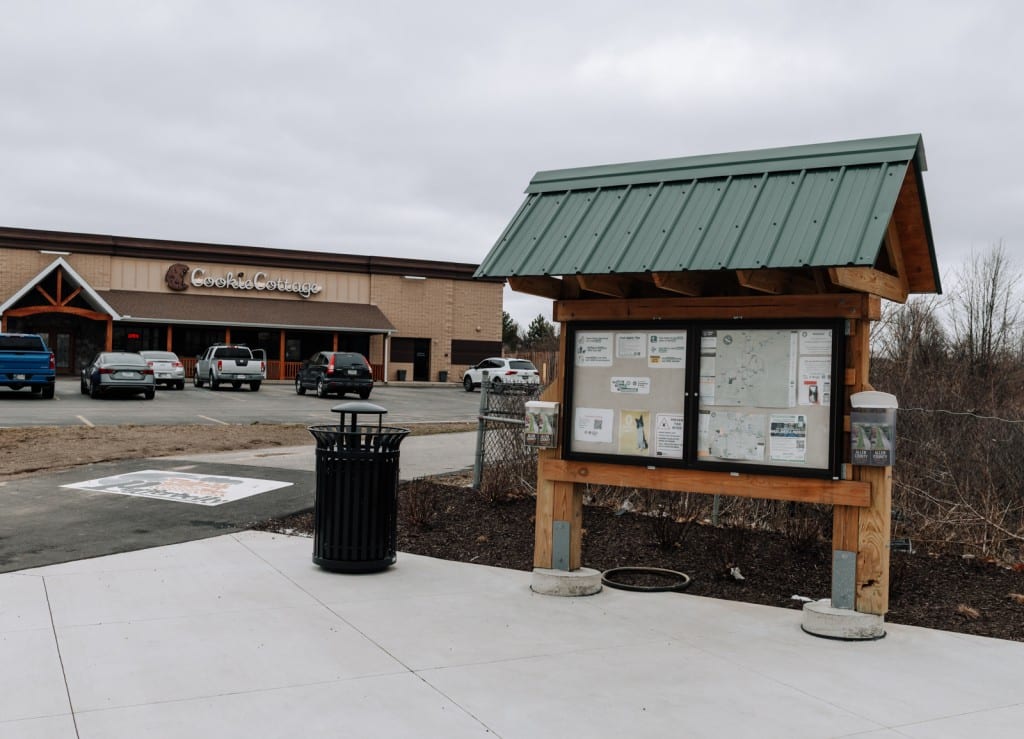
“It’s an opportunity for us to assist our municipal partners even more,” Holm says, “but also allow the trail user to support the trail user, which I think is a really cool part of the community that trails build.”
After collecting some data and feedback this year, like what tools volunteers need the most and the skillset differences between each team, Fort Wayne Trails will be able to support individual volunteer teams where they need it most as the program continues. For example, while some teams might bring their own equipment, other teams might benefit from a “tool library” from which they can borrow.
“I think once you activate a group of people,” Castleman explains, “and you empower them in a way — the passion from that group — I think we’re going to be able to get a lot done once we have the right key people in place that are going to really drive the work.”
While the program is still in its early stages, longtime trail users are already expressing support for a model that allows the community to take partial ownership of the system’s upkeep.
Steve Heim has been part of the trails community since 2011. A self-described late-life starter in running, Heim ran his first 5k at age 50. Since then, he has completed all six World Marathon Majors, and he has been president of the Fort Wayne Running Club since 2021.
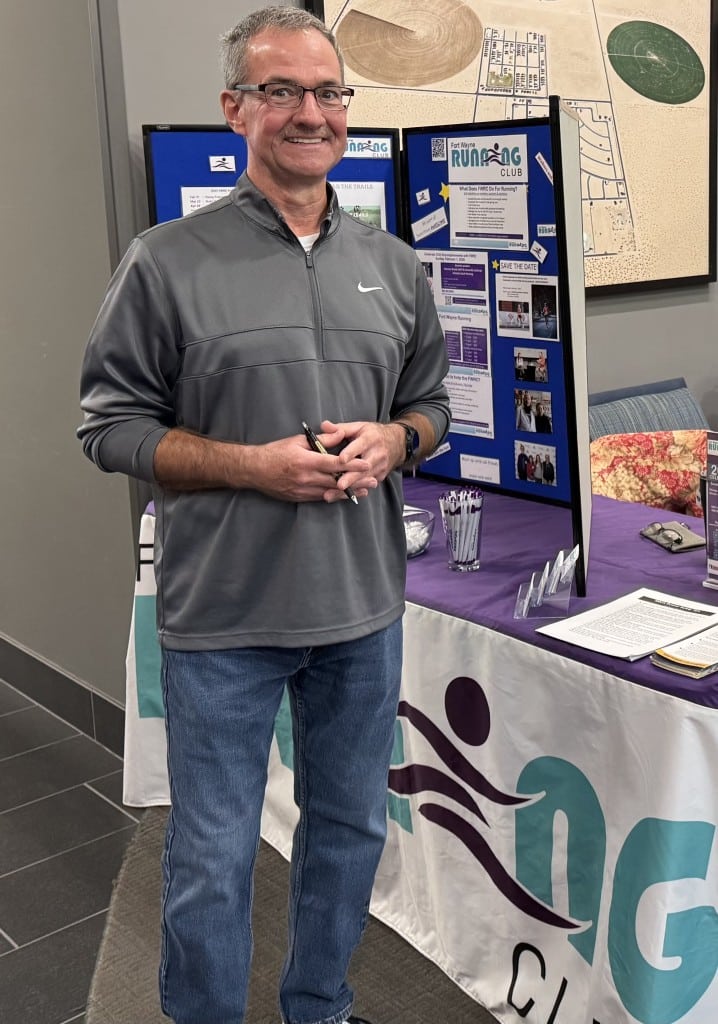
In his experience, overall maintenance of the trails has been “remarkable” considering the vast expanse of miles in the system. And, while sometimes parts of the trail need work, like overgrown vegetation or loose boardwalk slats, Heim says that municipalities are usually quick to fix it.
With that, however, he expressed excitement at the program as a way for trail users to give back to the community, similar to the “Adopt A Greenway” program that Fort Wayne Trails recently absorbed from the City of Fort Wayne. Heim says that Fort Wayne Running Club has a “two-mile stretch in Southwest where we go out three times a year, and we make sure that trash is picked up and, you know, the trails are clean in that section.”
Heim’s positive experience with trail maintenance reflects the City of Fort Wayne’s existing maintenance structure. The city oversees the vast majority of the trail system, operating with a small staff supported by seasonal workers, park crews, and around 120 volunteer “Greenway Rangers” who are each responsible for regularly looking after a section of the trail.
Moving Fort Wayne Forward Reader Survey
Hey! We could really use your help making sure we can continue producing journalism that informs and inspires. Taking a few seconds to answer these questions will ensure we’re on the right track and that our funders understand our impact.
Dawn Richie, greenways and trails manager for Fort Wayne, says that while the soft maintenance teams’ efforts will certainly complement the city’s work, the surrounding municipalities will likely see the greatest impact in their communities that include 52 miles of trail outside Fort Wayne’s city limits.
“They don’t always have the dedicated staff or the necessary staff to do all the maintenance work that’s required on the trails,” Richie explains.
And, even though Fort Wayne’s 110 miles of trail already boast a robust volunteer structure, she adds that the soft maintenance teams could make a positive impact on city projects like the repainting of yellow bollards with contrasting black stripes to make them more visible for people with visual disabilities.
“Those kinds of projects would really complement what we’re already doing out on the trails.”
This is not the first time that Fort Wayne Trails has partnered with community members to multiply its impact in the county. The organization has seen success in expanding trail amenities through local partners dubbed “Trail Friendly Businesses.”
Installing public restrooms is cost-prohibitive for municipalities. For example, last March, Fort Wayne announced approval for the purchase and installation of a new, semi-enclosed public restroom downtown that will cost nearly $300,000. Spacing permanent restrooms every five miles along trails would require dozens of facilities, a multimillion-dollar investment that is not feasible with the current funding constraints for public trails.
That’s where local businesses like Cookie Cottage stepped in.
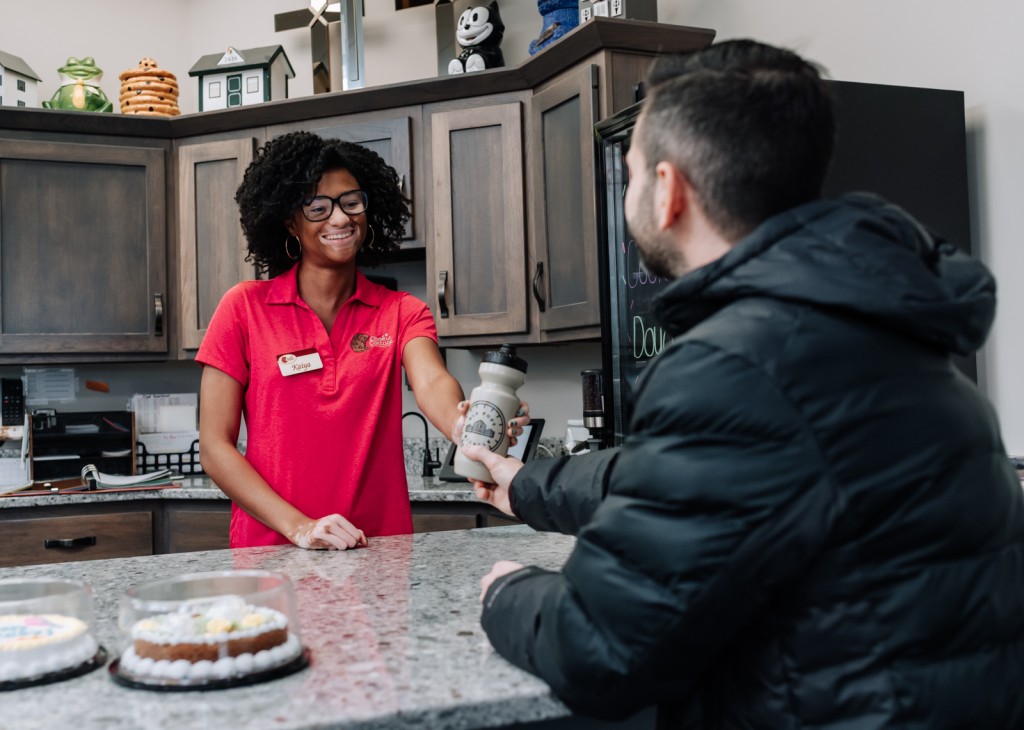
“They’ve been supporters for a very long time,” Holm says, “and up until this past year, the Pufferbelly Trail terminated there.”
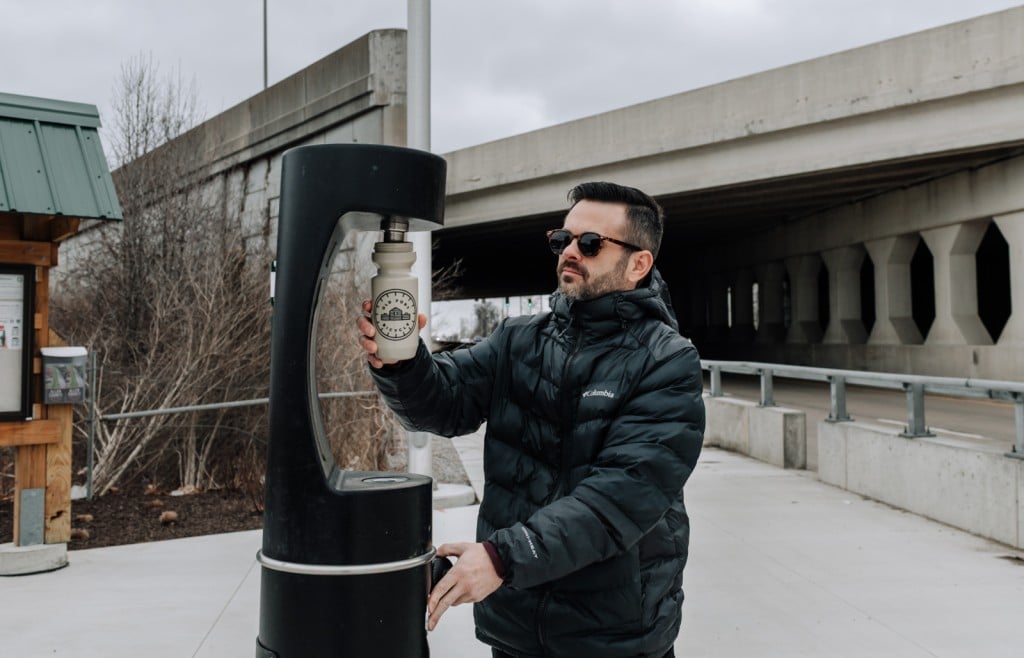
Cookie Cottage offers trail users restrooms and water, and Holm said that people usually also take advantage of some of the offerings of Trail Friendly Businesses.
“People can go ride the Pufferbelly, and they get their cookie. We hear about that all the time, and that’s happening with other businesses as well. We remain excited about trail-friendly businesses because they offer something to the community that is important.”
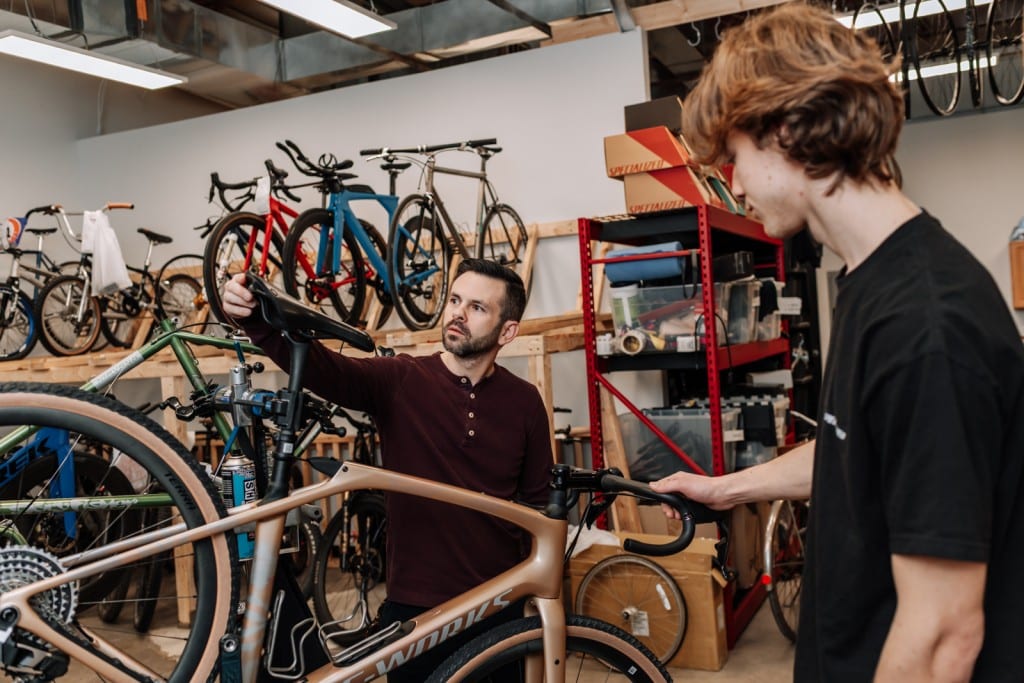
Maricela Madden, manager at Cookie Cottage, says that both trail users and partner businesses benefit from the relationship.
“We’ve got an older gentleman who comes every morning,” she says, “and he will park his car. He goes for his daily walk, and he comes and gets his cookie.”
Fort Wayne Trails now partners with 18 Trail Friendly Businesses along the network. Through the program, Fort Wayne Trails promotes participating businesses that offer water refills, public or accessible restrooms, bike repair, or special promotions for trail users.
While these partnerships help fill gaps, access to these amenities is limited to business hours. Trail users commuting early in the morning, late at night, or on days when businesses are closed may not have many options along certain stretches of the network.
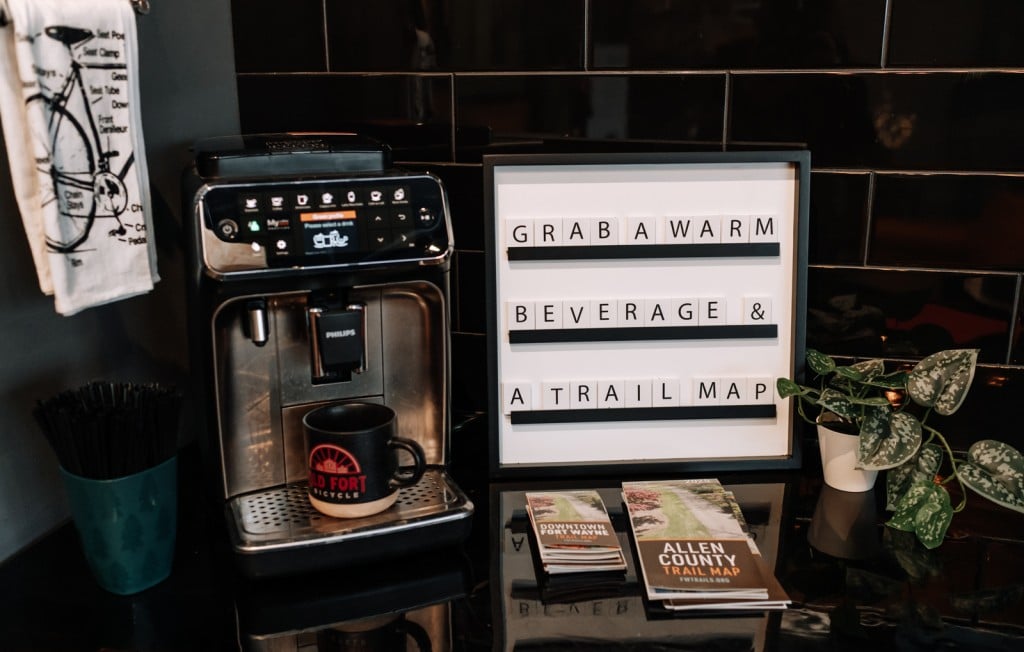
The availability of amenities also varies by location. Cyclists, who cover distance more quickly, are more likely to reach an open business within a short ride, while pedestrians may encounter longer gaps between available facilities, especially in more rural sections of the trail where few commercial partners exist.
While not a perfect replacement for permanent public facilities, the program offers a cost-effective way to expand amenities by utilizing infrastructure that already exists.
With a trail network that stretches across 160 miles and multiple jurisdictions, no single municipality can be everywhere at once. But, by delegating small responsibilities, Fort Wayne Trails is testing whether a community-powered approach can preserve both the usability and spirit of the region’s trails without placing the full burden on municipal budgets and staff.
From volunteer weed trimmers to local cookie shops, the future of Allen County’s trails may depend less on large capital projects and more on small, consistent acts of stewardship.
Thanks to our Presenting Partner, Parkview Health, our Lead Sponsors, WindSwell Foundation and Community Foundation of Greater Fort Wayne, and to our sponsor, Citilink, for making this story possible.

Author

Related Articles
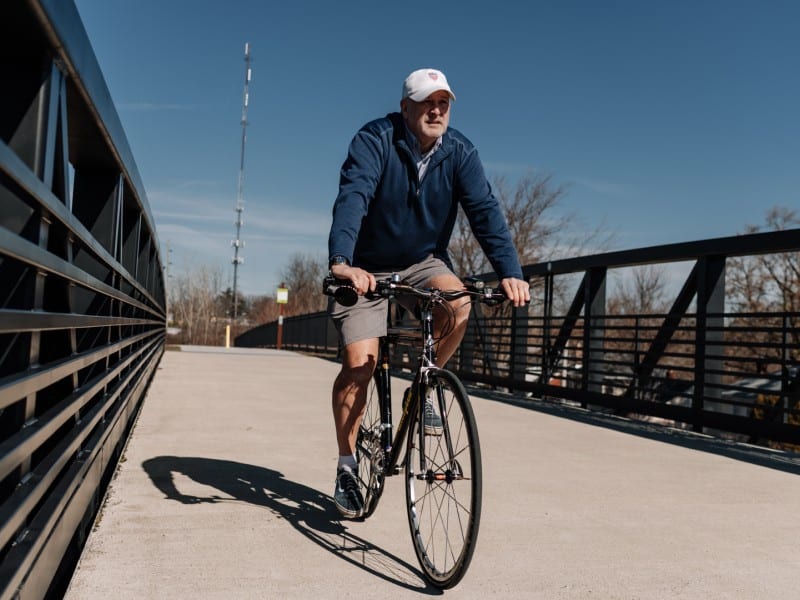
Pedals, paths, and people: Riders share their experience on Fort Wayne trails
Fort Wayne riders say familiarity, etiquette, and experience shape how comfortable people feel navigating the region’s expanding trail network.
CTN puts out urgent call for new drivers as new funding boosts capacity
A new grant offers the opportunity to increase the number of rides Community Transportation Network (CTN) offers, but they need to fill seven vacant driver positions to make it happen.
What do Citilink’s route changes mean for Southeast Fort Wayne?
Officials say the changes, which took effect in early March, will provide more predictable and direct service in the quadrant.