Fort Wayne Trails: A merger that changed how the city moves
Fort Wayne Trails, established in 2011, unified trail advocacy groups, building over 160 miles of trails for recreation, commuting, and safer transportation.
This story is part of Moving Fort Wayne Forward, a year-long reporting effort to engage residents, employers, and community leaders of Greater Fort Wayne around the possibility of a more modern, multimodal transportation system. Read the full series here.
When a vehicle struck and killed cyclist Ronald Repka along rural Arcola Road in 2001, residents in Aboite took action. They organized Aboite New Trails, one of several local trail-advocacy groups pushing for safer options for cyclists and pedestrians.
However, with scarce resources for building this new infrastructure, some noticed that enhanced coordination with nearby advocacy groups, such as the Rivergreenway Consortium and Northwest Allen Trails, could stretch their funding further. In 2011, Fort Wayne Trails was created from the merger of these three trail advocacy groups.
Since then, the trail system has expanded significantly, including the completion of 100 miles of trail in Allen County in 2017 — roughly double the organization’s starting mileage — along with continued progress on the Pufferbelly Trail and other connections.
Fort Wayne Trails does not build or operate any part of the trail system itself. It operates more as a unifier and advocate, bridging the gap between trail users and municipalities to help move projects from hope to reality by securing funding and supporting planning efforts for priority projects.
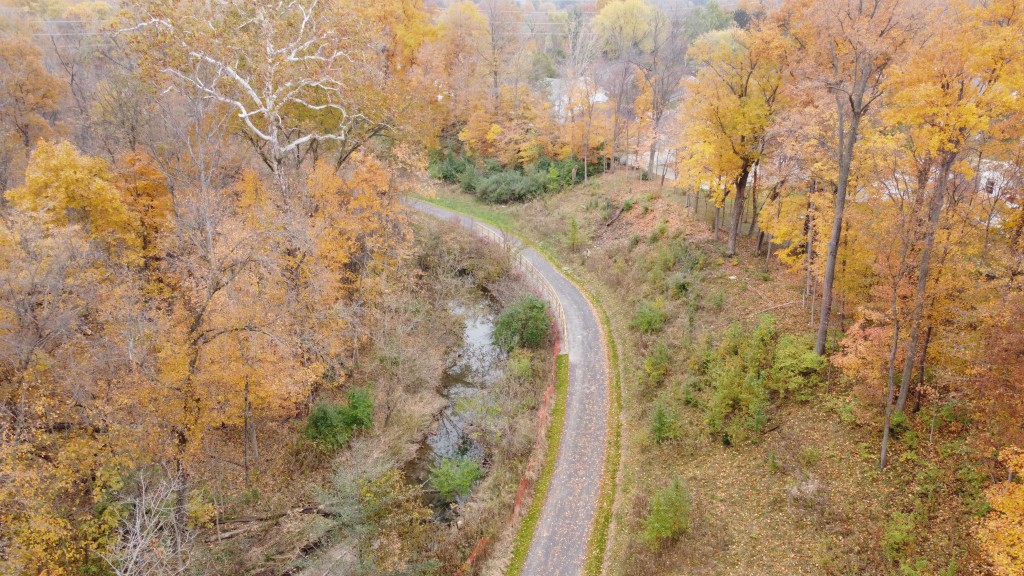
In addition to long-term planning, the organization also provides funding for certain trail maintenance tasks when city budgets fall short. For example, Fort Wayne Trails provided funding for the City of New Haven to pressure wash boardwalks that became mossy and slippery.
Another part of that mission, according to Executive Director Kent Castleman, is making sure that decision-makers build trails to get “people to and from destinations that matter,” encouraging residents to use the trails not only for recreation, but as an alternative mode of transportation.
When trails connect neighborhoods to jobs, schools, and parks, cyclists and pedestrians can travel more safely without relying on a car. As of 2023, 88% of Fort Wayne residents commute by car — fewer than 2% of residents bike or walk.
While most trail use tends to be recreational rather than an alternative mode of transportation, current trail enthusiasts can drive the infrastructure’s expansion and broader adoption. As connectivity improves, it can lay the groundwork for residents to use the system not just for leisure and exercise, but for errands and commuting.
For recreational trail users like Steve Heim, the system’s growing connectivity opened new possibilities. Around the time Fort Wayne Trails began its work, Heim took up running.
He started running later than most, and quickly developed a strong appreciation for both racing and the expanse of the local trail network. He ran his first 5k at age 50 and ultimately completed all six World Marathon Majors.
“Obviously, the trails were very important to me as a marathoner,” he says. “I ran 15 full marathons. Training for a marathon is like 90% of the effort, because you’re putting on so many miles to train, and long runs of anywhere up to 20 miles require places to go do it — Fort Wayne’s trail system was the ideal spot to go do that.”
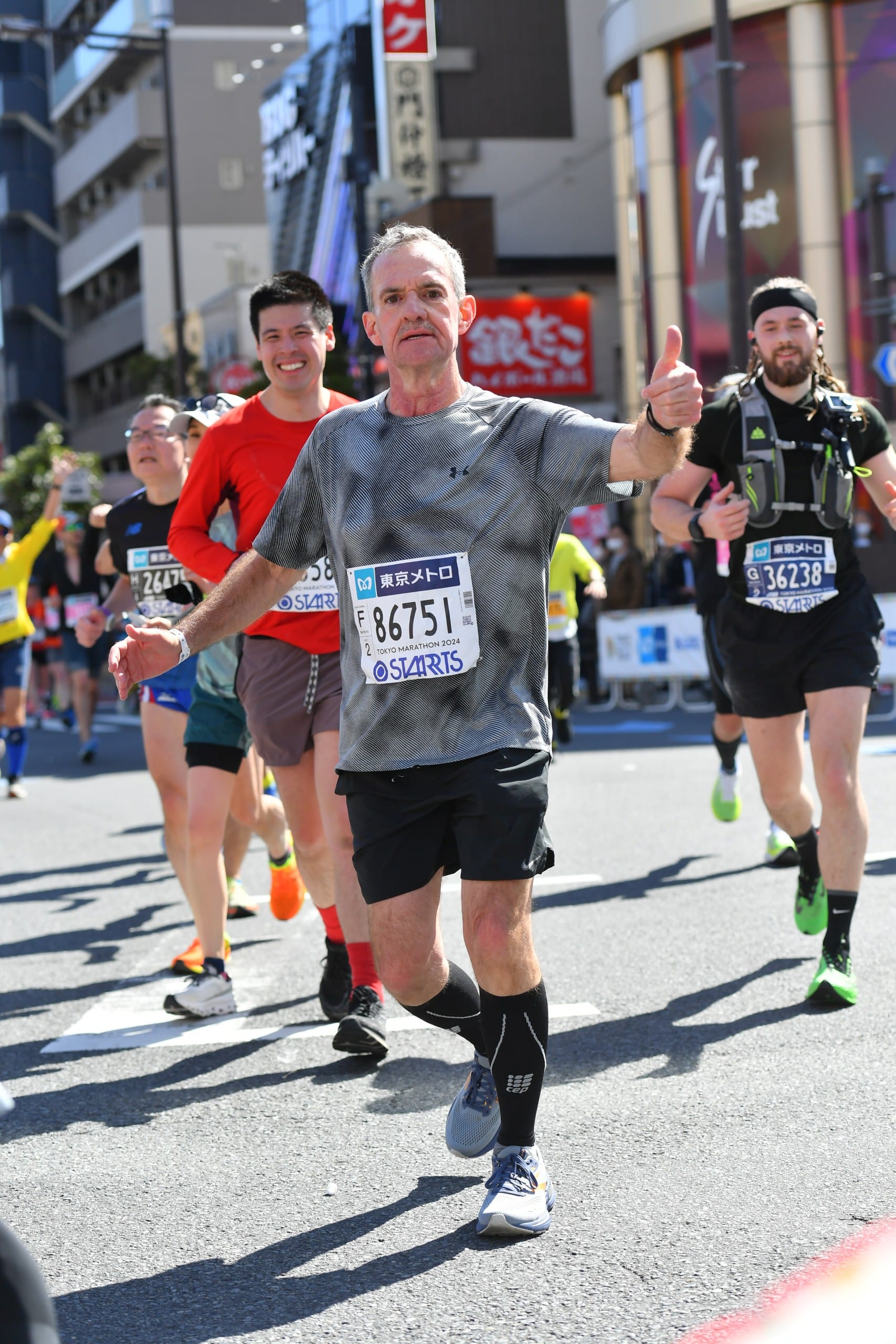
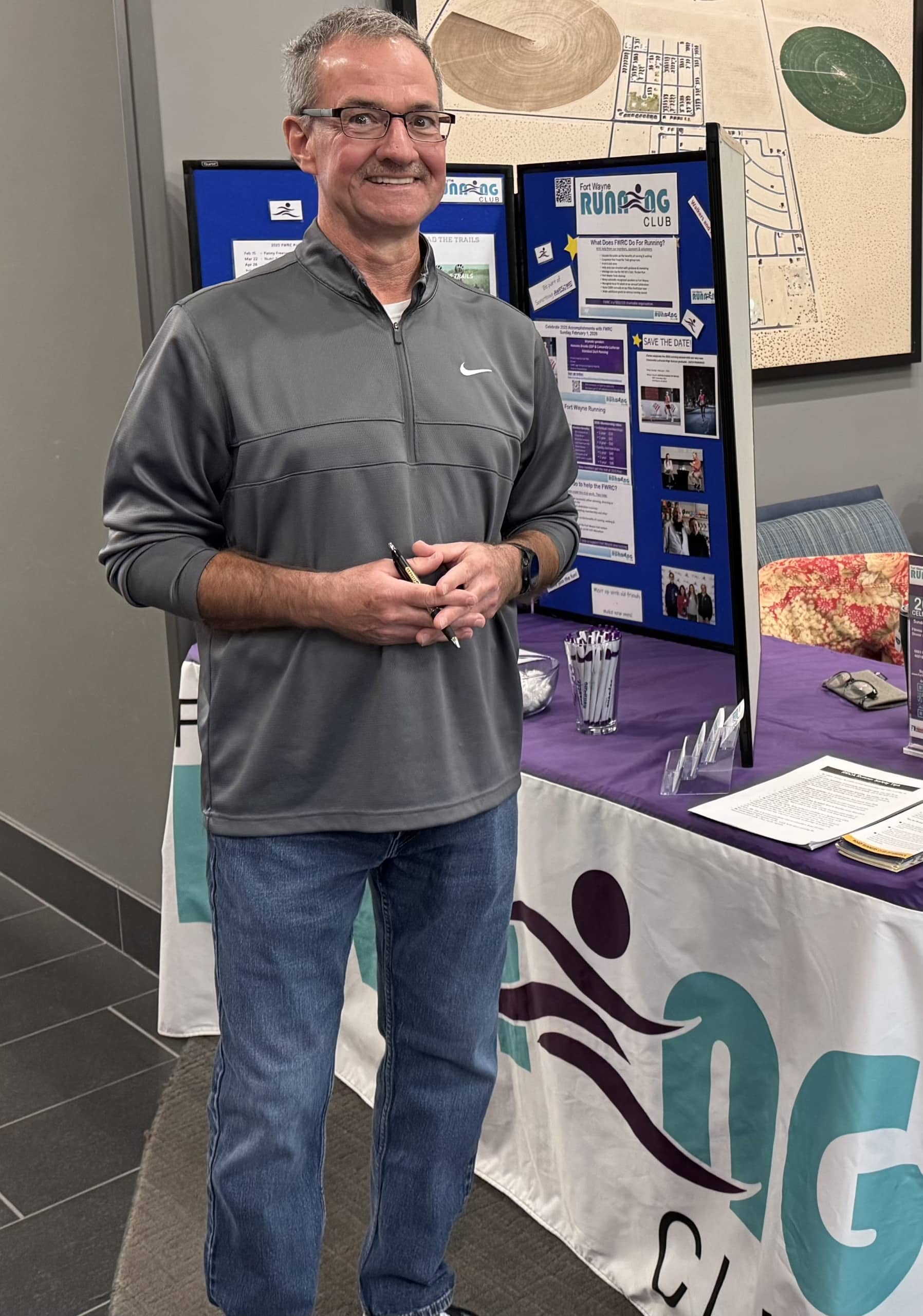
As his passion for running grew, Heim soon found himself on the board of the Fort Wayne Running Club and was elected president in 2021.
“The running community was so welcoming, and you know, so supportive,” he says. “There’s so many people in the Fort Wayne-area running community that embraced me, and helped me, and ran with me, and mentored me, and helped me with many things.”
Later that year, Heim wrote to the Road Runners Club of America (RRCA), a national organization, to nominate Fort Wayne as a “Runner Friendly Community,” which the RRCA designated the city that December. Requirements for the designation include a network of paths that allow runners to do 3 to 10 miles continuously and have trail-friendly businesses for runners to use amenities. Fort Wayne can check those boxes several times over.
Renewal of that designation comes this year, as the RRCA regularly reviews cities on its list.
Even with a nationally recognized trail system, some residents might still be unfamiliar with the local trail system. Heim says trails “provide something for everybody,” and urges people to give it a try if they have not.
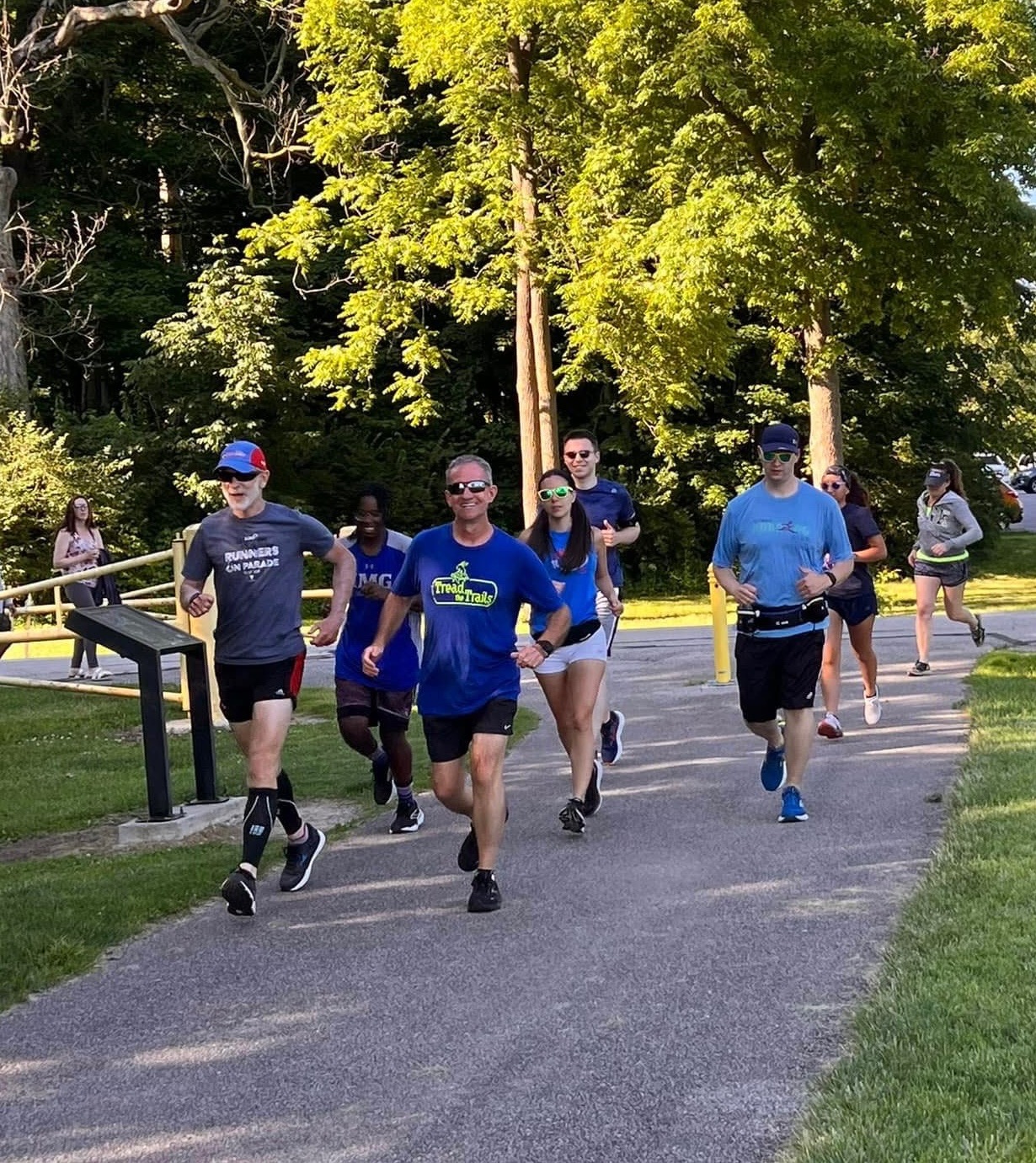
A great opportunity to do this, he says, is Tread the Trails, a joint effort between Fort Wayne Trails, the Fort Wayne Running Club, and the cities of Fort Wayne and New Haven to invite people on a guided walk or run to familiarize themselves with local trails.
“Nobody’s going to get lost, nobody left behind, and mentors are there to help you to use them, and how to use them properly and safely. It’s a perfect opportunity to be able to do that with no cost, no commitment, and take advantage of that.”
Participants like Heim play an important role in expanding awareness of the trail system. As more residents experience the trails through organized events and recreational use, that familiarity can translate into broader adoption over time.
Right now, Heim, Fort Wayne Trails, and other trail advocacy groups in northeastern Indiana have their eyes set on a major trail through the heart of Fort Wayne, the Poka-Bache Connector that will run from Pokagon State Park in Angola to Oubache State Park in Bluffton. Some segments of the 81-mile trail are complete, and Heim says that this could expand transportation options for the region, even if he does not intend to run the entire 81-mile trail quite yet.
Two decades ago, a fatal crash exposed the vulnerability of cyclists in Allen County. Today, through coordination, advocacy, and long-term planning, the region has built and connected more than 160 miles of trails. By aligning priorities and multiplying its influence, Fort Wayne Trails has helped transform isolated paths into a safer, interconnected regional network.
For runners like Heim, the trails made marathon training and community-building possible. And, as the network continues to grow, so does the number of residents discovering new ways to move through their community.
Thanks to our Presenting Partner, Parkview Health, our Lead Sponsors, WindSwell Foundation and Community Foundation of Greater Fort Wayne, and to our sponsor, Citilink, for making this story possible.

Related Articles
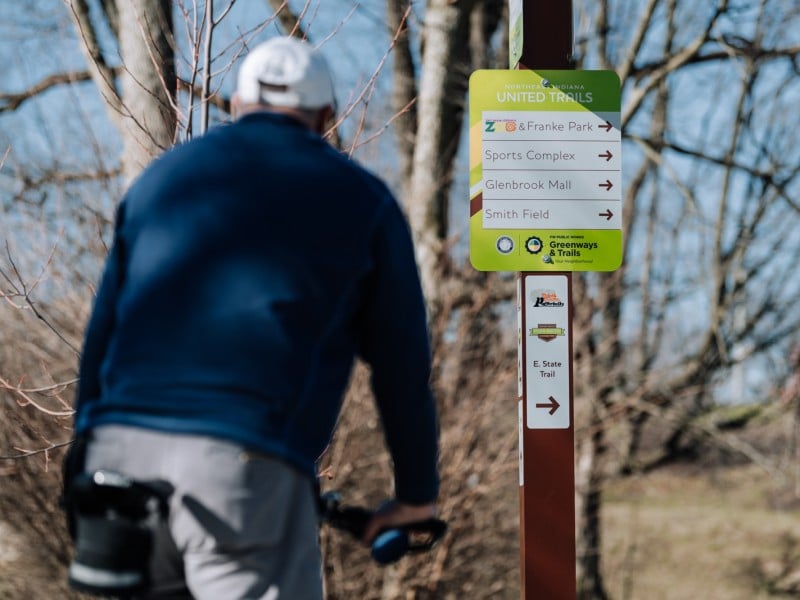
How improvements to wayfinding build confidence in trail users
Regional planners are expanding trail signage and wayfinding to help riders move beyond familiar routes and explore the network with confidence.
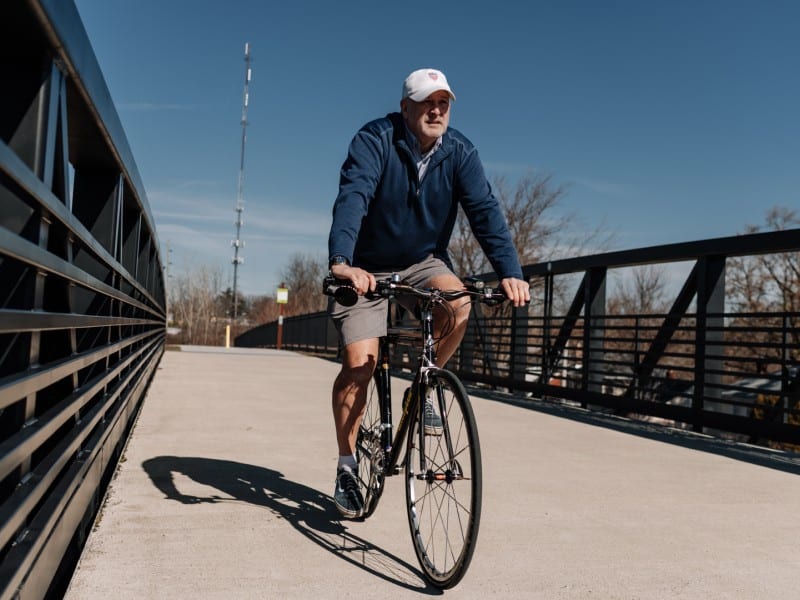
Pedals, paths, and people: Riders share their experience on Fort Wayne trails
Fort Wayne riders say familiarity, etiquette, and experience shape how comfortable people feel navigating the region’s expanding trail network.
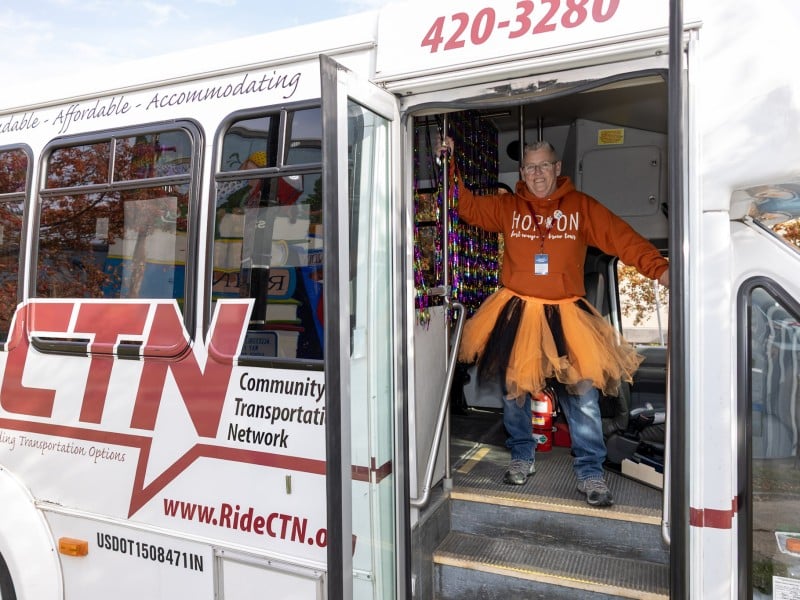
CTN puts out urgent call for new drivers as new funding boosts capacity
A new grant offers the opportunity to increase the number of rides Community Transportation Network (CTN) offers, but they need to fill seven vacant driver positions to make it happen.