
‘Filling gaps’: What a forthcoming mobile crisis unit means for community mental health and well-being
Courageous Healing is launching a mobile crisis unit to provide community-based crisis response, thanks to a million-dollar grant from the Mobile Crisis Accelerator Program.
When a mental health emergency strikes, the current response system often falls short — especially for those in Fort Wayne’s underserved neighborhoods. Too often, families and individuals facing a crisis are left with few options but to call 911. This frequently leads to fraught encounters with law enforcement or emergency room visits. Neither situation lends itself to quality and sustainable mental health care. Rising rates of depression, anxiety, suicide attempts, and substance use only exacerbate the challenges, creating a pressing need for a better solution.
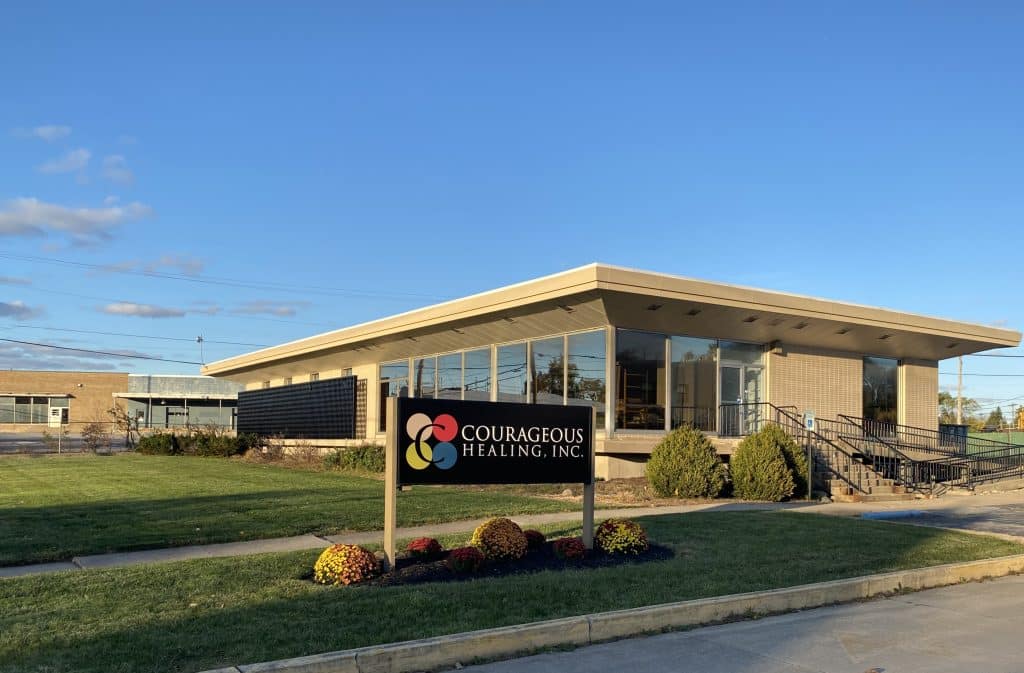
Recognizing this gap, Courageous Healing Co-Founders Janell and Aaron Lane plan to launch a mobile crisis unit upon receipt of a million-dollar grant from the Mobile Crisis Accelerator Program (MCAP). MCAP provides grant funding, training, and technical assistance to mobile crisis teams across Indiana, ensuring timely, community-based crisis response for all Hoosiers.
The mobile crisis unit will pair licensed clinicians with trained peer support specialists to deliver real-time, on-site de-escalation, assessment, and linkage to care. The program will operate in coordination with 988, 911, and local service providers to reduce reliance on emergency rooms and law enforcement for behavioral health crises. The program will target areas based on the number of police calls in a given period, service gaps identified by the Indiana Department of Mental Health and Addiction, and zip codes that have a demonstrated need for crisis support.
Though the program won’t officially launch until mid-2026, Janell says it has been a long time coming.
“We’ve known this was a need for a long time,” says Janell. “It’s something we’ve all been watching and hoping would change. But after watching long enough, it gets under your skin, and you decide maybe that someone who needs to do something about it should be you — or at least you should see what you can do to help.”
Currently, Courageous Healing’s practitioners primarily handle mental health through their culturally centered, one-on-one outpatient therapy services. Though they’ve seen tangible results in their work, their services only go so far. They can’t cater to people experiencing a crisis after hours, but the mobile crisis unit will expand its reach, allowing the team to address mental health emergencies at all hours of the day.
To support this initiative, the team will double in size, hiring eight to nine new staff members. The Lanes are committed to recruiting individuals with both the technical expertise and the empathy required to meet people in their most vulnerable moments
“We don’t just want bodies because we have to hire people,” Aaron says. “We want the right people who are going to meet those in the most vulnerable moments of their lives, in crisis, with empathy and care.”
The mobile crisis unit will also complement the work of other local organizations.
“It’s about jumping out there in the arena and seeing what we can do to help with this massive problem,” Janell says. “We’re audacious enough to think we’ll create some change, but also not naïve enough to think we’re inventing something entirely new. We want to come alongside those already doing great work. We’re not looking to step on toes — we want to play nice in the sandbox.”
For the Lanes, success will be tied less to numbers and more to the depths of the interactions. Still, there are necessary metrics and reporting for the grant. Stories of families who finally feel seen, heard, and connected will speak to the program’s impact.
But before they have tangible results to show for, the Lanes have their work cut out for them. Launching an ambitious, around-the-clock mobile crisis response is resource-intensive. Janell say it’s a huge commitment for her team, shifting to being open 24/7, 365 days a year.
The million-dollar grant is time-limited and restricted to the mobile unit, while Courageous Healing’s core outpatient work still relies on separate, and increasingly competitive, funding streams.
“We still have to fund our outpatient services during a time when funding is at an all-time low and it’s very competitive,” Janell says. “And we have to find funding to keep this new arm sustainable, especially with changes happening with Medicaid and Medicare.”
While Medicaid and Medicare billing may help with sustainability after the grant funding period ends, the Lanes are realistic about uncertainty. With all of the changes happening at the state and federal levels, no one knows what the funding landscape will look like in a few years. All of that to say: support from individuals, corporations, and foundations will be critical.
Capacity is another concern. One unit and one team cannot be everywhere at once. Calls will be prioritized based on need, informed by data and collaboration with law enforcement. For instance, the county police shared call data that points to high-need areas.
As they look to build out the mobile crisis unit infrastructure, Aaron says a guiding principle will be the importance of a holistic, community-owned approach. Specifically, he cites Indianapolis’ mental health roundtable, which reflects a diverse group of stakeholders — from sports teams to hospitals to city officials. In his words, “That’s a model we’d love to see here — everyone working collaboratively, recognizing that mental health intersects every part of community life.”
Author

Related Articles
Partner Partner Content Prenatal & Infant Care Network informs and connects
Ahead of Prenatal & Infant Care Network’s next luncheon, leaders reflect on their work to support case managers and providers locally.
What will a low-barrier shelter mean to Fort Wayne’s unhoused population?
City officials say a 24/7 shelter will offer programming, safe parking, and other amenities that will help people in need.
Partner Partner Content More than a wig: Compassion, confidence and care at Parkview’s Wig Boutique
Receiving a cancer diagnosis can be a life-changing experience. Parkview Health provides an experience designed to restore confidence and a sense of self during treatment.