How a Sculpture Tour is transforming Decatur
The once-traditional town is becoming a hub for national art and artists.
In the world of sculpting, David Smith is a household name.
Born and raised in Decatur in the early 1900s, he was the first American sculptor to use welding as a technique.
“He was really the first to do a lot of things in sculpture and became very famous for his efforts,” says artist Greg Mendez.
But while Mendez was displaying his work in the Sioux Falls Sculpture Walk in South Dakota about 10 years ago, he met artists who asked him how many of Smith’s style sculptures were in Decatur. And to their surprise, he responded, “None.”
So he decided to change that.
Working with a team of artists around the nation, as well as community leaders in Decatur, Mendez helped start the Decatur Sculpture Tour in 2012.
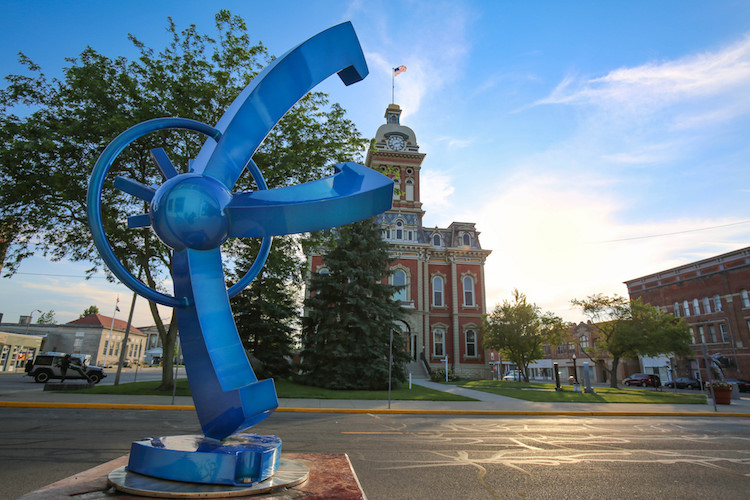
Going into in its seventh year this summer, the Tour brings original sculptures from around the country to the streets and storefronts of Decatur, decorating the town from June until April, along with the permanent displays the city has acquired over the years.
Starting with 16 sculptures in 2012, the Tour has grown to more than 35 pieces, including a new sculpture garden last year.
Better yet, all displays are free and open to the public, upending the exclusivity of a gallery experience, Mendez says, and in many ways, upending the small town of Decatur by turning it into a hub for artists.
While placing large sculptures on the streets was once a difficult sell to traditional community leaders, the city is now working with artists to advance the tour and feeding off its success in other forms of art around town, too.
Input Fort Wayne sat down with Mendez and Coni Mayer of the Decatur Sculpture Tour to learn more about the history of the event and how it’s shaping Decatur’s future.
IFW: Connie, along with being a part of the Sculpture Tour committee, you’re also Executive Director of the Adams County Community Foundation. Was it hard to win public approval and grow the Sculpture Tour to the point that it is now?
CM: When we went to the City in 2011 to ask if we could put giant concrete blocks on the streets for sculptures, it was not a warm welcome. It was hard going from zero art exhibits on our sidewalks to having eight installed big bases placed on our sidewalks. It was a huge risk. It was a change.
The City was concerned about people opening car doors into them, or people running into them.
Other cities have been doing it for years, but we hadn’t done anything like that in Decatur.
Then the first year went without any incident at all.
People enjoyed seeing the unveiling and seeing people from out of town walking the sidewalks and enjoying our outdoor exhibits.
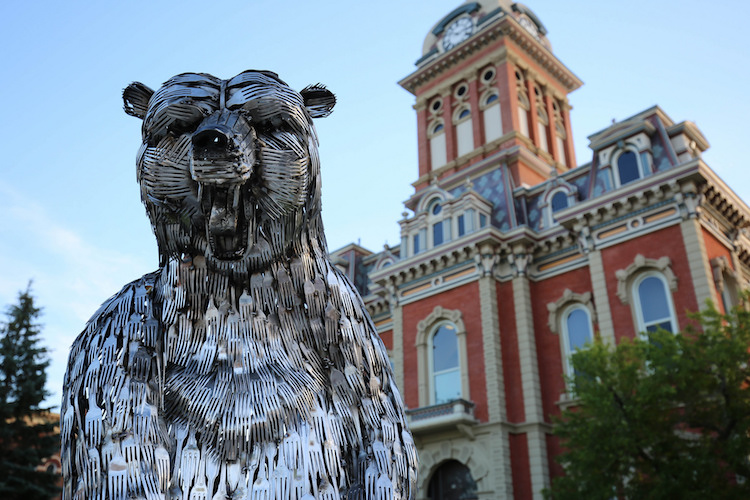
The second year, we had even more original pieces of artwork come in.
Now, word is out, and we’re starting to get artists from many places to show their work here. I’m thinking we have eight different states represented. We’ve got people coming from as far as Colorado and West Virginia.
Now the city is not only supportive in what they say, but also financially supportive. The City of Decatur’s street department has even become part of the committee.
Greg came up with the idea and encouraged the city to experiment. He’s participated in art shows across the US, and he has friendships that have encouraged other artists to participate here in Decatur, too.
IFW: Greg, how did you get started in the public art scene?
GM: It’s really a long story. I graduated in 2006 from the University of Saint Francis in Fort Wayne with a fine art degree, and there’s not much you can do with that today.
Most people study art education or graphic design, so I was trying to find a way I could use my degree.
Right now, around the country, public art is taking off in communities. It’s a trend where if a community wants to reinvent itself or attract people to an area, they’ll put a public art program in that place, and it gives people a reason to go there.
Ten years ago, I started making large scale sculptures to get them into public art programs. The whole gallery scene and everything that goes along with it was unappealing to me because it’s really secluded, whereas the public art scene all is intended for the public. Everyone can see it for free and form their own opinion.
Not only that, but they can also touch it and interact with it. I never liked not being able to tap something with my finger to see what it’s made of or how it feels.
In the public art world, you’re allowed to do that.
A couple years after college, I happened to luck out on getting three pieces into the Sioux Falls Sculpture Walk in South Dakota.
To this day, that’s the largest public art program in the country.
Once that was on my resume, it opened doors into other public art programs, and my career took off. As fast as I could make public art pieces, I could get them into programs.
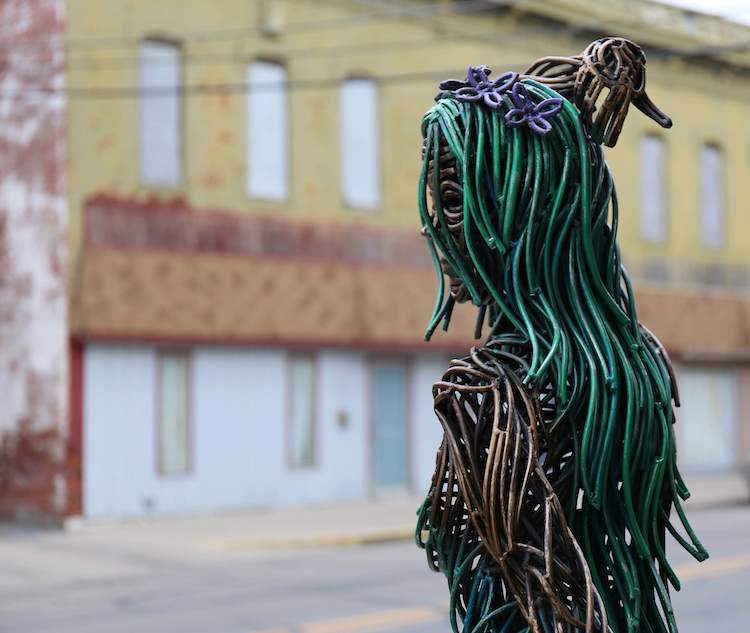
IFW: How did your involvement in the Sioux Falls Sculpture Walk inspire you to create the Decatur Sculpture Tour?
GM: A speaker at the Sioux Falls program showed us what the Sioux Falls downtown looked like prior to its public art program, and he had a progression of how it grew over the years. It just seemed really neat.
I also met several artists there. When you display in a gallery, everyone is really protective about their art, and their techniques, and how they did anything. But the first year I was at Sioux Falls, I was the youngest artist in the program, and all of these established artists out there were open books. They told me more than I could soak up.
At the time, I lived in Fort Wayne, but I was born in Decatur, and David Smith was born here, so a lot of them were asking, “How much is public art is in Decatur?” And I said, “You know, none.”
So when I came back, I presented the idea for a public art program to Decatur’s community leaders, and they thought, let’s give it a try.
IFW: Who are some of the artists in the Sculpture Tour?
GM: The first year, we got sculptures from three artists I met at the Sioux Fall Sculpture Walk: Ben Pierce, Nathan Pierce, and Matt Miller. They were all heavily influenced by David Smith.
All three of those artists were established and brought their work to Decatur. They’ve been bringing pieces up here every year since.
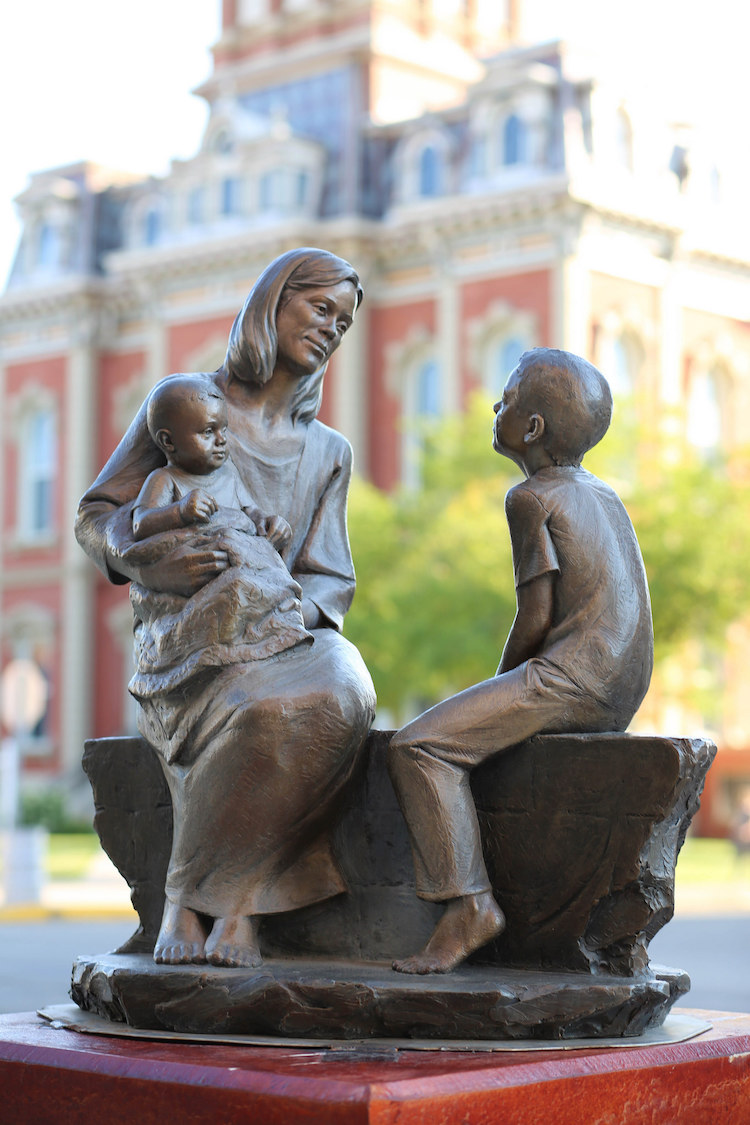
A lot of our artists have displayed in Sioux Falls in the past or are displaying in it now, so it’s really neat to see the same artists in Decatur that are in the biggest shows around the nation.
For example, last year, Ben Hammond sent a piece out here. It was a bronze sculpture of his family. You can walk through downtown Decatur and see his sculpture of a mother with a couple children, and it’s really classic and expressive.
But he’s made his career by making the last 20 busts for the NFL Hall of Fame, so it’s neat to know that’s the same artist.
A couple other artists, Lee Leuning and Sherri Treeby. They’re from South Dakota, and they’ve done bronze statues of every president, They’re widely known in the western public art circuit, and we have their work in Decatur, as well.
IFW: What regional artists are involved in the Sculpture Tour?
GM: Each year, we add a few new artists to the roster. We have some local artists, but there are not a lot of local artists creating large public art pieces, so were hoping this will encourage some to change what they’re creating.
My younger brother, Alex, followed in my footsteps and started doing it. He lives in Decatur.
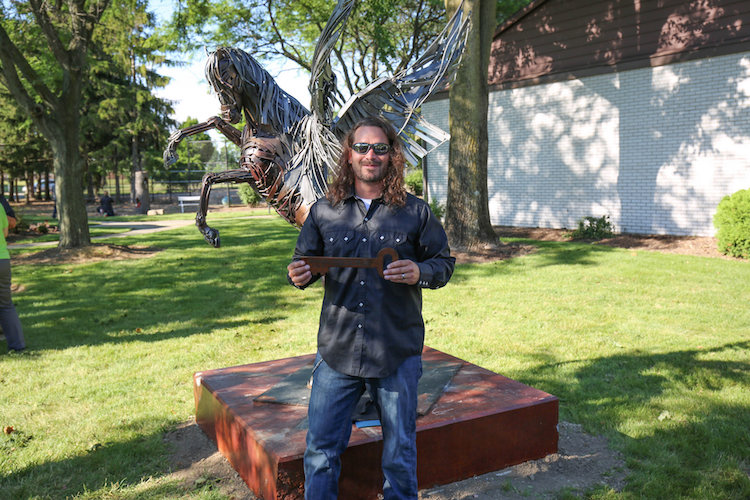
Neil Wiffill is a Fort Wayne artist who participates. He was in charge of the restoration of the Allen County Courthouse, all of the columns. He’s the only one who does this media called scagliola. It’s kind of a lost art plaster technique, where you mix dry pigment with plaster and then polish it.
It used to only be used in arches, columns, pedestals, and that sort of thing. But Neil has given it new life in sculpture form. He even has a permanent piece at St. Mary of the Assumption church in Decatur.
IFW: How has the Sculpture Tour progressed over the years?
GM: As the years have gone by, a lot more awareness has been brought to the history of sculpture in Decatur.
Each year, people are embracing it and learning more about sculpture.
Now, when new sculptures come up, people who live in the area recognize the names of artists and think back to previous years of what their art looked like.
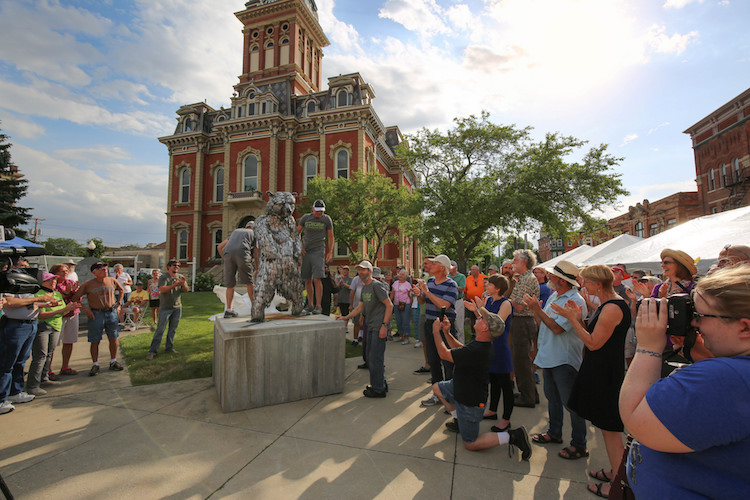
IFW: One of the awesome things about the Sculpture Tour is the way it’s inspired rising interest in public art in Decatur. It’s really turning a small town into an art city. Tell us about that.
CM: It’s interesting to see how things have taken different turns. We’ve found that people are very interested in visual art.
As a bit of a spinoff of the Sculpture Tour, Parks and Recreation hired someone to come in and transform fallen trees and stumps into artwork. So we have tree stumps turned into bears, raccoons, and squirrels.
Those are along Monroe Street in different parts of Decatur. Riverside Center has six to 12 log carvings.
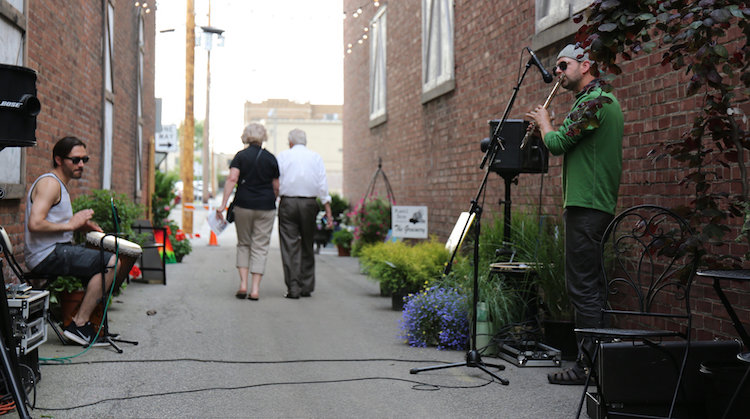
Another group decided they want to see a pedestrian walkway turned into place where art is displayed, so you can walk down an alleyway to enjoy it. There’s one large metal artwork piece on it now in the shape of the state of Indiana.
Right now, Madison Street is taking things one step farther. The City of Decatur decided they want to enhance this one block of the downtown area, so they’re turning Madison Street from First to Second Street into a plaza, and they’ll be pavers on the ground with places for permanent artwork displays.
As our show goes on and the gallery continues each year, we try to purchase the People’s choice, the Mayor’s Choice, and the Committee’s Choice.
We purchase those to stay in Decatur, and we’re hoping to set them up at the Madison Street plaza.
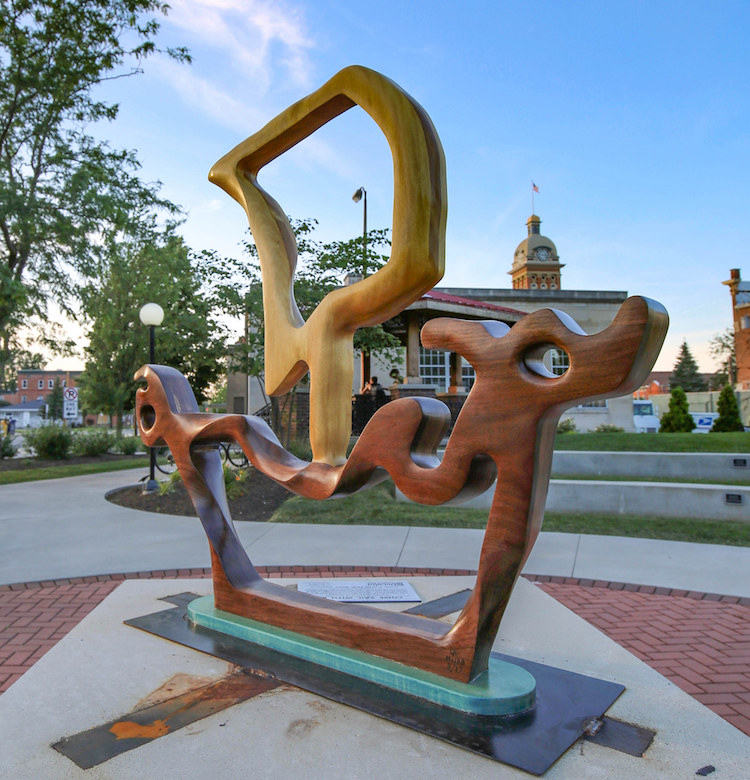
IFW: You’ve added bronze sculptures into the mix of more abstract, welded metal pieces. Tell us about that decision.
GM: The intent was to make it an all metal sculpture public art program because of the demographics of Decatur.
There are a lot of community members here who appreciated the modern abstract pieces, but didn’t understand or talk about them. Whereas with the bronze pieces, people can look at them and understand what they are right away. They’re much more traditional and something that the artist can get a lot of detail into. They look very realistic.
IFW: Are the pieces on display in the Decatur Sculpture Tour for sale?
CM: They are for sale. Some are leased, which might mean they’re only here for a one-year basis. The others are for sale, and if they’re not sold while they’re here, they go to another art show and hopefully along the way somebody finds an interest in them and purchases them.
We have quite a few bronze statues this year, and that’s really unusual for a show of this size. Our bronze pieces can go from $25,000-$45,000. They’re pretty pricy. The metal or wood pieces range from $750-$7,500.
The money goes to the artists, and a small commission is retained by the Decatur Sculpture Tour to purchase more sculptures and get more artists to come next year.
IFW: How many pieces does Decatur keep?
CM: We have 12 permanent pieces that are here. Eight of them are at the Riverside Center, and we have what’s called Founders Park, so Founders Park has two permeant pieces.
We have a couple on Seventh Street, as well, and one at the train depot and police station.
So they’re sort of all around town.
IFW: Is there a theme the artists have to work with?
CM: No, there’s no topic or theme. It’s whatever the artists have created and brought in. So we might have a dinosaur or a bear or a figure.
IFW: Where do you see the Sculpture Tour going in the future?
GM: Each year, it’s a new display, so we don’t necessarily have to grow in numbers as much as just keep doing what we’re doing. I think the program can speak for itself as far as effect in the community goes.
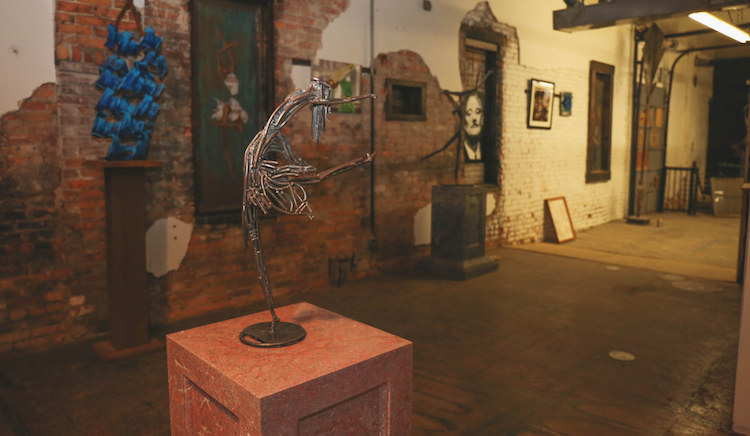
It has other effects in the community, too. Helping more galleries pop up and more artists move to the area. There’s a large 14,000-square-foot building that was bought by a private community member inspired by the Sculpture Tour to create an environment for artists to work out of.
They’re putting in studios throughout the building where artists can have their own private spaces and studios surrounded by a public gallery.
It’s called Artisian Collective Enterprise 40.8 (ACE 40.8). They’re still in the process of opening. They’re hoping to have a grand opening around same time the Sculpture Tour does its unveiling this June.
IFW: What would you tell other artists about living or working in communities like Decatur?
GM: I think a lot of what artists get in their heads is that, in order to be successful, you have to move to a big city like New York, Chicago, or even a city like Fort Wayne with people and galleries. But I think what’s important is to move where you’re inspired.
I grew up here. I didn’t have to move to Chicago to be inspired. Being around familiar faces and other people excited to be involved in the community is something I wanted to be a part of.
Visit the Decatur Sculpture Tour
Each year, the Decatur Sculpture Tour runs from June to April, in addition to the town’s permanent, year-round displays.
A new set of sculptures will be revealed at the annual all-day Unveiling Festival on June 8th, when the artists will be in town to personally show and speak about their work.
After that, the displays are open 24/7 for visitors to tour at their convenience. Brochures are available in old newspaper boxes around town. Visitors can also access an artist-recorded audio tour using the free “Otocast” app for smartphones available in the App Store. Free docent led tours are available upon request as well.
Mayer says visitors are encouraged to take pictures with the sculptures and share their experiences on social media.
Author

Related Articles
Our love letter to Fort Wayne’s neighborhoods
Input Fort Wayne is declaring 2026 to be “The Year of the Neighborhood.” Here’s why.
What’s it really like to live in downtown Fort Wayne?
Three residents share perspectives on the good and bad of downtown living.

#PlacesofNEI: Sunrise Mart in the North Anthony Neighborhood
Sunrise Mart is a neighborhood grocery store that offers a wide selection of fresh produce, meats, dairy products, and pantry items.