Bridging the Hunger Gap in Rural Northeast Indiana
Programs like Community Harvest Food Bank’s Farm Wagon provide a lifeline to hundreds of rural families each year.
Hunger doesn’t discriminate by geography. While urban zip codes often dominate the conversation around food insecurity in the United States, rural communities face unique challenges, like financial constraints, a lack of transportation and grocery stores, being physically isolated from resources, and other challenges that can make accessing food even harder.
Joel Bowerman, director of programs at Fort Wayne’s Community Harvest Food Bank, emphasizes the importance of addressing rural hunger. It starts with recognizing that life happens and anyone could need a helping hand at some point.
“Hunger affects all zip codes,” he says. “In our outer counties, we see everyone — families, individuals, middle-aged adults, and seniors. It’s not just one population.”
One of the biggest barriers to getting help in rural areas is transportation. “You might think taking food to a central location in a county solves the problem, but it doesn’t,” Bowerman explains. “Many rural residents lack access to public transportation or can’t afford ride-share services. That’s where programs like Farm Wagon come in.”
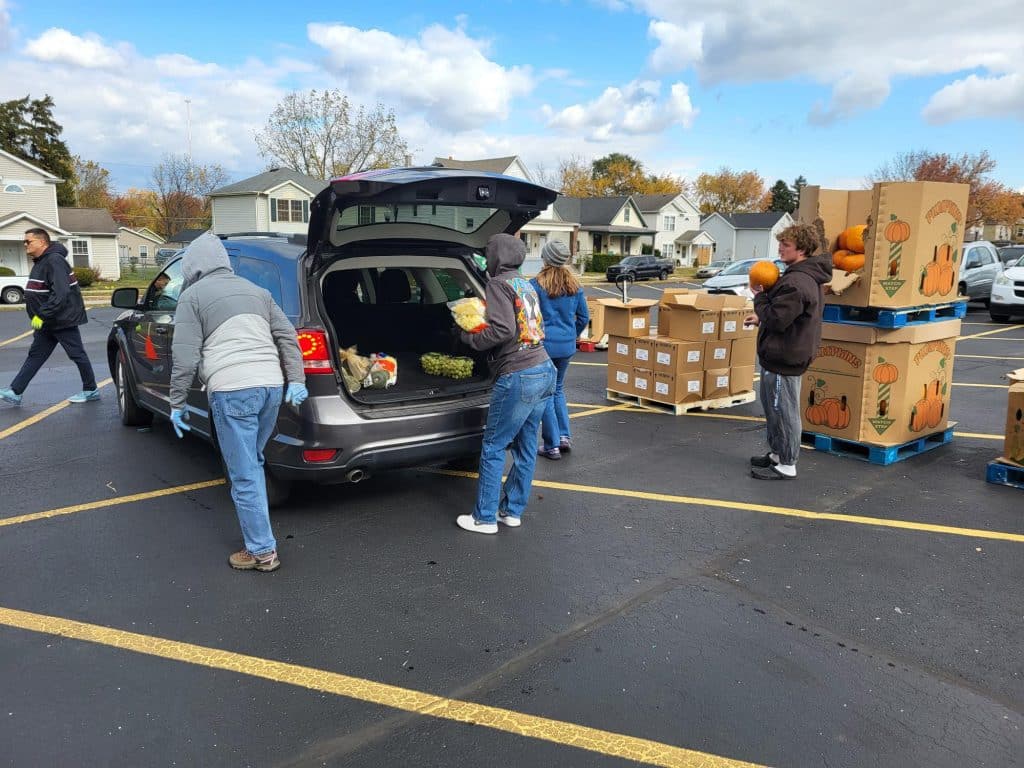
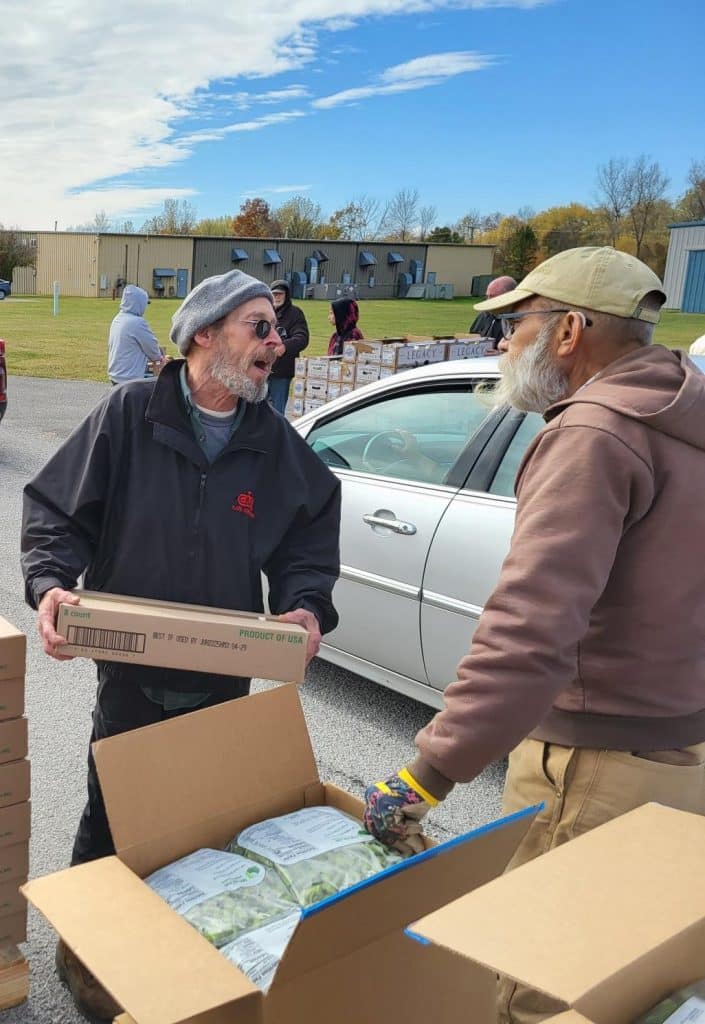
Farm Wagon tackles this issue head-on by bringing food directly to underserved and less populated areas. Introduced in 1999, the innovative program is a mobile food pantry that provides food to families at least once a week in Adams, Allen, DeKalb, Huntington, LaGrange, Noble, Steuben, Wells, and Whitley counties. Partner sites host Farm Wagon trucks on certain days and times. These distributions served the public through a walk-up model until 2020, when they were transformed into drive-through distributions. It’s a no-questions-asked program where anyone can drive up or walk up to receive fresh and nutritious food.
“It’s as simple as showing up,” Bowerman says. “We load your vehicle or whatever you have to transport food. There are no qualifications or criteria.”
The food distributed through the Farm Wagon comes from a mix of donations, government programs, and occasional purchases. Approximately half of the food is fresh produce, with the remainder comprising dairy, baked goods, and shelf-stable items. The program’s flexibility and accessibility make it a lifeline for many rural residents.
But the challenges don’t stop at transportation. Bowerman notes that rural areas often lack broadband internet, making it harder for residents to find information about food distribution schedules. Additionally, language barriers can complicate outreach efforts, especially in areas with diverse populations like Fort Wayne, which is home to Burmese, Hispanic, and other ethnic communities.
“We’re working on getting interpretive services and translating materials, but it’s an ongoing challenge,” Bowerman says.
Community Harvest also relies on a network of nearly 300 partner agencies, including churches and community centers, to distribute food in rural areas. These local organizations play a crucial role in reaching residents who can’t travel to Fort Wayne.
“Our partners know their communities better than we do,” Bowerman says. “They’re essential in meeting people where they are.”
The need for these programs is growing. Bowerman points to recent increases in demand at Farm Wagon sites.
“In Markle, we went from serving 60 to 70 households in the summer to nearly 90 this week. In Huntington, it’s jumped from 120 to almost 200 households,” he says.
Rising food prices and limited access to resources are driving the surge. According to the U.S. Department of Agriculture’s Economic Research Service, the all-items Consumer Price Index (CPI), a measure of economy-wide inflation, increased 0.3 percent from July 2025 to August 2025 and was up 2.9 percent from August 2024.
High food prices weigh heavily on families, especially those with children. That’s why Community Harvest runs other initiatives to combat rural hunger, such as the Kids BackPack Program. Similar to Blessings in a Backpack Fort Wayne, the goal is to bridge the gap over the weekend when kids may not have access to meals through school or other programs. The bags are intended for school-age children with a focus on the food being accessible, nutritious, and kid-friendly.
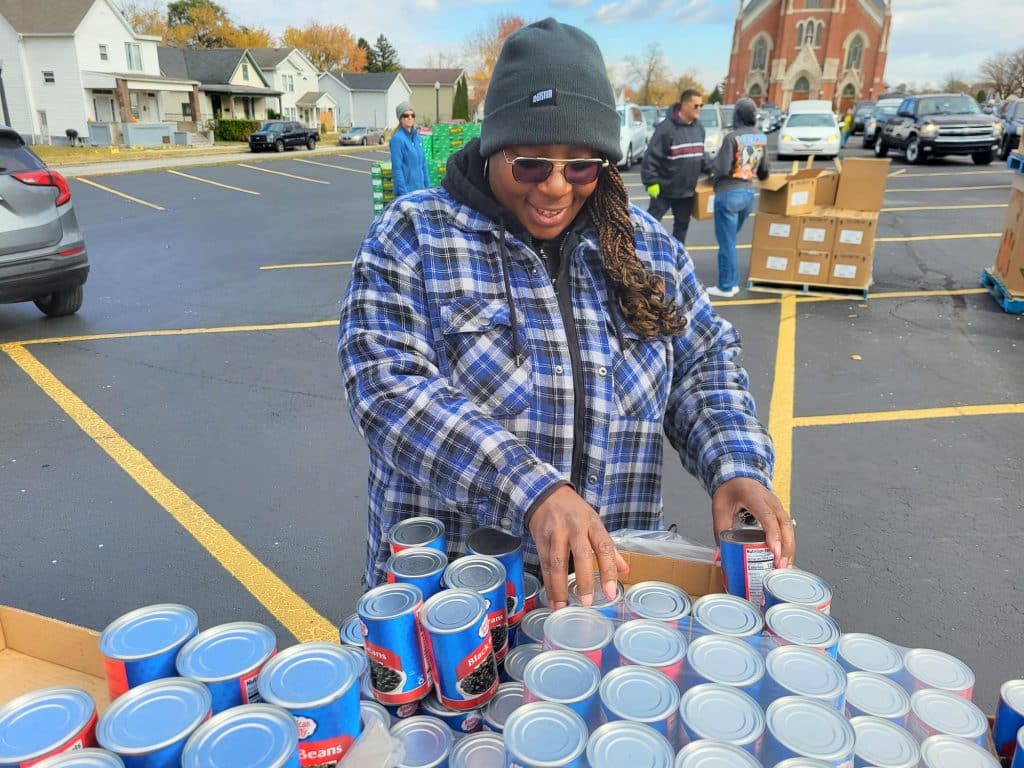
The food bank also operates the Commodity Supplemental Food Program (CSFP) in partnership with the U.S. Department of Agriculture (USDA). CSFP eases the burden for area seniors because they know they can count on groceries to supplement their food budget. According to Bowerman, this one is especially meaningful, as older people are one contingent in our society who are vulnerable. Government entitlement programs, like Social Security, Medicare, Medicaid, and the Supplemental Nutrition Assistance Program (SNAP), aren’t designed to cover all of a person or household’s daily needs.
“Seniors are often a forgotten population,” Bowerman says. “They face tough choices between food, medication, and other essentials. We need to take care of them just as much as we do families and children.”
For those looking to help, Bowerman encourages donations to Community Harvest or its partner agencies, as well as volunteering at food distributions.
“It’s all hands on deck,” he says. “We have an amazing team of staff and volunteers who understand the mission and make it all possible.”
As the holidays approach, Bowerman remains hopeful.
“We’re doing everything we can to ensure no one goes hungry, whether they’re in the city or a rural area. Programs like Farm Wagon are a step in the right direction, but there’s always more work to be done.”
Learn more about Community Harvest Food Bank and how to get involved here.
Author

Related Articles

Partner Partner Content Why early detection for cancer matters
Parkview Health’s “Show Up For Them” campaign aims to boost early detection rates through outreach and education.
CTN puts out urgent call for new drivers as new funding boosts capacity
A new grant offers the opportunity to increase the number of rides Community Transportation Network (CTN) offers, but they need to fill seven vacant driver positions to make it happen.
Partner Partner Content Prenatal & Infant Care Network informs and connects
Ahead of Prenatal & Infant Care Network’s next luncheon, leaders reflect on their work to support case managers and providers locally.