How can you support a stronger post-COVID economy in Indiana? Be an arts advocate
"The arts' impact on the economy and small business community cannot be understated."
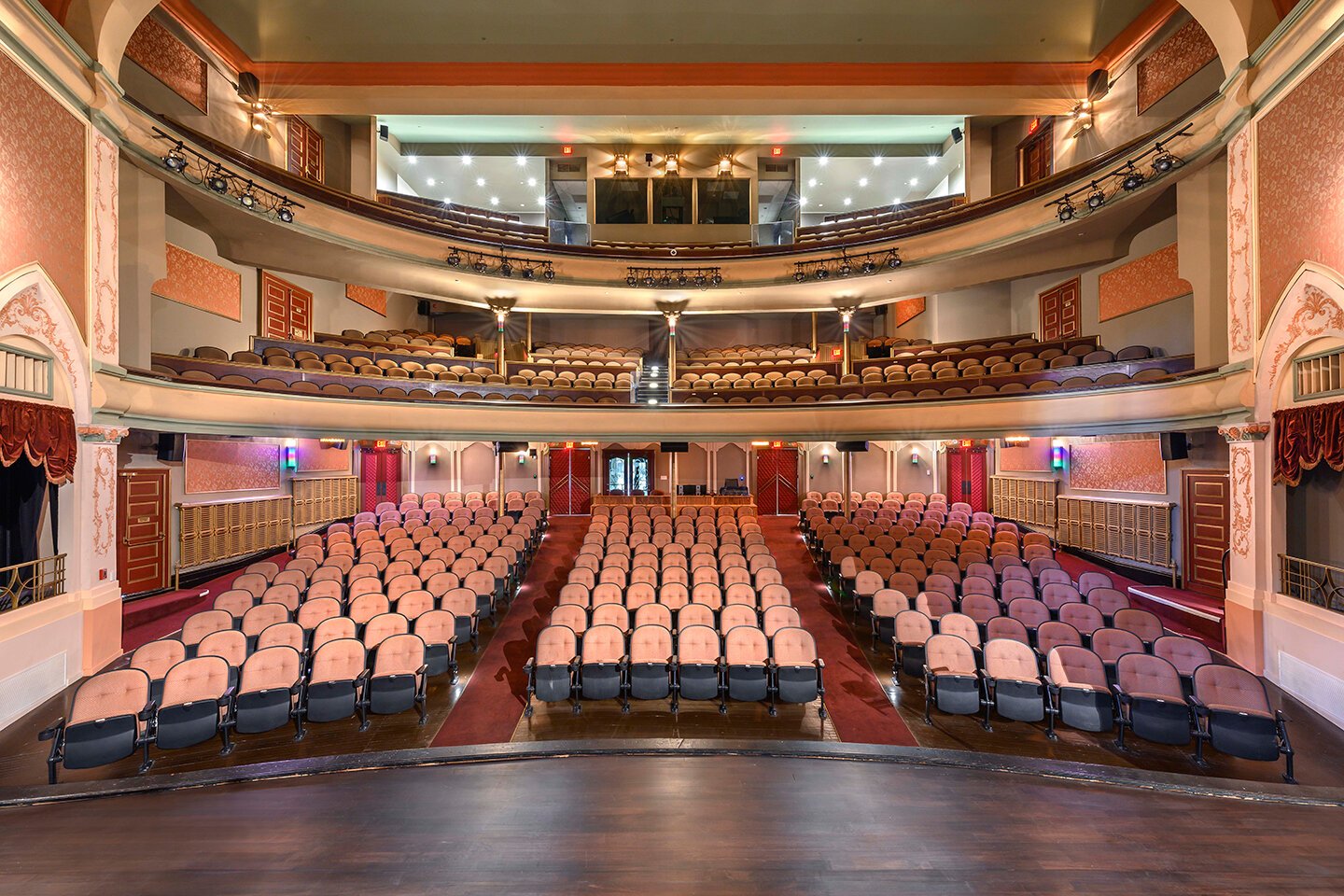
As the COVID-19 pandemic complicates concerts, performances, and arts experiences of all kinds in cities, the value of art is becoming increasingly clear—and people are realizing how deeply the arts impact their daily lives.
That’s the message that Indiana arts advocates want to send to statehouse representatives in March.
Each year, Arts Advocacy Week in early March is a time when art supporters contact state senators and representatives, asking them to maintain funding for the Indiana Arts Commission (IAC) in the next biennial budget. In 2021, as the world emerges from a pandemic that has eliminated, or drastically altered, the revenue streams for artists and arts organizations, this funding could deeply impact the state’s future in more ways than one, explains Dave Haist, an Indiana Arts Commissioner based in Wabash.
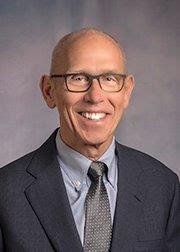
“The arts impact Indiana jobs, the economy, tourism, talent attraction, the state’s educational environment, and so much more,” Haist says. “It’s not merely about supporting the arts for art’s sake. It’s about providing resources and amenities in our communities, so we can all have vibrant places to live and work.”
As a state organization, the IAC works with 12 community-based arts partners across Indiana, including Arts United in Fort Wayne, to distribute grant dollars and provide support. During COVID-19, their efforts were a lifeline for many artists and arts organizations to survive the crippling effects of the pandemic, Haist says.
A former partner at Barnes & Thornburg in Fort Wayne and former COO at Do it Best Corp., Haist is now using his retirement to serve as the Board Chair of Parkview Health and to keep advocating for the arts and culture across Indiana. He’s formerly served on the boards of the Fort Wayne Philharmonic, the Fort Wayne Ballet, Arts United, and the Honeywell Foundation in Wabash.
We sat down (virtually) with Haist to learn more about the need for Indiana arts advocacy in 2021 and why it matters to our region’s future—now, more than ever.
IFW: Tell us about yourself and your background in arts advocacy.
DH: I grew up in Wabash. After going through law school, I moved to Fort Wayne with my wife to raise our family and start my career there. When I retired a few years ago, my wife and I decided to move back to Wabash, and I’ve stayed active in the arts community here.
Now, I serve as an Indiana Arts Commissioner, but my involvement with the IAC has been for decades that I’ve been working with multiple arts organizations in Fort Wayne and Wabash, which are all supported by the IAC.
On a personal note, my wife and I live in a rather creative environment, too. We bought and restored my parent’s former home in Wabash, which is more than 100-years-old. So we’ve had a lot of fun restoring this home, and now, we’re able to keep enjoying it with our family in the area.
IFW: Tell us more about the IAC and your work as an Indiana Arts Commissioner.
DH: The IAC supports artists and arts programs with grants in all 92 counties of Indiana, and they awarded more than 1,000 grants in the fiscal year of 2019-2020 to help our state arts organizations. Through CARES Act Funding and thanks to Indiana’s Governor Holcomb, the IAC was able to distribute $10 million of support to artists and arts organizations throughout Indiana, and $1.2 million of those dollars going directly to Northeast Indiana’s region.
Through its Resilience Fund, Arts United has also provided pandemic relief to the tune of $2.8 million. That was critical arts funding that was needed, especially when venues were closed and performances were canceled.
Overall, during COVID-19 and even before that, the IAC’s grants have been geared toward supporting the heart of our Indiana communities, infusing them with authenticity, involvement, prosperity, and enjoyment. Folks oftentimes think of the arts narrowly—whether it’s the performing arts or other forms of art. But as Indiana Arts Commissioners, we really think about the arts holistically and focus on their impact on our state’s quality of place, economy, and quality of life.
Think of Fort Wayne or Wabash, where there has been a long heritage of supporting the arts, and you can see how the arts really make those communities much stronger places. On top of the obvious benefits of creative places, many artists are self-employed or own small businesses, and so many Indiana businesses and industries rely on the presence of a strong arts scene to thrive. That means supporting the arts in Indiana makes a big difference throughout the state, and we help share that message and support the arts here.
IFW: Tell us about your creative community in Wabash, and how it has evolved, in many ways, by intentionally focusing on the arts.
DH: It’s been a really neat story. A lot of Wabash folks have really had a passion for making Wabash a destination—and a destination for the arts, specifically. The Honeywell Foundation has been a central part of that.
If you lived in Wabash back when I grew up here, the Honeywell Center was a community center that provided a basketball court, a skating rink, and a lot of rooms for meetings and conferences—things like that. But in the 1990s, the Honeywell Center was expanded to encompass the Ford Theater, which is a 1,500-person theatre in Wabash that was really a state-of-the-art facility at the time it was built in 1994.
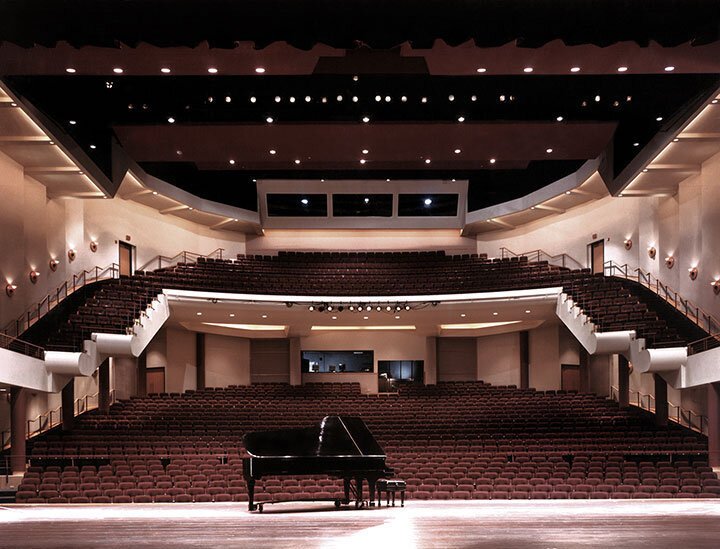
The Ford Theater was an amazing place for live performances, whether that be the Indianapolis Symphony, the Fort Wayne Philharmonic, plays, theatre, or traveling shows. So it’s contributed to a lot of growth in Wabash’s arts scene, and, at that time, the Honeywell Center was expanded into a small conference center and performing arts center.
Then, about 10 years ago, the Honeywell Foundation acquired the Eagles Theatre, too. They did that really to save the town’s only historic movie theatre. Those of us who grew up in Wabash often thought of the Eagles as a place you go for movies, and it certainly was. It had a large movie theatre that could accommodate 1,000 or so patrons, but it’s also a four-story building, and it was largely going unused in our community for decades.
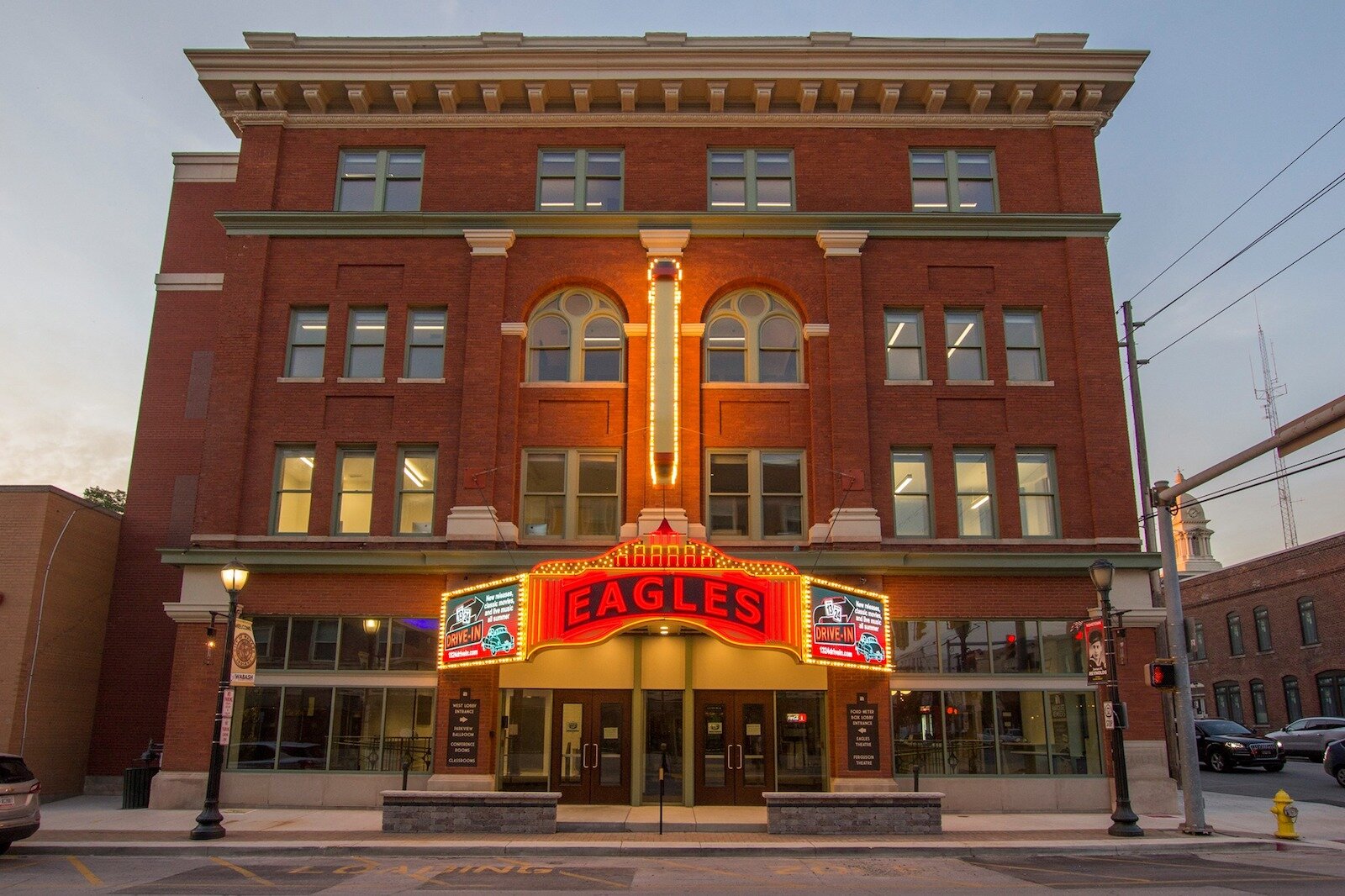
So when the Honeywell Foundation acquired that property, they expanded on its offerings. They continued operating it as a movie theatre, providing opportunities for family-friendly movies and programs for folks who couldn’t afford the price of admission to movies. But thanks to Honeywell Foundation President Tod Minnich and others at the Foundation, they innovated and said: What else can we do with this building?
Thanks to private and public support, Regional Cities funding, and funding from the City of Wabash, the Eagles Theatre has been totally renovated. Now, in addition to its historic movie theatre, it has an additional movie theater (the “Ferguson Theater”) on the lower level, which accommodates 49 people with the ultimate video and sound. It also has the Parkview Ballroom on the fourth floor, which is a beautiful, domed historic ballroom that had not been used for more than 75 years. But it was totally restored by the Honeywell Foundation just before the COVID-19 pandemic, and once public gatherings are safe again, it will accommodate everything from business meetings, to weddings, to conferences—you name it.
Then, on the second and third floors of the building, there’s a new digital arts media center, so creatives can both record and edit video and audio projects there and work in collaboration with local high schools and colleges to provide dual-credit, media arts training. It also offers a venue for music lessons of all types, so literally every square inch of that four-story building is being opened to the public and used to provide a comprehensive arts venue.
The Eagles Theatre’s grand opening was just before the COVID-19 shutdown in February 2020, so our community is eager to start using the space more frequently, and we know it will be a game-changer for our local arts scene.

IFW: How have you seen the arts in Wabash and across Indiana impacted by the COVID-19 pandemic?
DH: I think the arts, especially the performing arts, have gone through a really tough time during COVID-19. As we talked about with the Eagles Theatre, they just had their grand opening with a packed audience and excitement throughout the whole region right before the pandemic hit. Then, immediately after the space was revealed to the public, it was shuttered again—as was the Honeywell Foundation, the Fort Wayne Philharmonic, and other venues.
Really, all of the arts in Indiana and across the U.S. went from full speed to a dead stop overnight, and the impact in one word has been “crippling,” especially for performing artists and performing arts organizations. Their source of earned revenue was just completely cut off. Artists could not perform or exhibit in galleries. They didn’t have ways to connect with patrons or customers. Arts organizations, large and small, had to cease operations or dramatically change their operations.
It was a really tough time, but the great thing that happened through that time is organizations like Arts United and IAC really stepped up and said, “We’re not going to allow these arts organizations to falter. We’re going to provide critically needed resilience and support for them.”
Overnight the IAC started providing webinars, emails, and other resources to help arts organizations and artists survive the pandemic. They were answering questions, like: How do you do fundraising when you can’t go out and meet people face-to-face anymore? Or how do you get PPP loans from the government to survive when your earned revenue has been curtailed?
They hosted webinars where they brought in experts to help artists and arts organizations at beginning of the pandemic when no one really knew what to do. They helped artists understand how to apply for unemployment, which is something many artists never needed to do in the past because they could perform.
A survey by the Americans for the Arts estimates that 95 percent of artists reported a loss of income as a result of COVID-19, 79 percent experienced a decrease in creative work that generated income, and 63 percent of musicians have been fully unemployed. On top of that, 78 percent of artists have no post-pandemic financial recovery plan. So the impact on the creative sector has certainly been very dramatic.
As arts advocates, we want to help remind our state that many of these artists and arts organizations are small businesses that don’t have access to the same resources that big organizations and corporations have. So when we look to Arts Advocacy Week this year, it’s a matter of asking: How can we continue to support artists, so we can get back to a place where the arts in Indiana are thriving and advancing our communities, just like they were before COVID-19? And hopefully, we can make the arts here even better and stronger than they were before.
IFW: Have there been any silver linings you’ve seen regarding the arts in Indiana during the pandemic, and the future of the arts here?
DH: As we look to the future, I think it’s bright in a couple of ways. We had a lot of good support for artists and arts organizations throughout the pandemic. As we see a decline in hospitalizations due to COVID-19 and an increase in vaccinations every week and month, I think later this year we’ll see venues being able to get back into more of their normal operations. Helping arts organizations recover and reopen is something that both the IAC and Arts United will be focused on this year.
Another silver lining is: When we think about the pandemic and its crippling effects on the arts, one of the things that was really a byproduct of that was: It allowed many arts organizations to reflect on their path forward. Since their venues were closed, they were able to step back and think about how to innovate.
The Honeywell Foundation, for example, has run a national program called the Wabass Institute for more than 10 years now. It’s a program that brings in aspiring double bassists each year for a unique full-scholarship performance institute, helping them learn from other nationally acclaimed double bassists across the U.S. Overall, it’s been very impactful in the past, and its graduates have gone on to perform with philharmonics and symphonies across the country.
So during the pandemic, the Honeywell Foundation leaders got together with the folks at Wabass, and talked about how to expand the program. This summer, they’re launching not just one track of the Wabass program for double bassists, but adding new tracks for pianists and other musicians to expand the academy to a broader range of artists creating the Honeywell Arts Academy. Their vision is to continue to add other tracts to the academy that will attract musicians from throughout the country.
I think a lot of organizations have had the opportunity to reenvision their futures and create innovative ideas that will help them emerge from the pandemic better and stronger than before.
IFW: Arts advocacy is important every year, but tell us about the importance of advocating for the arts in 2021, in particular.
DH: It has been a difficult year, and we need to be sure we have support for the arts to allow for a successful reopening.
As we’re able to reopen later in 2021, we have organizations that really have been challenged to survive, and we want them to thrive. So helping them reopen better and stronger makes this year even more important in terms of raising awareness about funding for the arts.
There’s been a lot of focus on the need for jobs throughout the pandemic, and jobs are certainly always important. But the arts’ impact on the economy and small business community cannot be understated. We need support for the arts to keep our economy strong—to continue attracting businesses to Northeast Indiana and to continue growing businesses within our region.
IFW: For those interested in supporting the arts, financially or otherwise, how can they get involved?
DH: There are lots of things we can all do to support the arts during Arts Advocacy Week and beyond. One resource I recommend is the Indiana Arts Advocate website at www.inartsadvocates.org.
Within Northeast Indiana, I’d also encourage folks to support Arts United in the efforts they’ve made with their resilience fund and other initiatives, as well as the IAC.
Another thing you can do is to get to know your state legislators in Indiana, and let them know how important the arts are to the state’s jobs, economy, and general wellbeing of our communities.
IFW: During the pandemic, we’ve talked a lot about “essential needs,” and rediscovering what is “essential” in cities. Tell us what makes the arts “essential,” from your perspective.
DH: Beyond all the practical and economic benefits of the arts, the arts are an essential catalyst for community life. They bring diverse people together for positive interaction and dialogue. So especially coming out of a historic pandemic and a divisive political season, I think the arts will provide a critical vehicle for us to connect with other individuals in our cities and towns—even those who are different from ourselves.
Something the IAC has been really focused on in recent years is looking at equity, inclusion, diversity, and access as a really important part of their role in Indiana, assuring that the organizations they fund are focused on equity, inclusion, diversity, and access and what they do really operates on those principles throughout the state. As folks seek grants from IAC, they’re asking: How does this program or organization advance inclusion, access, equity, and diversity on a local level? Arts United has been doing similar things within the region.
The arts make our communities the welcoming, inclusive, and creative places we want them to be.
Author
Related Articles
‘Come as you are’: Fort Wayne Civic Theatre’s ‘Footloose’ production is setting a new standard for accessibility
Leveraging Arts United Center renovations and a ‘come as you are’ approach, Fort Wayne Civic Theatre’s Footloose is pioneering a new benchmark for inclusivity.
The sacred and the creative: How Fort Wayne churches champion the arts
Three local church leaders share how their congregations are showing up to advance the arts and cultural scene.
Meet the Fort Wayne native channeling Harriet Tubman through storytelling and connection
Children’s author Caroline Brewer uses the power of literacy to introduce young readers to important themes.