
How the Art Leadership Center is building ‘Renaissance leaders’ in Fort Wayne
What is the Art Leadership Center, and how is it engaging Fort Wayne residents in scholarship and community service? We sit down with Mr. Adrian Curry to find out.








Mr. Adrian Curry has deep roots.
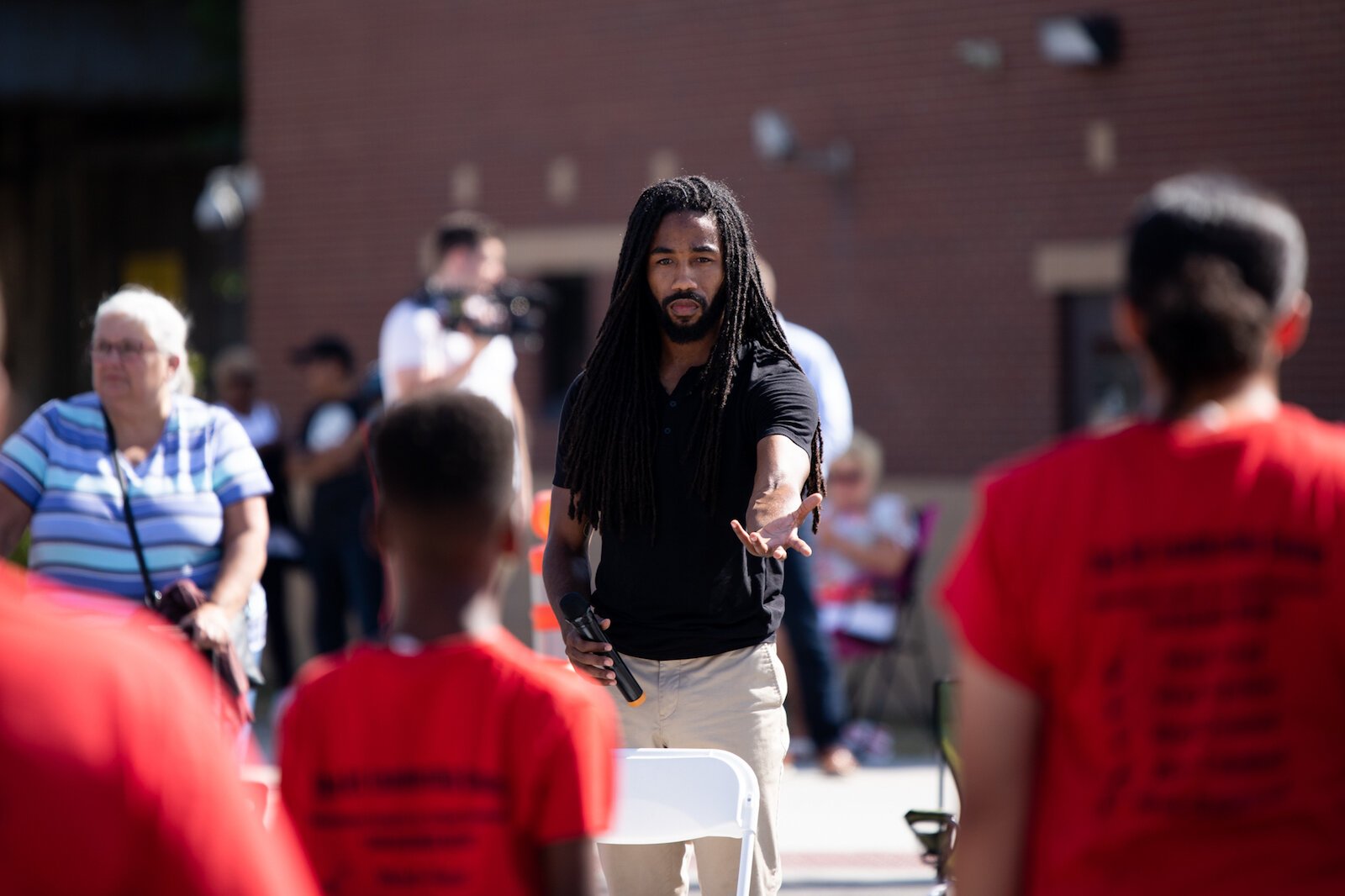
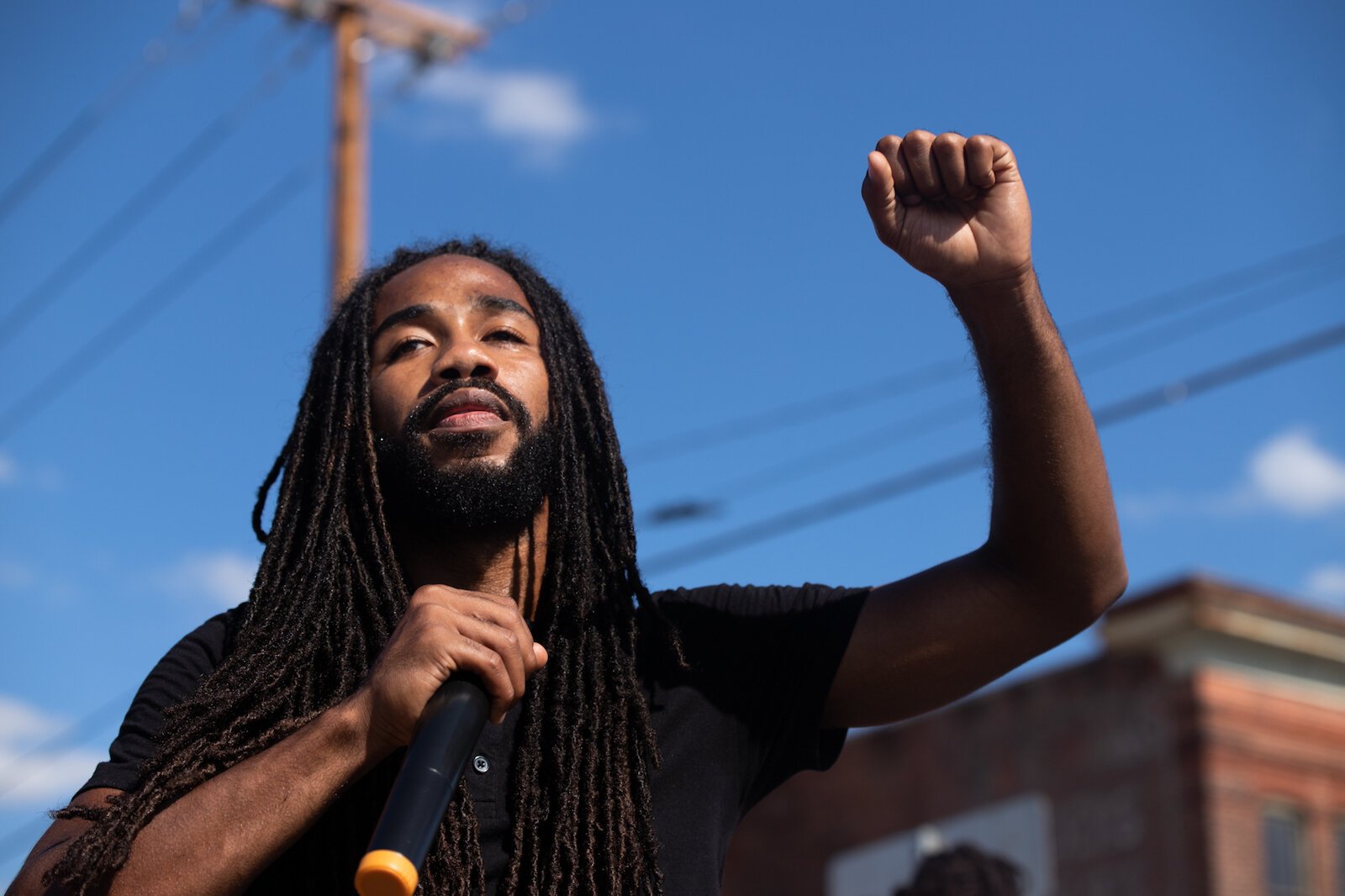
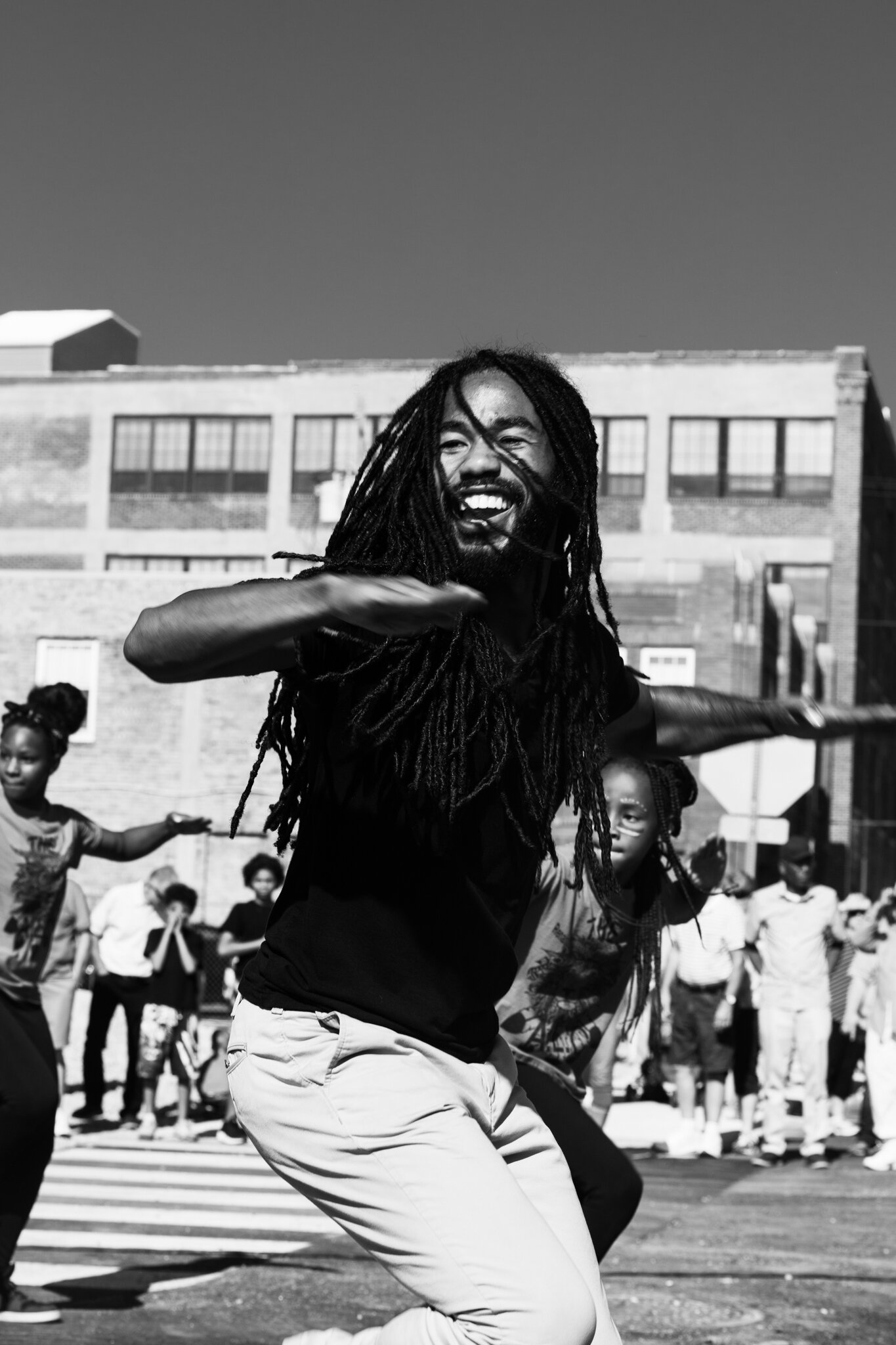
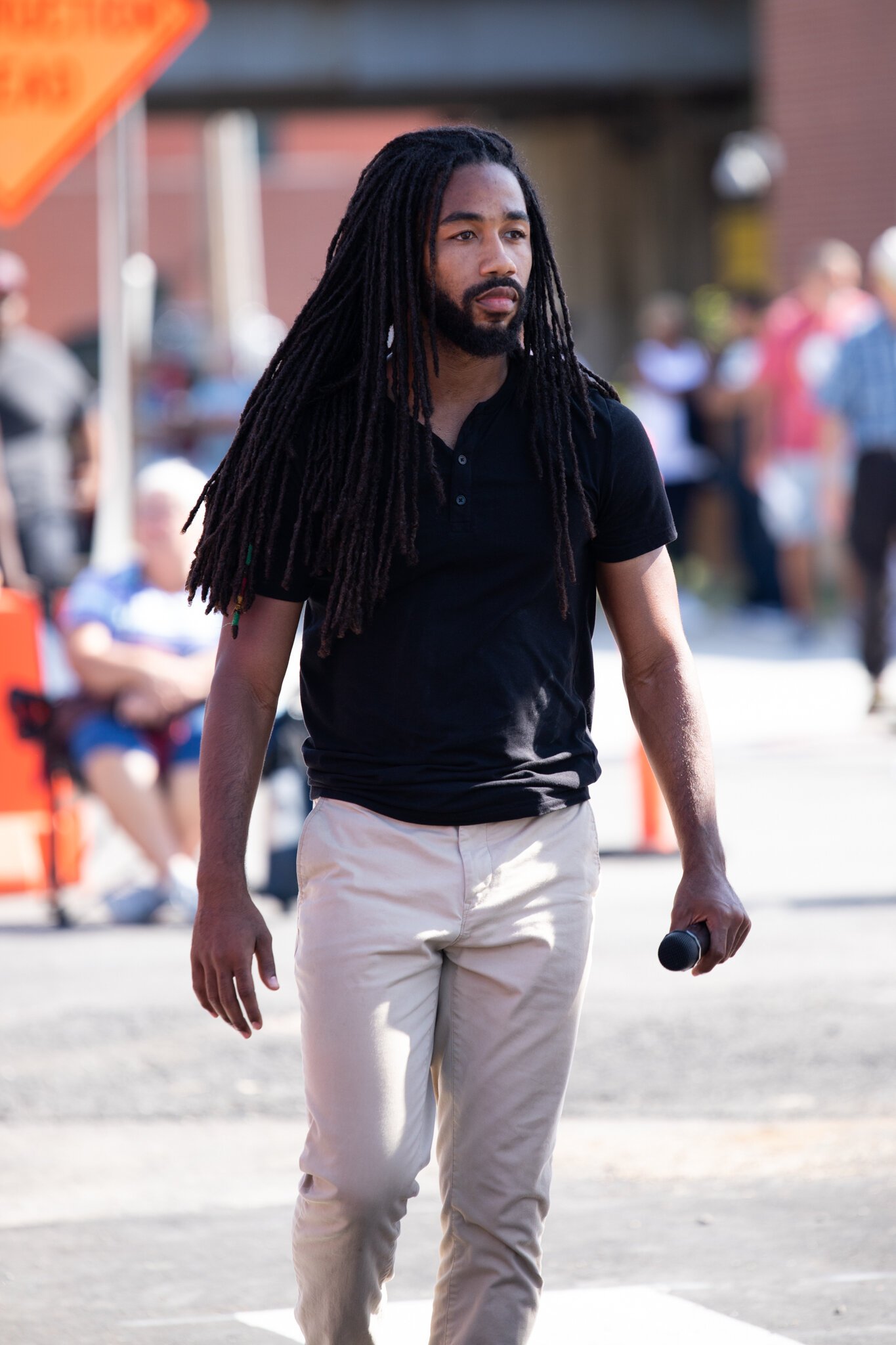
As a young, energetic leader on the city’s South East side, he has a warm smile, a head full of dreadlocks that drape over his shoulders, and a passion for service that permeates his life and work.
“I’ve been serving the Fort Wayne community for more than 15 years now,” he says, recounting roles as a mentor, teacher, and stepping instructor at various schools and youth centers.
Mr. Curry, as he prefers to be called, grew up in Southeast Fort Wayne after his family moved to the city when he was two years old. After graduating from South Side High School with the highest GPA among his African-American peers, he went on to earn his bachelor’s degree in Neuroscience and Psychology at Morehouse College in Atlanta, Georgia, and later earned his master’s in Medical Science.
In his studies, Mr. Curry traveled the world, from Ghana, West Africa, where he studied ethnobotany and pan-Africanism to Cusco, Peru, where he studied Neuro Surgery with the Tropical Pathology and Infectious Disease Association.
Although he initially planned to attend medical school right away and was accepted at the University of Health Sciences Antigua–Medical School to the World, he decided to take a different route to healing and establish a community organization before continuing his medical training.
“I like to say the Most High spoke to me and said to focus on what I’ve been working on since I was a boy,” Mr. Curry says. “That’s what led me to focus on developing an elite school and global percussion theatre at the Art Leadership Center. I thought to myself: How did I get to where I am, and who has afforded me these opportunities?”
Since Mr. Curry was a boy on Fort Wayne’s South East side, he has been practicing the ancient arts of spoken word, stepping, and dance. He also grew up attending programs for youth at the Weisser Park Youth Center or with grassroots groups, like MAAT, Dono Ntoaso, and SBA Academy, which were fundamental to his development and accomplishments.
“There were various programs where we were able to learn about history as children, and elite scholars would come into our community and teach us,” Mr. Curry says. “I am grateful to have received that education.”
Now, Mr. Curry is paying that forward in his own way: Running the Art Leadership Center for youth, young adults, and even elders in Fort Wayne. He is also leading community-building events, like the city’s weeklong Juneteenth celebration, June 13-19. He is Executive Director of the Juneteenth Collaborative.
So what is the Art Leadership Center, and how is it engaging Fort Wayne residents in scholarship and community service? We sat down with Mr. Curry to find out.
***
“WHO-WHO-ARE WE?”
“A-L-C!”
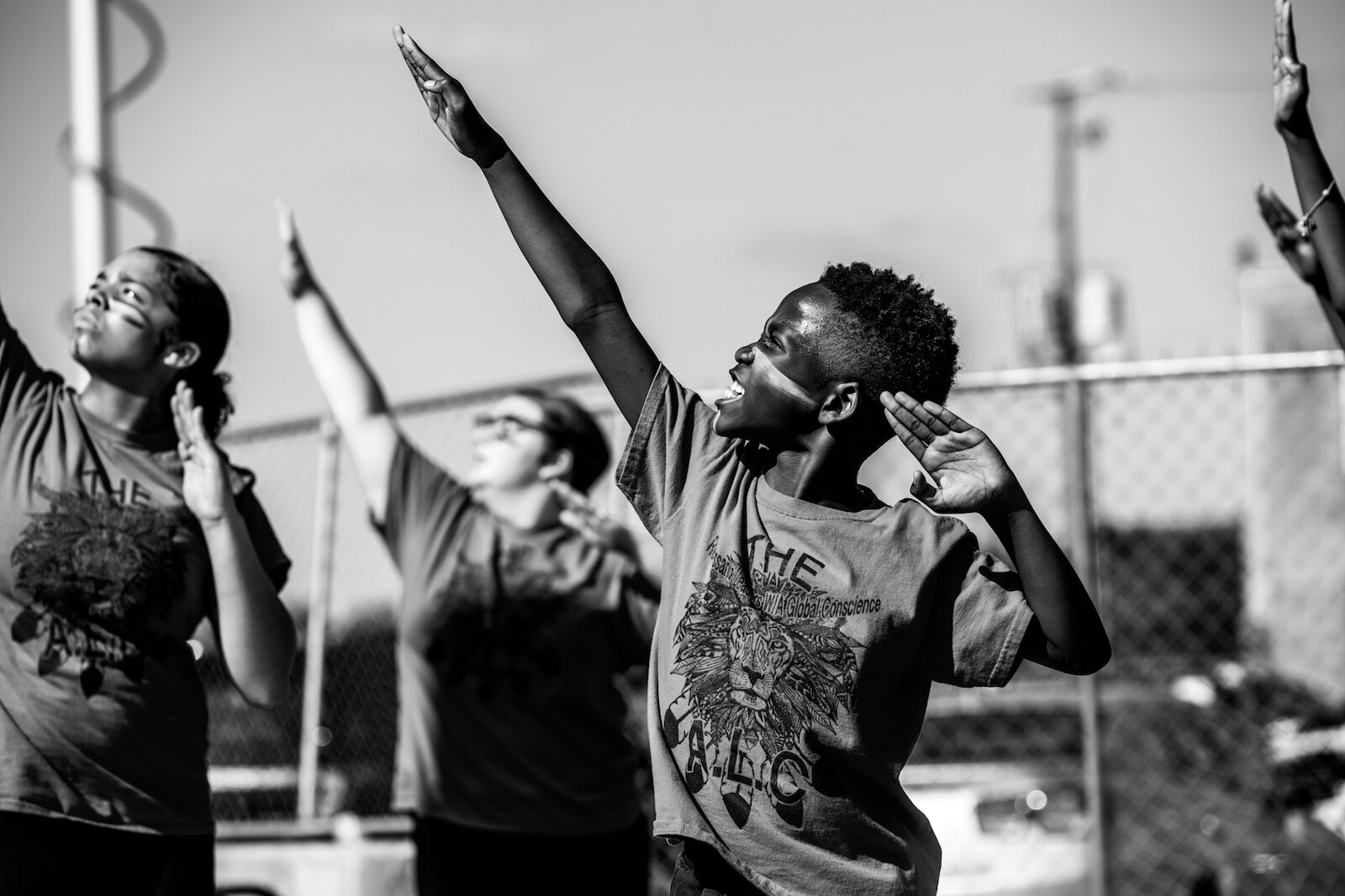
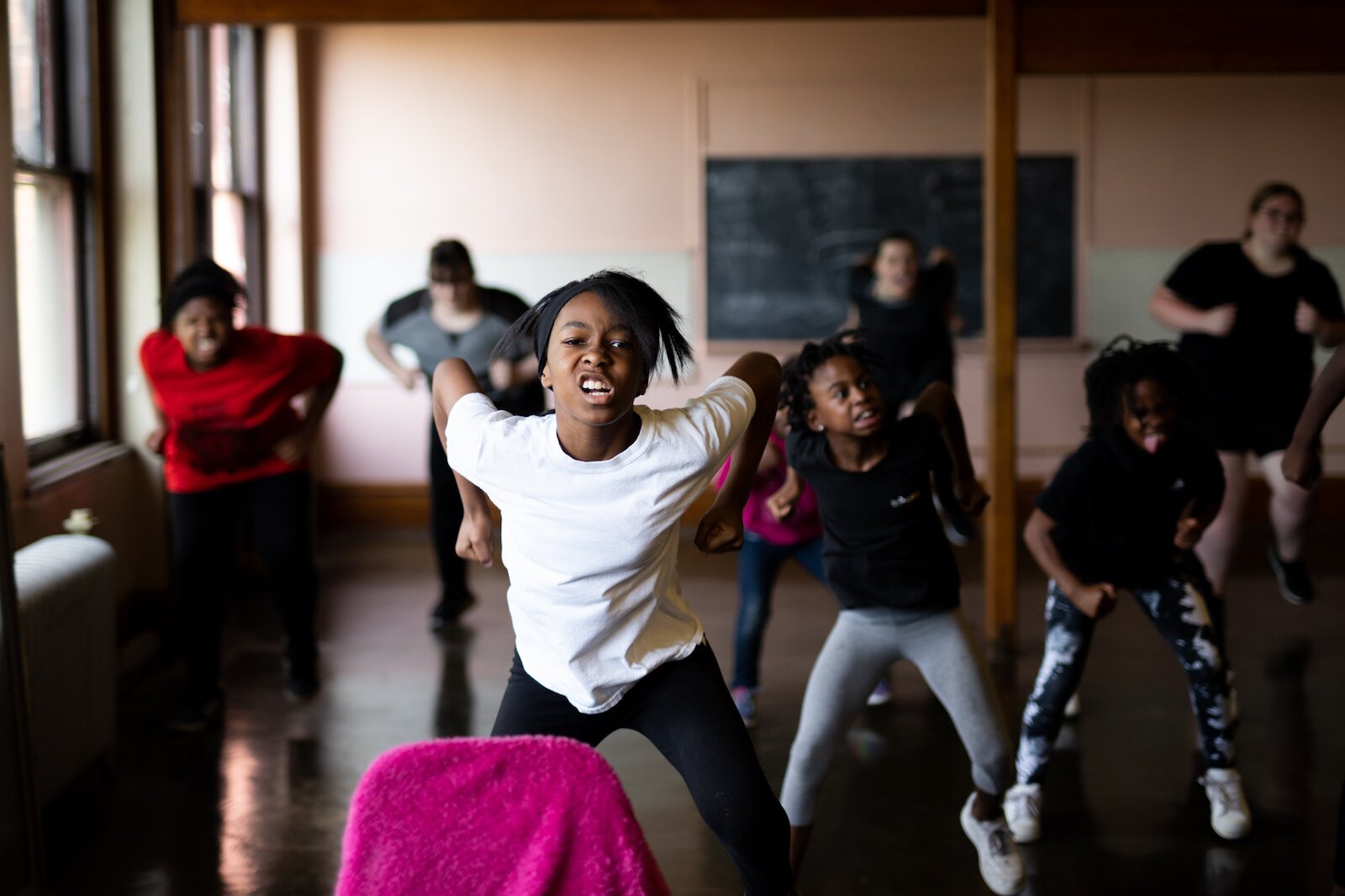
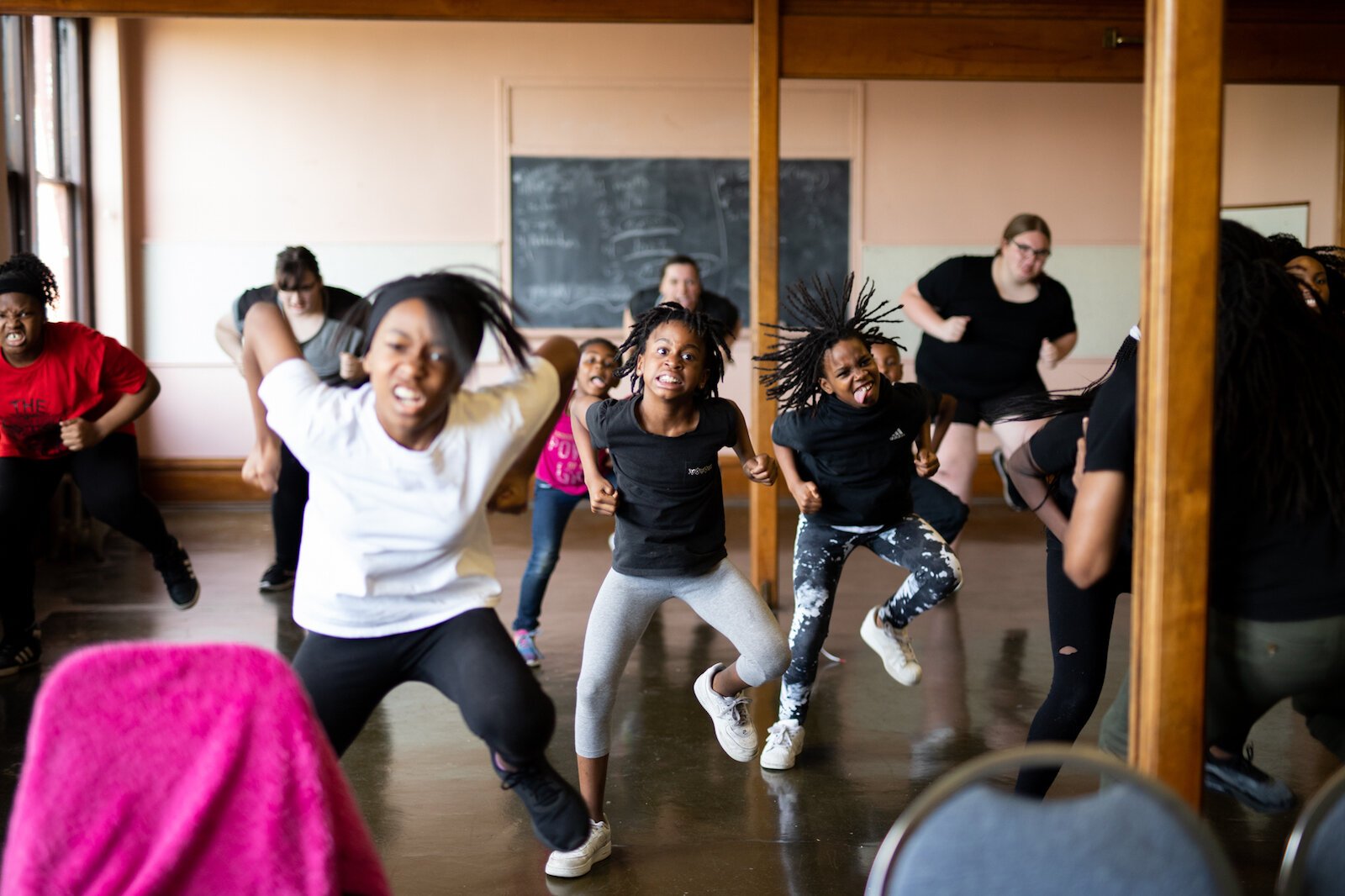
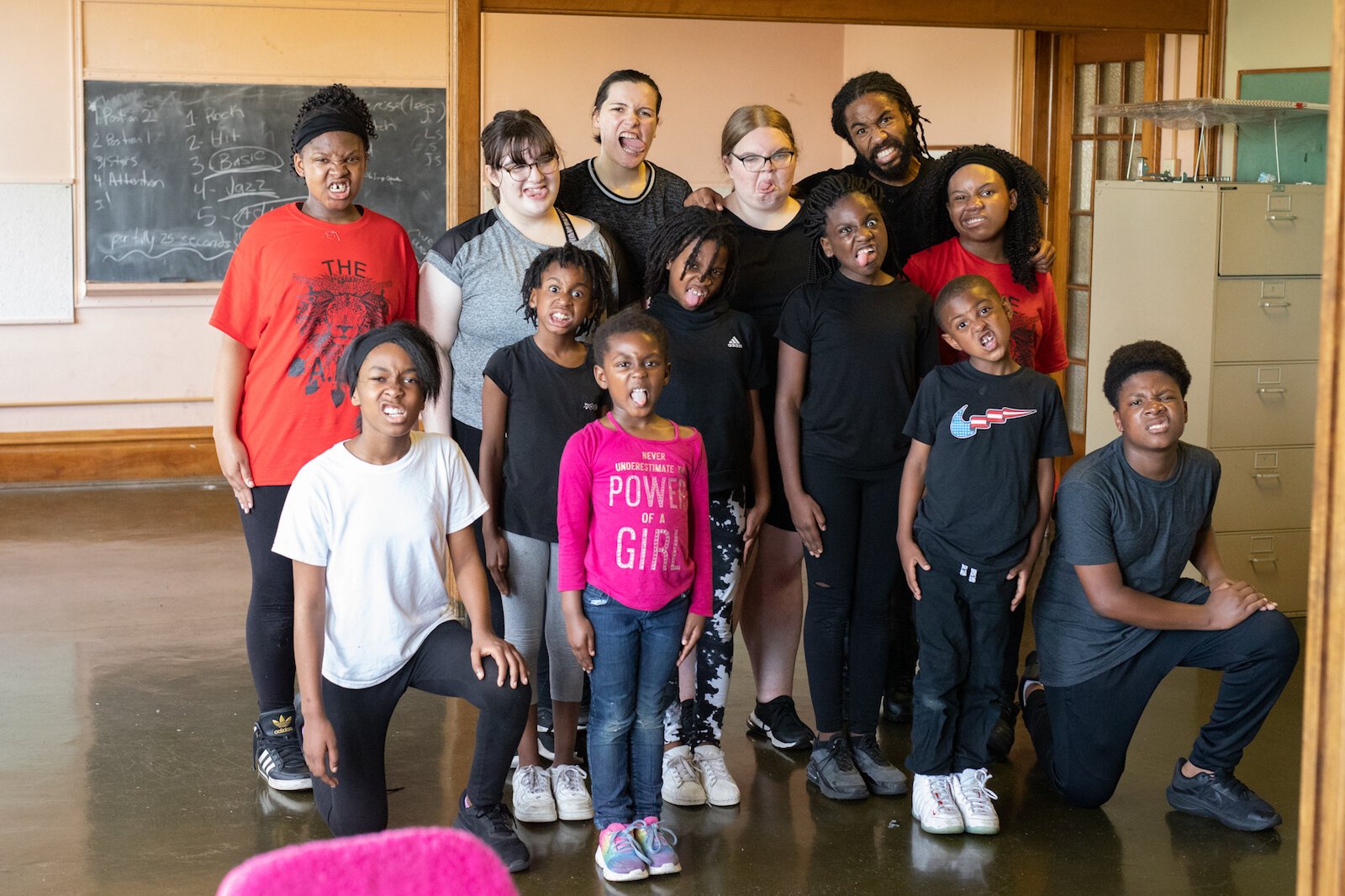
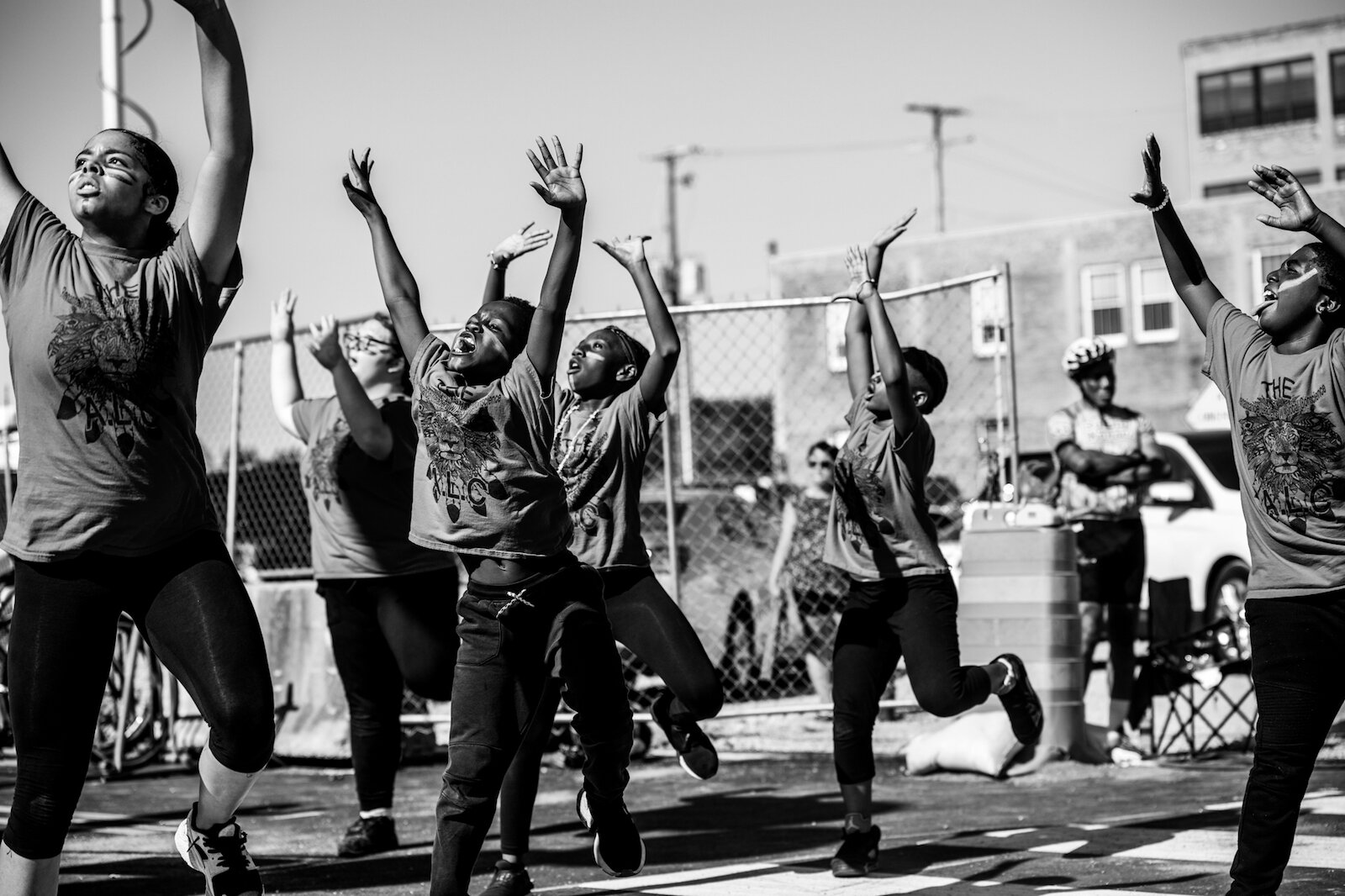
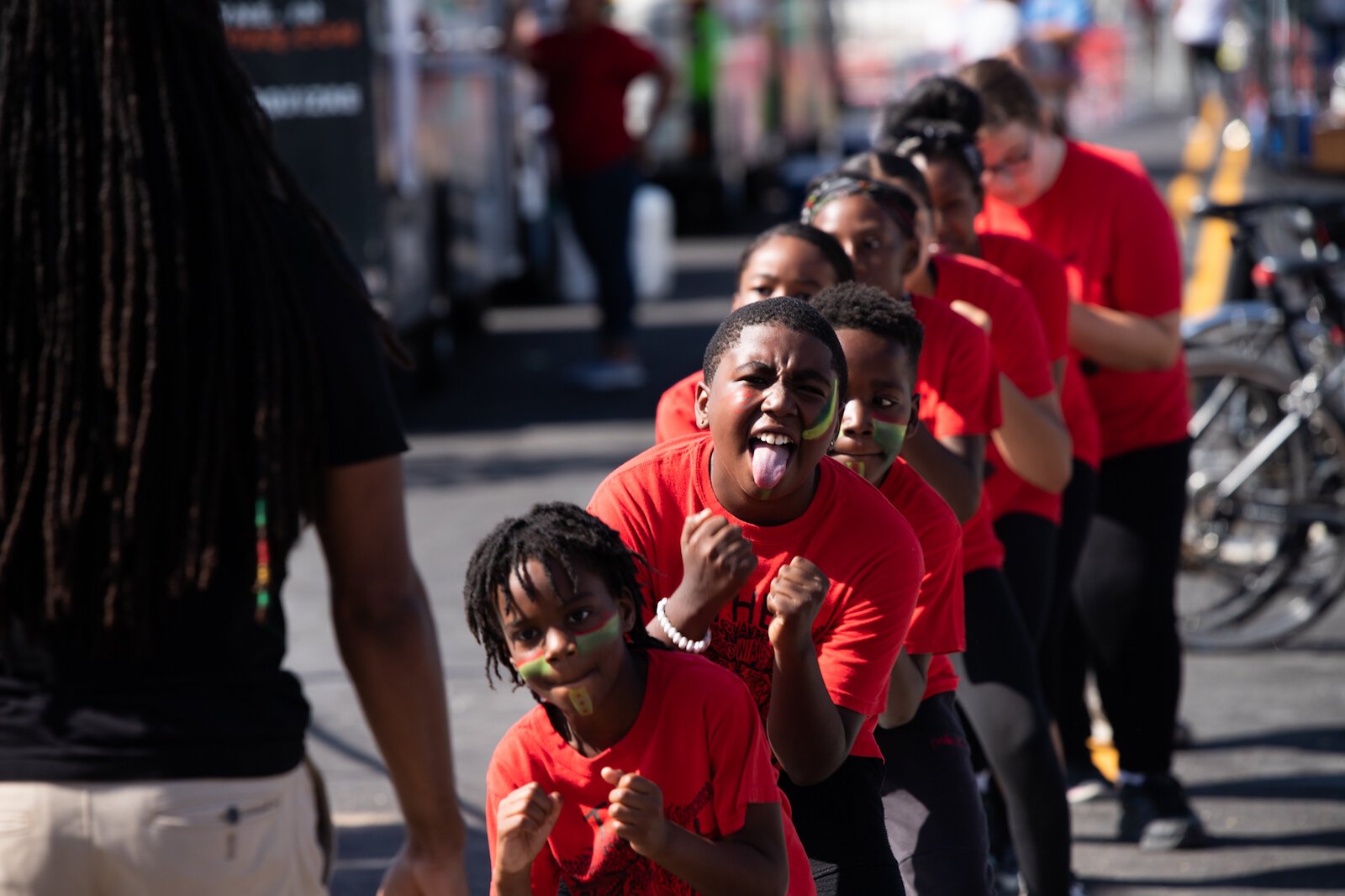
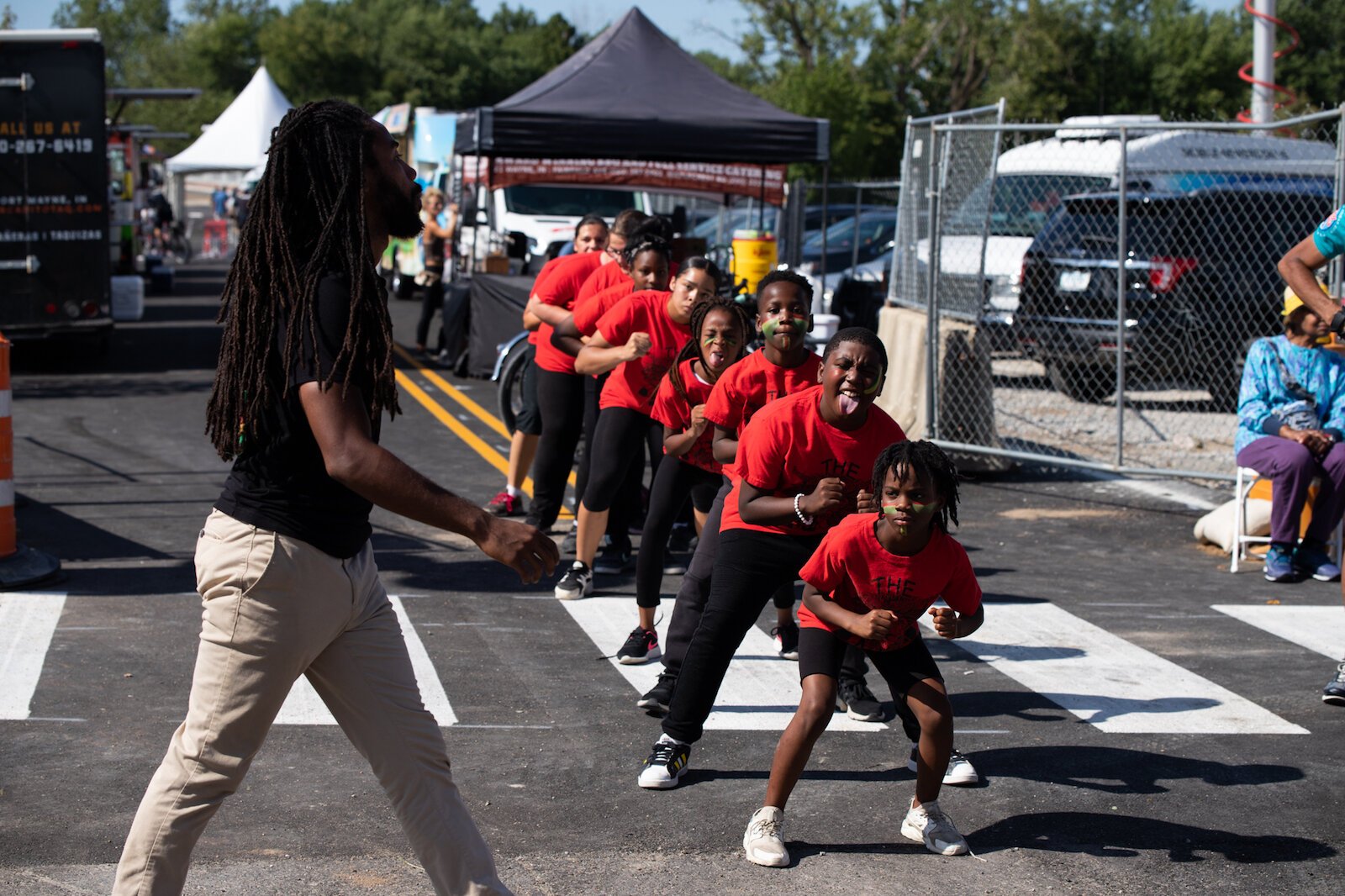
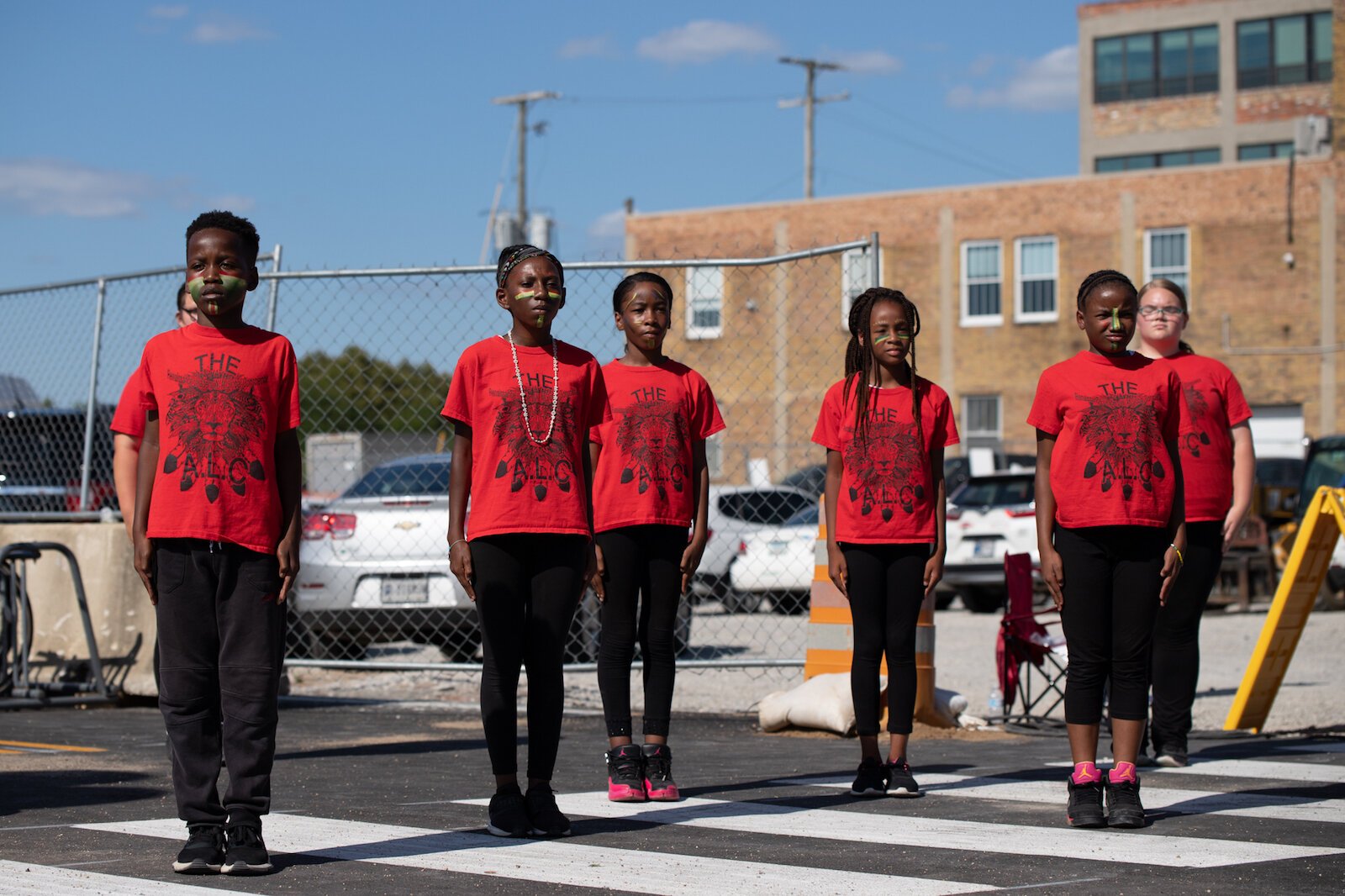
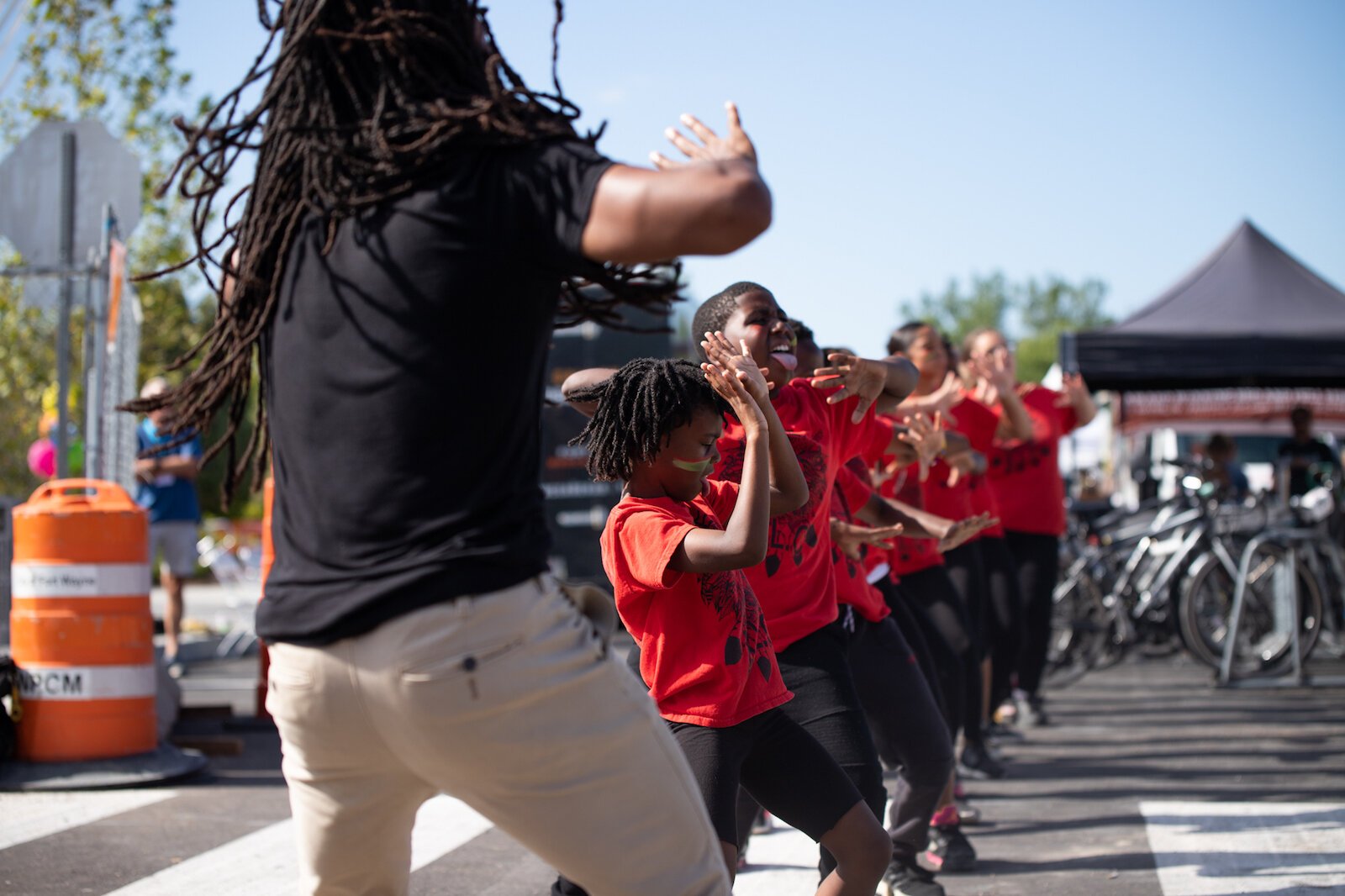
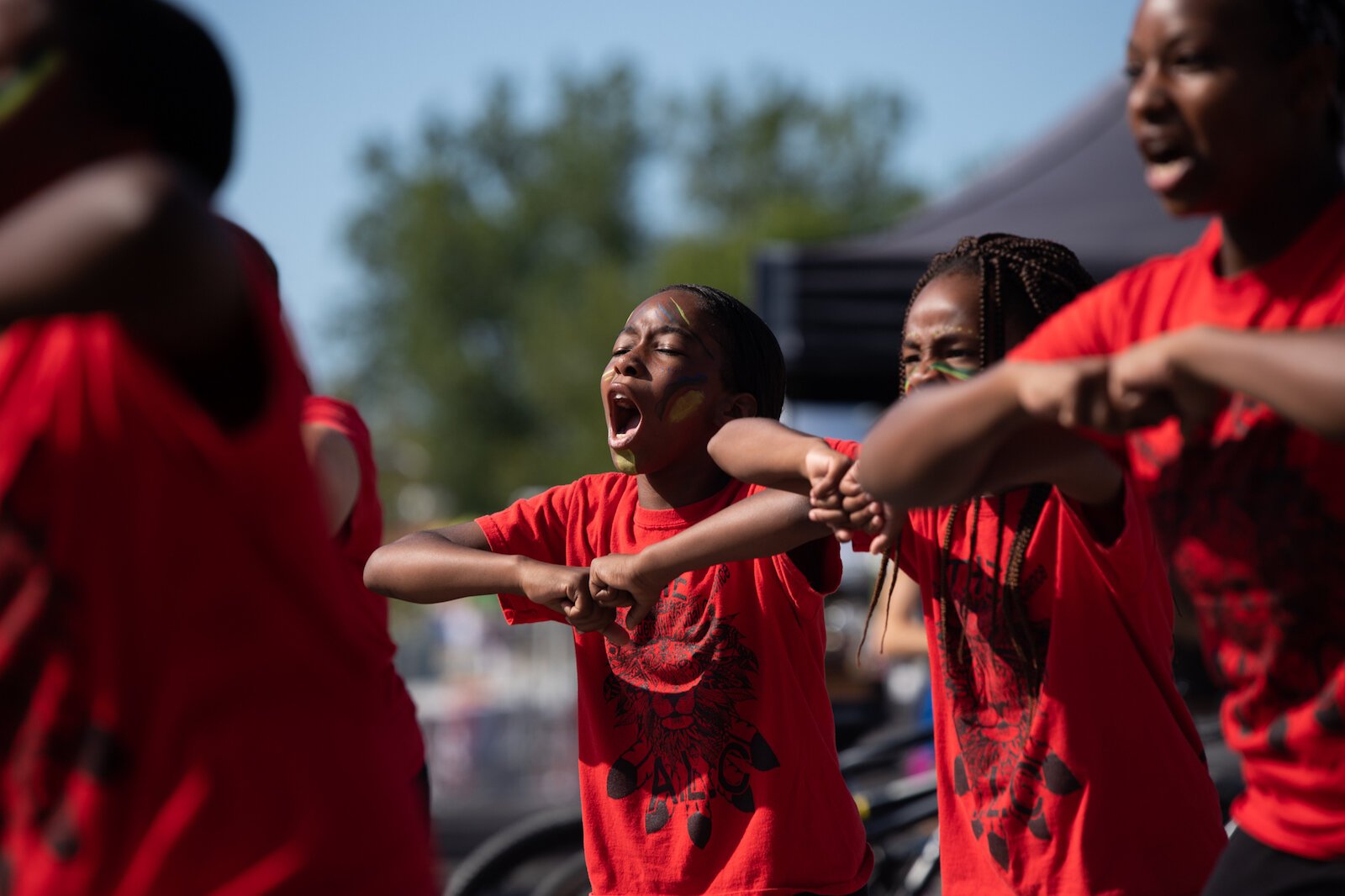
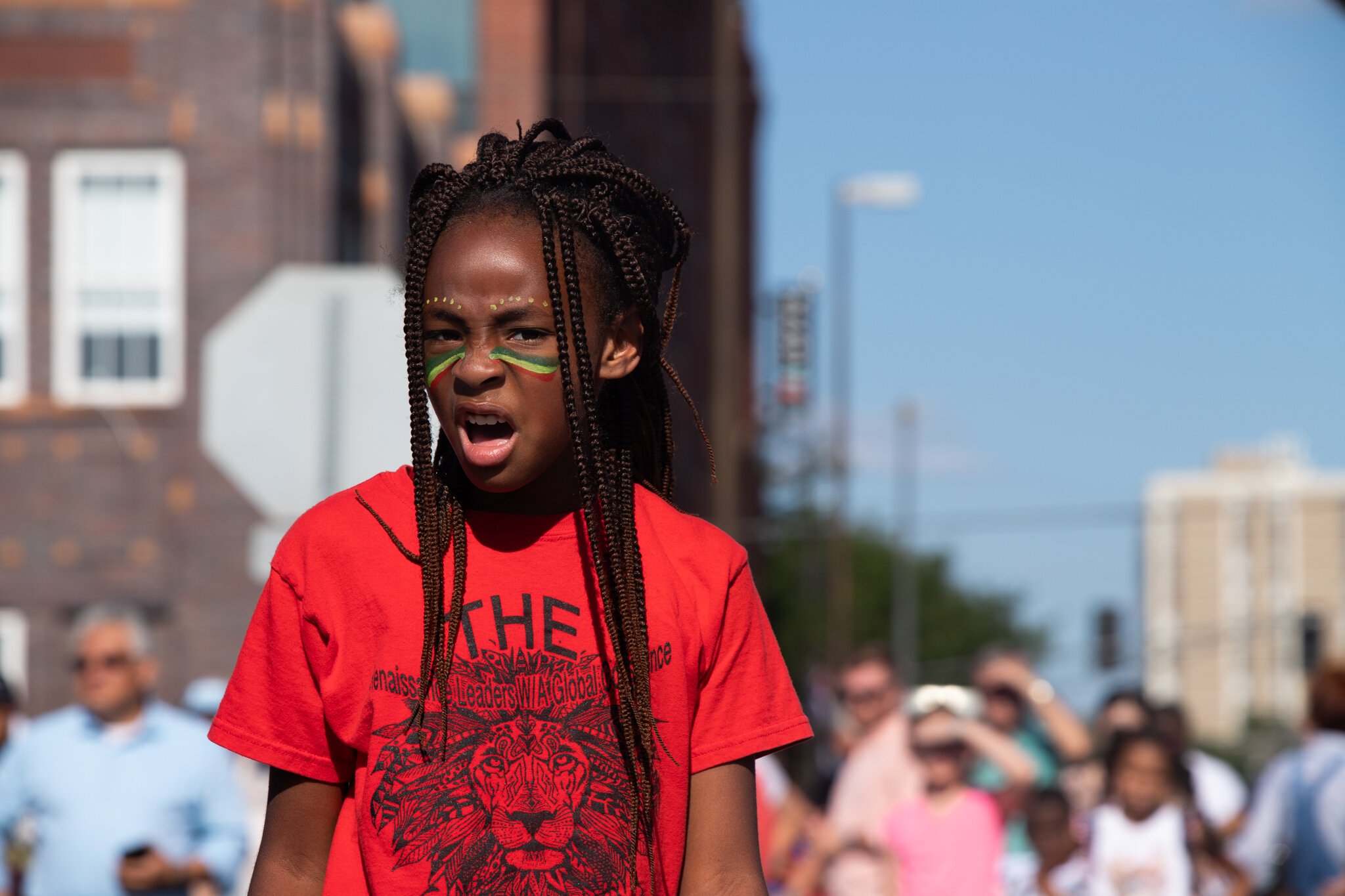
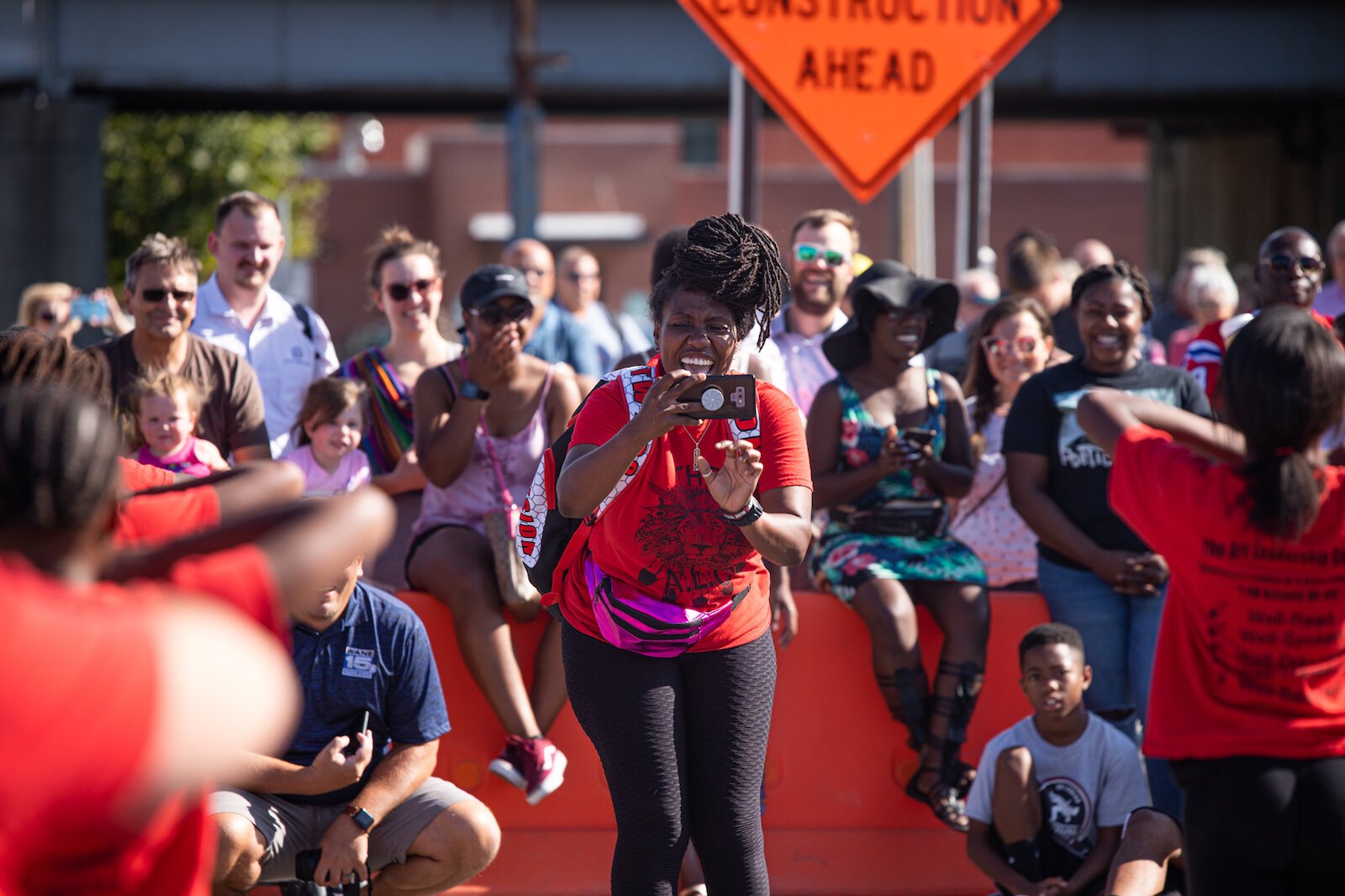
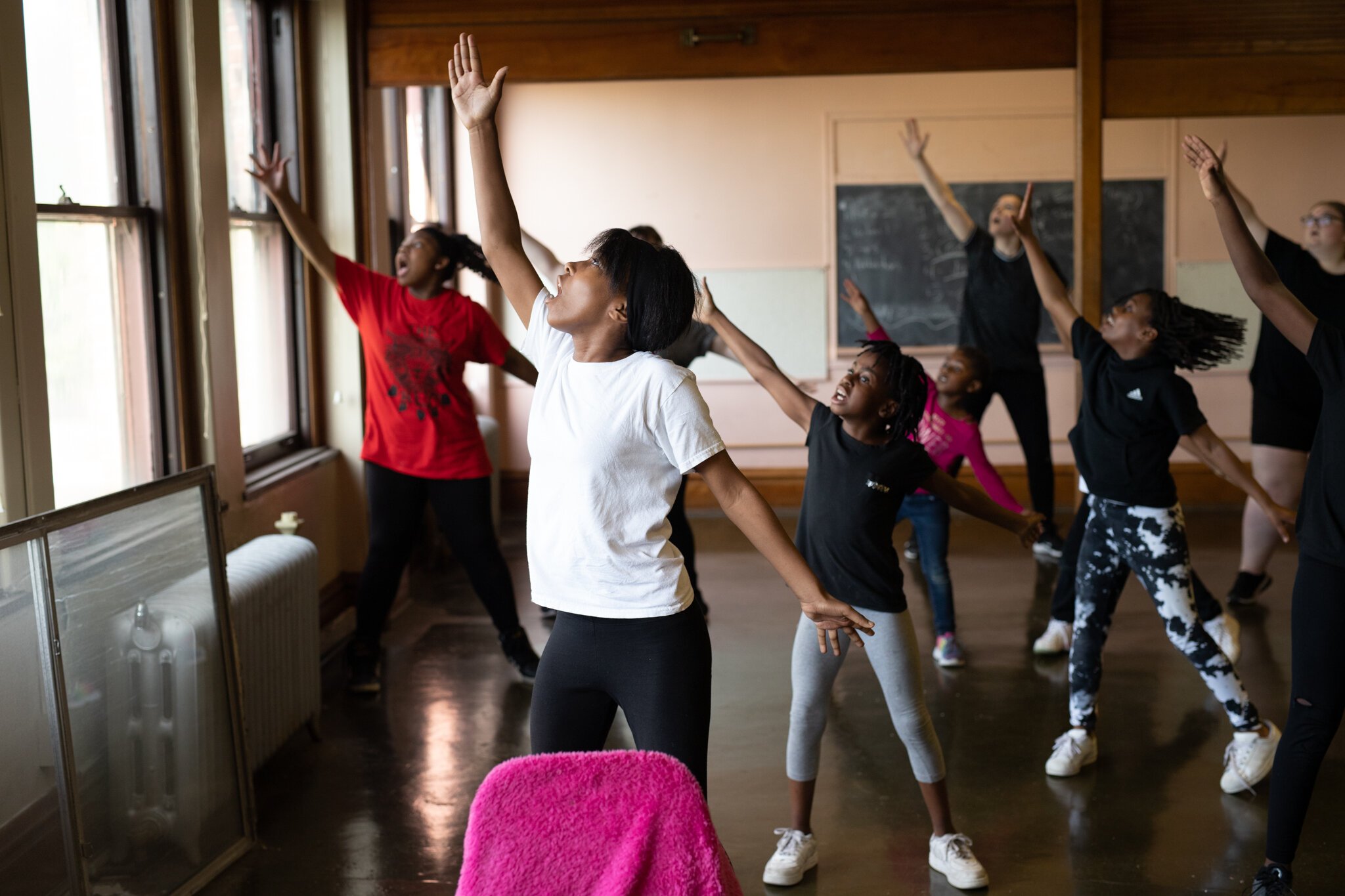
A group of about 15 youth, ages kindergarten through college, stomp, dance, and shout in a drill-like formation during a parking lot performance in South East Fort Wayne.
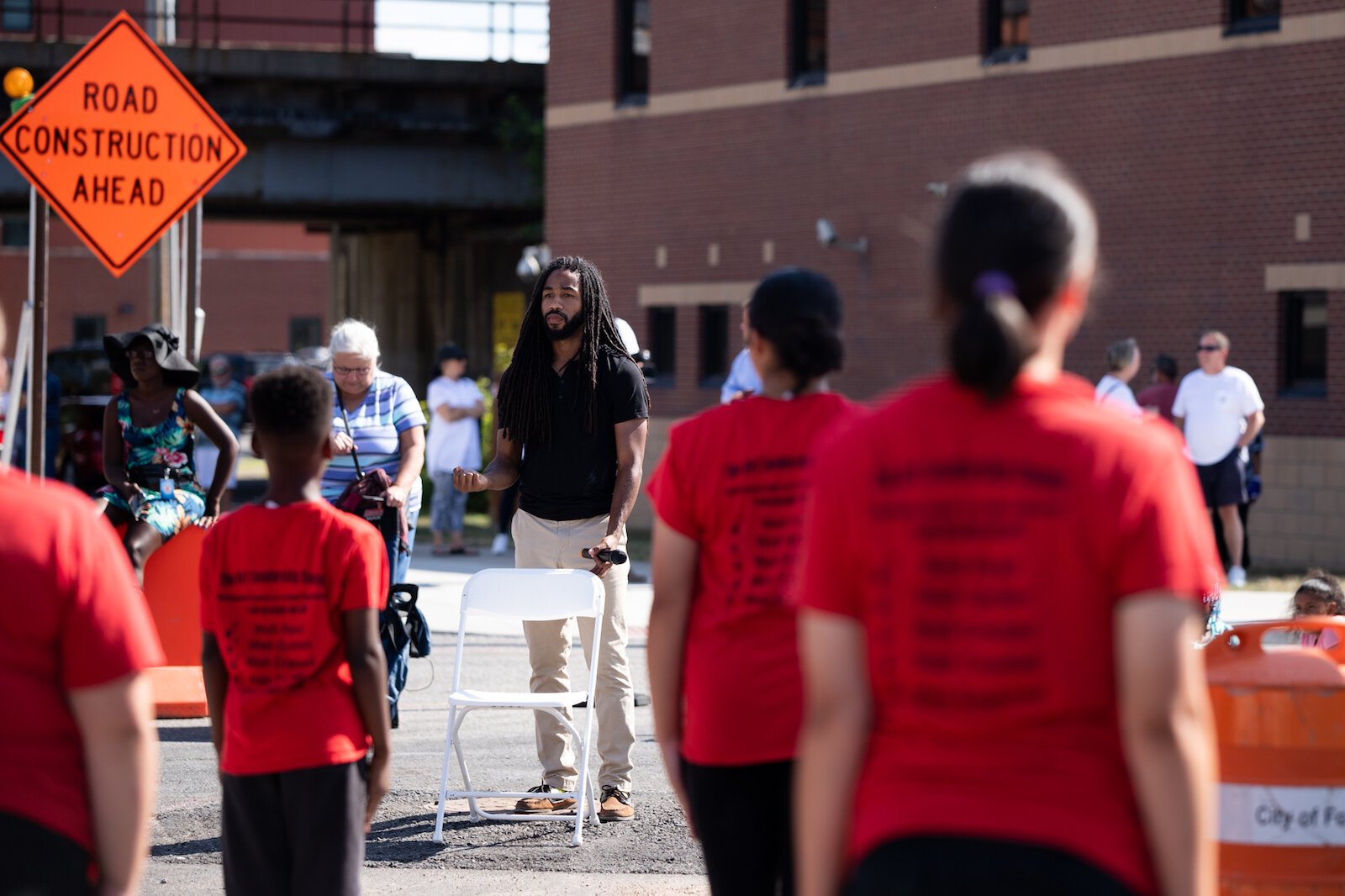
Mr. Curry watches from the sidelines and occasionally joins them in a routine.
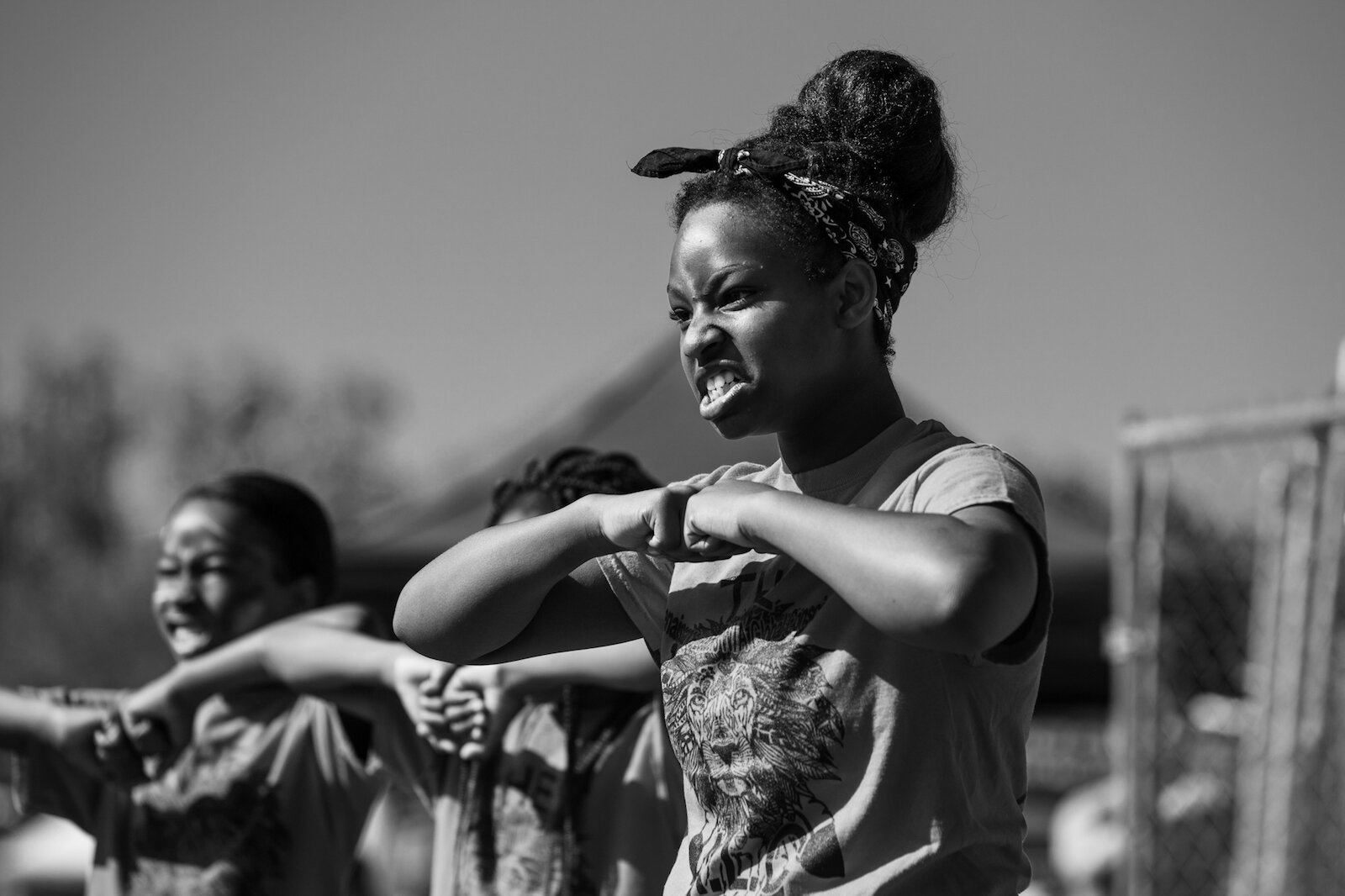
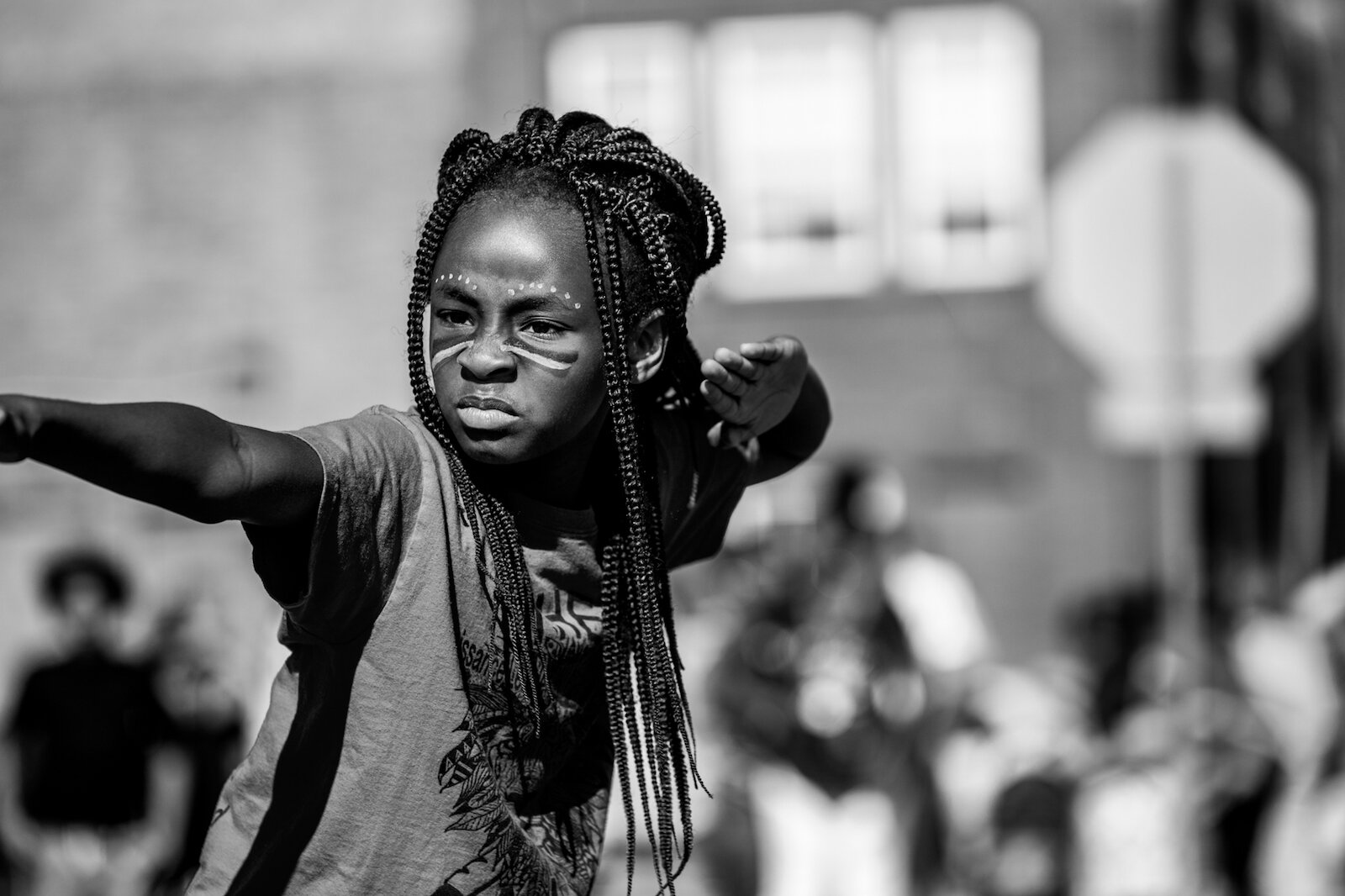
“Stepping is a high-impact, ancient American art form,” Mr. Curry says. “It is a dynamic and intense style of dancing. It’s all about intensity, with very mechanical movements and mugging, or making faces.”
In ancient times, Mr. Curry says stepping was used to prepare for war or tournaments, but it has evolved. It rose to popularity in modern culture in the 1960s-1980s, popularized at historically Black colleges and universities in the U.S.
Since then, informal shows have given way to public exhibitions and international step competitions.
“Stepping is spiritual, but it’s also a high-energy, high impact sport, if you will,” Mr. Curry says. “We step and use our hands and feet and strike the floor and our bodies for percussion sake.”
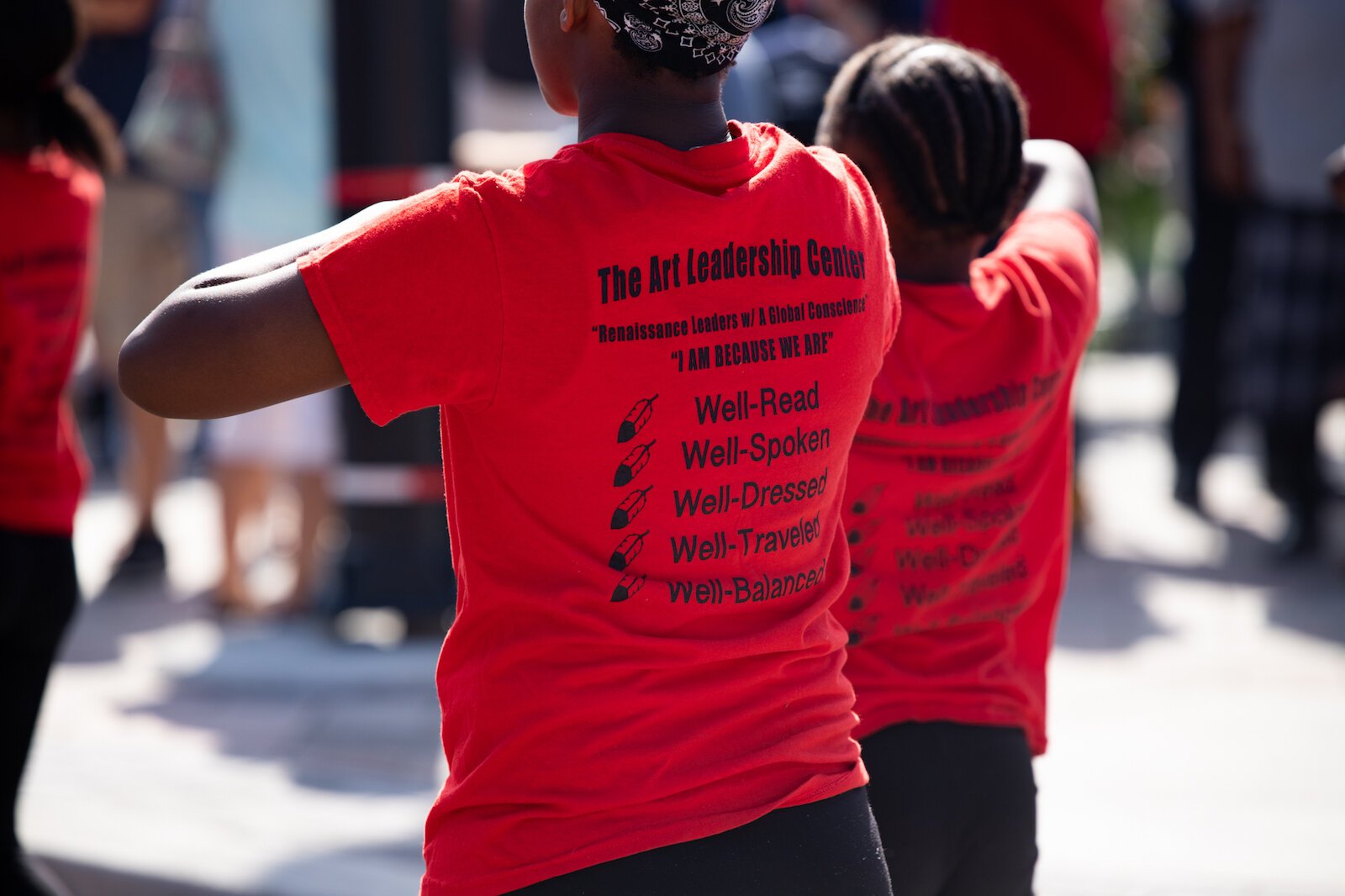
Even so, while Fort Wayne residents might know the Art Leadership Center for its captivating step performances, the Center itself is about something deeper than that, Mr. Curry says. It’s systemically designed to develop what he refers to as “Renaissance leaders”— scholars and artists with a global conscience who embody the “Five Wells of Leadership.”
“Well-read, well-spoken, well-dressed, well-traveled, and well-balanced,” Mr. Curry says. “We like to say: ‘Welcome to house,’” he adds with a quick laugh.
But the intention behind the Art Leadership Center, like nearly every aspect of Mr. Curry’s life, is no lighthearted matter. Instead, it’s carefully crafted to bring a new order to systems, starting with individuals and rippling out to their communities, nation, and world.
The Art Leadership Center aspires to develop leaders of character with a global conscience who serve underdeveloped and underrepresented communities both locally and abroad, like Mr. Curry himself. The way he describes it: It is about creating a leadership-building system that helps people identify and develop their unique strengths, to be their most effective self and to bring about order in the community or “the body,” as Mr. Curry calls it.
“You shouldn’t expect everyone to do the same things,” he says. “We’re a body, and the nose doesn’t do what the ears do.”
While the Art Leadership Center is currently an afterschool program for youth, which runs from about 4-8 p.m. on Tuesdays, Thursdays, and Fridays, Mr. Curry hopes to develop it into a full-fledged, alternative school for students of all ages. He says the programs will be primarily rooted in the development of “Renaissance leaders,” which involves service, science, law, art, alignment, and power.
“Right now, we’re only in the service program,” Mr. Curry says, noting that he launched the Art Leadership Center around his personal talents in stepping, spoken word, and gardening. Thus, the group currently performs many of its service projects in the form of maintaining community gardens in Fort Wayne.
Ultimately, the vision for the Art Leadership Center is to create a peer-led instructor certification system where students can become ALC certified instructors and give back to the program, growing the organization from within and eventually expanding it to other cities.
“We’re developing an elite school alongside a global percussion theatre,” Mr. Curry says.
While his educational methods may be nontraditional by modern U.S. standards, his concepts are rooted in a simple, fundamental philosophy that is already transforming the lives of many students and families he serves.
“In order to control anything, you must first learn how to control yourself,” Mr. Curry says. “At the Art Leadership Center, we focus on ourselves and controlling vehicles. I believe that in order to build something, especially if you want to make a change in the world, you must start with yourself and move outward.”
***
The concept for the Art Leadership Center is relatively new, considering it was founded three years ago on March 28, 2018. Even so, many of Mr. Curry’s students have worked with him for several years, back when he was a contracted teacher or instructor for programs like Akoma Dance Crew at the Weisser Park Youth Center.
The Art Leadership Center currently has 15 members who attend the program on a weekly basis, with high school graduates coming back in the summertime and on breaks from college to reconnect. On any given week at the Center, you’ll find groups of students working together, preparing for their next performances, or simply meeting with Mr. Curry, who offers tutoring, mentorship, and advice.
The Art Leadership Center’s student ambassadors, Desire Buckhanon, Elisha Brown, and Matana Land, say this personalized attention and support from Mr. Curry has helped tremendously in their studies at Fort Wayne Community Schools. Buckhanon is going into 8th grade, and Brown and Land are freshmen and juniors in high school, respectively.
“Mr. Curry gives each student one-on-one time to work on whatever they need to work on during practice, whether its school work or dancing or life choices,” Brown says. “If you have a hard decision to make, he can give guidance, and he’s not forcing us with the decision, but he’s just giving what he feels is most helpful.”
While Buckhanon has been working with Mr. Curry since she was in second grade, Brown and Land met Mr. Curry more recently and say their grades have significantly improved since then.
“I went from getting C’s and B’s to getting straight A’s in just a couple of months,” Land says.
By and large, the students attribute their improved grades to Mr. Curry’s principles and processes at the Art Leadership Center, which have carried over into their personal lives after practice.
“At the Art Leadership Center, we learn about focus and discipline,” Buckhanon says. “I’ve noticed that since I joined the Art Leadership Center, I don’t get distracted as easily when I’m working on something at school or home.”
“You learn skills here that help you with every aspect of your life,” Land says. “And when you realize you can accomplish something, you gain confidence and motivation.”
***
The Art Leadership Center is currently seeking a new, permanent location for its practices and future programs, Mr. Curry says. For the time being, they’re holding practices on the unairconditioned second floor of Faith United Methodist Church on the corner of Clinton and Dewald Street.
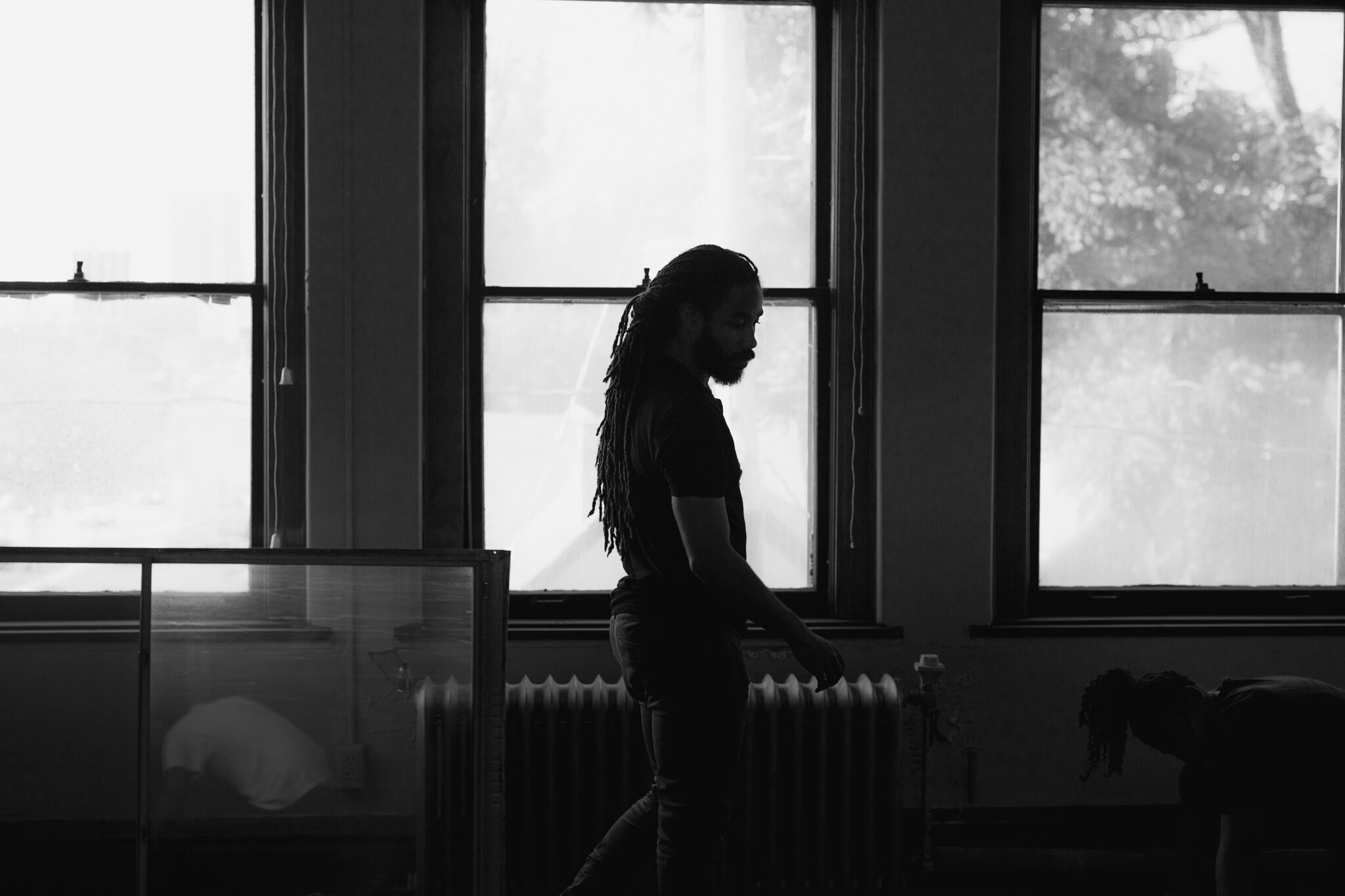
On a balmy Thursday afternoon in June, up two flights of stairs and down a hallway, you’ll find a room that looks like it was designed for the Art Leadership Center: Half old-school classroom, half-glossy dance studio.
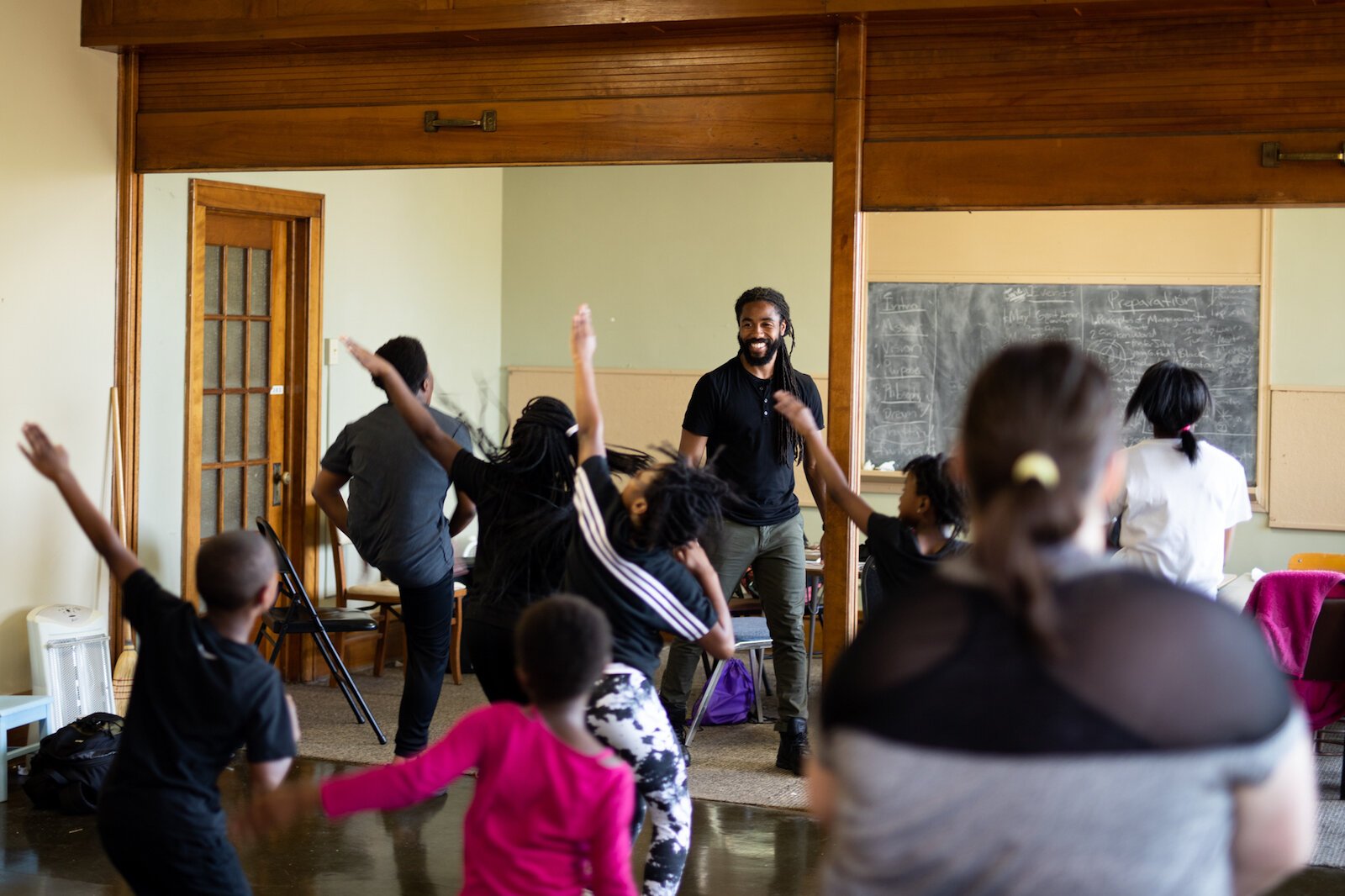
Mr. Curry stands in front of the classroom at a chalkboard, as about 13 students of all ages, sizes, and skin colors sit around two 6-foot-tables in front of him shaped like a T with black and white composition notebooks spread open across them.
The students watch Mr. Curry attentively, chiming in and leaning forward, eager to participate in the collaborative process of creating their next performance.
“With our shows, we incorporate a lot of spoken word,” Buckhanon says. “So when we start practice, Mr. Curry has us go over our spoken word that we’re working on and figure out how to perform it.”
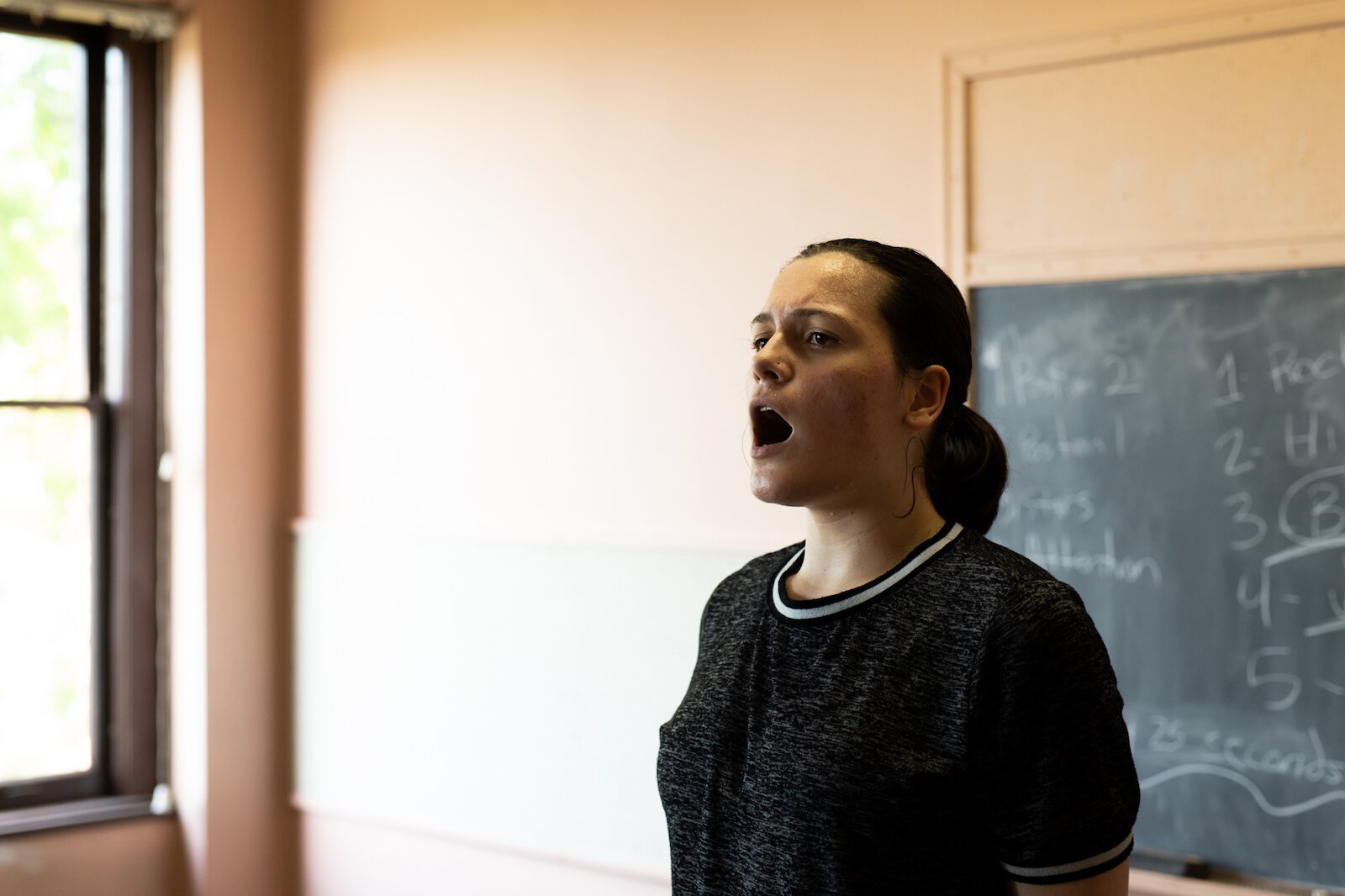
Today, one of the teen girls is reciting a poem, and when she finishes, Mr. Curry speaks.
“Can you do me one favor?” he asks. “Can you stand up and deliver that now? I see that you’re ready. Perform it for me. I know it’s not memorized, but do your best.”
She emerges from her chair, and recites the poem again, this time with confidence, adding in a few impromptu hand motions for emphasis.
“Mmmm, fantastic. That’s good,” Mr. Curry says. “Memorize it, and get ready to deliver it for Juneteenth. All right. Now, I need you all in formation.”
At once, the students drop everything and head to the dance floor silently. Two team captains quietly direct the others where to stand.
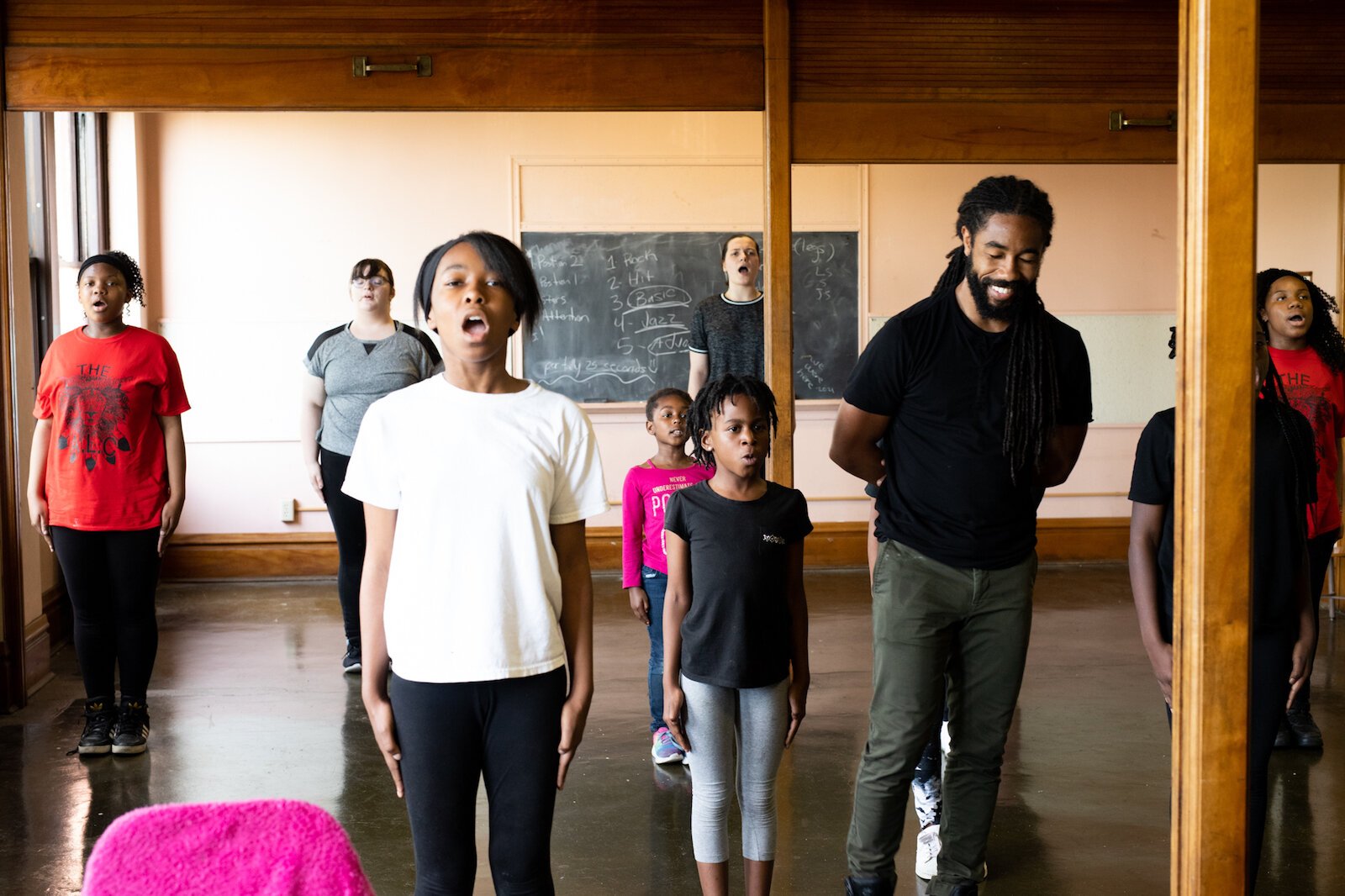
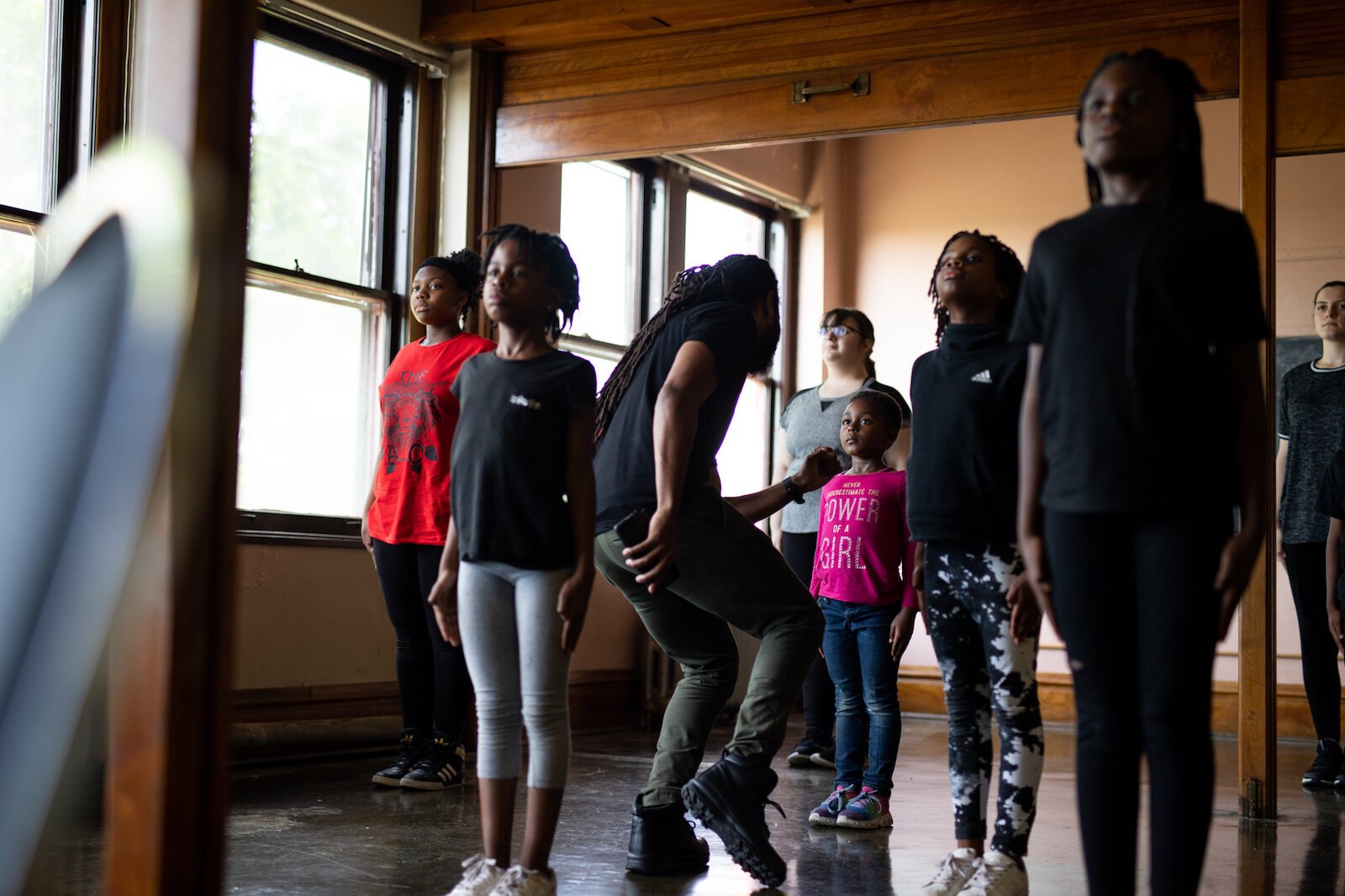
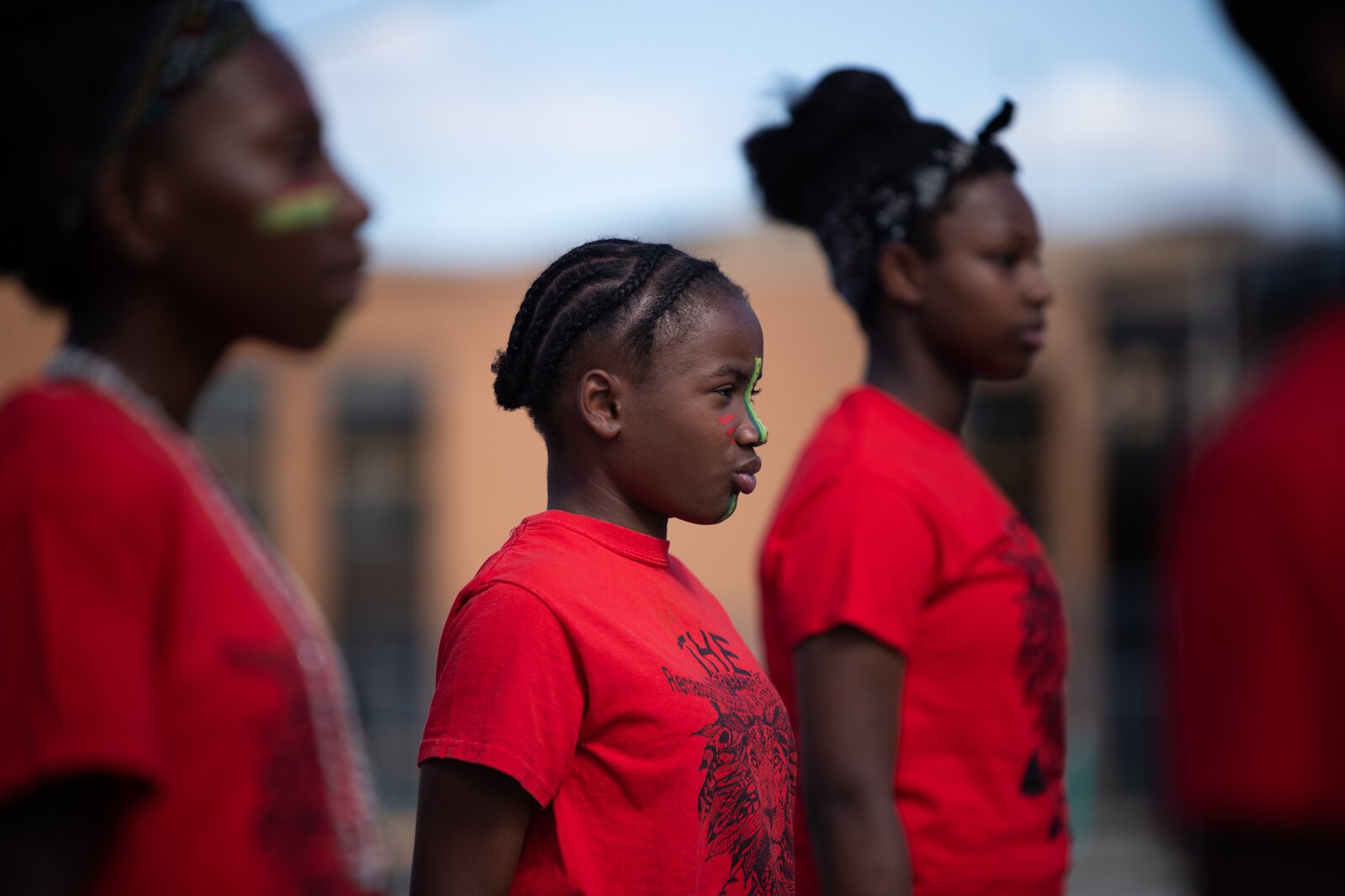
“They have to figure it out,” Mr. Curry says, watching the students create a formation that resembles an X on the dance floor. When everyone is in position, the students stand at attention—legs together, arms flat against their sides, faces and eyes locked forward on some invisible horizon.
Mr. Curry leaves his station by the chalkboard and begins to saunter in front of the formation, swaying as if to music—his fluid form and flowing dreads stand in strong juxtaposition to the students’ stiff bodies.
“If you see me on stage, and my student leaders are still tight in position, it’s not because I make them hold in position,” Mr. Curry says. “It’s because they understand the significance of being unwavering—being unmoved. The philosophy is to control one’s own view. It’s all about order. Everything is about order, and that’s the bottom line at the Art Leadership Center. What’s first? What’s second? How do you lead? There’s a lot of ‘leaders,’ but how do you lead a people if you don’t know where they belong? How can you say you’re a leader if you don’t know where each person belongs in order to create the ‘unity’ we all seem to yearn for?”
“That’s what I mean when I say I have deep roots,” Mr. Curry continues. “As a leader, you can be the blind leading the blind. The idea here is to make sure my students are not blind, but that they have a strong foundation of knowledge that they can build on. You can learn mathematics, but why does that matter if you don’t understand how it fits into the big picture? Just to say you’re smart? My philosophy is: Don’t act smart; be it. Don’t show off; showcase.”
***
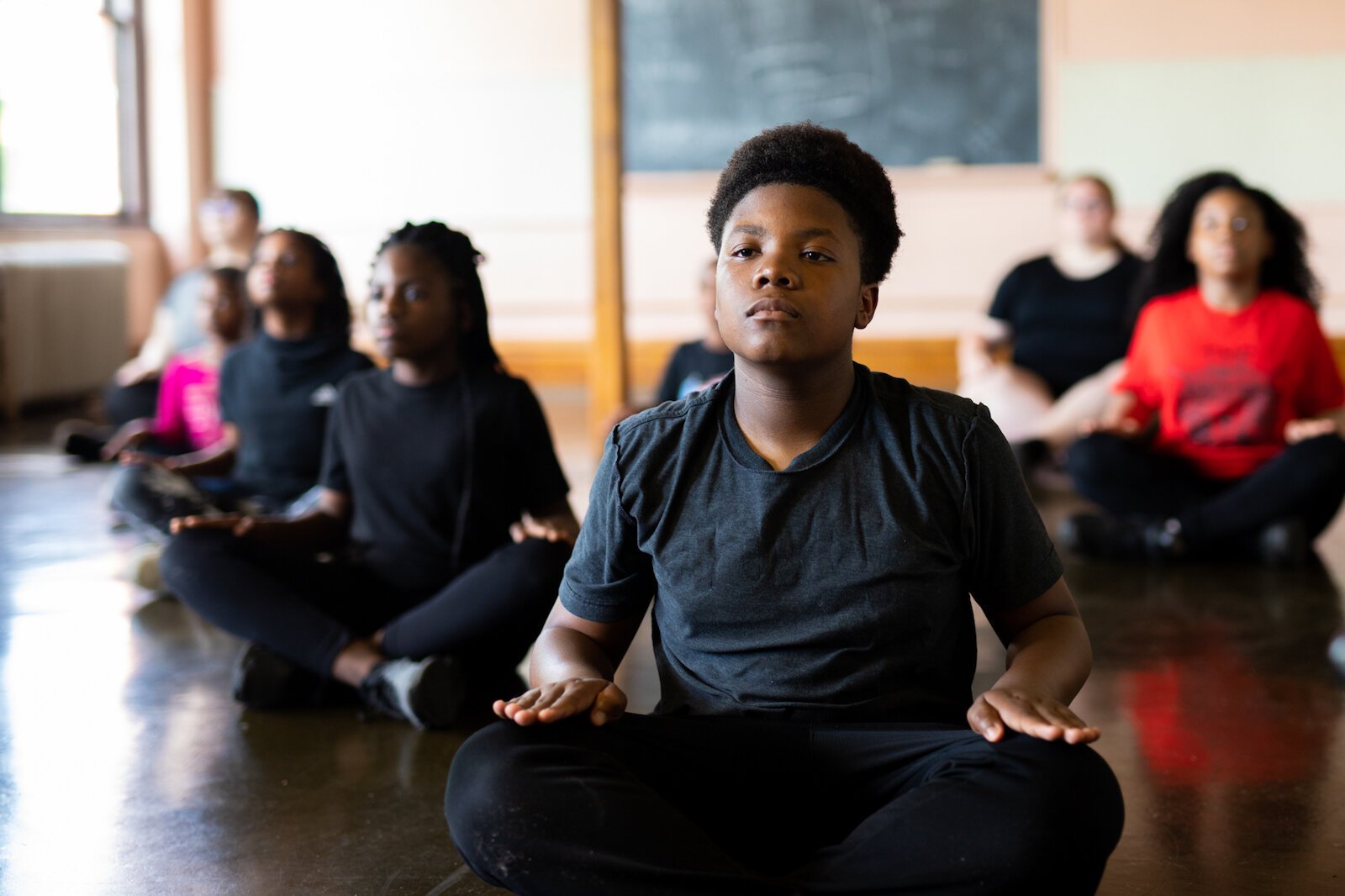
As Mr. Curry moves through the lines of students, he speaks an order, “Position 2,” and the students instantaneously drop into a meditative pose on the floor, crossed legs, hands in blades and resting on their knees, faces still forward.
Then Mr. Curry cues the music with a remote, and a slow, whistling song emerges from the speakers.
“Naaa-Naaa-Naa-Nahhhh,” he sings with the music intermittently as he talks with the students about their upcoming performances at Juneteenth. Then the students stand and stomp their way through several sets of step routines.
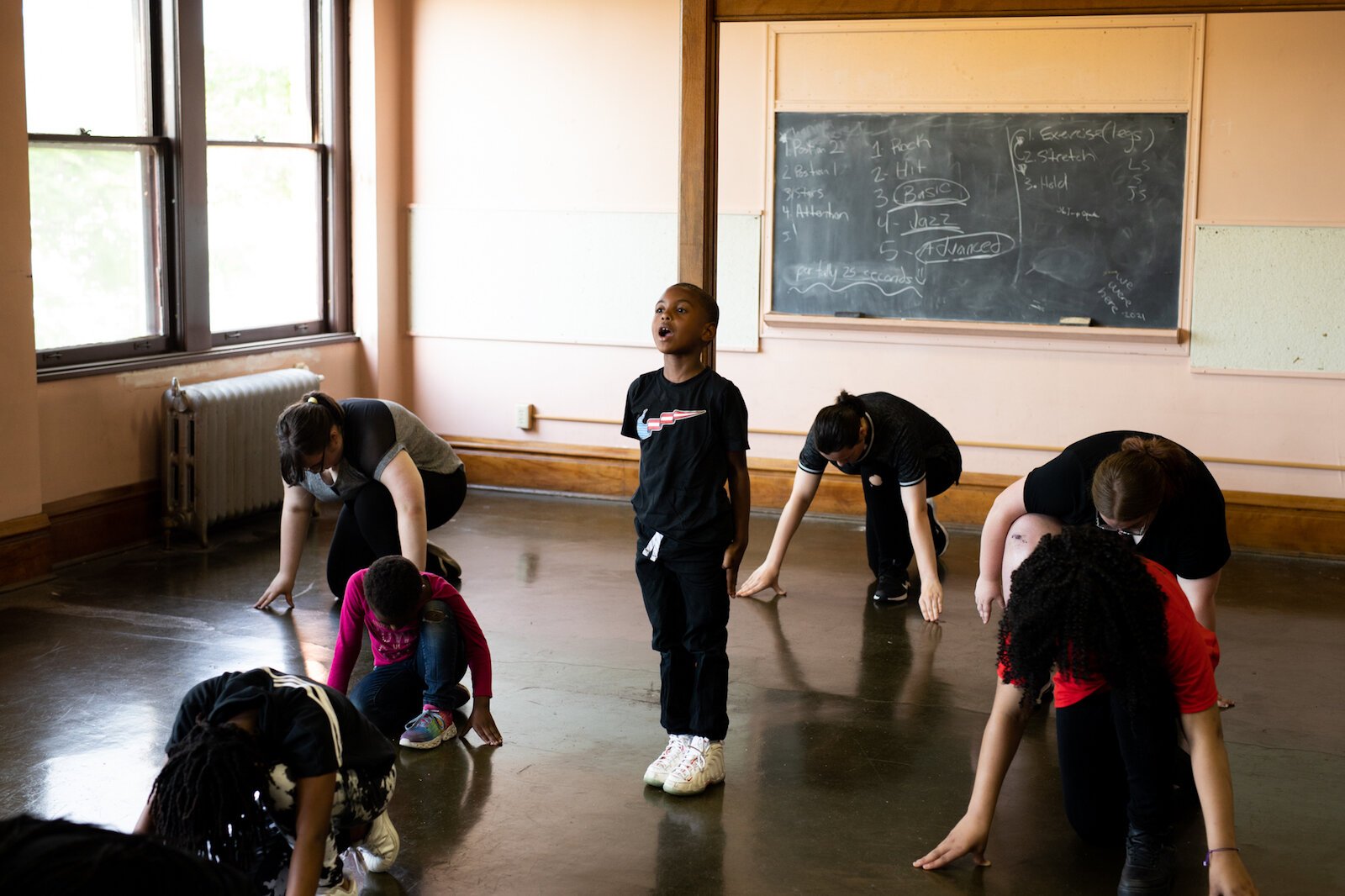
During one set, everyone kneels on the ground and takes turns standing up to announce their names, their parent’s names, their grade levels in school, and their career aspirations.
Many say they want to be doctors or therapists.
Brown says he wants to be film director.
“Not only a film director, but maybe a film producer or a cinematographer, too,” he tells me after practice. “The way the Art Leadership Center can help me with that is the information that Mr. Curry supplies could help toward my future films—it could help me spread awareness about things that I wouldn’t know about without Mr. Curry.”
Land says she aspires to be a therapist and credits that decision to her time at the Art Leadership Center.
“When I first joined, I wanted to be a doctor, but after learning about modern medicine and how it tends to target the symptoms of issues, like mental illness, rather than the root causes, I think I want to be a therapist now instead,” she says. “I want to help people more effectively and not just prescribe medicine to them.”
Buckhanon, who aspires to be a vocalist, says student ambassadors like herself at the Art Leadership Center are responsible for helping Mr. Curry in making sure everything at the Center flows smoothly. They lead the team during practice and also at community service days they participate in, like the Great American Cleanup.
“If the younger students have questions, they come to us first,” she says.
In this way, the Art Leadership Center functions like a family with “older siblings” supporting the younger ones. A group of the youth’s parents are even appointed as their “Guardian Angels,” who meet with Mr. Curry regularly and help determine the direction of the Art Leadership Center’s future.
Land says the Art Leadership Center feels like her family each week at practice, too.
“I don’t really talk to many people at my school,” she says. “This is where most of my friends are.”
Brown seconds that opinion.
“We build strong connections here, and these are the people we feel most comfortable with,” he says. “The Art Leadership Center helps with dancing, but that’s not really what it’s about; it’s about making yourself a more well-rounded individual—a Renaissance leader.”
Learn more
Art Leadership Center students will perform during Fort Wayne’s Juneteenth celebration in 2021 at the Freedom Event at 4:30 p.m. on June 19 at McMillen Park and the Art Leadership Center Promenade earlier from 12 p.m.-1:30 p.m. on June 19. Get a full schedule here.
Follow the Art Leadership Center on Facebook for more information or theartleadershipcenter.org.
Author

Related Articles
What will Dekalb County do with the historic Sunny Meadows property?
Sunny Meadows, a county residential home, is now closed, but the building’s future is up for debate.
#PlacesofNEI: Katey’s Cafe on Berry Street
Katey’s Cafe features a breakfast and lunch menu, as well as a variety of coffees, smoothies and snacks.