How riders and advocates navigate Fort Wayne’s transit gaps
While some wait for large-scale changes, advocates say taking small steps to chip away at barriers can provide tangible solutions and hope.
This story is part of Moving Fort Wayne Forward, a year-long reporting effort to engage residents, employers, and community leaders of Greater Fort Wayne around the possibility of a more modern, multimodal transportation system. Read the full series here.
Once Marguerite Madison gets on the bus, she can rest from the most difficult part of her near-daily commute: walking to the bus stop and waiting.
Madison uses a cane to walk due to arthritis in her feet and legs, and every step from her front door to the bus stop is a challenge. Sometimes, that challenge is made harder if the bus stop does not have a place for her to rest and find refuge from frigid weather.
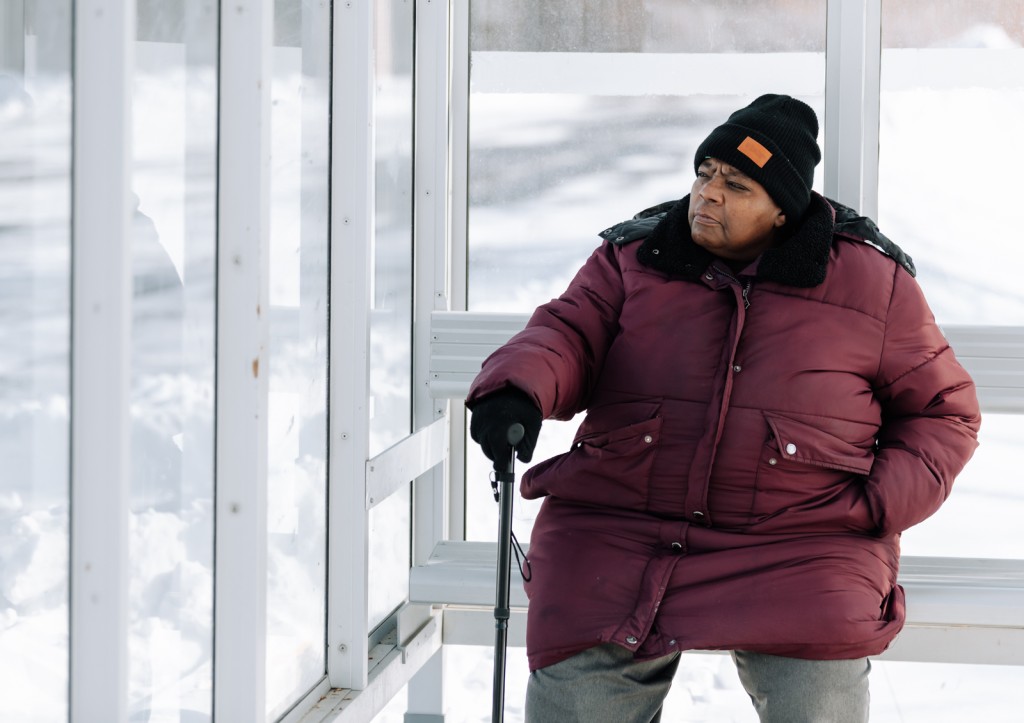
“I’m almost 70 years old,” she says. “I try to walk out here, in this cold like this. That’s not good for people, handicapped or not.”
Like Madison, those with disabilities struggle to navigate Fort Wayne, even if they have a car. Advocates from WindSwell Foundation, formerly the AWS Foundation, and a sponsor of Moving Fort Wayne Forward, say that, while progress continues to be made to make transportation infrastructure in Fort Wayne more accessible, people with disabilities continue to face significant challenges navigating the city.
What is the typical gameplan for someone with limited mobility traversing Fort Wayne?
Transportation options for residents with disabilities are limited not only because of physical barriers, but also because the financial burden of car ownership weighs more heavily when reliable employment becomes more difficult.
Joni Schmalzried, chief program officer at WindSwell Foundation, says that, without reliable transportation and with limited capacity for certain positions, losing access to transportation seriously limits the ability to find employment. Put simply, transportation issues lead to income shortfalls, and income shortfalls limit transportation options in a self-sustaining cycle.
The next option is usually a call to friends and family. When that support system is unavailable, services like Citilink, Citilink Access, and the Community Transportation Network (CTN) try to fill the gap. Citilink Access and CTN are both programs specifically aimed at providing rides to qualifying residents with limited access to transit.
Using these services can come with its own challenges. Limited service times, capacity, and the need to schedule pickup in advance restricts the independence of riders.
Snow-covered sidewalks and bus stops with no shelters or benches present additional challenges for Madison and others with mobility needs. If Madison does not make it to the bus stop on time, she has to wait up to an hour for the next bus. If no shelter or rest area is available for her, arthritis compounds the struggle.
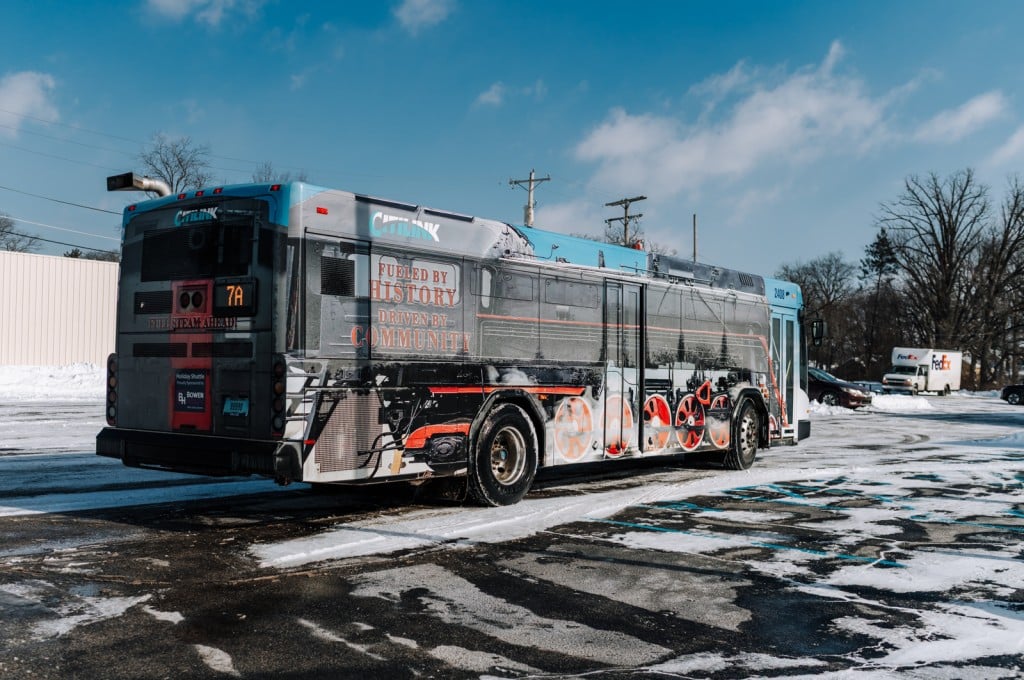
And if she needs to go anywhere on Sunday, she’s out of luck. Citilink and CTN only operate six days out of the week.
Madison says she believes that more frequent routes and additional bus stops on those routes would help people with mobility needs more easily utilize public transit. For public transit carriers, however, solutions to these problems often require funds that cannot be covered, but, Schmalzried says, solutions do not have to be perfect or large-scale. Rather, chipping away at issues over time utilizes scarce resources more effectively and contributes to incremental, but impactful change.
For example, the optimal public transit mix might have more frequent service, but given limited resources, a more practical solution might be accommodations by an employer for an altered shift schedule that allows someone with a disability to utilize public transit and still clock in on time.
Moving Fort Wayne Forward Reader Survey
Hey! We could really use your help making sure we can continue producing journalism that informs and inspires. Taking a few seconds to answer these questions will ensure we’re on the right track and that our funders understand our impact.
But employment is only one aspect of life obstructed by a lack of transportation accessibility. People encounter obstacles when accessing healthcare, buying groceries, and participating in social life. Solving transportation issues involves a lot of coordination, time, and investment. Many of the proposed solutions appear lofty, but finding fixes to improve accessibility would improve the quality of life for many in Fort Wayne.
“It is a behemoth of an issue,” Schmalzried says, “and it impacts so many different things, so many different people, in so many ways. So we can talk about things we wish could happen, but other things, I think people continue to try. If it was solvable quickly, I think we would have done it.”
Inclement weather offers one example of a problem that can be chipped away. Even if those with disabilities can normally reach a bus stop, snow and rain increase the difficulty, and an extended period of outdoor travel in freezing temperatures can also cause health and safety issues for neighbors who already have disadvantages in reaching their destination. Patti Hayes, CEO at WindSwell Foundation, says proactive sidewalk clearing can make a positive impact without excessive investment.
Although chipping away at the challenges facing residents with disabilities is a slow process, Madison remains optimistic that conditions will continue to improve, and believes that both decision-makers and stakeholders can take proactive steps to reach their destinations, even if the situation is not ideal.
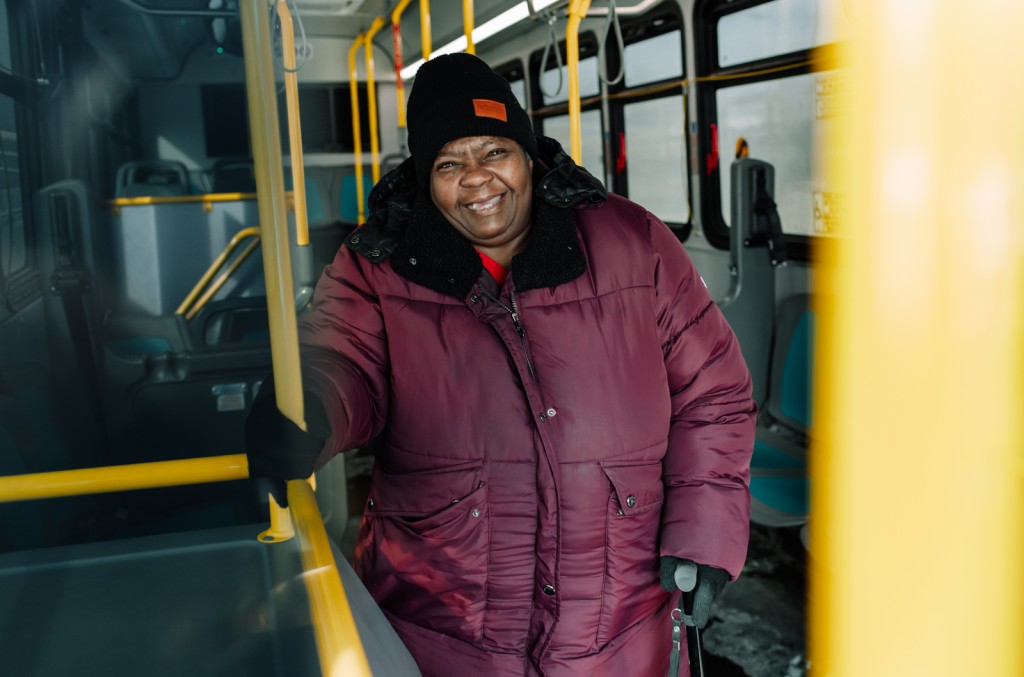
“A lot of people don’t have information on how to ride the bus,” Madison said. “They need to ask somebody: then they’ll know how to ride the bus, but it’s not that bad … The people at the bus station — they will help you. If you need to go somewhere or need to get there, they will find the best way and try to get you to the place where you want to go.”
Chipping away, Madison believes, ultimately boils down to community support for the people and organizations working to make that difference.
“The community has got to get in with the bus, because they do the best they can,” she says. “But you all got to help them too at the same time.”
For now, as Madison walks back home from the bus stop, she can celebrate the small wins, knowing that, one day, chipping away will build toward something more reliable, if not yet perfect.
Thanks to our Presenting Partner, Parkview Health, our Lead Sponsors, WindSwell Foundation and Community Foundation of Greater Fort Wayne, and to our sponsor, Citilink, for making this story possible.
Author

Related Articles
Help shape future coverage – join our upcoming listening session
Join Input Fort Wayne at Tall Rabbit for coffee, conversation, and a chance to share the issues, people, and neighborhood stories you think deserve more attention.
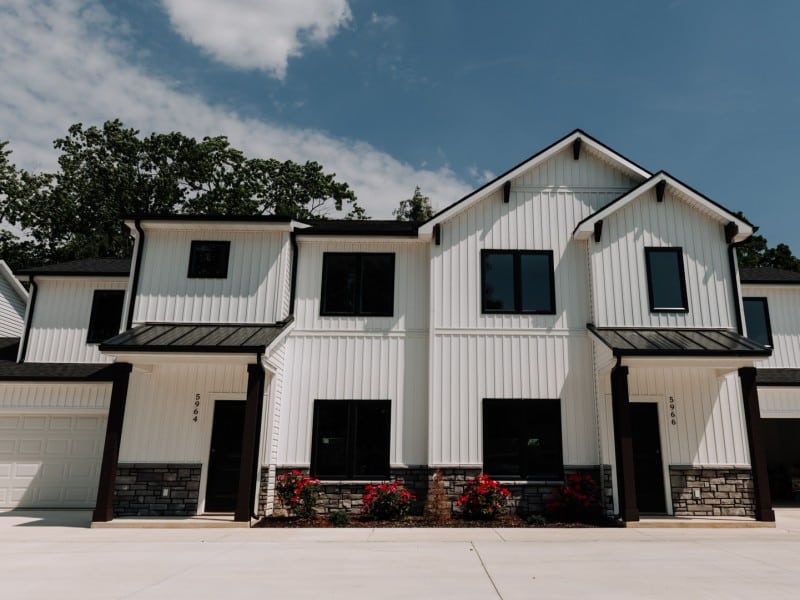
Can proximity solve a transportation problem?
Some developers, planners, and neighborhood advocates believe bringing destinations closer together could expand transportation choices.
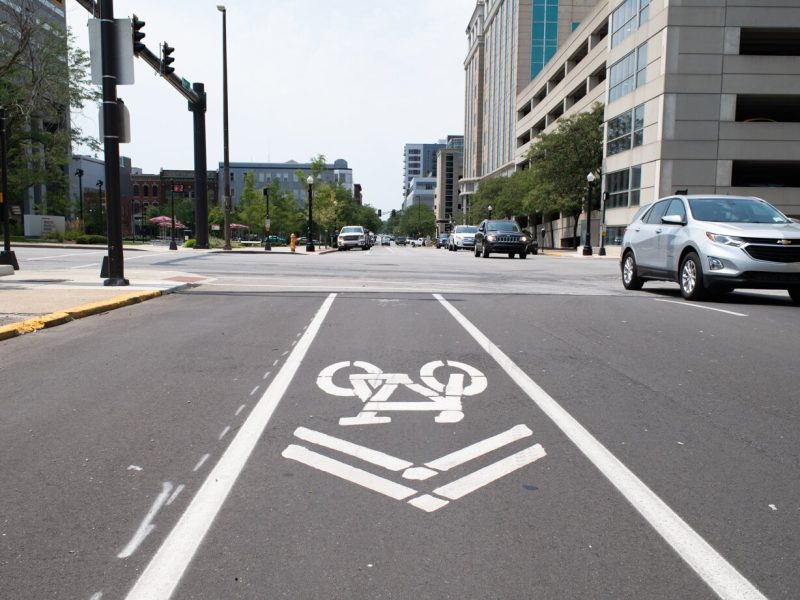
How we got here: The role of transportation in Fort Wayne’s growth
From portages and streetcars to highways and subdivisions, transportation shaped the way Fort Wayne grew.