Can volunteer walk audits help fix Fort Wayne’s accessibility data gap?
With thousands of intersections to manage and limited staff, cities face a data challenge. Volunteer walk audits may offer a way to fill in the gaps.
This story is part of Moving Fort Wayne Forward, a year-long reporting effort to engage residents, employers, and community leaders of Greater Fort Wayne around the possibility of a more modern, multimodal transportation system. Read the full series here.
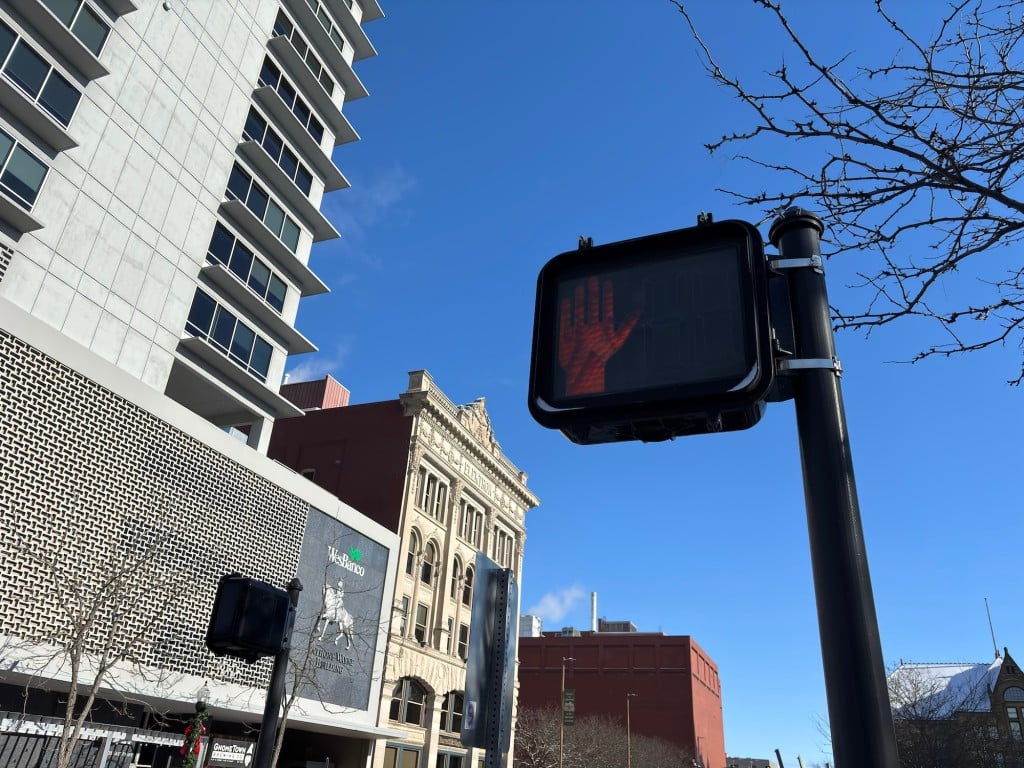
Since the inception and implementation of the Americans with Disabilities Act (ADA) in the early 1990s, regulations have required businesses and municipalities to implement accessibility standards for those with disabilities to equally access facilities.
However, even over three decades since the ADA’s adoption, certain parts of daily life for those with disabilities remain difficult due to infrastructure that has not yet been updated, including sidewalks and intersections. In fact, the ADA generally does not require that sidewalks and other infrastructure constructed before the law be updated unless certain triggers prompt reconstruction of that infrastructure.
Despite no requirement to immediately update all pre-ADA infrastructure, municipalities like Fort Wayne have taken steps to make the public right-of-way more accessible for those with disabilities. But, among the several reasons that non-compliant infrastructure persists, collecting and maintaining fresh data about more than 4,400 pedestrian-involved intersections stands as a challenge for Fort Wayne.
Without fresh and ample data, limited resources might not reach the areas that need accessibility fixes sooner than others.
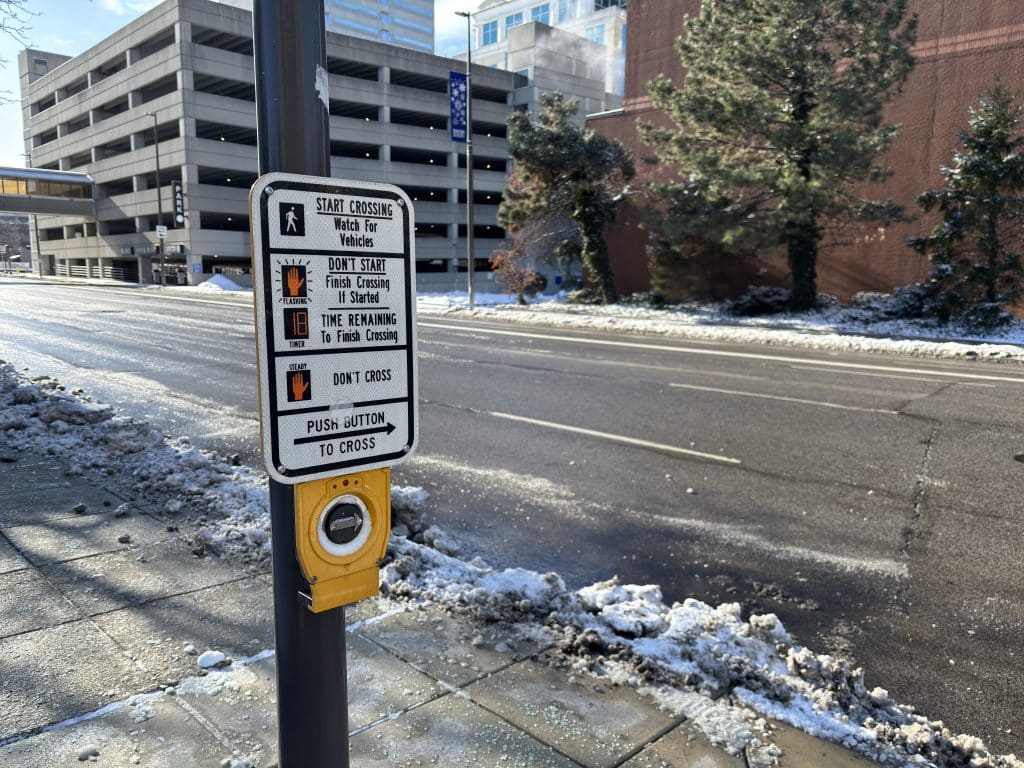
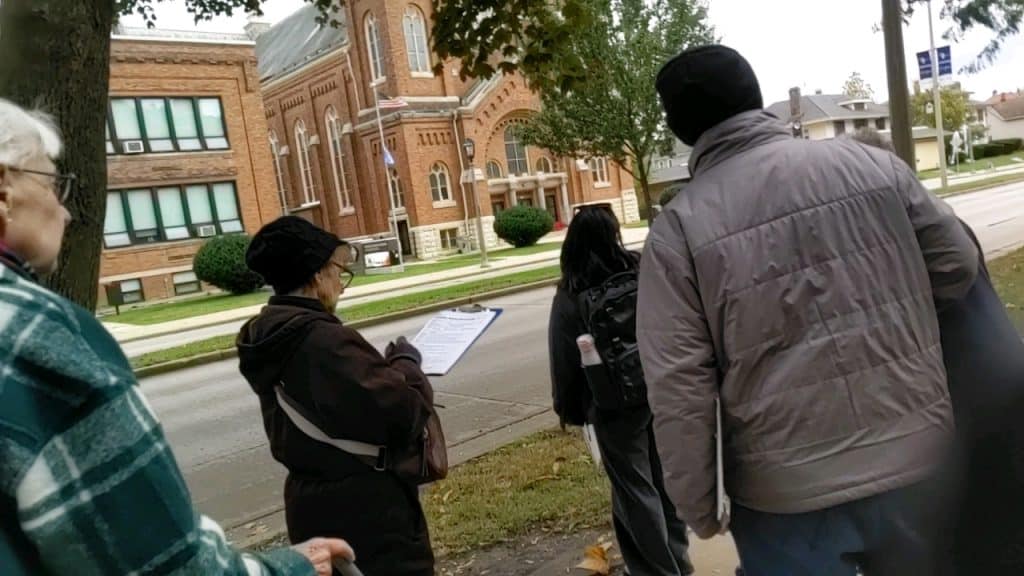
In some cities, advocates have experimented with a solution to the manpower problem facing data collection. Grassroots efforts pulled together volunteer groups from various neighborhoods, who were armed with checklists and briefly trained to perform walk audits, collecting data on intersections to complement the efforts of their city governments.
Joyce Boyland, a board member of the Congress for the New Urbanism in Milwaukee, has organized several walk audits in her city. Boyland, who is also an instructor and professor emerita in psychology at Alverno College, says that her initial interest came from an assignment she had given her students for over a decade.
In these assignments, she had students study walk audit checklists produced by the AARP. Years later, after she applied for and was awarded an AARP microgrant to organize real-life walk audits, Boyland found neighbors and activists who could push efforts forward.
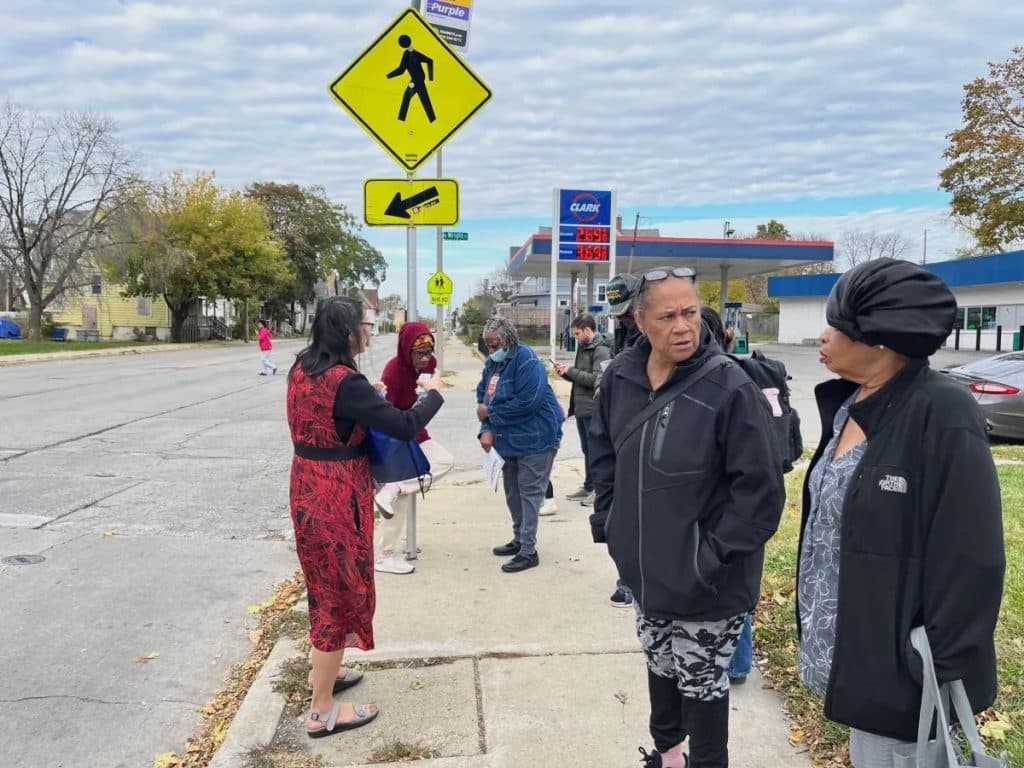
In her audits, organizers briefed volunteers on how to collect data using the AARP checklists before heading out into the field.
The concept is not entirely new to Fort Wayne. Local transportation advocacy groups, including the Active Transportation Coalition (ATC) and Three Rivers Active Streets, have experimented with audit-style evaluations, particularly through bike audits, with ATC piloting some limited walk audit trials in 2020.
Jahnavi Kirtane, an associate planner for SpeckDempsey, an urban planning firm that focuses on building safe streets, says that walk audits often help understand how people actually navigate spaces, rather than what it might look like on paper.
“It’s great that Fort Wayne has in-house people doing that work, but it’s extremely helpful when you have people who are walking the intersections — rolling through the intersections on a daily basis — participating as well.”
Moving Fort Wayne Forward Reader Survey
Hey! We could really use your help making sure we can continue producing journalism that informs and inspires. Taking a few seconds to answer these questions will ensure we’re on the right track and that our funders understand our impact.
Nick Jarrell, right-of-way manager for the City of Fort Wayne, says that volunteer groups that “get more eyes on the road” would probably complement the existing data collection efforts of the city. According to Fort Wayne’s ADA Transition Plan, those efforts include rotating pavement inspections, curb ramp inventories maintained across multiple departments, and annual updates, though the city notes that intersection-level data is still being completed.
Although this might not solve other outstanding constraints, he added that additional data still helps, even if volunteers record data that goes beyond ADA requirements.
“If the intersection is not in compliance [with the ADA], we, the city, look at that as more of a priority than one that’s not upgraded that way.”
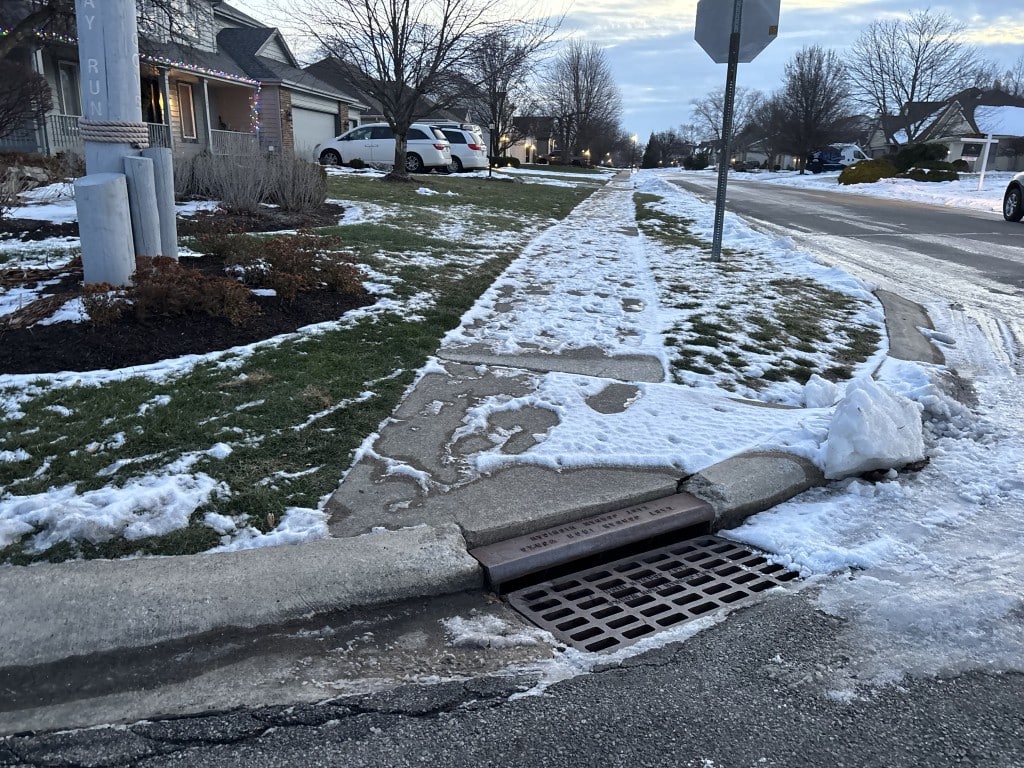
For example, current federal ADA standards do not mandate that truncated domes — the pink grids at some crosswalks that warn visually impaired pedestrians of an upcoming intersection — align with the direction of travel, although the proposed changes to these standards recommend doing so as a best practice.
So while a volunteer might collect data on these apparent accessibility issues, such as curb ramp slope and the orientation of truncated domes, the city will prioritize building a sloped sidewalk over non-mandatory changes. Prioritization of ADA compliance ensures that the city uses limited resources where they will have the most impact before making other supporting accommodations not required by the ADA.
While volunteer audits can compound the efforts of municipalities with limited coverage, Boyland noted that the continued success of a voluntary, grassroots movement like this relies on the capacity of organizers to consistently find willing volunteers to participate. Even then, neighborhoods with low-engagement residents may be more difficult to address, despite possibly being the neighborhoods that need it the most.
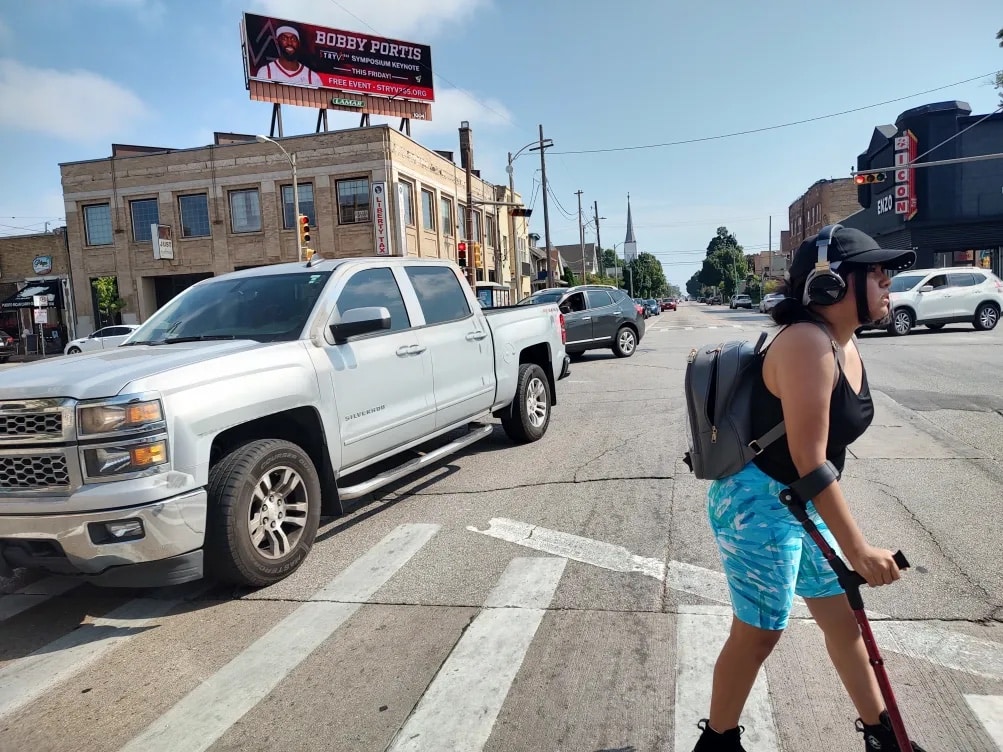
On top of that, while engineers might have additional data from volunteer walk audits about the intersections and sidewalks of most need, the funding available for changes to this infrastructure limits the amount of data that can translate into real-world impact. Underground infrastructure, like communication lines and natural gas, which requires additional entities to cooperate with the project, often adds to the time and expense of updates.
This, Jarrell believes, remains the biggest roadblock to right-of-way updates.
“That’s a big problem when you try to squeeze all of this infrastructure into a small spot, and you’re at an intersection that has, now, traffic signals and poles that are there. So you have AEP poles, you have utilities that are underground. How deep are they? Do you need to move them? Sometimes you don’t find that out until you expose them, and that can be an issue.”
Volunteer walk audits do not guarantee immediate construction, but they can help cities make more informed decisions about which accessibility barriers should rise to the top of the list when resources become available.
Even with these limitations, Boyland says that the additional data the Milwaukee walk audits collected resulted in a variety of positive impacts to both infrastructure and mindset.
First, Milwaukee added data about the areas of most need into its priority infrastructure schedule, effectively allocating scarce resources to the areas of most need. Second, Boyland says, the walk audits expanded volunteers’ imaginations of what is possible, including the installation of a raised crosswalk on one of Wisconsin’s state highways.
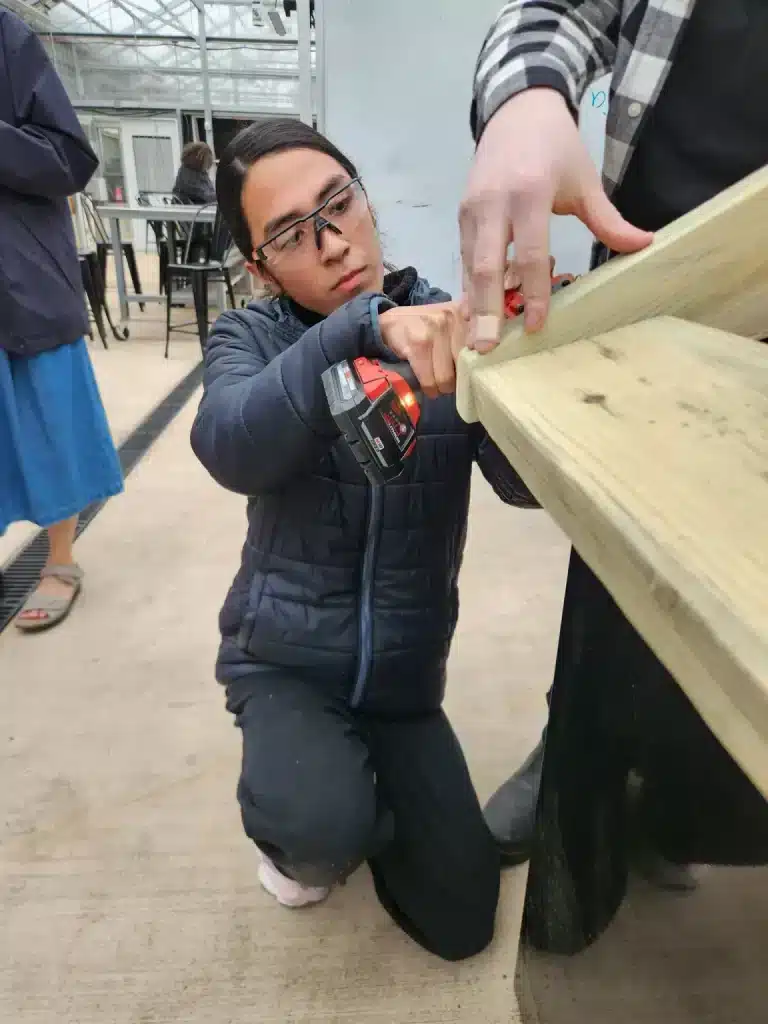
A teen in Milwaukee builds a bench with funds from an AARP micro grant after a walk audit revealed that many bus stops had nowhere for riders to sit. Photo Courtesy of Joyce Boyland.
“To me, that was the biggest goal,” Boyland says, “to see that actually, they can say things that they can have a voice on.”
The Milwaukee walk audits also revealed bus stops that did not have benches for riders to rest as they waited for their bus. In Fort Wayne, this becomes a serious accessibility issue because buses run on hourly schedules, and those with and without disabilities might find it difficult to stand at these stops for up to an hour without a place to sit.
As a result of the audits and using some of the grant funding, volunteers in Milwaukee built a number of bus benches to enhance the accessibility of their public transit system.
If Fort Wayne attempts consistent walk audits to bolster the city’s data collection efforts, Boyland says that organizers should emphasize to prospective volunteers that “you have a gift to give, that you can choose to offer, that will truly make the life of you and your community and the whole city better.”
Volunteer walk audits are not a substitute for engineers and funding, or the physical constraints of some infrastructure. Instead, they offer a way to widen the city’s field of vision, identifying barriers that might otherwise remain undocumented or overlooked. In a system where data shapes priority, more eyes on the ground can lead to more informed decisions about where accessibility investments will have the greatest impact.
Thanks to our Presenting Partner, Parkview Health, our Lead Sponsors, WindSwell Foundation and Community Foundation of Greater Fort Wayne, and to our sponsor, Citilink, for making this story possible.

Author
Related Articles
Can proximity solve a transportation problem?
Some developers, planners, and neighborhood advocates believe bringing destinations closer together could expand transportation choices.
How we got here: The role of transportation in Fort Wayne’s growth
From portages and streetcars to highways and subdivisions, transportation shaped the way Fort Wayne grew.
How early introduction to alternative transportation could help change Fort Wayne’s car-centric mindset
Fort Wayne is a city with a car-centric mindset. Early exposure to biking and transit could help, but a lack of density could limit long-term habit change.