What’s the future of education? Fort Wayne-raised Vimeo Co-Founder shares his edtech innovations
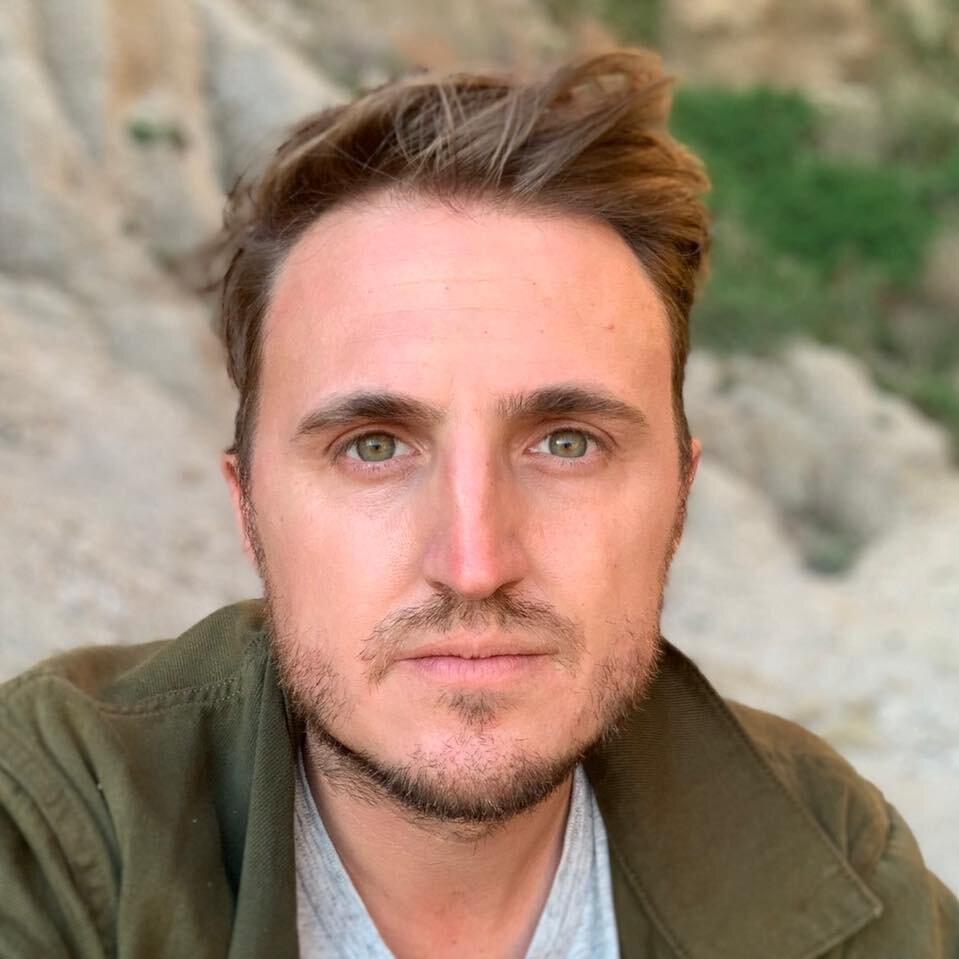
We sat down with Zach Klein to talk about his Fort Wayne roots, his innovations in the hot edtech space, and his passion for creating safe, positive virtual communities.
For grade school students today, it might be hard to imagine a world without the internet or tech giants like Facebook, Instagram, Twitter, YouTube, and Vimeo.
For better or for worse, our online interactions dominate our lives, define our relationships, and in many ways, influence how we see ourselves and the world around us. In the past year of the COVID-19 pandemic and the presidential election, we’ve witnessed some of the best and worst aspects of these technologies firsthand. Tools like social media can provide us with healthcare, knowledge, and community. They can also be used to tear communities apart.
Growing up in Fort Wayne in the ‘90s and early 2000s, Zach Klein never imagined himself making a career in the tech industry. But his early interest in computers and website building was encouraged by his teachers at Summit Middle School. After growing his skills in online communities and collaborating with his peers, he went on to co-found and design the video platform Vimeo. Since then, he’s created the book series Cabin Porn and is now the CEO of Dwell in San Francisco.
But over the years, one of Klein’s greatest passion projects has been launching and growing an edtech platform called DIY.org that draws on the best aspects of online communities to fundamentally shift how students, parents, and educators think about learning.
As traditional school systems struggle to support teachers and families in the remote learning environment of the pandemic, and as more families experiment with homeschooling, one might wonder: What is the future of education in the U.S.?
While Klein doesn’t presume to have the answer, he’s optimistic about the emergence of more equitable and engaging edtech learning environments and the surge of interest he’s seen in DIY.org—whose user base has grown tenfold in 2020.
Input Fort Wayne sat down with Klein to talk about his Fort Wayne roots, his innovative perspective on education, and his passion for creating safe, positive virtual communities that bring out the best in technology—and its users.
IFW: Tell us about your background in Fort Wayne and your own education experience.
ZK: I moved from Buffalo to Fort Wayne at age 11 when my dad started a business there.
I was in the first class of sixth graders at Summit Middle School in Aboite Township, and it was a big upgrade from my previous school in Buffalo, which was comparatively underfunded. So it was an incredible experience for me, as someone who loves school.
I think my education in Fort Wayne played a vital role in my career, as well. There were about 120 kids in my sixth-grade class at Summit, and we had massive computer labs—even a recording studio for middle schoolers to make their own shows. I had never experienced anything like that.
We didn’t have a personal computer at my home yet, so I was excited that I could use the computers at school, and my early interest in technology was encouraged by my teachers. They used to allow me to be excused from class during free time to go to the library, where I could access computers and the internet. It was there that I started making my first web pages.
I also met some friends in grade school who have been highly influential in the global web and tech scene, too: Jeff Hammerbacher and Mari Sheibley (who went to Woodside). Jeff went on to be the first data scientist at Facebook, and Mari went on to be a product designer for Instagram and a lead designer for Foursquare. I always thought that, considering the outcomes of our careers and the fact that we all were in Fort Wayne schools, there’s a high likelihood that our schools’ support of technology so early in our lives influenced us.
After middle school, I went on to high school at Bishop Luers where I focused on the school newspaper and developed a love of publishing and media of all kinds. Then I went to college at Wake Forest University, and I became a studio art major.
Studio art—kind of like newspapers—ultimately most approximated what it’s like to work for a startup. You have a lot of deadlines, and the professors are on hand to guide you and bounce ideas as you pursue personal projects, but you primarily learn through practice and observation, and it’s ultimately your responsibility to get the project done.
Several years of that kind of learning prepared me well for a life of building companies.
IFW: What led you to co-found Vimeo?
ZK: I graduated college when the Internet bubble had just burst, so making a career on the internet just seemed unfathomable. I seriously considered returning to Fort Wayne to work for Lincoln Financial Group because that’s where I had interned every summer during college. But a classmate of mine at Wake Forest founded CollegeHumor in New York, and I ended up getting an offer from him to help build that, so I went.
While we were working on CollegeHumor, another colleague and I started building Vimeo at night. Then, two years after arriving in New York, we sold both CollegeHumor and Vimeo to IAC.
IFW: Many people know you today as CEO of Dwell or author of Cabin Porn. But about nine years ago, you launched another passion project in the edtech space: DIY.org. Tell us about that venture, and how it connects to your various interests.
ZK: I moved from New York to San Francisco to co-found DIY.org, which I approached as a love letter to the world. My passion—besides publishing—is creating great places for communities, both online and offline.
One thing I’m most proud of about Vimeo, for instance, is the community it created, and how it was an early place of optimism on the internet. It was a place where jerks weren’t tolerated, and a community that allowed creativity to flourish—that made people comfortable enough to be vulnerable. That’s not something you can say about many large, tech platforms today, and we’re seeing the effects of that unchecked cynicism playing out in the world.
Not all online communities were designed to be good places.
Since DIY.org is a skills-based learning platform for users ages 17 and younger (and their parents), I wanted to create a place that was safe and specifically for children because I could see how toxic the internet was. But also, more broadly, because I was interested in building on what we started with Vimeo and discovering other kinds of communities that could facilitate or replace conventional ways of learning.
I wanted to build a virtual learning community, like an online school, but a learning community that challenged some of the conventional assumptions about what a learning experience needs to be.
IFW: You’ve posted about gaming communities online and how they inspired your approach to learning with DIY.org. In these communities, peers often learn from one another in collaborative, interest-based, passion-driven environments, using age- and gender-transcending aliases. Tell us more about these concepts and how they have the potential to shift the way we think about learning in our current education system.
ZK: Ever since I was a middle schooler making web pages, one of the things that has been such a powerful force for me in my life has been learning from my peers. In the early internet, there were few formal ways for novices to learn to program, and I mostly depended on open source references and the generosity of people I met online who shared their passion by teaching me. Peer-to-peer learning is profoundly effective, but often, in conventional school, it is characterized as cheating.
With peer-to-peer learning, you are both a student and a teacher at all times. The role of the teacher is fluid on the web. Ageism and hierarchies don’t exist. It’s a true meritocracy where your passions, insights, and leadership are the most important qualities, and that’s starkly different from what you experience in the traditional school system, where there are few opportunities for students to take on leadership roles and to be formally invited to play a role in educating their peers.
I’m humbled by the tremendous work teachers do and the amount of thinking in the education space that has preceded me. But I don’t believe our conventional education system in the U.S. reflects how people naturally learn. When you’re young, you primarily learn through observation, and you often feel safest observing people you feel comfortable around, which tends to be your friends and peers. So the idea with DIY.org was: How can we build a community where 10-year-olds teach 9-year-olds about a subject like chemistry?
The scaffolding of the instruction might not be as rational as it would be coming from an adult who has been trained in the pedagogy of these fields, but that’s the important thing to remember about this way of learning. It’s less about having the perfect pedagogy, and it’s more about sparking a student’s interest in learning in the first place, so they become self-motivated to acquire greater knowledge and expertise.
That’s my mission in education. Fundamentally, I believe it’s a mistake for us to focus on anything other than teaching children how to be good learners and preserving their confidence so they can learn anything.
IFW: Tell us more about your thinking behind this approach.
ZK: In the age we’re living in, knowing how to learn is really the only skill you need to maintain a livelihood throughout your life. The rate at which skills are becoming obsolete is quickening, so if we truly want to prepare children for a livelihood, we need to teach them how to learn quickly and how to keep learning.
What’s unfortunate is: A lot of students coming out of school today might feel like they’re not “good learners,” but they have the potential to be. At the root of our ability to be good learners is our belief that we can learn something new, so I believe we should focus on what makes students passionate and get them to feel that connection to what it’s like to be curious about something that’s unique to them, instead of stamping onto them a strict pedagogy that was really designed for a workforce era that’s becoming obsolete.
IFW: Do you find that DIY.org helps students who are falling through gaps in more traditional learning environments?
ZK: Anecdotally, a remarkable portion of our membership at DIY.org are students who would be classified as having “special needs” in traditional school. I think that’s in a large part because of our focus on peer-to-peer learning, and the fact that we don’t use personal names or ages. Instead, all of our DIY.org users create an identity online, so it allows children with seen or unseen challenges that make it difficult to learn in-person to succeed online because they’re not being judged superficially. Their online identity is completely based on their passions and what they want to share with other children.
IFW: What growth are you seeing in DIY.org and edtech, in general, as the world evolves during COVID-19?
ZK: This year has been a strange year for this edtech industry, in general, in that, a lot of us who have been entrepreneurs in this space for 10 years have been waiting for this type of shakeup in education in a way.
No one hoped for a terrible pandemic, but the pandemic has caused millions more households to experiment with online learning tools, and while end of pandemic is on the horizon, and kids returning to school seems inevitable, I do think substantial numbers of families will start or continue using online tools to supplement conventional education. I think it’s likely a lot of families have discovered unique qualities of online learning tools that are really additive to what their child gets day-to-day at school.
At DIY.org, March and April 2020 were our biggest months in our nine-year history by a factor of 10 times. We saw a massive number of parents finding us and signing up, and so many parents have written to us to tell us that DIY.org has proven to their children that they don’t hate learning. For parents to see their kids actually be inspired and be passionate and want to contribute something, it’s a really magical experience.
While the pandemic has obviously been terrible, I think many of us are excited for edtech to finally be in the limelight and to be a category families are seriously adopting. I think we really are going to see a ton of innovation in this space, and I’m excited to be a part of it.
IFW: Thinking about gaps in education systems, one gap that comes to mind with edtech is access to costly technology and the internet. How accessible is DIY.org?
ZK: Cost-wise, we have memberships that start as low as $15 a month, but that’s certainly not as accessible as it could be. What makes it expensive for us is maintaining privacy and safety on the web. We don’t rely on algorithms to determine if a piece of content is appropriate. Instead, we employ real people who literally go through and check everything. The human touch is expensive. That said, any learning tool that requires payment creates a divide for users. Some of the households with the greatest need for online learning options don’t have reliable access to the internet or a credit card to transact online.
So I’m very aware of the digital divide, and it’s always been our intent to make DIY.org as accessible as possible over time. We haven’t formally built DIY.org to be integrated into schools themselves, but we’re finding that, more and more, that is happening. Schools, libraries, homeschools, and churches are buying licenses to DIY and making it more accessible to people who otherwise couldn’t afford it. We love that, and we love to give them special pricing packages that can make it work for them.
IFW: What other edtech companies are on your radar?
ZK: One of the breakout stars in this space has been Outschool. They provide a marketplace where anyone can apply to offer in-person, video-based courses to children. What I love about it is how quality the videos are and how they offer diversified classes for children.
My wife and I have two children, and our daughter took a course on how to care for a hamster. I thought that was the neatest thing because it speaks to her interests, and it treats children’s interests with the same level of reverence as the skills and knowledge that adults think are important to the economy.
What a perfect way to help a child learn the skills of empathy, ecology, and veterinary science—by going directly to something so critical to them, like a pet.
Author

Related Articles
Partner Partner Content How the Fort Wayne Urban League and Alliance Health Centers are closing gaps in access to healthcare
The new clinic offers prenatal and postnatal care, behavioral health services, developmental support, and pediatric therapies in one accessible location at the Fort Wayne Urban League.
Column: Medicaid Changes and the Potential Impact
Recent actions in Indiana, Nebraska, and other states to come, put at risk those personal choices of the disabled who are dependent on Medicaid, about where and how to live their lives.
Help shape future coverage – join our upcoming listening session
Join Input Fort Wayne at Tall Rabbit for coffee, conversation, and a chance to share the issues, people, and neighborhood stories you think deserve more attention.