Partner Partner Content Bridging policy and community: Research illuminates immigrant impact in Fort Wayne
St. Joseph Community Health Foundation’s intern Sofia Vazquez explores changing immigration policies and their local impacts in a white paper.
This story was created in partnership with the St. Joseph Community Health Foundation.
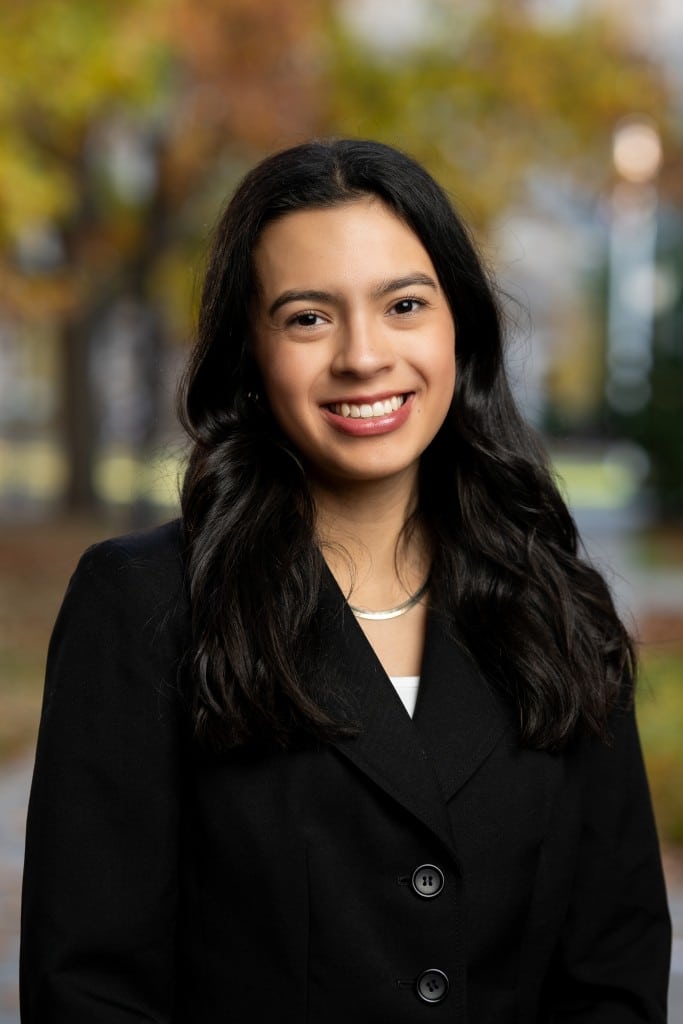
Sofia Vazquez returned to Fort Wayne, where she was raised, this summer.
She’s spent the last three years studying public policy with a minor in Spanish at the University of Michigan in Ann Arbor. Since she was a student at Bishop Dwenger, policy, political science, and government have been her passion. Entering her fourth and final year, she hopes to use the skills and knowledge she’s gained to become an immigration lawyer.
“It’s getting pretty real now that I’m months away from graduating. The goal has always been immigration law. It truly fascinates me,” Vazquez says.
Her return to Fort Wayne was in support of that career goal, as she spent the summer serving as an intern for St. Joseph Community Health Foundation, creating a white paper exploring the local impact of changing immigration policies.
The term “white paper” used to refer to an official government report, but today, it’s a technical document, often used to propose a solution or advocate a position. Vazquez says her goal was to create something factual and unbiased.
She adds that the process and writing style are similar to the work she does in school, including creating policy briefs and researching topics from various perspectives. But her connection to the work is deeper than a simple alignment with her college studies.
“My parents are both immigrants. My dad is from Mexico, and my mom is from Guatemala,” Vazquez says. “It wasn’t something they talked about a ton…Once I started hearing more rhetoric about immigrants, that’s when I wanted to keep pushing and asking them more about how they ended up here in the United States and their stories.”
She adds that her parents are proud of her career aspirations.
“I think they’re really proud of me – that I’ve come far enough to want that to be part of my career,” she shares. “They’re very happy about it, especially because it’s not something that just affects them individually – it’s affected a multitude of their family and friends.”
A lack of information
Collaborating with SJCHF staff, Vazquez identified points and topics to include, and ultimately spent months gathering information, writing, and fine-tuning what would become a 15-page document.
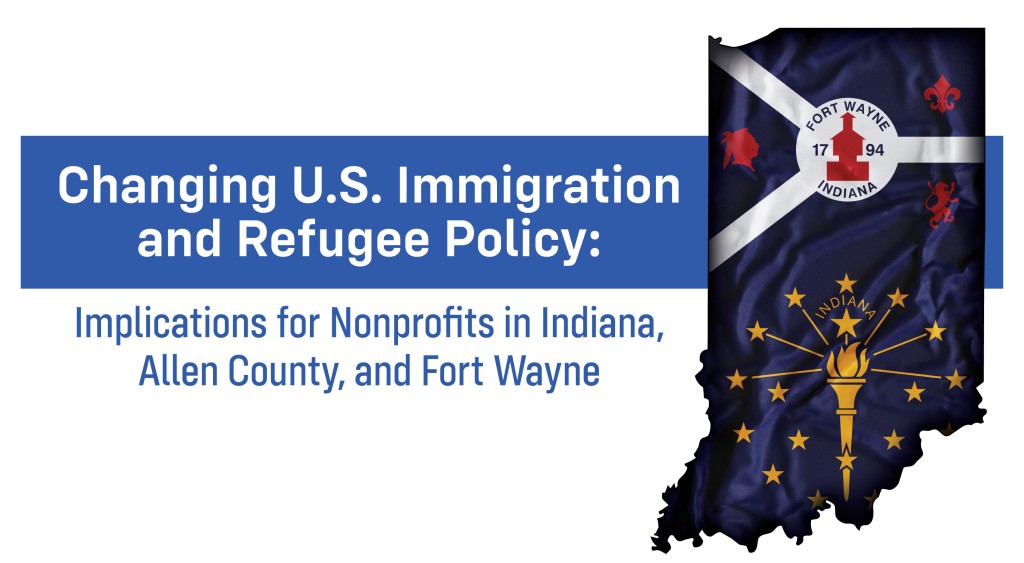
Titled “Changing U.S. Immigration and Refugee Policy: Implications for Nonprofits in Indiana, Allen County, and Fort Wayne,” the paper walks readers through a history of the national and state policies regarding immigrants and refugees, connecting them with present-day outcomes.
“I was proud at the end that it did not feel biased, because I do just want to give out the information itself,” Vazquez says. “It was interesting to look at the most recent administrations.”
While information on the history of the subject was readily available – Vazquez adds she could have written a giant paper on the history alone – they were met with roadblocks as they tried to localize the topic.
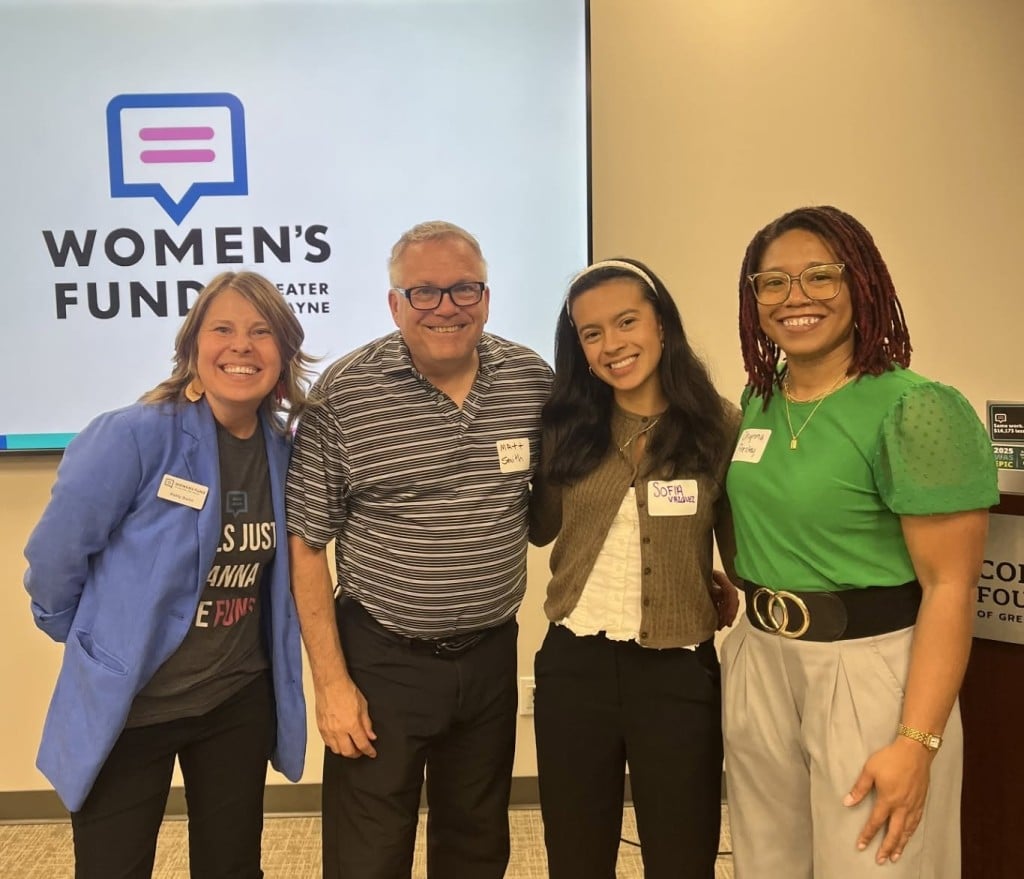
Matt Smith, Ph.D., CEO of St. Joseph Community Health Foundation, describes Vazquez as “a diligent researcher and an excellent writer,” but says they were both intrigued by the “dearth of information around the impact of immigrants and refugees for Allen County, the region, the state, and in some regards, the country.”
Vazquez notes that the most recent data available was from 2019.
“It was kind of hard to find data. The main thing I could find was from 2019, which feels recent, but I was in eighth grade in 2019. That’s seven years ago.”
Eventually, she was able to find data that helped illustrate the area’s experience with immigrants and refugees and the impact they’ve had, which she lays out in the white paper.
“I would like people to realize how much immigrants benefit the society, especially in Fort Wayne, where we have a large number of Burmese and Latino people,” Vazquez says. “In the paper, you can see the myriad of nationalities we have in Fort Wayne and Allen County.”
Digging through data was not her only method of research. SJCHF sent her out into the field to local nonprofit organizations, meeting their leaders and shadowing their operations to gain a better understanding.
Smith says this strategic step was twofold. It gave the staff and board a better understanding of the community’s needs and what actions could be taken, while illuminating the interrelatedness of the nonprofits’ work across the city.
Vazquez visited places like Catholic Charities, Amani Families Services, the Language Access Lab, and International House.
“It was helpful to see, just down the street, how another nonprofit was helping immigrants in the area and exactly how they were doing it,” she says.
Despite growing up in Fort Wayne, Vazquez was unfamiliar with the work many of these nonprofits do, but says witnessing the full scope of their work was eye-opening.
“I had heard of a lot of them, like the big ones like Catholic Charities, but the ones I didn’t know, like Amani, do so much in our area. I was like, ‘How have I never heard of them?’ she says. “It was cool to get to fully see what they do.”
That experience had an impact for Vazquez too. She shares that her plans post-graduation are to find work, taking a break before pursuing law school. She hopes that this time includes working for or volunteering with a nonprofit. Long-term, she plans to make Fort Wayne home again.
Smith says that he wants to thank all the people who took the time to meet with Vazquez, adding that she “is exactly the type of person the city needs and would welcome back to be a leader in the community.”
A ripple effect
As U.S. Immigration and Customs Enforcement’s presence increased this year, fear and concern rose as well. The agency continues to make headlines for fatalities. The conditions at detention centers across the country have also sparked outrage and concern. Organizations like the ACLU and American Immigration Council cite concerns about “unsanitary conditions” and “medical neglect and abuse, and denials of adequate food and water.”
Indiana state legislators have also turned their attention to the issue, proposing and passing legislation. Senate Enrolled Act (SEA) 76, also known as the FAIRNESS Act, went into effect in July and expanded Indiana’s cooperation with ICE, restricting entities from enacting sanctuary policies or policies that would restrict cooperation with ICE. Additionally, it prohibits employers from knowingly hiring unauthorized workers, creating new penalties for business owners if they do.
“As I was writing the paper, things were changing,” Vazquez says, referring to the bill. “I would see it when I went to Catholic Charities or talked to people at Amani. They were people who were being directly affected by these things happening right before our eyes.”
Having to stay up to date while researching was tricky, but she stayed focused on the end goal and the potential impact her work could have.
“The goal would be for someone to be able to read it and feel like they know generally what’s happening in Indiana and Allen County, and that these policies aren’t just papers being signed and passed along,” she says. “They do have effect on our everyday neighbors.”
Vazquez hopes the information in her paper can inspire action.
“[It could] drive people to vote, or to want to volunteer at a nonprofit or look into being on the board of a nonprofit or seeing what they do,” she says. “The goal would be informing, but then kind of that call to action of: We want to help the immigrant population, and we see the facts.”
A piece submitted to the Journal Gazette in January 2026 on behalf of the St. Joseph Community Health Foundation’s board shared a similar sentiment. It speaks about Fort Wayne’s long legacy of caring for neighbors, reaffirmed the organization’s dedication to caring for “the immigrant, refugee and vulnerable person in our community,” and committed to a list of actionable items.
It reads in part, “We are deeply concerned about the immigrants and refugees in our community…Never should a child in our schools wonder whether their parents will be present to pick them up at the end of the day. A mother should not isolate in her home for fear she will be separated from her family. An infant should not go without health care because of a parent’s inadequate documentation of their local residency. This is all happening in our Fort Wayne community. The inhumane treatment of the powerless is unjust. Human life is sacred, and each person deserves to be treated with compassion, respect and dignity.”
Vazquez’s white paper offers guidance to the foundation around commitments made in that January letter.
“St. Joseph Community Health Foundation will use her white paper to inform our grant strategy as we, along with our board, discern and operationalize it in relation to our mission,” Smith tells Input Fort Wayne. “Additionally, we will use this white paper to educate our community about the current issues concerning immigrants and refugees in our community.”
Read Sofia Vazquez’s full white paper here.
This story was created in partnership with the St. Joseph Community Health Foundation.
Author

Related Articles
Help shape future coverage – join our upcoming listening session
Join Input Fort Wayne at Tall Rabbit for coffee, conversation, and a chance to share the issues, people, and neighborhood stories you think deserve more attention.
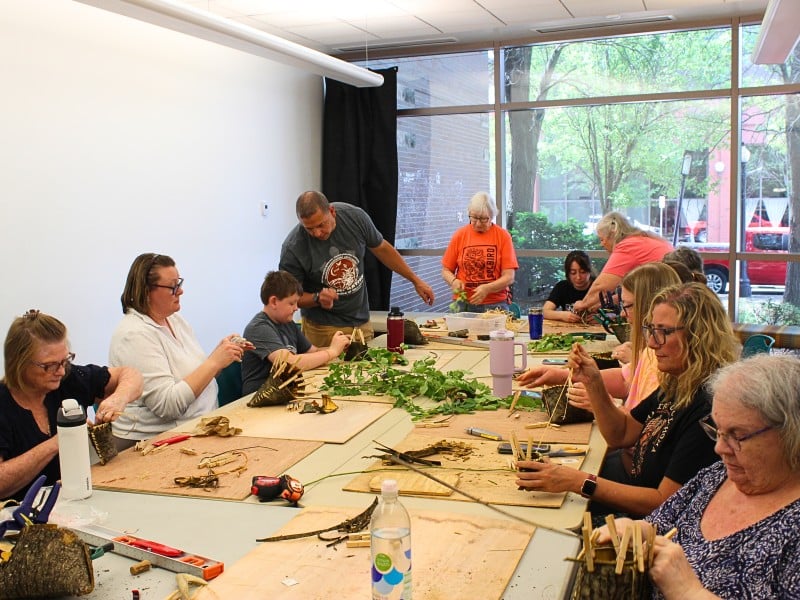
Myaamia Heritage Foundation is hosting the first Myaamia Cultural Fest in Fort Wayne
The event will celebrate the culture, history, language, foodways, arts, and ongoing revitalization of the Miami Tribe of Oklahoma — whose homelands include Fort Wayne and northeast Indiana.
Erin’s House for Grieving Children: Supporting families through loss
Erin’s House provides free grief support for Fort Wayne youth. Events like their BMW giveaway and 5K run fund these life-changing services.